.webp&w=384&q=75)

Loading, please wait...
Loading, please wait...
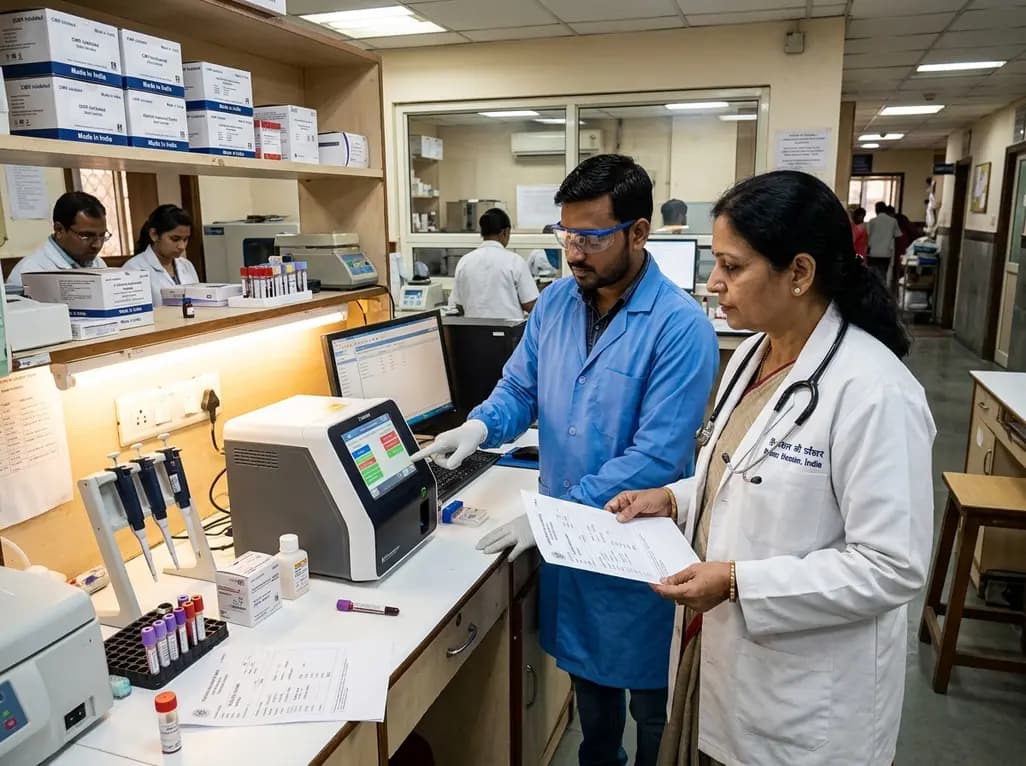
Modern clinical practice depends heavily on prompt and dependable laboratory investigations. Indeed, clinicians make over seventy percent of critical diagnostic decisions based on pathology findings. Consequently, the rapid evolution of indigenous diagnostics in India marks a transformative shift for national healthcare delivery. By transitioning academic discoveries into standardized commercial tests, domestic innovators strengthen clinical reliability across hospitals. Furthermore, this translational continuum ensures that healthcare facilities receive affordable, high-quality diagnostic assays tailored to local epidemiology.
Translating an innovative laboratory concept into an approved diagnostic kit presents immense regulatory and technical hurdles. Historically, valuable research from premier Indian institutes remained confined to academic publications. However, structured technology-transfer frameworks now bridge this persistent divide effectively. For example, institutional partnerships with the Indian Council of Medical Research allow manufacturers to license patented biomedical breakthroughs. This coordinated approach accelerates the pathway from proof of concept to commercial batch manufacturing. Consequently, clinical laboratories obtain faster access to thoroughly validated assays without excessive delays.
Furthermore, commercial entities establish rigorous documentation systems to fulfill statutory CDSCO medical device regulations. Production specialists also optimize automated reagent synthesis, precise bottling, and robust cold-chain packaging. Therefore, public health centers and private diagnostic chains receive stable test supplies during epidemiological surges. In addition, formal licensing agreements ensure that public research investments translate into affordable clinical tools. Meanwhile, regular audits maintain regulatory discipline across every production tier. As a result, domestic manufacturers compress the timeline between lab bench discovery and bedside implementation. Clinicians can subsequently rely on timely diagnostic kits during critical disease outbreaks. Ultimately, this seamless transition establishes a resilient foundation for national healthcare security.
High import dependency historically left Indian diagnostic laboratories vulnerable to foreign supply disruptions and prohibitive costs. Consequently, expanding indigenous diagnostics in India offers an essential buffer against international market volatility. When domestic manufacturers produce quality in-vitro diagnostic kits, local healthcare networks secure continuous access to critical testing materials. Furthermore, indigenous development allows researchers to design assays tailored directly to local disease variants. For instance, pathogens causing tropical fevers, tuberculosis, and enteric illnesses demand customized molecular targets. Therefore, locally engineered kits often demonstrate superior clinical sensitivity compared to generic global alternatives.
Moreover, local production drastically lowers operational expenditure for hospital laboratories and private collection centers. As a result, pathology facilities can offer comprehensive testing panels at significantly reduced prices for patients. In addition, health programs achieve broader coverage across underserved semi-urban and rural populations. Clinicians consequently formulate definitive treatment strategies much earlier in the disease trajectory. Similarly, health authorities gain immediate diagnostic data to manage community outbreaks before widespread transmission occurs. Ultimately, prioritizing domestic IVD manufacturing protects patient well-being and fosters long-term medical self-reliance. Thus, robust local supply chains empower clinicians to deliver uninterrupted diagnostic care during seasonal crises. This indigenous capacity transforms routine clinical workflows across Indian healthcare facilities.
In diagnostic medicine, technological innovation holds little value if results cannot be replicated reliably across laboratories. Therefore, manufacturers must treat quality as an intrinsic component rather than a simple end-point check. Medical laboratories require high analytical specificity and sensitivity across every production batch to prevent clinical misdiagnoses. Consequently, diagnostic developers align research teams directly with quality assurance and regulatory affairs personnel. Furthermore, standardized manufacturing protocols guarantee traceability for every chemical reagent, buffer solution, and probe. When companies follow ISO 13485 standards, they eliminate subtle variations that compromise patient results.
Additionally, rigorous internal validation and multi-center clinical trials verify test performance under diverse field conditions. Pathologists depend on these documented parameters when interpreting borderline or complex clinical specimens. Moreover, consistent batch performance reduces the need for expensive confirmatory repeat testing in routine practice. In contrast, substandard reagents introduce diagnostic ambiguity and delay vital clinical therapy. Quality-driven manufacturers therefore enforce stringent lot-release criteria before releasing products to hospital pharmacies. Hence, practicing physicians can trust diagnostic reports implicitly when initiating aggressive therapeutic regimens. Ultimately, unwavering quality compliance safeguards patient outcomes and builds enduring clinical trust. Continuous analytical verification preserves diagnostic integrity across every medical department.
The diagnostic landscape is undergoing a profound paradigm shift toward rapid decentralized testing. Traditionally, complex molecular testing required sophisticated central reference laboratories and specialized technical personnel. However, novel point-of-care platforms and multiplex assays now bring advanced molecular diagnostics directly to primary care centers. For instance, isothermal amplification technologies and microfluidic cartridges permit rapid nucleic acid detection in non-specialized clinical settings. Consequently, clinicians receive actionable molecular results within hours rather than waiting multiple days. This rapid turnaround time proves critical when managing aggressive viral or bacterial infections.
Furthermore, multiplex testing platforms identify multiple respiratory or enteric pathogens simultaneously from a single patient sample. As a result, attending physicians avoid inappropriate broad-spectrum empirical antibiotic prescriptions, supporting antimicrobial stewardship programs. Additionally, decentralized diagnostics enable primary care physicians to triage critical patients promptly during triage assessments. Meanwhile, digital connectivity allows remote instruments to transmit real-time diagnostic data to regional surveillance databases. Thus, epidemiological surveillance teams can detect emerging community outbreaks with remarkable speed. Ultimately, decentralizing molecular testing bridges the diagnostic divide between tertiary hospitals and peripheral clinics. Practitioners in remote locations can deliver accurate evidence-based interventions without sending patients elsewhere. Indeed, portable molecular platforms expand equitable clinical access throughout the entire nation.
Technological advancement in diagnostic medicine cannot succeed without a skilled technical workforce to operate and interpret complex platforms. Even the most sophisticated diagnostic kit fails if laboratory technicians lack comprehensive operational training. Therefore, leading diagnostic manufacturers invest substantially in professional skill development and academic partnerships. For example, structured industrial training programs teach laboratory personnel proper sample handling, calibration protocols, and quality control maintenance. Furthermore, these collaborative initiatives bridge the gap between academic education and clinical laboratory demands. When technicians understand the biochemical principles of diagnostic kits, analytical errors drop substantially.
Additionally, contract research and manufacturing services foster deeper collaboration between academia and commercial enterprises. Research scientists gain direct insight into manufacturing feasibility and regulatory clearance pathways early during discovery phases. As a result, academic institutions design realistic diagnostic tools that meet commercial scale-up criteria from inception. Moreover, continuous professional development programs keep practicing laboratory staff updated on emerging molecular testing protocols. Consequently, hospital laboratories maximize the diagnostic utility of modern point-of-care platforms. Ultimately, building human capability across technical, operational, and regulatory domains secures sustainable healthcare progress. A competent diagnostic ecosystem empowers doctors to practice medicine with greater diagnostic precision. Hence, comprehensive training creates an enduring environment of clinical excellence across diagnostic facilities.
Q1: How does technology transfer from ICMR benefit practicing clinicians?
Technology transfer from the Indian Council of Medical Research allows commercial manufacturers to transform validated medical discoveries into affordable diagnostic kits. Consequently, clinicians gain access to reliable diagnostic assays evaluated against local disease strains. Furthermore, domestic production ensures steady reagent supplies during epidemiological surges, preventing testing disruptions. Attending doctors can therefore make rapid, evidence-based treatment choices using locally validated and compliant diagnostic tools without facing high import costs.
Q2: Why is batch-to-batch reproducibility critical for diagnostic reagents?
Batch-to-batch reproducibility ensures that diagnostic reagents deliver identical analytical sensitivity and specificity across different production lots. If reagent performance fluctuates, laboratory results become inconsistent, potentially causing false-positive or false-negative diagnoses. Therefore, strict quality control protocols and standardized manufacturing protect diagnostic accuracy. Clinicians rely on this analytical consistency to monitor therapeutic response, evaluate disease progression, and prescribe targeted medications safely across longitudinal patient consultations.
Q3: How do point-of-care molecular platforms transform infectious disease management?
Point-of-care molecular platforms bring sophisticated nucleic acid amplification directly to decentralized clinics and emergency rooms. Consequently, doctors obtain definitive pathogen identification in hours rather than waiting multiple days for centralized culture results. This rapid turnaround time enables prompt initiation of targeted antimicrobial therapy while avoiding unnecessary broad-spectrum empirical antibiotics. Furthermore, early detection limits community pathogen transmission, strengthening antimicrobial stewardship and overall infection control protocols.
Disclaimer: This content is for informational and educational purposes only. It does not constitute medical advice or replace professional judgment. Refer to the latest local and national guidelines for clinical practice.
References

Read summarized clinical updates, watch expert medical content, and earn CME certifications right from your smartphone.
Open your smartphone camera to scan and install.





Translating laboratory discoveries into robust in-vitro diagnostic tools is vital for Indian healthcare. By combining ICMR technology transfers with rigorous quality systems, domestic manufacturing fulfills clinical needs, curbing import dependence and expanding point-of-care infectious disease testing.
Today

Solid-state fermentation of soybeans using Rhizopus oligosporus significantly enhances isoflavone aglycone content and thermal stability. In vitro digestion and fecal fermentation demonstrate improved bioaccessibility and gut microbiota modulation, prominently enriching beneficial Bifidobacterium populations.
Today
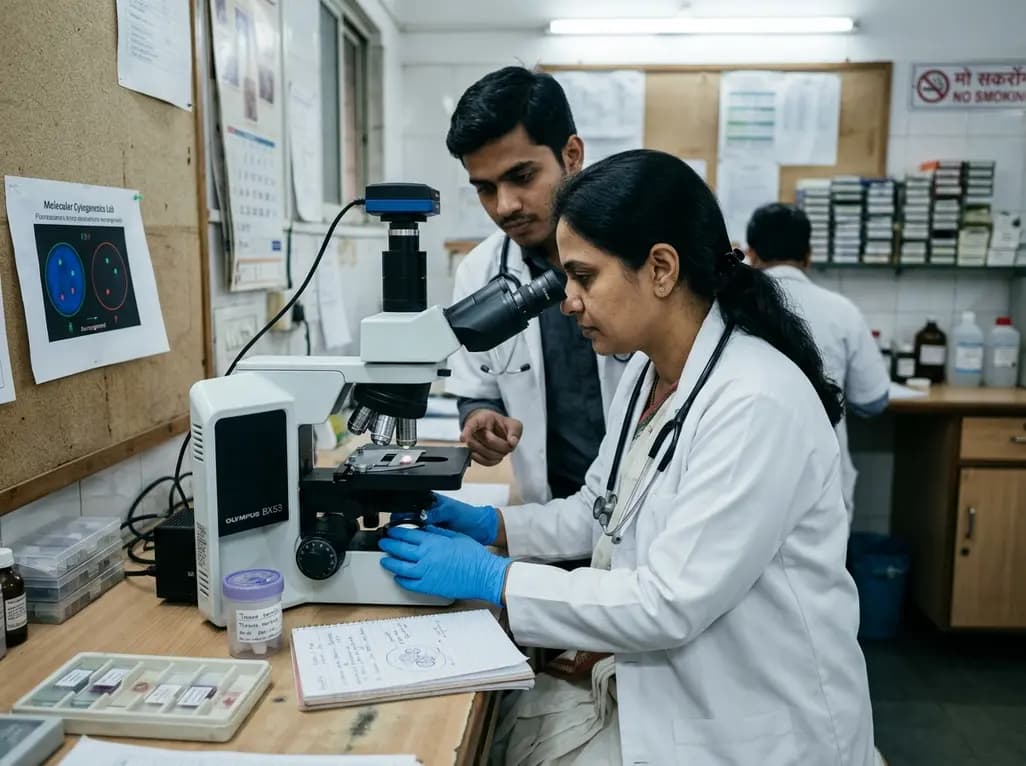
A recent study identifies a rare vulvovaginal myxoid epithelioid smooth muscle tumor harboring an NCOA2 rearrangement in a 56-year-old female. Demonstrating estrogen receptor negativity and a low proliferative index, the case refines diagnostic boundaries and underscores the importance of molecular cytogenetics.
Today

A longitudinal study reveals that an escalating cardiometabolic disease burden significantly accelerates health-related work cessation among middle-aged adults, highlighting an urgent need for proactive multimorbidity screening and tailored workplace health interventions.
Today
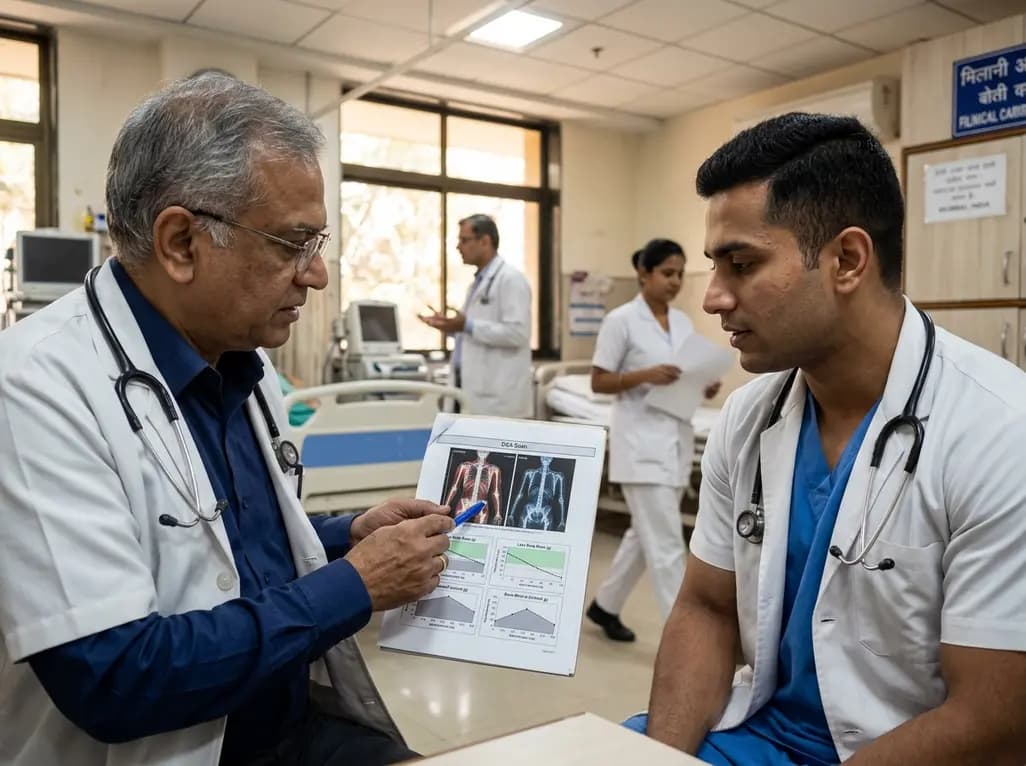
A new cross-sectional evaluation reveals how regional lean mass and bone mineral content interact in resistance-trained men, showing that whole-body size and allometric scaling explain shared musculoskeletal phenotypes and strength relationships.
Today

Explore the emerging role of glucose metabolic reprogramming in exercise-attenuated osteoporosis, examining how physical activity influences osteoblast glycolysis, osteoclast bioenergetics, and skeletal remodeling pathways to improve bone mineral density.
Today
