.webp&w=384&q=75)

Loading, please wait...
Loading, please wait...
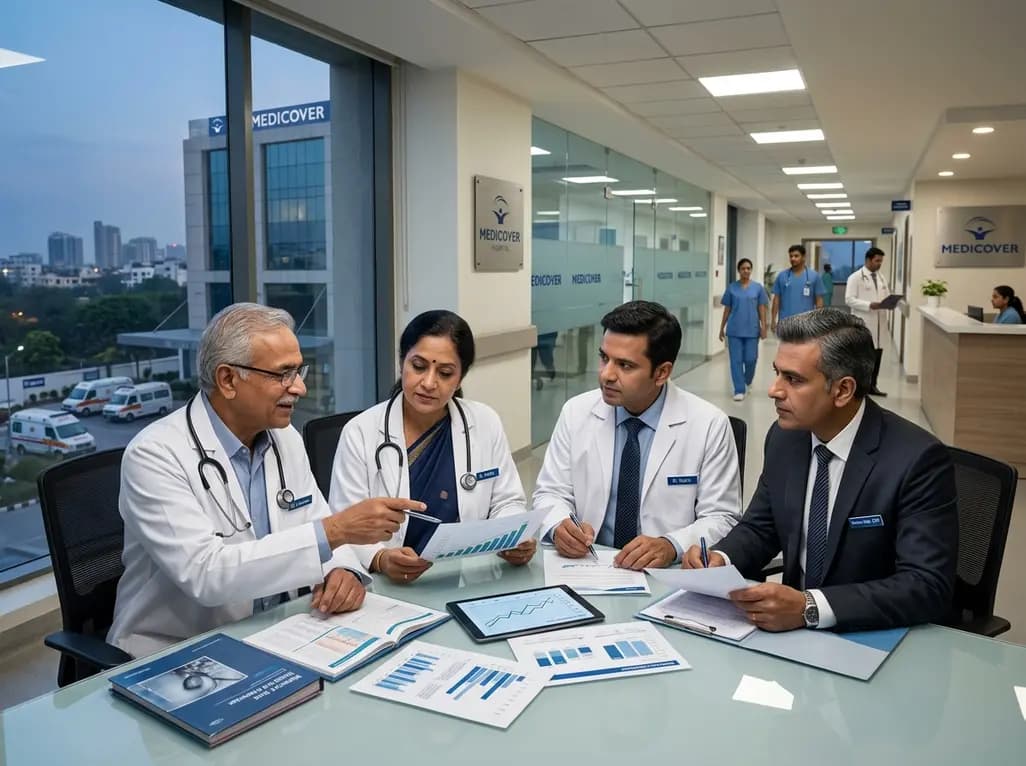
The landscape of hospital management is undergoing a significant transformation, driven largely by rapid Indian healthcare expansion and rising clinical demand. Swedish healthcare provider Medicover has announced that all 25 hospitals in its Indian network will reach profitability within the next 18 months. This turnaround follows a major €1.2 billion acquisition by the global investment firm KKR. Healthcare administrators and clinical directors are closely watching this strategic shift, as it highlights how institutional capital can accelerate operational sustainability and enhance specialized patient care delivery.
Medicover India currently operates 25 multi-specialty facilities across several high-density regions. Currently, 19 of these hospitals generate consistent operational profits. However, the remaining six facilities have faced typical gestation challenges associated with greenfield tertiary healthcare infrastructure. Management expects core profit margins to improve from the current 14 percent to between 20 and 25 percent over the next 12 to 18 months.
To achieve this ambitious financial milestone, the network focuses on optimizing unit economics and standardizing clinical procurement. Furthermore, hospital administrators are streamlining administrative overhead while preserving clinical quality. Rising debt burdens previously constrained the organization's growth trajectory. Therefore, leadership sought strategic equity partnerships rather than relying solely on high-interest domestic debt.
Additionally, expanding specialized tertiary services improves revenue per occupied bed. Highly complex surgical procedures and intensive care services generate better operating margins than routine non-critical treatments. Consequently, clinical departments are expanding their interventional cardiology, neurosurgery, and oncology capabilities. These targeted interventions allow newer centers to shorten their break-even period significantly, turning previously lagging hospitals into productive tertiary assets.
The ongoing Indian healthcare expansion creates unprecedented opportunities for hospital chains that operate large-scale inpatient networks. Medicover currently maintains an aggregate capacity of approximately 6,000 hospital beds across southern and western India. However, average daily occupancy sits near 2,500 to 2,600 beds. The management team now plans to boost occupied bed counts to 4,000 within the next 18 months.
This ambitious target represents an impressive 67 percent increase in operational bed utilization. Moreover, scaling up occupied beds directly dilutes high fixed costs like advanced imaging equipment and dedicated clinical staffing. As a result, marginal revenue flows straight into core EBITDA margins. The leadership will deploy fresh capital from KKR directly into existing facilities to commission previously non-chargeable beds.
Furthermore, tier-2 and tier-3 cities represent the primary growth frontiers for bed deployment. Patients in non-metro areas often lack timely access to advanced critical care and complex surgical suites. By commissioning dedicated critical care units and surgical beds in regional hubs, the network captures localized patient demand. Consequently, this regional focus prevents patients from traveling long distances to metro hospitals, establishing localized centers of clinical excellence.
Private equity participation in Indian medical infrastructure has expanded rapidly over the past few years. KKR's €1.2 billion buyout represents one of the largest private equity deals in the country's hospital sector. Previously, the investment firm established strong footholds in healthcare through significant stakes in Baby Memorial Hospital and HealthCare Global.
Institutional private capital offers distinct advantages over traditional domestic public offerings. Specifically, private equity sponsors provide long-term patient capital that insulates healthcare providers from quarterly equity market volatility. Furthermore, PE investors provide strategic operational expertise and corporate governance frameworks. This approach allows clinical leadership to focus entirely on patient safety, technological integration, and clinical outcomes.
In addition, institutional investment facilitates rapid regional consolidation through bolt-on acquisitions. When hospital chains achieve massive scale, they gain substantial bargaining power in negotiating supplier agreements for medical devices and pharmaceuticals. Consequently, institutional backing helps hospital platforms lower operational expenses, improve clinical protocols, and modernize existing medical infrastructure without accumulating unmanageable corporate debt.
The underlying macro drivers of hospital demand in India remain exceptionally resilient. The nation faces a rising burden of non-communicable diseases, including cardiovascular disorders, diabetes, end-stage renal disease, and advanced malignancies. Therefore, multi-specialty hospitals with comprehensive tertiary and quaternary capabilities experience sustained high footfalls.
Simultaneously, the steady expansion of private and state-sponsored health insurance schemes has revolutionized healthcare affordability. Middle-income families can now access advanced surgical interventions without catastrophic out-of-pocket financial distress. As insurance penetration deepens across semi-urban clusters, tertiary hospitals witness higher conversion rates for elective surgeries.
Consequently, clinicians and hospital administrators must design integrated care pathways that support longitudinal disease management. Speciality clinical units require state-of-the-art diagnostic equipment, such as digital subtraction angiography and advanced linear accelerators. By addressing complex chronic conditions with specialized medical teams, tertiary networks build durable trust within patient communities, thereby securing high occupancy rates and steady revenue streams.
As part of the definitive agreement with KKR, the hospital network will undergo comprehensive regulatory reviews and a planned corporate rebranding. Swedish provider Medicover AB will completely divest its Indian hospital business to refocus resources on its European core operations. Consequently, the Indian hospital network will adopt a refreshed corporate identity once statutory clearances arrive from the Competition Commission of India.
Nevertheless, operational continuity and clinician retention remain paramount during this ownership transition. Executive leadership confirmed that clinical workflows, physician leadership roles, and nursing staffing ratios will remain intact. In fact, fresh capital deployment will enhance doctor recruitment across super-speciality departments.
Moreover, modern clinical governance requires standardized infection control protocols, electronic health record adoption, and continuous quality audits. The incoming institutional ownership intends to strengthen clinical accreditation across all facilities, ensuring national quality standards. As a result, the transition promises not only financial profitability but also enhanced clinical excellence and improved patient care across the entire hospital system.
Q1: Why is Medicover India expecting all 25 hospitals to turn profitable within 18 months?
Medicover India anticipates full network profitability because 19 hospitals are already profitable, while newer facilities are rapidly maturing through their operational ramp-up phase. Furthermore, management is aggressively increasing operational bed occupancy from 2,500 to 4,000 beds. This substantial scale directly optimizes fixed hospital costs, boosts high-margin specialized clinical procedures, and leverages fresh capital from KKR to eliminate heavy debt interest obligations across the entire hospital network.
Q2: How does the KKR acquisition impact Medicover India's daily clinical operations and branding?
The €1.2 billion acquisition by KKR provides critical capital to upgrade medical technology, expand intensive care capacity, and recruit specialized clinicians across tertiary departments. Daily clinical operations will continue seamlessly without disrupting patient care pathways or physician routines. However, once mandatory regulatory approvals conclude, the hospital group will transition to a new corporate brand name while Swedish parent company Medicover AB exits the Indian hospital market completely.
Q3: What macro factors are driving massive private equity investments into Indian hospital networks?
Global private equity firms are investing heavily in Indian healthcare due to surging demand for tertiary care, driven by an expanding chronic disease burden. Furthermore, rapidly expanding private insurance penetration and rising disposable incomes allow more patients to access advanced hospital treatments. Consequently, institutional investors recognize strong long-term potential in scaling operational bed capacity, consolidating regional clinical networks, and modernizing multi-specialty infrastructure across underserved metropolitan and tier-2 markets.
Disclaimer: This content is for informational and educational purposes only. It does not constitute medical advice or replace professional judgment. Refer to the latest local and national guidelines for clinical practice.
References

Read summarized clinical updates, watch expert medical content, and earn CME certifications right from your smartphone.
Open your smartphone camera to scan and install.





Medicover India projects profitability across all 25 hospitals within 18 months following a €1.2 billion acquisition by global investment firm KKR. The transaction aims to enhance bed occupancy and accelerate specialized medical care across tier-1 and tier-2 healthcare hubs.
last month

Novel ex vivo evidence demonstrates that the next-generation triple combination vanzacaftor/tezacaftor/deutivacaftor partially rescues CFTR channel function in patients harboring the treatment-refractory L467F;F508del complex allele, overcoming non-responsiveness to elexacaftor/tezacaftor/ivacaftor.
Today

A pharmacometric and machine learning study reveals that specific vaginal bacteria alter cervical antiretroviral exposure, highlighting the need for precision HIV PrEP strategies.
Yesterday
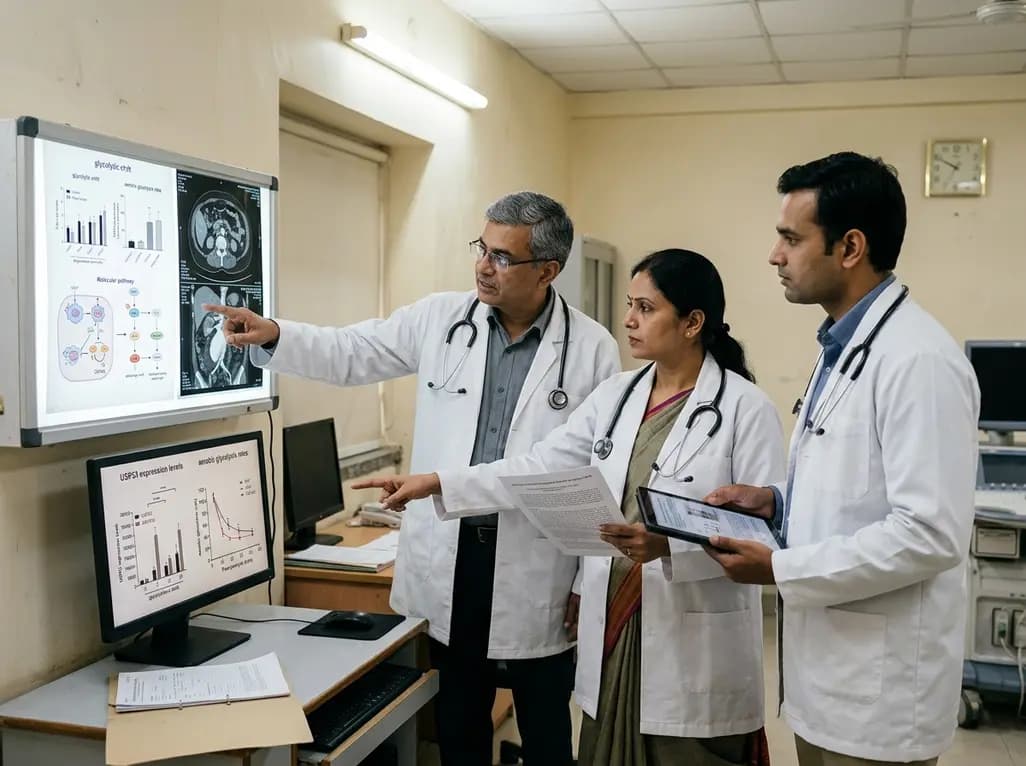
Abdominal aortic aneurysm rupture remains a catastrophic vascular emergency. Groundbreaking research reveals that USP53 accelerates aneurysm progression by reprogramming smooth muscle cell metabolism toward aerobic glycolysis, highlighting a promising target beyond conventional diameter-based surveillance.
Today
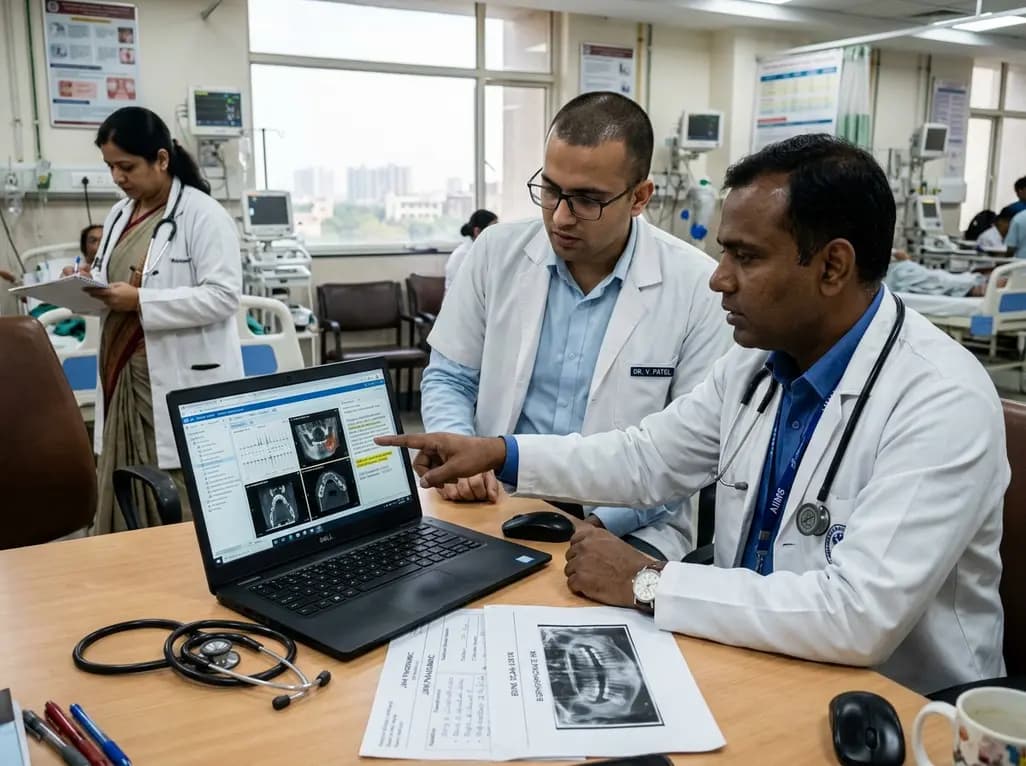
A breakthrough study leverages natural language processing to accurately identify incident medication-related osteonecrosis of the jaw and track antiresorptive drug holidays from clinical narratives in electronic health records, advancing osteoporosis pharmacovigilance and dental safety.
Today
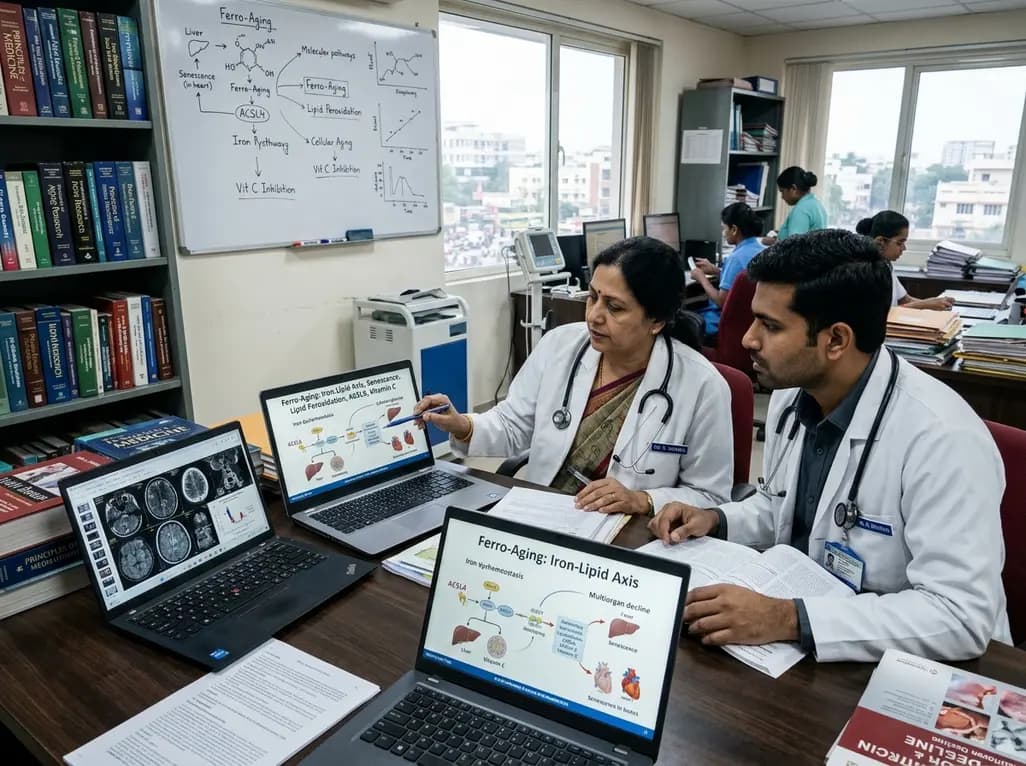
Recent research defines ferro-aging as a conserved iron-lipid axis driving organ decline across primates. Age-related iron dyshomeostasis stimulates ACSL4-mediated lipid peroxidation, promoting cellular senescence. Notably, vitamin C directly inhibits ACSL4, suppressing phospholipid oxidation and multi-organ decay.
Yesterday
