.webp&w=384&q=75)

Loading, please wait...
Loading, please wait...

India's Union Health Ministry recently introduced the National Guidelines on Fire and Life Safety in Healthcare Facilities (2026). These updated Hospital Fire Safety Guidelines address the unique risks of medical environments, such as oxygen-rich atmospheres and heavy electrical loads. Consequently, the framework prioritizes patient safety and structured emergency responses across all clinical settings. The new standards represent a significant upgrade from the 2020 version to meet modern infrastructure demands.
The 2026 framework significantly upgrades the previous 2020 version by expanding technical coverage. It introduces specialized protocols for high-risk areas, including Intensive Care Units (ICUs), Neonatal Intensive Care Units (NICUs), and operation theatres. Furthermore, it identifies critical zones like oxygen storage and electrical installations for targeted safety interventions. This risk-based strategy ensures that resources are allocated where they are most needed during a crisis. Standardized safety approaches are now mandatory for all complex medical equipment installations.
A major feature of the new document is the emphasis on phased evacuation strategies. Specifically, it recommends horizontal movement for immobile or critically ill patients to prevent life-support disruptions. This approach ensures that patients remain stable while moving away from immediate danger. Additionally, the guidelines establish a clear governance and accountability framework. This defines the specific roles of hospital administrations and safety officers to ensure a coordinated response. Designated fire safety committees will now oversee compliance and emergency readiness.
To maintain high standards, the guidelines mandate regular training and mock drills for all healthcare personnel. Staff members must participate in induction modules to reinforce a culture of safety. Moreover, institutions must conduct periodic safety audits and continuous monitoring. This alignment with the National Building Construction Standards (2026) ensures uniform safety practices across all Indian states. Following these rules will reduce fire-related risks and ensure the continuity of essential health services during emergencies.
Q1: What are the main fire risks identified in healthcare facilities?
Hospitals are particularly vulnerable due to high electrical loads, oxygen-rich environments, and the presence of complex medical equipment that can ignite or fuel fires.
Q2: What is the recommended evacuation strategy for critically ill patients?
The guidelines recommend horizontal and phased evacuation strategies. This allows immobile patients to be moved safely while maintaining their connection to essential life-support systems.
Q3: Who is responsible for fire safety according to the new framework?
The framework defines clear roles for hospital administrations, fire safety committees, and designated safety officers to ensure accountability and coordination.
Disclaimer: This content is for informational and educational purposes only. It does not constitute medical advice or replace professional judgment. Refer to the latest local and national guidelines for clinical practice.
References

Read summarized clinical updates, watch expert medical content, and earn CME certifications right from your smartphone.
Open your smartphone camera to scan and install.





The Union Health Ministry updated fire safety guidelines for 2026, focusing on patient safety, phased evacuation in ICUs, and robust accountability framewor...
4 months ago

This clinical review examines the dangerous intersection of climate change and antimicrobial resistance (AMR). It highlights thermal selection, altered transmission pathways, and the imperative for One Health and Planetary Health adaptation frameworks to preserve therapeutic efficacy.
Today
Discover the crucial distinctions between mesonephric and mesonephric-like proliferations of the female genital tract. Learn the key histomorphologic, immunohistochemical, and molecular differences essential for accurate diagnosis and clinical management.
Today
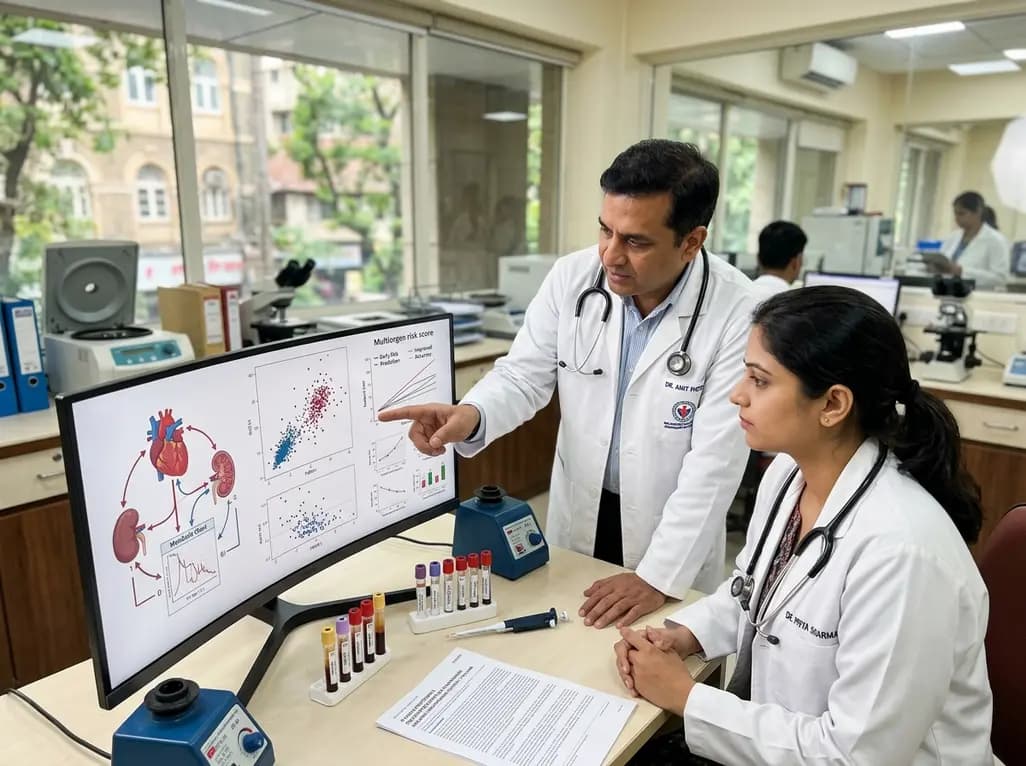
A large UK Biobank study reveals that plasma proteomic signatures capture preclinical organ damage and improve multiorgan risk prediction across early CKM syndrome stages 0 to 2 beyond traditional PREVENT clinical models.
Today
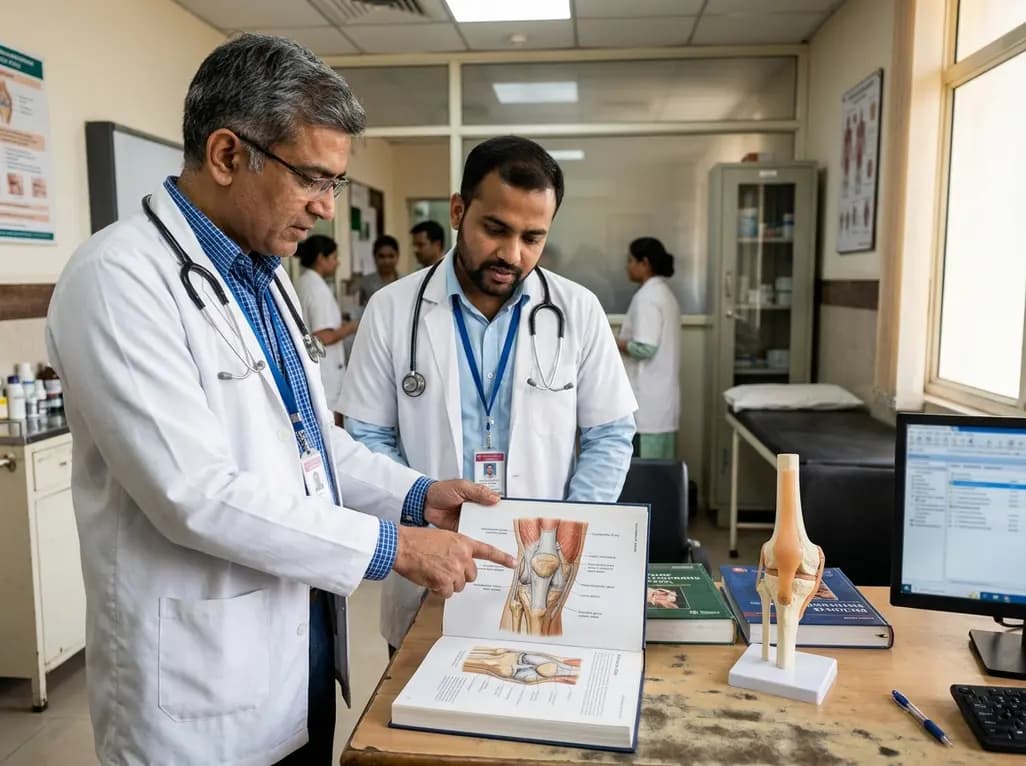
A narrative review investigates whether the articularis genus muscle functions as an independent anatomical entity or blends with the vastus intermedius. We evaluate its morphology, role in retracting the suprapatellar bursa, and direct clinical significance in anterior knee pain and arthroplasty.
Today
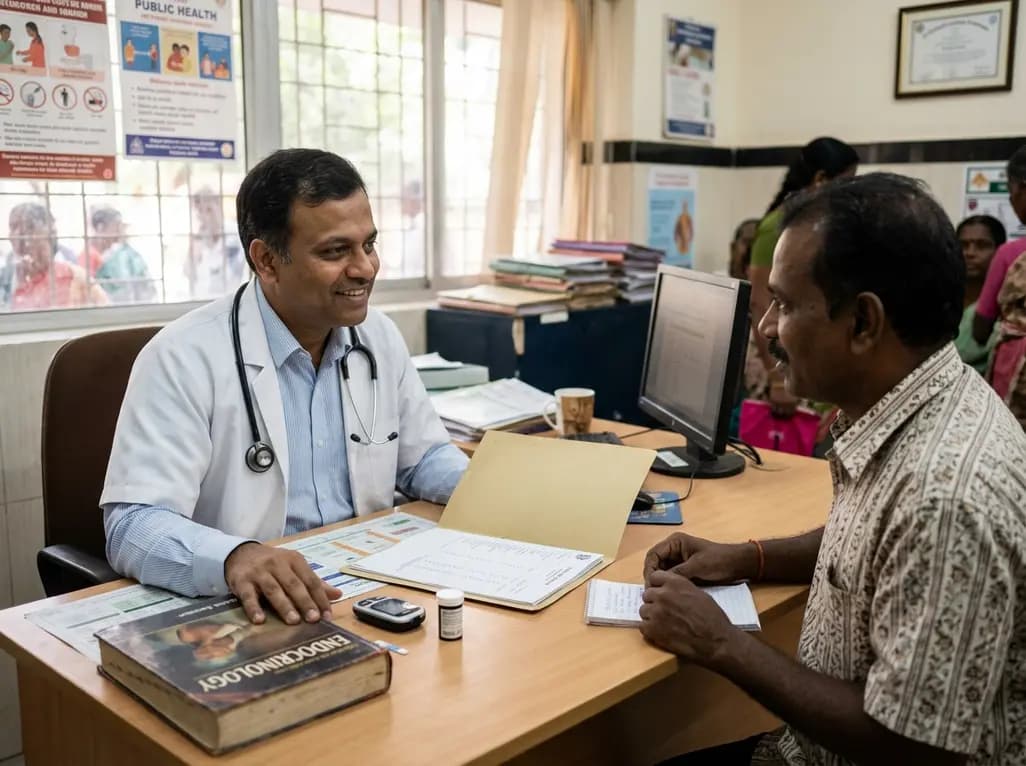
A Bayesian multilevel meta-analysis reveals that aerobic training combined with moderate carbohydrate restriction modestly lowers HbA1c in type 2 diabetes. However, sparse data and very low certainty leave incremental benefits over exercise or diet alone unproven, highlighting the need for individualized care.
Today
