.webp&w=384&q=75)

Loading, please wait...
Loading, please wait...

Effective healthcare delivery requires empathy, clarity, and continuous self-reflection. When managing serious health conditions, clinicians often encounter intricate emotional dynamics that shape clinical encounters. Consequently, adopting inclusive palliative communication serves as an essential foundation for building therapeutic trust with patients and their families. This person-centered approach demands language that acknowledges cultural diversity, respects personal dignity, and rejects rigid assumptions.
Furthermore, traditional medical terminology can unintentionally alienate vulnerable individuals during critical conversations. Clinicians frequently rely on standard clinical jargon that creates barriers rather than comfort. In contrast, thoughtful phrasing validates personal values and strengthens shared decision-making. Therefore, providers must consciously assess how their everyday speech affects emotional well-being. By prioritizing compassionate phrasing, healthcare professionals create an environment where individuals feel truly heard and respected. Ultimately, intentional listening transforms routine consultations into empowering therapeutic alliances that uphold dignity.
In 1978, Barbara Carper introduced four foundational patterns of knowing in nursing: empirics, ethics, aesthetics, and personal knowing. While empirical evidence guides technical clinical interventions, personal knowing emphasizes authentic self-awareness, human connection, and psychological presence. Consequently, this reflective framework provides a robust foundation for clinicians navigating complex palliative and end-of-life care. Through personal knowing, healthcare providers evaluate how their own beliefs, cultural backgrounds, and emotional reactions influence patient interactions.
Moreover, personal knowing enables clinicians to embrace vulnerability alongside clinical expertise. Healthcare professionals who practice deliberate self-reflection can identify subtle biases that might otherwise compromise therapeutic relationships. For example, recognizing one's personal discomfort with mortality prevents defensive communication or dismissive reassurances. Instead, clinicians cultivate authentic spaces where patients freely explore their deepest fears without judgment. Therefore, integrating personal knowing enhances relational empathy and resilience. In addition, this reflective awareness protects clinicians from moral distress and burnout during emotionally demanding scenarios.
Clinical environments frequently perpetuate subtle stigmatizing phrases that undermine patient agency. For instance, describing a patient as having "failed chemotherapy" improperly shifts the burden of disease progression onto the individual. Similarly, labeling individuals as "non-compliant" or "difficult" reflects institutional frustration rather than patient defiance. Consequently, these noninclusive terms degrade mutual trust and reinforce harmful social stigmas across clinical settings.
Furthermore, providers often use dismissive expressions such as "withdrawing care" when transitioning focus toward comfort-oriented measures. This misleading terminology implies clinical abandonment and frightens families during vulnerable moments. In response, clinicians must adopt restorative language that affirms ongoing commitment, such as "redirecting therapy toward comfort and quality of life." Additionally, avoiding battlefield metaphors, such as "fighting a losing battle," relieves patients from unrealistic psychological pressures. When teams replace combative expressions with supportive phrasing, they honor individual experience. Therefore, deliberate linguistic adjustments eliminate bias and safeguard human dignity during challenging health journeys.
Clinical scenarios illustrate how subtle linguistic shifts profoundly alter patient comprehension and emotional outcomes. In a first scenario, an oncologist informs a patient with metastatic disease that "there is nothing more we can do." This blunt phrase induces immediate panic and feelings of abandonment. Alternatively, the clinician can reframe the update: "While disease-directed treatments are no longer effective, we will aggressively manage your pain, breathlessness, and comfort." Consequently, this phrasing reassures the family of steadfast clinical support.
Similarly, a second scenario involves a patient with end-stage organ failure declining further invasive interventions. The team initially documented the choice as "patient refusing care." However, revising this documentation to "patient prioritizing home comfort and family time" honors autonomous values without negative judgment. In a third scenario, clinicians discussing goals of care often use ambiguous phrases like "letting nature take its course." Replacing this ambiguity with explicit statements emphasizing continuous symptom relief provides clarity. Thus, thoughtful phrasing guides families through complex transitions with compassion and certainty.
Transforming clinical communication requires coordinated action across individual clinicians, interdisciplinary teams, and institutional healthcare systems. At the individual level, clinicians must cultivate regular reflective practice and solicit feedback from colleagues. Furthermore, interdisciplinary team huddles offer an ideal setting to discuss challenging conversations and align communication goals before entering patient rooms. When nurses, physicians, social workers, and spiritual counselors collaborate, they reinforce unified, empathetic messaging.
Moreover, healthcare institutions must implement structural policies that support inclusive communication training. System-level interventions should incorporate experiential simulation workshops, cultural competency modules, and standardized documentation templates that discourage stigmatizing labels. For example, electronic health records can flag pejorative terminology and suggest person-centered alternatives. In addition, healthcare organizations must recruit diverse palliative teams and provide access to certified medical interpreters. Using qualified translators ensures equitable access for all patients. Therefore, systemic commitment fosters an institutional culture where inclusive dialogue flourishes naturally.
Patient autonomy represents the cornerstone of modern bioethics, particularly during advanced illness management. However, paternalistic habits often obscure patient preferences during critical care discussions. Consequently, clinicians must actively adopt communication techniques that empower individuals to articulate their values, spiritual needs, and personal goals. Using open-ended inquiries, such as "What matters most to you right now?", invites patients to lead the dialogue.
Furthermore, clinicians should practice silence as an active communication tool. Allowing intentional pauses gives patients and family members sufficient time to process distressing prognostic information. In addition, clinicians must avoid coercive phrasing that nudges families toward predetermined clinical outcomes. Instead, healthcare providers should present care options with balanced objectivity, ensuring that patients understand the benefits and burdens of each intervention. Consequently, this collaborative dynamic reinforces therapeutic rapport and minimizes emotional regret. When clinicians view patients as equal partners, they uphold fundamental ethical principles. Therefore, person-centered communication bridges technical medical interventions and compassionate advocacy.
Inclusive palliative communication significantly enhances end-of-life outcomes by cultivating emotional safety, trust, and mutual understanding between clinicians, patients, and families. Furthermore, replacing stigmatizing medical jargon with person-centered phrasing reduces anxiety and dispels common misconceptions about palliative therapy. Consequently, patients feel empowered to express their genuine preferences, resulting in tailored care plans that honor their personal dignity. Therefore, this thoughtful approach minimizes unwanted invasive interventions and optimizes comfort.
Barbara Carper's personal knowing is vital because it encourages deep self-awareness, emotional presence, and empathy in clinical practice. Moreover, it urges healthcare providers to examine their internal biases, emotional reactions, and cultural assumptions during difficult interactions. Consequently, clinicians who master personal knowing can connect authentically with patients without imposing paternalistic views. Therefore, this reflective practice strengthens the therapeutic alliance, mitigates provider burnout, and ensures compassionate, individualized care throughout severe illness trajectories.
Clinicians should avoid phrases like "withdrawing care" or "there is nothing more we can do," which provoke severe distress. Furthermore, teams must eliminate pejorative labels like "patient failed therapy" or "non-compliant," as they shift unfair blame onto the patient. In addition, clinicians should reconsider aggressive military metaphors like "fighting a battle." Instead, providers should employ supportive, constructive phrases emphasizing continuous symptom management, unwavering clinical dedication, and individualized comfort goals.
Disclaimer: This content is for informational and educational purposes only... Refer to the latest local and national guidelines for clinical practice.
References

Read summarized clinical updates, watch expert medical content, and earn CME certifications right from your smartphone.
Open your smartphone camera to scan and install.





Inclusive communication in palliative care fosters therapeutic trust, supports shared decision-making, and eliminates bias. Grounded in Carper's personal knowing, this article outlines actionable language strategies across clinical practice, interdisciplinary teams, and health systems to affirm patient dignity.
Today

A novel non-invasive approach uses mesoporous PdPt bimetallic alloy-assisted mass spectrometry and machine learning to classify spinocerebellar ataxia type 3 from plasma metabolic fingerprints with high diagnostic accuracy, advancing neurodegenerative biomarker discovery.
Today

Scandinavian register evidence reveals that neonatal birth length strongly predicts adult health and mortality, whereas birth weight dictates cognitive capacity. Symmetric growth restriction causes far more severe long-term deficits than asymmetric restriction, underscoring the need for comprehensive anthropometry.
Today

Discover how rescue cutting balloon angioplasty successfully modifies heavily calcified carotid stenosis, enabling stent delivery without baroreceptor instability and ensuring favorable long-term neurologic outcomes.
Today

A comparative cohort study evaluates clinical outcomes between isotension and low-tension fixation in arthroscopic biceps tenodesis. Discover how resting tension, shear wave elastography measurements, and functional scoring systems guide optimal surgical restoration of the long head of the biceps tendon.
Today
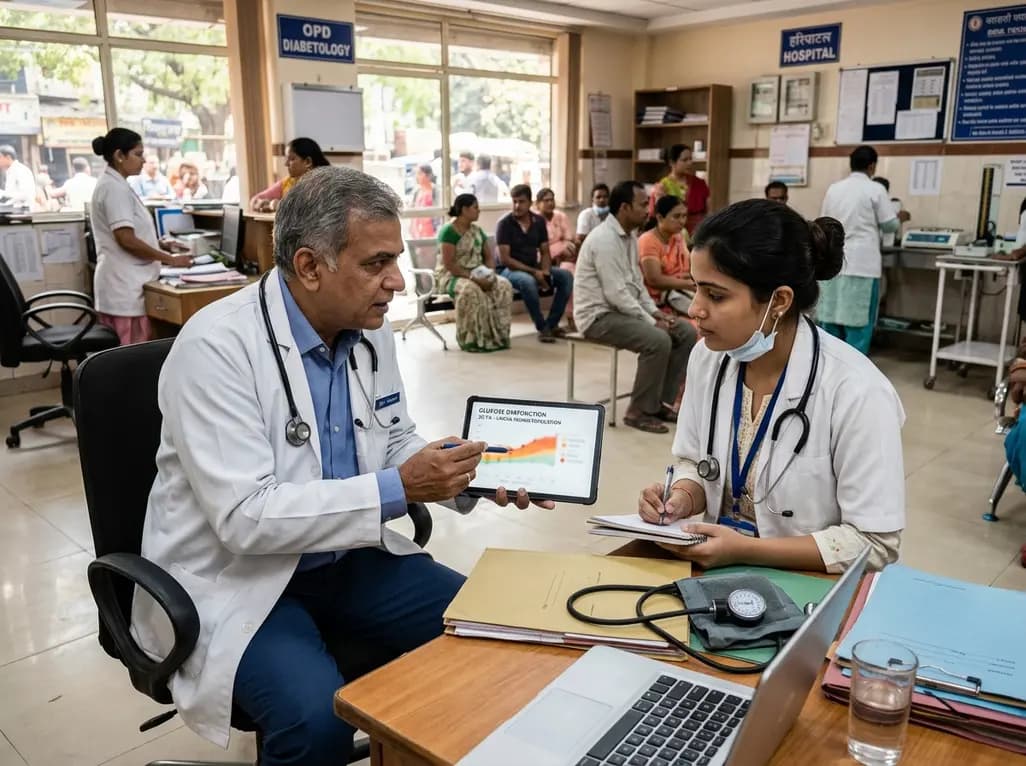
Data from the 2026 Workforce Health Index reveals that 38.7% of urban employees and dependents exhibit abnormal glycemic control. Emerging at increasingly younger ages, this metabolic shift intersects with severe vitamin deficiencies, highlighting the urgent need for early workplace screenings and targeted clinical care.
Today
