.webp&w=384&q=75)

Loading, please wait...
Loading, please wait...

Parkinson's disease progressively impairs functional communication and diminishes quality of life in most individuals. Notably, hypophonia, monotonic pitch, and dysarthria affect nearly ninety percent of diagnosed patients over time. These deficits stem from basal ganglia degeneration, causing motor stiffness and blunted vocal volume perception. Consequently, patients often fail to recognize that their speech sounds quiet, strained, or muffled to listeners. This sensory mismatch prompts considerable frustration during everyday conversations. Furthermore, speech deterioration accelerates withdrawal from family gatherings and workplace duties. Patients gradually experience profound social isolation as their conversational confidence deteriorates. Recently, qualitative investigations have explored group singing in Parkinson's as an accessible non-pharmacological avenue for speech rehabilitation. Clinicians observe that standard levodopa therapy rarely restores voice projection or conversational rhythm effectively. Therefore, multidisciplinary rehabilitation programs must provide targeted behavioral interventions early in the disease trajectory. Healthcare providers increasingly recognize that preserving communication directly shields cognitive vitality and emotional well-being. By integrating vocal exercise within supportive social formats, clinicians can help patients retain interpersonal agency despite neuropathological decline.
Choral singing activates complex neural networks that bypass damaged motor circuits in the brain. Specifically, singing engages bilateral frontotemporal pathways, recruiting intact musical processing areas to assist motor speech initiation. Rhythmic entrainment provides an external auditory pacemaker that regulates tempo, articulation rate, and syllabic cadence. Consequently, individuals with parkinsonian festinating speech achieve smoother and more intelligible vocal cadence. In addition, singing requires conscious breath pacing, which trains diaphragmatic control and maximizes respiratory efficiency. Participants repeatedly practice prolonged vowel phonation and vocal glides, thereby activating laryngeal adductor muscles. This structured muscular recruitment builds acoustic energy and sustains vocal stability across varied conversational settings. Moreover, group settings reduce the cognitive burden of individual speech drills by fostering spontaneous expressive participation. Neurologists recognize that this multi-sensory stimulation stimulates neuroplasticity across phonatory and auditory feedback loops. The social camaraderie concurrently triggers endogenous dopamine and endorphin release, countering chronic apathy and elevating patient engagement. Thus, therapeutic singing unites neurobiology with structured motor rehabilitation to produce meaningful functional adaptations.
Recent qualitative data from community-based Parkinson's choirs show marked improvements in physical vitality and vocal loudness. Participants consistently describe feeling greater physical energy after weekly choral sessions. Controlled singing requires vigorous posture correction, deep thoracic expansion, and coordinated abdominal contractions. As a result, singers strengthen expiratory muscles, which directly raises peak cough flow and airway defense mechanisms. Improved airway clearance carries crucial clinical significance, because aspiration pneumonia represents a leading cause of mortality in parkinsonian syndromes. Furthermore, patients report enhanced vocal endurance that carries over into their daily verbal interactions. Family members notice substantial increases in vocal volume without excessive strain or throat tightness. Choral warm-ups specifically target articulatory agility through repetitive consonant drills and pitch variations. Consequently, participants regain clearer articulation, making phone calls and public interactions far less exhausting. In addition, singers experience diminished vocal tremors, allowing them to communicate sustained thoughts without mid-sentence vocal fading. These physiological benefits underscore singing as a vigorous physical workout disguised as artistic leisure.
Beyond biomechanical gains, therapeutic choirs provide profound psychological support for individuals confronting chronic neurodegeneration. Depression, anxiety, and apathy frequently accompany Parkinson's disease, degrading overall quality of life. In a choir, participants encounter a safe peer community where communication struggles carry zero stigma. Therefore, members feel liberated from the pressure of keeping up with fast-paced social conversations. Shared musical performance builds genuine empathy, shared laughter, and meaningful mutual support among members. Additionally, choral synchronization fosters a powerful sense of social belonging, counteracting the pervasive loneliness that older adults face. Qualitative interviews demonstrate that singing boosts mood and provides effective coping mechanisms against disease-related distress. Patients report feeling uplifted and emotionally refreshed for several days following each rehearsal session. Moreover, choir rehearsals offer structured social routines that motivate individuals to leave home regularly. Caregivers similarly observe positive behavioral ripple effects, noting improved optimism and reduced domestic friction. Thus, choral participation transforms isolation into therapeutic fellowship, addressing the emotional burden of Parkinson's disease holistically.
A chronic neurological diagnosis often strips individuals of professional roles, hobbies, and personal identity. Many patients describe feeling reduced to a medical label defined entirely by tremors and slowness. However, participating in a singing ensemble reconstructs personal identity through collective artistic achievement. Members view themselves as contributing musicians rather than passive clinical patients. Preparing for public concerts or community performances instills tangible purpose, pride, and structure into weekly life. Consequently, this renewed sense of competence boosts general self-efficacy across non-musical activities as well. Furthermore, clinicians can adapt these findings to local healthcare environments by partnering with community choirs and music teachers. In India, where rich vocal and devotional traditions thrive, singing groups offer a culturally resonant, cost-effective rehabilitation strategy. Neurologists and geriatricians should proactively connect patients with local vocal groups alongside routine pharmacotherapy. In addition, hybrid virtual choirs can accommodate individuals facing mobility limitations or geographic barriers. Therefore, community singing bridges clinical neurorehabilitation and social life, enabling individuals to preserve dignity and self-expression.
Therapeutic singing actively trains the respiratory musculature through targeted phonatory exercises and sustained vocalizations. Consequently, patients recruit intercostal muscles and the diaphragm more effectively, which elevates subglottic pressure during speech. This process directly counteracts parkinsonian hypophonia by expanding vocal dynamic range and improving glottic closure. Furthermore, the auditory feedback inherent in choral singing recalibrates internal volume perception, enabling individuals to project their voices with greater clarity and enduring stamina.
Group singing serves as a potent complementary therapy rather than an outright substitute for evidence-based interventions like LSVT LOUD. Formal speech therapies provide customized, one-on-one calibration to treat specific speech and swallowing deficits. However, singing choirs offer sustainable long-term maintenance after intensive clinical therapy concludes. Therefore, clinicians frequently recommend choral participation as an enjoyable maintenance strategy that preserves vocal loudness, reinforces respiratory muscle training, and supports sustained social engagement over years.
Physicians should first evaluate patient mobility, dysphagia risk, and cardiovascular stability before recommending choral programs. Individuals with advanced parkinsonism may experience postural instability during standing rehearsals or vocal fatigue from excessive straining. Therefore, leaders must adapt sessions with seated options and proper hydration breaks. Additionally, clinicians should coordinate with speech-language pathologists to monitor swallowing function, ensuring that respiratory exertion does not provoke aspiration or worsen airway clearance during energetic singing tasks.
Disclaimer: This content is for informational and educational purposes only... Refer to the latest local and national guidelines for clinical practice.
References

Read summarized clinical updates, watch expert medical content, and earn CME certifications right from your smartphone.
Open your smartphone camera to scan and install.





A qualitative study reveals that weekly group singing significantly enhances vocal strength, respiratory support, and quality of life in Parkinson's disease. Beyond physical gains, therapeutic choirs counteract social isolation, reduce stigma, and rebuild self-efficacy for affected individuals.
Today
A bioengineered oral nanozyme microsupplement converts pathological ROS into a protective polydopamine hydrogel shield. By curbing neutrophil extracellular traps and balancing T cells, this platform outperforms standard 5-ASA in preclinical colitis models, opening new paths for sustained remission.
Today
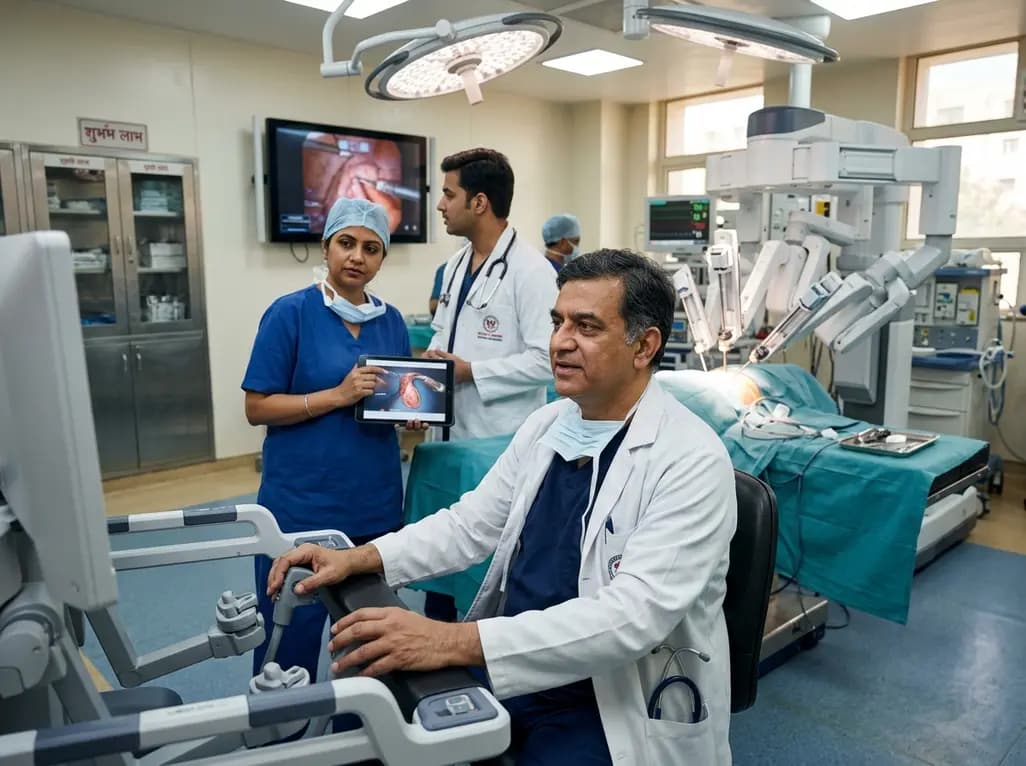
India experiences an exponential rise in robotic-assisted procedures, with Delhi NCR leading system installations and clinical volume. Discover how multidisciplinary surgical adoption, remote telesurgery breakthroughs, and standardized international consensus guidelines are shaping surgical care nationwide.
Today
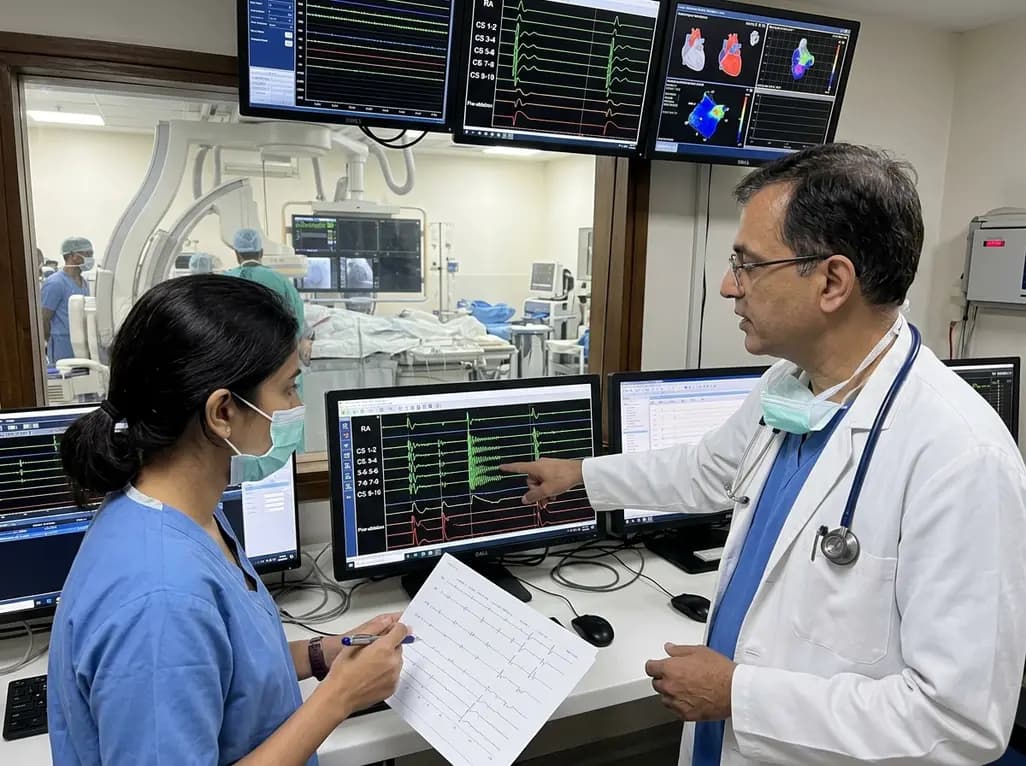
Radiofrequency catheter ablation of the cavotricuspid isthmus successfully terminates typical atrial flutter. This article reviews the mechanisms driving coronary sinus electrogram changes, wavefront activation pathways, and clinical criteria to verify bidirectional block during electrophysiology studies.
Today
A study comparing four knee flexion strength tests after ACL reconstruction using hamstring tendon autografts reveals marked variability in limb symmetry indices. Clinicians must recognize that different strength testing modalities yield divergent return-to-sport clearance rates.
Today
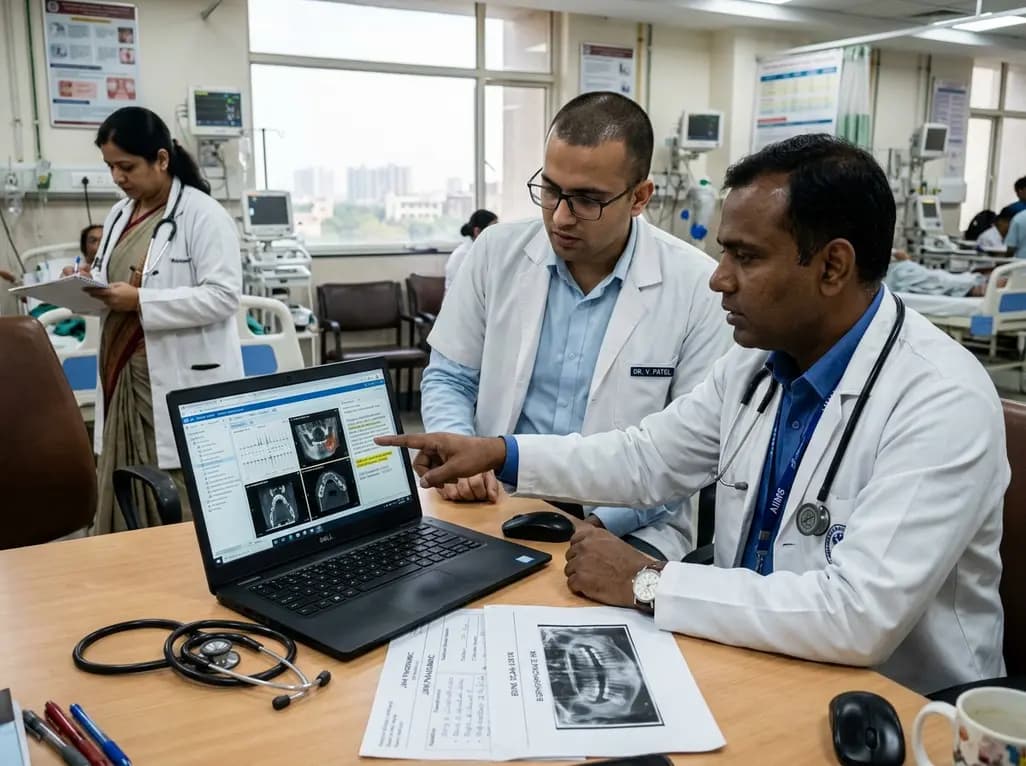
A breakthrough study leverages natural language processing to accurately identify incident medication-related osteonecrosis of the jaw and track antiresorptive drug holidays from clinical narratives in electronic health records, advancing osteoporosis pharmacovigilance and dental safety.
Yesterday
