

Loading, please wait...
Loading, please wait...
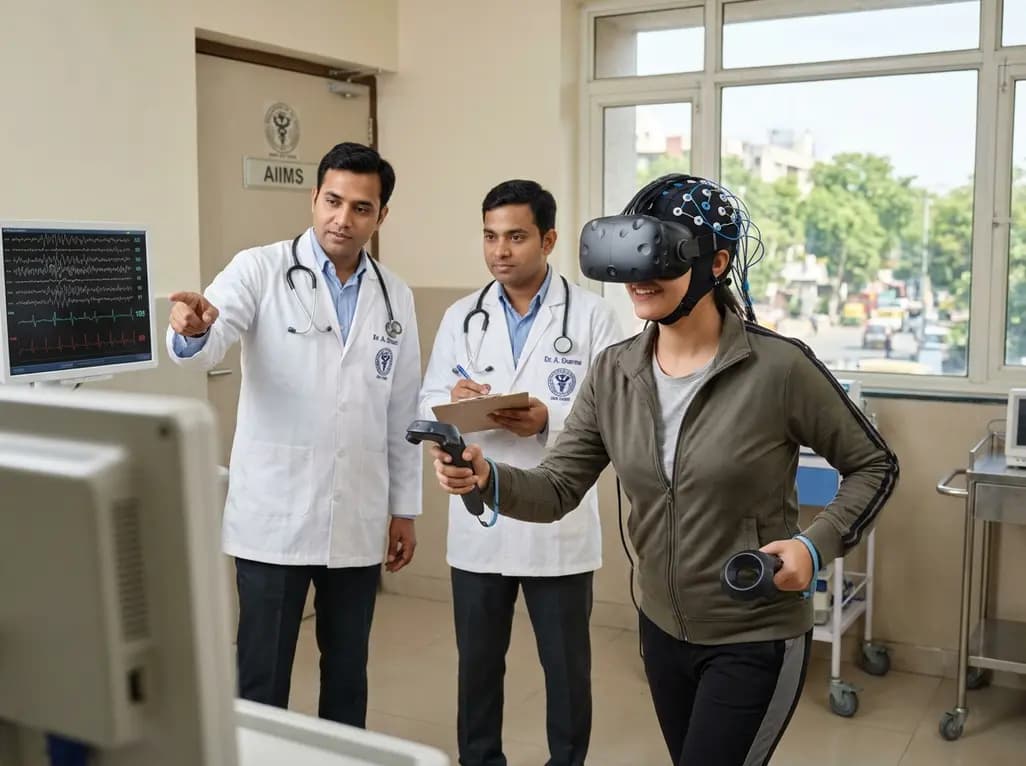
Physical activity reliably bolsters neurocognitive resilience, yet combining physical exertion with simultaneous executive demands yields even greater neuroplastic adaptations. Modern digital health increasingly leverages immersive virtual reality exergaming to heighten engagement, spatial presence, and cognitive-motor integration. While conventional aerobic training fosters broad neurobiological benefits, virtual reality introduces dynamic environments requiring continuous perceptual processing and rapid decision-making. However, rigorous clinical evidence differentiating true immersive multisensory engagement from standard screen-based workouts remains scarce. A newly registered protocol by Becerra-Alonso and colleagues establishes an experimental framework comparing head-mounted virtual exergames against matched two-dimensional screen exercises. This trial systematically investigates whether three-dimensional interactive feedback produces superior inhibitory control and neurophysiological adaptations across acute bouts and chronic training regimens.
Physical exercise triggers robust physiological cascades, including neurotrophic factor release, enhanced cerebral perfusion, and elevated monoaminergic signaling. When clinicians pair physical movement with rich sensory feedback, neural demands increase substantially across frontoparietal cognitive control networks. Therefore, immersive virtual reality exergaming operates as a dual-task stimulus that demands motor coordination while challenging selective attention and spatial updating. By fully enveloping the user within a responsive virtual environment, head-mounted displays generate a heightened sense of presence. Consequently, this immersive state minimizes real-world distractions and optimizes intrinsic goal-directed engagement. In contrast, conventional video exercises lack stereoscopic visual cues, dynamic depth perception, and individualized real-time tactile-kinesthetic corrections. Neuroscientists hypothesize that this interactive feedback loop preferentially stimulates the dorsolateral prefrontal cortex and anterior cingulate cortex. As a result, immersive exercise may stimulate synaptic plasticity more effectively than passive screen-guided workouts, providing compelling clinical value for neurorehabilitation and cognitive preservation.
Establishing rigorous experimental controls represents a major hurdle in digital health research. Previous virtual reality investigations frequently suffered from methodological discrepancies because researchers compared interactive gaming against mismatched conventional controls. In contrast, this new protocol employs an elegant comparative design that isolates immersion as the primary variable. Investigators evaluate the rhythm-based application Beat Saber using Meta Quest 2 headsets against a precisely matched video comparator condition. Consequently, both groups encounter identical playlists, musical tempos, movement choreographies, difficulty scalings, transition durations, and overall session lengths. Control participants perform the exact movement patterns while observing a prerecorded, high-definition screen display rather than wearing a headset. Because kinematics, metabolic output, and auditory inputs remain tightly aligned, any observed divergence in neurocognitive end points directly reflects the influence of immersive interactivity. This methodological rigor eliminates confounding factors, establishing a reliable standard for clinical exercise trials.
The primary cognitive end point centers on inhibitory control, quantified objectively through the validated Stroop interference index. Inhibitory control represents a foundational pillar of executive function, governing an individual's capacity to suppress prepotent motor impulses and resist distracting stimuli. In parallel, researchers record objective neurophysiological activity using high-density electroencephalography. Specifically, the confirmatory electrophysiological end point examines absolute frontal theta power across key frontal channels, specifically F3, F4, AF3, and AF4, during color-word interference challenges. Frontal midline theta oscillations, typically oscillating between 4 and 7 Hz, directly reflect cognitive control allocation, mental effort, and top-down conflict monitoring within the prefrontal cortex. By combining behavioral Stroop reaction times with precise spectral electroencephalography measures, the trial directly evaluates whether immersive virtual reality exergaming strengthens neural processing efficiency. Ultimately, these synchronized evaluations clarify whether technological immersion translates into measurable changes in functional brain architecture.
Beyond executive tasks, the protocol tracks comprehensive psychological and systemic physiological adaptations. Researchers evaluate perceived self-efficacy, subjective enjoyment, participant expectations, and acute affective states before and after sessions. Understanding emotional responses is crucial because positive affect significantly enhances neuroplasticity and long-term exercise adherence. Meanwhile, objective physiological monitoring records continuous heart rate telemetry, percentage of heart rate reserve, and tri-axial wrist accelerometry to monitor biomechanical workload and cardiovascular stress accurately. Furthermore, the investigators assess ratings of perceived exertion alongside potential technological drawbacks, specifically cybersickness and visual discomfort. Evaluating these autonomic and psychological metrics allows clinicians to distinguish true neurocognitive improvements from non-specific stress or physical fatigue. Consequently, the research generates a comprehensive profile describing how the human body and mind simultaneously adapt to immersive digital environments.
To capture both immediate transient shifts and lasting neurobiological remodeling, the trial implements two distinct phases under a single prospective registration. First, an acute crossover study enrolls up to 40 young adults aged 18 to 30 years to assess immediate post-exercise responses. Second, a 10-week randomized controlled trial assigns 64 participants to complete three structured exercise sessions weekly. In the chronic intervention, investigators conduct comprehensive evaluations at baseline, mid-intervention, post-intervention, and following a 4-week non-training washout period. This longitudinal tracking determines whether neurocognitive adaptations persist once structured training ceases. Methodologically, the investigators utilize linear mixed models that rigorously account for period effects, sequence allocation, within-session variations, and individual participant variance. Furthermore, the statistical analysis applies prespecified false discovery rate corrections across outcome families. This robust analytic structure ensures that findings reflect genuine therapeutic signals rather than statistical artifacts.
Although this study recruits healthy young adults, its overarching scientific insights carry profound clinical implications for specialized neurological care, psychiatric interventions, and athletic conditioning. Chronic lifestyle diseases and neurodegenerative disorders frequently manifest with subtle executive dysfunction and prefrontal cortical attenuation. By confirming whether immersive virtual reality exergaming delivers superior cognitive-motor stimulation, this protocol establishes a scientific rationale for scalable digital therapeutics. In clinical settings, physicians could prescribe gamified virtual reality routines to accelerate cognitive rehabilitation following traumatic brain injury or stroke. Similarly, sports medicine practitioners can deploy immersive exergaming to train reactive agility and situational decision-making under physiological fatigue. As healthcare systems explore cost-effective, home-based therapeutic technologies, scientifically validated exergaming protocols provide an evidence-based roadmap bridging physical exertion, digital innovation, and cognitive longevity.
Virtual reality exergaming stimulates executive function by integrating physical exertion with high-demand sensory-cognitive challenges. While exercising, users must continuously monitor three-dimensional space, anticipate visual targets, make split-second decisions, and inhibit inaccurate motor movements. This constant cognitive-motor coordination increases cerebral perfusion, activates frontoparietal neural pathways, and stimulates neurotrophic factor synthesis, ultimately improving cognitive control, mental speed, and working memory more effectively than repetitive exercise alone.
Frontal theta power, spanning the 4 to 7 Hz frequency band, serves as an established neurophysiological biomarker for cognitive-control allocation and prefrontal cortical engagement. Enhanced theta synchronization across frontal channels reflects active conflict resolution, focused mental effort, and the recruitment of the anterior cingulate cortex during demanding executive tasks like the Stroop interference test. Tracking theta oscillations allows researchers to measure objective neural adaptations beyond subjective behavioral responses.
Immersive exergaming can occasionally induce motion sickness, visual fatigue, or disorientation, particularly when latency or sensory mismatch occurs between physical movement and visual display. However, contemporary consumer headsets offer rapid refresh rates, accurate inside-out tracking, and reduced latency, which significantly lower these adverse risks. Structured clinical protocols systematically measure cybersickness and exertion to ensure that virtual exercise regimens remain well-tolerated, safe, and physiologically effective.
Disclaimer: This content is for informational and educational purposes only... Refer to the latest local and national guidelines for clinical practice.
References
Becerra-Alonso M et al. Immersive Virtual Reality Exergaming vs Video-Guided Screen-Based Exercise for Cognitive and Neurophysiological Adaptations in Young Adults: Protocol for Acute and Chronic Experimental Studies. JMIR Res Protoc. 2026 Nov 12. doi: 10.2196/105801. PMID: 43019538.
Huang KT. Exergaming Executive Functions: An Immersive Virtual Reality-Based Cognitive Training for Adults Aged 50 and Older. Cyberpsychol Behav Soc Netw. 2020;23(9):598-604.
Sudo M et al. The Effects of Acute Virtual Reality Exergaming on Mood and Executive Function: Exploratory Crossover Trial. JMIR Serious Games. 2022;10(3):e38450.

Read summarized clinical updates, watch expert medical content, and earn CME certifications right from your smartphone.
Open your smartphone camera to scan and install.





A landmark trial protocol evaluates how immersive virtual reality exergaming modulates inhibitory control, frontal theta power, and physiological responses compared to matched video-guided workouts in young adults, shedding light on neurocognitive adaptations.
Today

A new study demonstrates how explainable AI guides transparent fall risk prediction models in older adults. By pairing random survival forests and SHAP with Cox regression, researchers achieved superior accuracy and eliminated unneeded variables, enhancing clinical decision-making and patient safety.
Today

Ascertainment bias in cancer case-control studies inflates odds ratios and penetrance estimates when cases are drawn from high-risk clinics. A landmark modeling study demonstrates substantial bias ranging up to 23.72, highlighting the critical need for ascertainment adjustment in genetic risk counseling.
Today

Researchers demonstrate that central induction of synthetic torpor in non-hibernating rats provides striking cardioprotection, reducing myocardial infarct size by ~40% during ischaemia-reperfusion injury through endogenous survival signaling, independent of hypothermia.
Today
A prospective study evaluates DeepSeek for knee osteoarthritis outcomes. While the model excels at baseline diagnosis and clinical scoring, its six-month prognostic predictions fall short of clinicians and simple persistence models, demonstrating high run-to-run variability.
Today

A novel fluorine-functionalized near-infrared copper fluorescent probe selectively illuminates lung tissue, revealing critical links between hyperglycemia, ER stress, and pulmonary malignancy for improved early diagnosis.
Today
