.webp&w=384&q=75)

Loading, please wait...
Loading, please wait...

The Meghalaya Cabinet recently approved the IIPH Shillong State University Bill 2026. This landmark decision marks a significant step forward for healthcare education in India. Chief Minister Conrad K Sangma chaired the meeting that cleared the way for this transition. Consequently, the institute can now award degrees to public health graduates and scholars independently.
This move aims to strengthen academic autonomy for the institution. It positions the institute as a center of excellence for research. Furthermore, it will boost capacity building for public health studies across the Northeast. Therefore, medical professionals in the region will benefit from enhanced training opportunities. The government expects this change to attract more scholars to the state.
Additionally, the cabinet approved the Meghalaya State Policy for promoting Anganwadi workers. This policy aims to help workers advance to supervisor roles through clear career progression. As a result, the Integrated Child Development Services (ICDS) framework will see improved functioning. Moreover, the state granted a no-objection certificate for infrastructure expansion at Eco Resort, Nongkhlaw. These combined efforts highlight the government\'s focus on both education and social welfare.
Q1: What is the main objective of the IIPH Shillong State University Bill?
The bill aims to upgrade the Indian Institute of Public Health into a state university. This allows the institute to grant degrees and enhances its research autonomy in the public health sector.
Q2: How will this decision affect public health research in the Northeast?
By becoming a state university, the institute becomes a center of excellence. It will lead research initiatives and capacity building tailored specifically for the unique needs of the Northeast region.
Q3: What changes are being made to the Anganwadi system in Meghalaya?
The cabinet approved a new policy for the promotion of Anganwadi workers to supervisors. This update improves career progression and strengthens the ICDS framework within the state.
Disclaimer: This content is for informational and educational purposes only. It does not constitute medical advice or replace professional judgment. Refer to the latest local and national guidelines for clinical practice.
References

Read summarized clinical updates, watch expert medical content, and earn CME certifications right from your smartphone.
Open your smartphone camera to scan and install.





Meghalaya Cabinet approves Bill to upgrade IIPH Shillong into a state university, enhancing public health research and academic autonomy in the Northeast....
7 months ago

Explore why official drug package inserts fail to reflect modern evidence for clozapine prescribing. Learn how legal standards of care, case law, slow titration, and vital adverse event monitoring empower clinicians to prioritize evidence-based medical practice over outdated manufacturer labeling.
Today
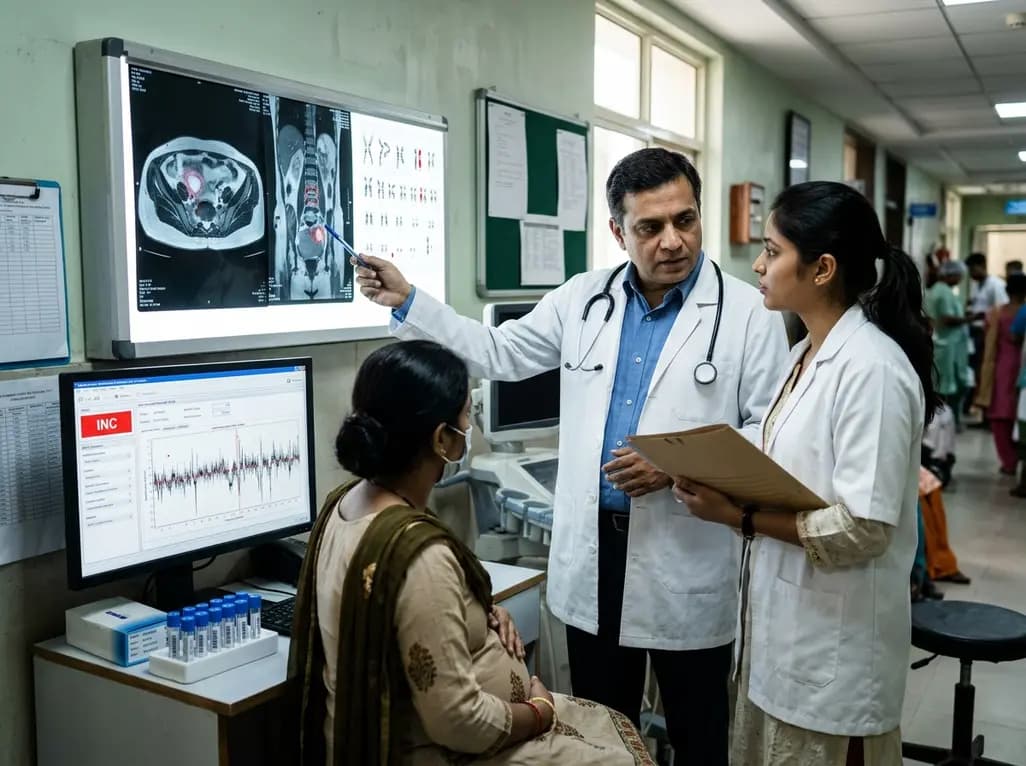
Occult maternal malignancy accounts for 3.82% of persistent unreportable NIPT results with genomic noise. Multiple chromosomal aberrations, notably on chromosome 18, warrant thorough oncological evaluation and whole-body MRI to ensure timely maternal diagnosis while preserving fetal care.
Today
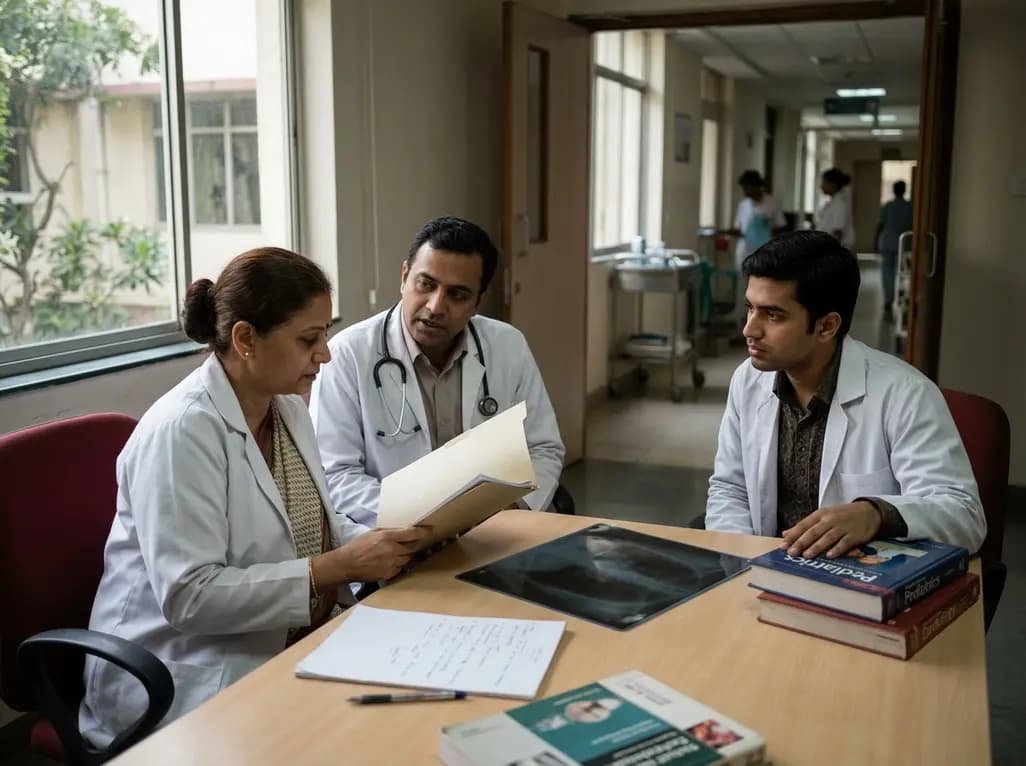
This article reviews the forensic and clinical complexities of acute myocarditis arising on left ventricular hypertrophy in children, highlighting early diagnostic red flags and multidisciplinary postmortem autopsy protocols.
Today
A randomized controlled trial demonstrates that an eight-week dual-task training intervention significantly improves static and dynamic postural control over standard balance exercises in individuals with chronic ankle instability, addressing critical neurocognitive deficits during athletic and daily activities.
Today

A retrospective cohort study of 7,716 ICU patients from the MIMIC-IV database demonstrates that Gradient Boosting Decision Trees significantly outperform traditional SOFA scores in predicting in-hospital mortality among patients with sepsis and diabetes, with SHAP analysis providing clinical interpretability.
Today
