.webp&w=384&q=75)

Loading, please wait...
Loading, please wait...

Refining mHSPC biomarker prognosis remains an essential priority for oncologists managing advanced prostate cancer. The insulin-like growth factor (IGF) signaling axis plays a pivotal role in cellular proliferation, apoptosis resistance, and malignant progression. Within this endocrine network, circulating IGF-1 binds transmembrane tyrosine kinase receptors to stimulate downstream oncogenic signaling cascades. Conversely, insulin-like growth factor binding protein 1 (IGFBP1) regulates ligand bioavailability by sequestering free IGF-1. Consequently, an elevated IGFBP1 concentration diminishes bioavailable active peptides while signaling systemic metabolic dysregulation. Moreover, hepatic production of IGFBP1 increases markedly during catabolic stress, chronic inflammation, and severe insulin resistance. Preclinical models demonstrate that altered IGF signaling interacts extensively with the androgen receptor pathway. Therefore, fluctuations in bioavailable IGF peptides directly influence how castrate-sensitive tumor clones respond to systemic hormone suppression. In addition, earlier clinical investigations established that low circulating IGF-1 relative to binding proteins predicts accelerated disease progression. Thus, baseline circulating ratios provide crucial insights into host-tumor biology and metabolic resilience. Ultimately, evaluating these circulating endocrine markers helps clinicians identify hidden biological risks beyond traditional anatomical staging parameters.
The international phase 3 ENZAMET trial demonstrated substantial survival gains from adding enzalutamide to standard androgen deprivation therapy. In this correlative post-hoc investigation, researchers analyzed baseline plasma samples from 845 enrolled participants. Investigators measured circulating concentrations of IGF-1 and IGFBP1 prior to commencing systemic therapy. Furthermore, they categorized the entire patient cohort into tertiles according to baseline IGF-1:IGFBP1 ratios. The statistical evaluation revealed striking prognostic associations across survival outcomes. Specifically, participants in the upper two tertiles exhibited significantly superior overall survival compared to the lowest tertile (hazard ratio 0.75, p = 0.008). Additionally, these men achieved a meaningful improvement in clinical progression-free survival (hazard ratio 0.82, p = 0.034). Interestingly, baseline metastatic disease burden did not drive these divergent outcomes. Approximately 50 percent of participants in both the high-ratio and low-ratio cohorts presented with high-volume disease. Therefore, these survival differences emerged independently of baseline anatomical tumor volume. These robust results directly corroborate earlier findings from the CHAARTED trial. Consequently, this analysis validates that a higher baseline ratio consistently identifies patients with inherently favorable clinical trajectories.
Distinguishing between prognostic and predictive biomarkers is fundamental to modern precision oncology practice. In the ENZAMET trial, the circulating IGF-1 to IGFBP1 ratio displayed strong prognostic significance across all treatment arms. However, the biomarker failed to predict differential benefit from specific systemic therapies. Statistical interaction tests showed no significant interaction between the ratio and enzalutamide therapy. Similarly, the biomarker showed no predictive interaction with early docetaxel chemotherapy. Thus, clinicians cannot use this circulating ratio to guide docetaxel administration or select enzalutamide. Nevertheless, the biomarker provided independent prognostic clarity within defined clinical subgroups. Among participants allocated to enzalutamide, the ratio independently predicted overall survival and progression-free survival in bivariable analyses with docetaxel use. Accordingly, the biomarker reflects underlying host biological resilience rather than sensitivity to cytotoxic agents. These observations suggest that circulating IGF peptides capture tumor aggressiveness across diverse therapeutic backbones. Consequently, treating clinicians should recognize the IGF axis as a general prognostic indicator rather than a tool for treatment selection.
Applying mHSPC biomarker prognosis concepts in daily practice helps refine clinical risk assessment. Traditional oncology frameworks rely primarily on tumor volume and anatomical metastatic distribution to plan therapy. However, clinical staging parameters do not assess host metabolic status or systemic inflammation. Patients with a low baseline IGF-1:IGFBP1 ratio face shorter overall survival regardless of tumor volume. Therefore, recognizing metabolic vulnerability helps oncologists identify high-risk individuals requiring close follow-up. Moreover, poor metabolic health often correlates with accelerated sarcopenia, insulin resistance, and reduced treatment tolerance. Consequently, targeted nutritional interventions and metabolic optimization could support these vulnerable patients during intensive cancer treatment. In contrast, patients with a high ratio experience sustained disease control with standard therapy. As clinicians manage diverse patient cohorts, accessible circulating biomarkers provide practical insights into disease biology. Ultimately, integrating metabolic indicators with standard clinical staging creates a more comprehensive and personalized prognostic framework for clinical practice.
Consistent validation across both CHAARTED and ENZAMET reinforces the clinical relevance of the IGF axis in advanced prostate cancer. Nevertheless, several translational steps remain necessary before adopting this biomarker into clinical practice. First, laboratories must establish uniform reference ranges and standardized assay platforms for circulating IGF-1 and IGFBP1 concentrations. Second, prospective clinical trials must examine whether lifestyle modifications or pharmacological therapies targeting metabolic pathways can improve oncologic survival. Furthermore, combining endocrine markers with tumor genomic tools may enhance overall prognostic precision. For example, genomic classifiers predict docetaxel responsiveness, whereas metabolic ratios indicate systemic host resilience. Therefore, combining host metabolic profiling with tumor genomics could guide treatment selection and patient monitoring. Additionally, future trials should explore how the IGF axis behaves during modern triplet regimens. As precision oncology advances, liquid biomarkers offer practical, minimally invasive tools for clinical evaluation. Consequently, ongoing investigations will determine how clinicians can best integrate metabolic markers into routine prostate cancer care.
The ratio reflects the functional balance between bioactive growth signaling and systemic metabolic regulation. Circulating IGF-1 promotes tumor cell growth and inhibits apoptosis through tyrosine kinase pathways. Conversely, elevated IGFBP1 sequesters IGF-1 and indicates metabolic exhaustion, catabolism, or severe systemic inflammation. A higher ratio signifies preserved anabolic balance and superior host fitness, which correlates with significantly improved progression-free and overall survival in patients with metastatic disease.
Currently, clinicians should not use this ratio to select between doublet and triplet therapy regimens. Post-hoc analysis from the ENZAMET trial demonstrated that the ratio lacks predictive capability regarding docetaxel or enzalutamide benefit. Statistical tests revealed no significant interaction between biomarker levels and treatment efficacy. Therefore, while a low ratio identifies patients with higher risk of mortality, treatment intensification decisions must still rely on established clinical guidelines and genomic profiling tools.
The prognostic independence occurs because tumor burden and host metabolism reflect different biological processes. In the ENZAMET cohort, high-volume metastatic disease appeared equally distributed across both high and low biomarker tertiles. While radiographic volume measures anatomical tumor extent, the IGF-1 to IGFBP1 ratio captures systemic metabolic health, insulin resistance, and catabolic decline. Consequently, an unfavorable metabolic state accelerates disease progression and shortens overall survival regardless of initial radiographic tumor burden.
Disclaimer: This content is for informational and educational purposes only... Refer to the latest local and national guidelines for clinical practice.
References

Read summarized clinical updates, watch expert medical content, and earn CME certifications right from your smartphone.
Open your smartphone camera to scan and install.





A post-hoc analysis of the phase 3 ENZAMET trial demonstrates that a higher baseline IGF-1:IGFBP1 ratio correlates with improved overall and progression-free survival in metastatic hormone-sensitive prostate cancer, establishing the metabolic axis as a consistent prognostic biomarker across modern systemic therapies.
Today

A systematic review examined preclinical studies on mesenchymal stem cell therapy and gut microbiota modulation, revealing inconsistent microbial shifts, substantial risk of bias, and an absence of direct evidence for managing systemic hypertension.
Today
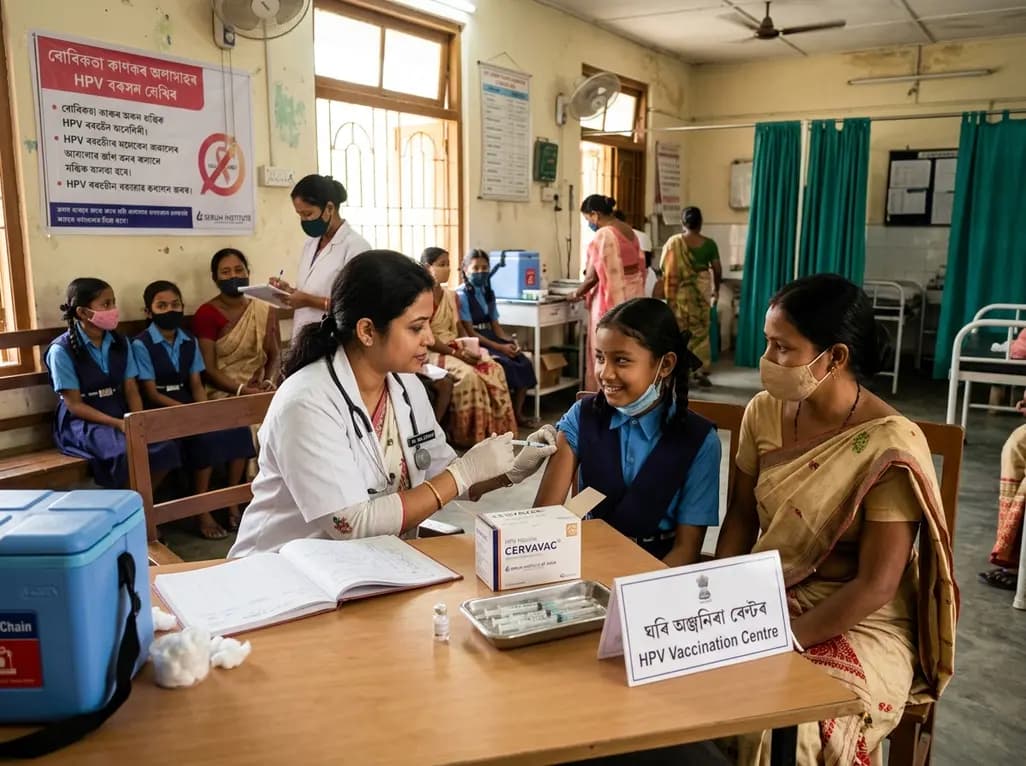
An independent clinical evaluation from Assam confirms the excellent safety profile of CERVAVAC, India's indigenous HPV vaccine. Evaluating 3,800 doses administered to 2,000 young girls, researchers documented zero serious adverse events, providing critical real-world evidence to resolve vaccine hesitancy.
Today
This clinical analysis examines heparin-free versus heparin-containing Impella purge solutions in patients receiving concomitant ECMO support (ECPELLA). Evidence suggests anticoagulant-free purges maintain device patency while reducing bleeding risks, offering a viable strategy alongside systemic anticoagulation.
Today

A 10-year Markov state-transition model shows minimally invasive tubular decompression dominates open laminectomy for pure lumbar spinal stenosis, yielding 5.95 vs 5.91 QALYs and saving $4,167 per patient through reduced complications and lower index costs.
Today

A preclinical study demonstrates that naringin-loaded phytosomes significantly enhance oral bioavailability and provide neuroprotective efficacy in diabetic neuropathy by dampening inflammation, reducing oxidative stress, and relieving neuropathic pain.
Today
