.webp&w=384&q=75)

Loading, please wait...
Loading, please wait...
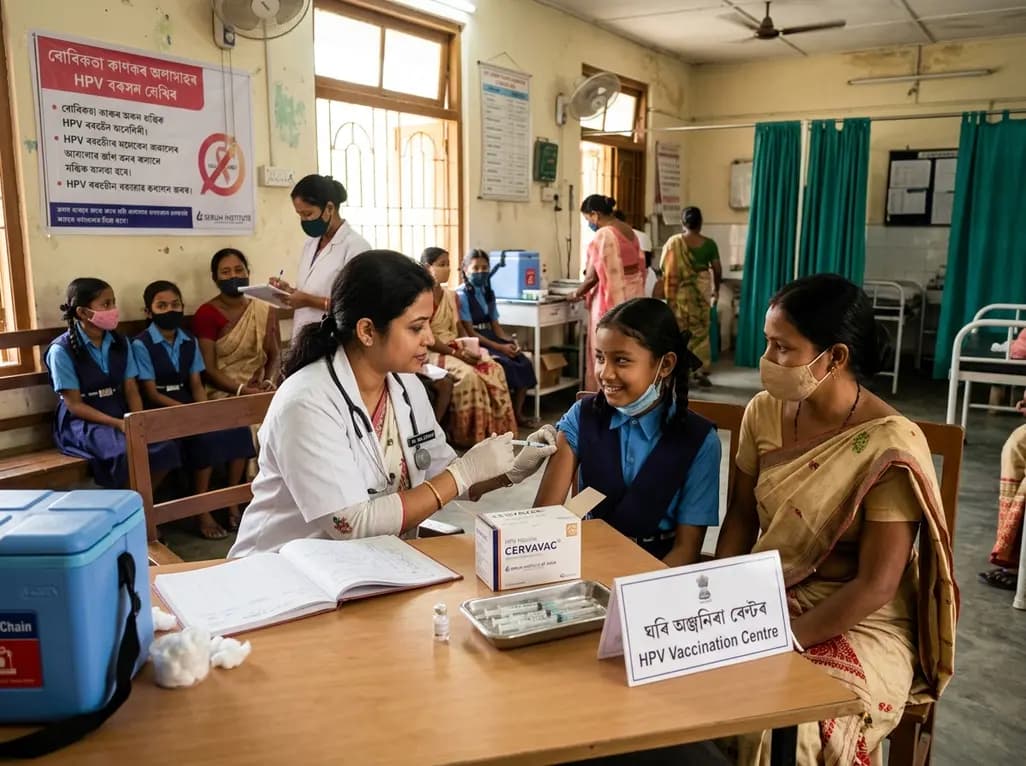
Cervical cancer represents a severe public health burden across India. Consequently, systematic prophylactic immunization offers the most reliable strategy against oncogenic infection. A recent prospective study from Assam provides reassuring real-world evidence regarding CERVAVAC vaccine safety among adolescent girls. Published in the Annals of Oncology Research and Therapy, this independent evaluation monitored thousands of doses. Therefore, these clinical findings equip medical professionals with essential evidence to guide daily practice.
Dr. Gayatri Gogoi from Assam Medical College led this landmark evaluation alongside Dr. Dippy Aggarwal and Amay Kashyap Deka. Together, the researchers assessed an inaugural cohort of 2,000 girls aged nine years and older. The public health initiative delivered 3,800 total doses of India's indigenous quadrivalent vaccine between March 2025 and February 2026. Most recipients completed their scheduled multi-dose regimens without experiencing programmatic interruptions.
Notably, the investigators prospectively monitored participants throughout the entire immunisation cycle. Clinicians documented local reactions, systemic events, and general health metrics following every scheduled appointment. Furthermore, researchers observed zero serious adverse events following immunisation across the complete cohort. In fact, clinical outcomes closely aligned with findings from earlier pre-licensure registrational trials. Thus, the Assam data confirms that this indigenous formulation performs reliably in real-world community environments. Pediatricians and oncologists can therefore recommend this vaccine with heightened confidence. In addition, these rigorous observations establish a reliable framework for regional cancer prevention efforts. Consequently, the study provides concrete evidence that indigenous manufacturing matches international safety benchmarks.
Post-marketing surveillance represents a vital requirement for confirming biologic safety after widespread deployment. In this northeastern cohort, clinicians documented an exceptionally benign adverse event profile. Specifically, mild injection site pain occurred in only 6.1 percent of recipients after immunization. A small fraction of recipients also experienced transient localized erythema and mild swelling near the deltoid region. However, these localized discomforts resolved spontaneously within forty-eight hours without medical therapy.
Importantly, the researchers recorded zero severe allergic reactions or anaphylactic episodes following any injection. Moreover, participants developed no neuroinflammatory conditions, chronic systemic illnesses, or unexplained hospital admissions throughout the observation period. Healthcare providers recognize that mild injection site soreness naturally accompanies intramuscular vaccine administration. Consequently, the investigators concluded that CERVAVAC demonstrates a tolerability profile indistinguishable from standard pediatric vaccinations. Therefore, clinicians must explain these anticipated local phenomena during pre-vaccination counseling. As a result, adolescent recipients and their guardians navigate the vaccination experience without undue anxiety. Furthermore, thorough post-injection monitoring protocols ensure immediate safety during all clinical encounters. Additionally, systematic adverse event tracking reassures regulatory authorities about the consistent quality of manufactured vaccine batches.
Vaccine hesitancy often impedes the successful implementation of preventive oncology programs in India. Initially, participating communities harbored widespread apprehension regarding the safety of a relatively new indigenous vaccine. Social media platforms frequently circulate unfounded rumors linking HPV immunisation to future infertility and autoimmune disorders. Consequently, early enrollment efforts encountered palpable hesitation among cautious parents and community leaders.
However, the Assam team tackled these reservations through direct educational engagement and transparent scientific communication. Dr. Gogoi highlighted that robust clinical evidence remains the most potent instrument for debunking pseudoscientific narratives. When community members witnessed participants completing their doses without untoward events, skepticism rapidly diminished. Indeed, vaccinated girls resumed their school routines and extracurricular activities immediately without disruption. As a result, initially hesitant families became active proponents of the immunisation campaign within their social circles. Therefore, healthcare providers must consistently utilize empirical local data during patient consultations. In addition, sharing verified clinical evidence prevents digital rumors from undermining vital preventive healthcare decisions. Thus, proactive scientific transparency transforms community attitudes and strengthens broad immunization acceptance. Such clinical leadership dismantles entrenched social barriers against routine adolescent vaccination.
Mobilizing thousands of adolescent recipients requires extensive multi-sectoral coordination and strong organizational infrastructure. The Pratishruti Cancer and Palliative Trust in Dibrugarh served as a critical operational partner during this landmark campaign. Non-governmental organisations facilitated grassroots communication, addressing parental questions and organizing neighborhood registration drives. Furthermore, local academic centers and schools provided convenient community venues for vaccination sessions.
Notably, this coordinated initiative established a national record for non-governmental HPV immunisation volume achieved within a single year. Structured administrative workflows ensured rigorous monitoring and high participant retention across subsequent vaccine doses. Moreover, local health workers maintained continuous contact with enrolled families to track potential adverse events systematically. Consequently, the program demonstrated how civil society organizations can bridge persistent healthcare delivery gaps in underserved areas. Similar operational blueprints could expand immunisation coverage across other northeastern regions and rural Indian districts. Importantly, academic medical centers provided technical oversight and clinical validation throughout every phase. Therefore, this public-private synergy provides a scalable template for upcoming provincial vaccination drives. In addition, close institutional cooperation builds enduring trust among vulnerable rural populations. Ultimately, collaborative delivery channels help healthcare systems achieve sustainable equitable coverage.
Cervical carcinoma imposes a catastrophic clinical and socioeconomic burden on Indian women and families. Historically, prohibitive retail pricing of imported vaccines restricted preventative access to affluent urban populations. In contrast, indigenous production by the Serum Institute of India makes preventative oncology substantially more affordable. The Assam experience demonstrates that affordable domestic biologics achieve exceptional safety profiles in community settings.
Furthermore, accelerating adolescent vaccination directly advances the World Health Organization mandate to eliminate cervical cancer by 2030. That global strategy targets ninety percent vaccination coverage among girls aged fifteen years and younger. Accordingly, robust real-world data from northeastern India provides vital evidence for national immunisation advisory committees. Gynecologists, pediatricians, and primary care physicians can cite this peer-reviewed study to champion adolescent immunisation. Thus, combining cost-effective domestic vaccines with organized screening programs will steadily curtail invasive cervical malignancies nationwide. Continued post-licensure evaluation will further consolidate clinician confidence across upcoming demographic cohorts. Specifically, domestic manufacturing protects national health sovereignty against international supply shortages. Therefore, large-scale adoption will protect millions of young lives across forthcoming generations. Ultimately, widespread immunisation remains the most effective clinical intervention for eradicating this preventable cancer. Indian clinicians now possess conclusive evidence to lead this historic public health transformation.
Q1: What adverse events occurred during the Assam CERVAVAC vaccination study?
The Assam study documented only mild, transient injection site pain in 6.1 percent of vaccinated individuals. A very small proportion of recipients also reported minor localized swelling and erythema at the injection site. Importantly, investigators recorded zero serious adverse events following immunisation, anaphylaxis, or systemic complications across all 3,800 doses administered. All reported local reactions resolved spontaneously within a couple of days without requiring any medical intervention.
Q2: Why is real-world safety evidence essential for overcoming HPV vaccine hesitancy?
Real-world evidence is indispensable because public apprehension and digital misinformation frequently hinder vaccine uptake. While randomized clinical trials demonstrate initial efficacy, community-based cohort studies validate safety across diverse populations and field conditions. Consequently, showing that 2,000 adolescent girls experienced zero serious complications reassures parents, educators, and healthcare practitioners. This empirical reassurance dismantles unscientific rumors regarding chronic toxicity and significantly bolsters overall community participation in cancer prevention campaigns.
Q3: How does CERVAVAC compare with globally established HPV vaccine formulations?
CERVAVAC is India's first indigenously developed quadrivalent HPV vaccine targeting oncogenic types 16 and 18, along with types 6 and 11. Clinical evaluations and real-world cohort findings demonstrate that its immunogenicity and safety profiles parallel established global vaccines like Gardasil. However, domestic manufacturing by the Serum Institute of India drastically reduces production costs. Therefore, CERVAVAC provides an equally safe, effective, and economically viable alternative for widespread national immunisation programs.
Disclaimer: This content is for informational and educational purposes only. It does not constitute medical advice or replace professional judgment. Refer to the latest local and national guidelines for clinical practice.
References

Read summarized clinical updates, watch expert medical content, and earn CME certifications right from your smartphone.
Open your smartphone camera to scan and install.





An independent clinical evaluation from Assam confirms the excellent safety profile of CERVAVAC, India's indigenous HPV vaccine. Evaluating 3,800 doses administered to 2,000 young girls, researchers documented zero serious adverse events, providing critical real-world evidence to resolve vaccine hesitancy.
Today

India's health ministry has instructed state authorities to confiscate unapproved oral nicotine products and prosecute unauthorized sellers. Although marketed as smokeless harm-reduction tools, these pouches deliver high doses of nicotine, posing significant cardiovascular, mucosal, and addiction hazards for patients.
Today
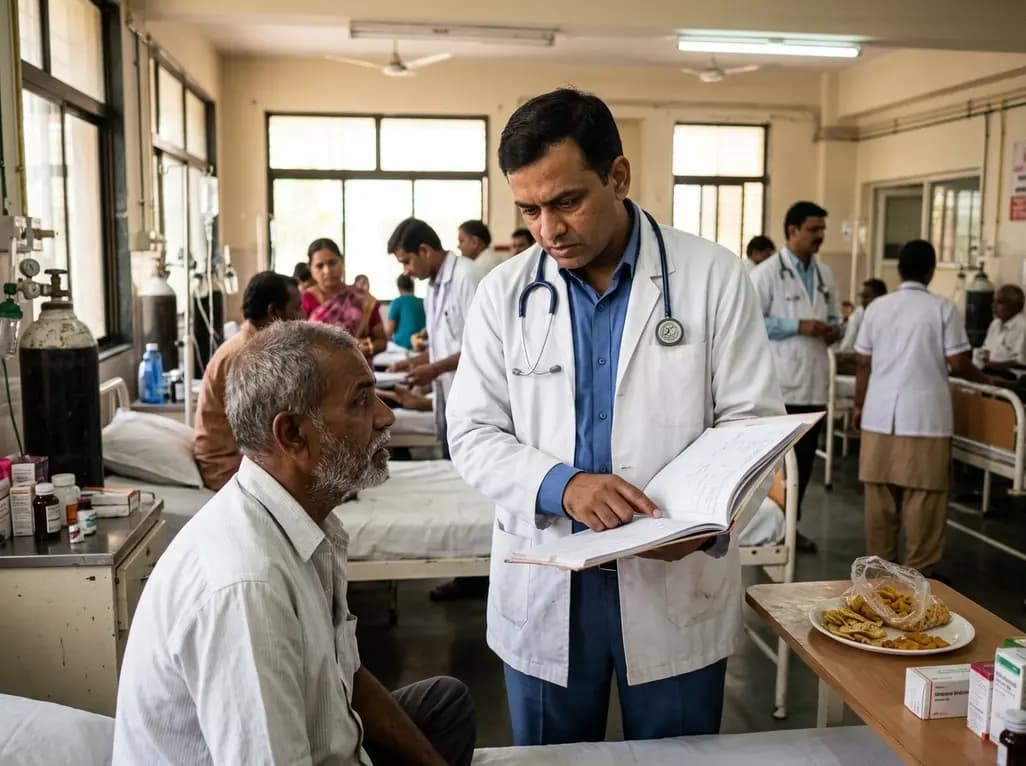
Maharashtra FDA Commissioner Tukaram Mundhe warns that widespread non-compliance with food standards is driving a surge in non-communicable diseases. Healthcare professionals must bridge clinical practice with nutritional vigilance, recognizing dietary quality as a primary driver of premature cardiometabolic conditions.
Today
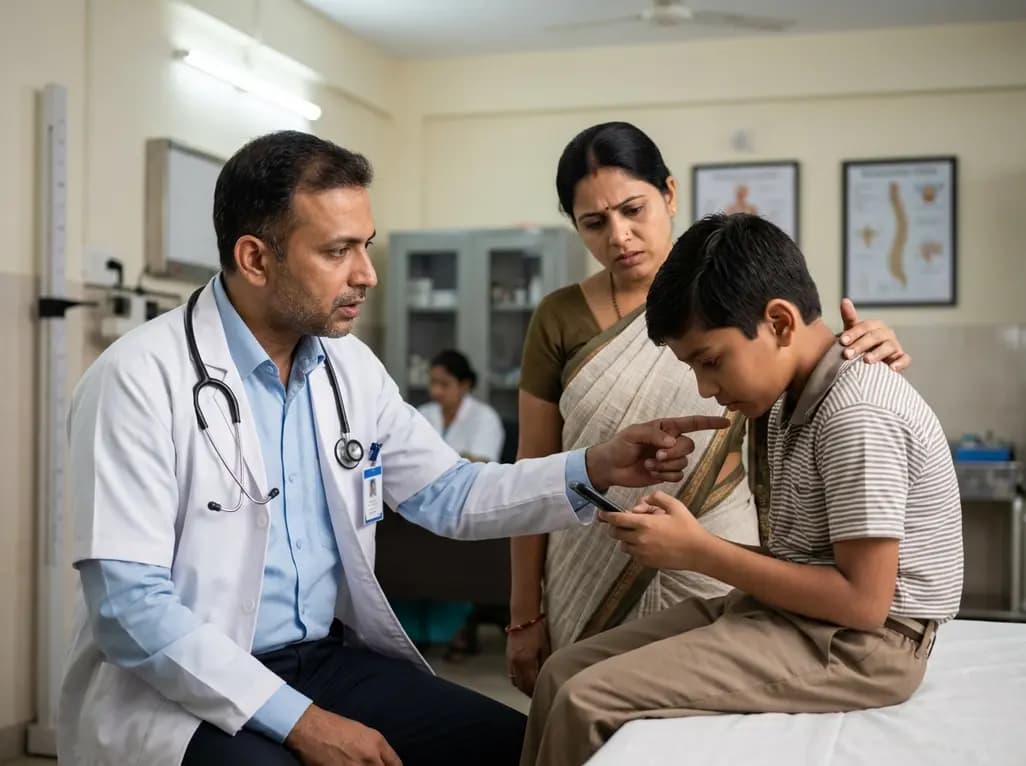
Excessive screen exposure and sedentary routines are driving a silent surge in musculoskeletal pain among young patients. This comprehensive overview examines pediatric cervical strain, biomechanical loads, clinical evidence, and targeted physiotherapy interventions to safeguard growing spinal structures.
Today

A randomized crossover study reveals that exercise-induced glycogen depletion combined with a low-carbohydrate diet significantly enhances peak fat oxidation without impairing skeletal muscle mitochondrial coupling control or efficiency in healthy trained men.
Today
