

Loading, please wait...
Loading, please wait...
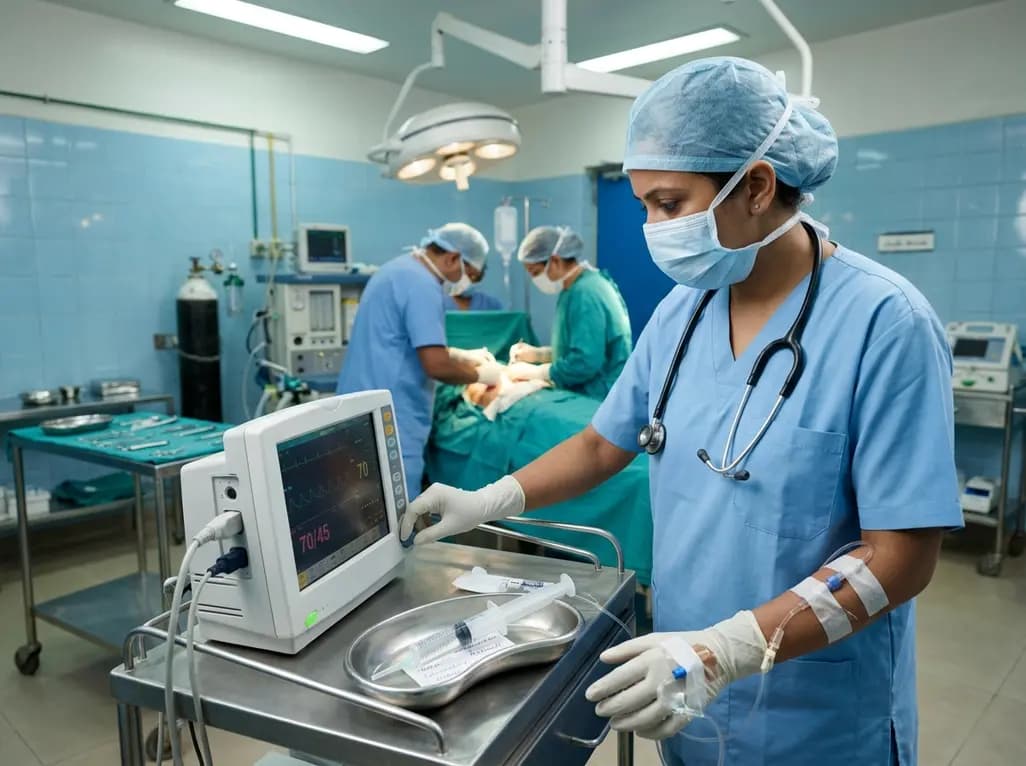
Parturients requiring emergency caesarean delivery often develop hypotension after spinal anaesthesia, particularly when transitioning from prior epidural analgesia. Obstetric anaesthesiologists regularly face this complex clinical dilemma during labor floor emergencies. When labor fails to progress or fetal distress arises, clinicians must rapidly establish adequate surgical anesthesia. In many situations, an existing epidural catheter provides inadequate surgical block or requires extended top-up time. Consequently, clinicians frequently choose to perform a de novo spinal block to achieve prompt surgical conditions. However, prior epidural top-ups alter the epidural space and compress the dural sac. Clinicians previously feared that standard intrathecal local anaesthetic doses might cause excessive cephalad spread and life-threatening high spinal blocks. Conversely, reducing the intrathecal dose substantially increases the risk of failed regional blocks and urgent conversion to general anaesthesia. Therefore, clinicians require robust clinical evidence to balance these competing perioperative risks. A recent retrospective propensity score-matched cohort study offers valuable insights into this ongoing obstetric controversy. The researchers examined whether standard spinal dosing remains feasible after labor epidural analgesia. Ultimately, their findings clarify maternal outcomes and guide safer decision-making on busy labor wards worldwide.
To assess surgical reliability, the investigators analyzed parturients undergoing caesarean delivery between April 2016 and March 2020. They specifically evaluated women transitioning from epidural labour analgesia to spinal anaesthesia compared to women receiving primary spinal anaesthesia alone. Furthermore, the team applied rigorous propensity score matching to balance confounding maternal and obstetric baseline variables. They successfully matched 161 patients in each clinical group. The primary study endpoint focused on the rate of conversion to general anaesthesia during the surgical procedure. Notably, both cohorts demonstrated comparable conversion rates. The epidural-to-spinal cohort experienced a 3.3% conversion rate, whereas the primary spinal group recorded a 2.5% rate. Statistical testing confirmed no significant difference between the two approaches. Importantly, every recorded conversion in both cohorts stemmed directly from sensory block failure rather than patient discomfort or hemodynamic collapse. In addition, using a standard intrathecal dose prevented inadequate perineal and abdominal surgical anaesthesia. Thus, the investigators demonstrated that clinicians can successfully achieve surgical anaesthesia using standard spinal doses without raising general anaesthesia conversion rates. These results provide vital reassurance regarding block efficacy when emergency situations demand rapid intervention.
Although conversion rates remained identical, the clinical trial revealed a stark disparity in maternal hemodynamics. Specifically, parturients in the prior epidural group experienced a markedly higher incidence of hypotension after spinal anaesthesia. Hypotension developed in 55.9% of women with prior epidural analgesia, compared to only 30.4% in the primary spinal group. This dramatic difference highlights critical physiological interactions between continuous epidural infusions and subsequent intrathecal drug administration. First, local anaesthetics infused during labor establish a preexisting, subtle sympathetic blockade. When clinicians introduce a standard spinal dose, rapid additive sympathetic denervation abruptly decreases systemic vascular resistance. Furthermore, previous epidural fluid administration mechanically compresses the dural sac within the spinal canal. This anatomical compression decreases the effective volume of cerebrospinal fluid in the lumbar cistern. Consequently, standard intrathecal doses spread more extensively in the cephalad direction. Higher sensory and sympathetic dermatomal levels rapidly follow this amplified cephalad distribution. Therefore, venous return and cardiac preload plummet precipitously. In addition, labor exhaustion, prolonged fasting, and maternal dehydration compound the vascular collapse. Understanding these intertwined pharmacological and mechanical mechanisms enables obstetric anaesthesiologists to anticipate and mitigate sudden maternal hemodynamic decompensation proactively.
Because severe maternal hypotension jeopardizes uteroplacental perfusion, anaesthesiologists must refine their preventive strategies. Maternal hypotension frequently precipitates fetal bradycardia, neonatal acidosis, and distressing maternal nausea or vomiting. Consequently, clinicians should not manage these parturients with passive fluid preloading alone. Instead, modern obstetric guidelines strongly advocate proactive, weight-adjusted prophylactic vasopressor infusions. Continuous infusions of norepinephrine or phenylephrine effectively stabilize systemic vascular tone during spinal induction. Moreover, clinicians can administer a co-load of warmed crystalloids or colloids simultaneously with intrathecal injection. Rapid fluid co-loading expands intravascular volume precisely when sympathetic vasodilation unfolds. Furthermore, clinicians must maintain invasive or rapid-cycle non-invasive blood pressure monitoring from the instant of intrathecal administration. If blood pressure drops significantly below baseline, the team must immediately administer rescue vasopressor boluses. In addition, positioning the parturient with left uterine displacement relieves aortocaval compression by the gravid uterus. This simple maneuver preserves venous return and augments stroke volume. Ultimately, vigilant hemodynamic monitoring and prompt vasopressor escalation ensure maternal cardiovascular stability, preserving vital placental blood flow and protecting fetal wellbeing throughout caesarean delivery.
Institutional labor ward protocols should incorporate clear guidelines for managing parturients with existing labor epidurals. When transitioning a patient to spinal anaesthesia, clinicians must carefully calculate the intrathecal dose. Rather than drastically reducing local anaesthetic doses and risking block failure, anaesthesiologists can use standard doses alongside aggressive hemodynamic support. However, team communication remains paramount during these transitions. The anaesthesia team must alert the surgical and nursing staff about the elevated risk of sudden arterial hypotension. In addition, clinicians should verify catheter history, including the timing and volume of previous epidural top-ups. A recent massive epidural bolus creates a higher risk of extensive spinal spread than an infusion stopped hours earlier. Furthermore, resuscitation equipment, vasopressor syringes, and airway supplies must remain immediately accessible in the operating room. Clinicians should also consider epidural volume extension or catheter reactivation whenever clinical urgency permits adequate time for surgical top-ups. If clinicians elect to perform a spinal block, vigilant hemodynamic titration prevents catastrophic complications. Ultimately, meticulous planning, evidence-based dosing, and proactive cardiovascular management transform challenging emergency caesarean deliveries into predictable, safe procedures for both mother and child.
Prior epidural infusions induce a baseline sympathetic blockade and mechanically compress the dural sleeve. Consequently, when clinicians inject standard spinal local anaesthetics, the medication spreads further in the cephalad direction. This extended dermatomal spread causes profound sympathetic denervation. Arterial and venous beds dilate rapidly, drastically reducing maternal systemic vascular resistance and cardiac venous return. Therefore, parturients experience significant arterial hypotension much more frequently than women receiving primary spinal anaesthesia alone.
Clinicians should exercise extreme caution when reducing intrathecal drug doses. Although reducing the dose aims to prevent high spinal blockade, evidence shows it substantially increases the risk of sensory block failure. Incomplete surgical blocks often force emergency conversion to general anaesthesia, exposing parturients to airway complications. Instead, using standard spinal doses provides reliable surgical anaesthesia while clinicians simultaneously manage the heightened risk of hypotension through aggressive prophylactic vasopressors and fluid co-loading strategies.
Current international consensus guidelines recommend continuous prophylactic infusions of alpha-1 agonists, specifically phenylephrine or norepinephrine. Clinicians must initiate these infusions simultaneously with intrathecal local anaesthetic delivery. Additionally, rapid crystalloid or colloid co-loading augments intravascular volume as peripheral vessels vasodilate. Anaesthesiologists should also apply left uterine displacement to prevent inferior vena cava compression. Promptly administering rescue vasopressor boluses whenever maternal arterial pressure decreases guarantees adequate uteroplacental blood flow and preserves neonatal oxygenation.
Disclaimer: This content is for informational and educational purposes only... Refer to the latest local and national guidelines for clinical practice.
References
Wu CC et al. Association between prior epidural labour analgesia and increased incidence of hypotension after spinal anaesthesia for caesarean section: A retrospective propensity score-matched cohort study. Anaesth Intensive Care. 2026 Nov 17. doi: 10.1177/0310057X261472513. PMID: 43041184.
Kinsella SM, Carvalho B, Dyer RA, et al. International consensus statement on the management of hypotension with vasopressors during caesarean section under spinal anaesthesia. Anaesthesia. 2018;73(1):71-92.
Xiao F, Shen B, Xu T, et al. Epidural volume extension and spinal anaesthesia for caesarean section: A systematic review and meta-analysis. Int J Obstet Anesth. 2020;42:15-26.

Read summarized clinical updates, watch expert medical content, and earn CME certifications right from your smartphone.
Open your smartphone camera to scan and install.





A propensity score-matched study demonstrates that spinal anaesthesia following epidural labour analgesia significantly increases maternal hypotension to 55.9%, despite comparable block failure and conversion rates. Proactive vasopressor support is critical.
Today

A landmark study reveals that chronic stress and acute racial discrimination interact synergistically to intensify alcohol craving in young adults. Understanding these neurobiological and social dynamics enables clinicians to deliver personalized, culturally informed addiction care and relapse prevention.
Today

The Food Safety and Standards Authority of India has challenged Red Bull over its marketing claims, demanding scientific evidence for the term energy drink. With products packing massive amounts of caffeine and added sugar, clinicians must recognize the critical cardiovascular and metabolic implications for young patients.
Today

A 491-patient cohort study in Sudan reveals critical insights into war trauma reconstructive surgery, analyzing injury patterns, soft-tissue procedures, and a 25.5% complication rate in resource-limited conflict zones.
Today
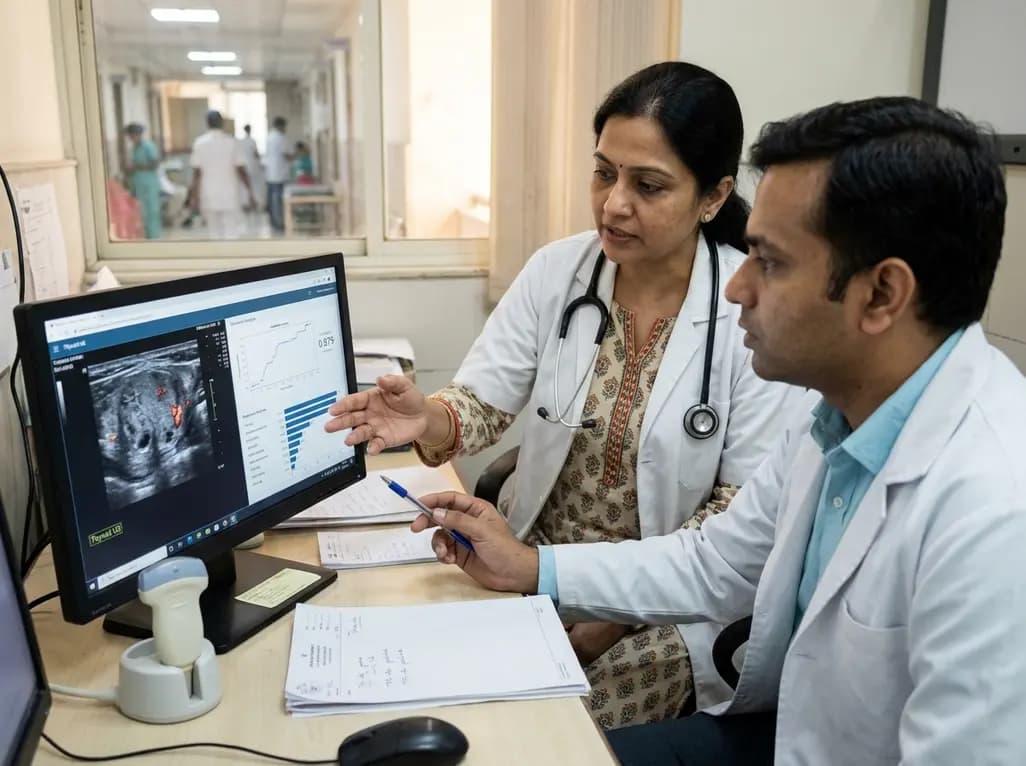
A multi-modal machine learning model integrating ultrasound radiomics, tumor morphology, TPO-Ab, and BRAF V600E accurately predicts lymph node metastasis in papillary thyroid carcinoma with concurrent Hashimoto's thyroiditis, achieving 0.879 accuracy.
Today
