

Loading, please wait...
Loading, please wait...

Prader-Willi Syndrome (PWS) is a complex genetic disorder often characterized by endocrine dysfunction. Managing Hypogonadism in Prader-Willi Syndrome remains a significant challenge for pediatricians and endocrinologists. While many adolescents enter puberty spontaneously, the majority eventually develop hypogonadism. This condition often goes underdiagnosed, leading to long-term health complications such as reduced bone mineral density.
Research indicates that approximately two-thirds of adolescents with PWS begin puberty without medical intervention. Specifically, 63% of females and 68% of males achieve spontaneous onset. However, clinicians typically diagnose hypogonadism in the late teenage years. By the time patients transition to adult care, the prevalence of hypogonadism reaches 77% in females and 88% in males. The underlying cause is predominantly central hypogonadism, although some males exhibit primary or mixed etiologies.
Effective management requires consistent monitoring and timely hormone replacement therapy (HRT). Data show that 80% of females and 60% of males receive pubertal hormone replacement. Importantly, this treatment does not significantly increase behavioral or psychiatric issues. Clinicians must also address bone health, as many patients show low bone mineral density z-scores. Early detection and intervention are vital to optimize physical development and skeletal health during the transition to adulthood.
The etiology is predominantly central hypogonadism, meaning it originates from hypothalamic or pituitary dysfunction. However, some patients may also present with primary gonadal failure.
Studies suggest that initiating pubertal hormone replacement therapy does not result in significant changes in the frequency of behavioral or psychiatric issues in this population.
Adolescents with PWS often exhibit lower-than-average bone mineral density. This occurs due to hormonal deficiencies, which increases the risk of osteoporosis if not managed properly with HRT.
Disclaimer: This content is for informational and educational purposes only. It does not constitute medical advice or establish a doctor-patient relationship. Always seek the advice of a qualified healthcare provider regarding any medical condition. Refer to the latest local and national guidelines for clinical practice.
References
Nguyen H et al. Spectrum of Hypogonadism and Its Management in Adolescents With Prader-Willi Syndrome: A Retrospective Cohort Study Over 35 Years. Clin Endocrinol (Oxf). 2026 Mar 16. doi: 10.1111/cen.70131. PMID: 41839742.
Goldstone AP et al. Recommendations for the diagnosis and management of Prader-Willi syndrome. J Clin Endocrinol Metab. 2008;93(11):4183-4197.
Deal CL et al. Management of Prader-Willi syndrome in childhood and adolescence. Nat Rev Endocrinol. 2013;9(11):630-645.

Read summarized clinical updates, watch expert medical content, and earn CME certifications right from your smartphone.
Open your smartphone camera to scan and install.





A 35-year study reveals high rates of hypogonadism in adolescents with Prader-Willi Syndrome, necessitating long-term monitoring and hormone replacement the...
7 months ago

A retrospective cohort study reveals that frailty quadruples the odds of pressure injuries in hospitalized older adults. Integrating the Clinical Frailty Scale with comprehensive geriatric care is crucial for identifying vulnerability early and implementing targeted multidisciplinary prevention.
Today

Occult maternal malignancy accounts for 3.82% of persistent unreportable NIPT results with genomic noise. Multiple chromosomal aberrations, notably on chromosome 18, warrant thorough oncological evaluation and whole-body MRI to ensure timely maternal diagnosis while preserving fetal care.
Today

This article reviews the forensic and clinical complexities of acute myocarditis arising on left ventricular hypertrophy in children, highlighting early diagnostic red flags and multidisciplinary postmortem autopsy protocols.
Today
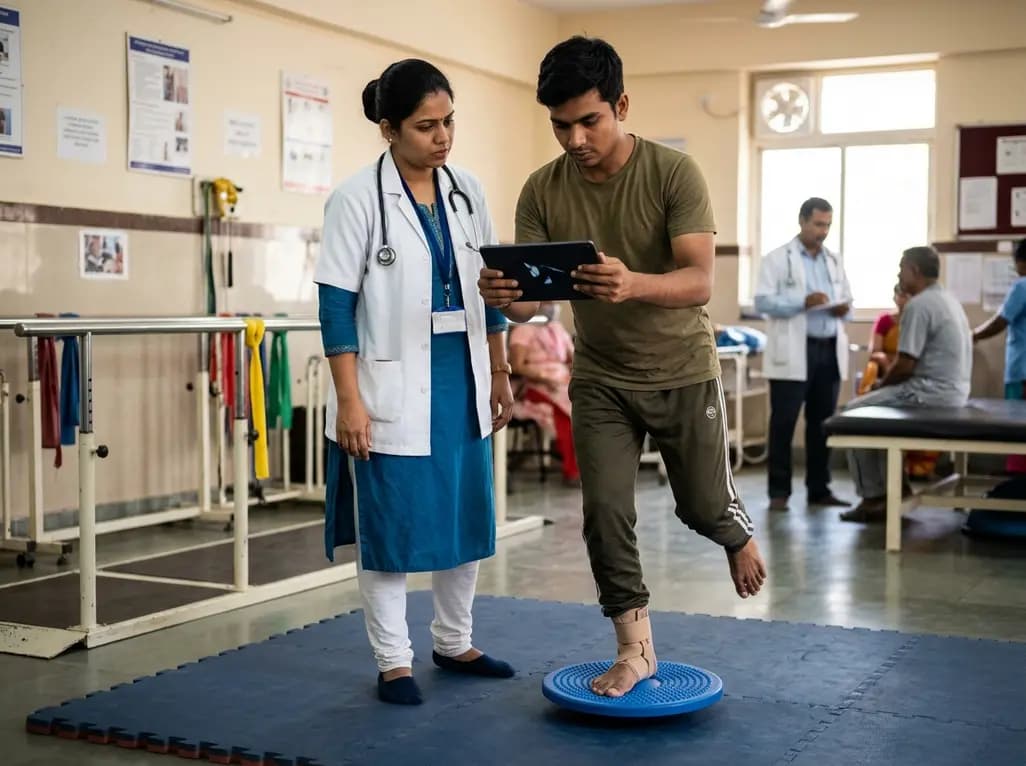
A randomized controlled trial demonstrates that an eight-week dual-task training intervention significantly improves static and dynamic postural control over standard balance exercises in individuals with chronic ankle instability, addressing critical neurocognitive deficits during athletic and daily activities.
Today

A retrospective cohort study of 7,716 ICU patients from the MIMIC-IV database demonstrates that Gradient Boosting Decision Trees significantly outperform traditional SOFA scores in predicting in-hospital mortality among patients with sepsis and diabetes, with SHAP analysis providing clinical interpretability.
Today
