.webp&w=384&q=75)

Loading, please wait...
Loading, please wait...

Definitive management of localized prostate cancer has evolved rapidly over recent years. Notably, hypofractionated radiation therapy has gained widespread clinical acceptance as a radiobiologically sound alternative to conventional fractionation. Large multi-institutional randomized trials have established its non-inferiority in oncological control. However, understanding real-world adoption patterns and patient-reported functional outcomes remains vital for clinicians across international healthcare settings, including India.
Historically, clinicians delivered external beam radiotherapy over eight to nine weeks using conventional fractions of 1.8 to 2.0 Gy. Consequently, patients endured prolonged treatment schedules that created personal, financial, and logistical burdens. As radiobiological data revealed that prostate adenocarcinoma exhibits a low alpha-beta ratio, clinicians recognized that larger daily fractions could deliver equivalent or superior tumor cell kill. Therefore, moderate hypofractionation delivers definitive therapy in four to six weeks rather than two months.
International guidelines now endorse moderate hypofractionation across localized disease strata. Despite strong guideline recommendations, real-world translation often varies across jurisdictions. Health systems frequently encounter logistical hurdles, reimbursement variations, and clinical inertia. Furthermore, practitioners often harbor persistent concerns regarding late urinary and gastrointestinal toxicities. Recent population-based evidence offers reassuring verification that clinicians are embracing this standard without compromising long-term patient wellbeing.
A comprehensive cohort study evaluated treatment patterns using the Victorian Prostate Cancer Outcomes Registry in Australia. The researchers analyzed 3,647 individuals diagnosed with localized prostate cancer treated between 2016 and 2023. Specifically, the cohort comprised 6% low-risk, 49% intermediate-risk, and 45% high-risk disease. Overall, 1,729 patients received hypofractionation during the seven-year observation period.
The investigation demonstrated a profound shift in practice over time. In 2016, only 2% of the entire cohort received shortened radiotherapy courses. In contrast, by 2023, adoption rates surged remarkably to 87% in low-intermediate-risk disease and 52% in high-risk disease. Multivariable regression analyses confirmed that older age, low-intermediate-risk categories, and more recent diagnosis independently predicted the receipt of shortened regimens. Consequently, this real-world transition reflects rapid guideline uptake and institutional trust in shortened fraction schedules.
Patient-reported functional outcomes remain paramount when selecting definitive prostate cancer interventions. Accordingly, the registry investigators assessed health-related quality of life at twelve months post-radiotherapy using the validated Expanded Prostate Cancer Index Composite questionnaire. The analysis specifically evaluated urinary incontinence, urinary irritative symptoms, bowel function, and sexual performance domains.
Importantly, linear regression analyses revealed no statistically or clinically significant differences in 12-month urinary and bowel quality-of-life scores between conventional and shortened schedules. Patients experienced equivalent functional preservation regardless of fractionation intensity. Although transient acute rectosigmoid toxicities can occur during hypofractionated delivery, late adverse effects remained comparable. Thus, these population-level findings reassure radiation oncologists that abbreviated treatment courses preserve organ function effectively without inflicting excess late morbidity.
The therapeutic rationale supporting prostate hypofractionation relies heavily on distinct radiobiology. Because prostate carcinoma exhibits an estimated alpha-beta ratio of approximately 1.5 to 2.0 Gy, it demonstrates greater fraction sensitivity than surrounding normal rectal and bladder mucosa. Therefore, increasing the fraction size while lowering total nominal dose achieves favorable therapeutic ratios without elevating late normal tissue injury.
However, successful implementation requires modern delivery standards. The routine application of intensity-modulated radiotherapy and volumetric modulated arc therapy allows steep dose gradients around the prostate capsule. Furthermore, daily image-guided radiotherapy with fiducial markers or onboard cone-beam computed tomography mitigates inter-fraction motion. Consequently, modern targeting precision minimizes radiation dose to adjacent rectal wall and bladder trigone. These advanced technologies explain why real-world cohorts maintain excellent functional scores while completing therapy in fewer total fractions.
The global shift toward abbreviated treatment regimens holds profound relevance for oncology practice in India. Indian cancer centers manage overwhelming patient volumes alongside limited linear accelerator capacity. Prolonged eight-week regimens restrict machine throughput, thereby extending waiting lists for definitive curative treatments. In addition, many Indian patients travel substantial distances to regional tertiary centers, incurring hefty lodging and travel expenses.
Consequently, shifting standard prostate cases to four-week regimens effectively doubles machine capacity. This transition reduces direct out-of-pocket travel expenditures and minimizes family wage loss. Moreover, excellent patient compliance improves when overall treatment duration drops significantly. Given the validated equivalence in functional and oncological metrics, Indian multidisciplinary teams should actively implement hypofractionated protocols as standard care across eligible localized prostate cancer populations.
Hypofractionated radiation therapy substantially reduces the overall duration of definitive treatment from eight weeks to four to five weeks. Because the prostate tumor exhibits high radiation fraction sensitivity, delivering larger doses per fraction maintains identical oncological cure rates. Simultaneously, the abbreviated course offers patients enhanced convenience, lower overall travel costs, and reduced disruption to their daily lives without increasing late adverse reactions.
Large randomized clinical trials and robust registry studies demonstrate that moderate hypofractionation does not increase late urinary or gastrointestinal complications compared to conventional fractionation. Although some patients encounter mild, self-limiting acute rectal irritation during active treatment, long-term functional scores at twelve months and beyond remain virtually indistinguishable. Modern image guidance and conformal intensity-modulated delivery reliably protect surrounding normal tissues.
According to current international and national guidelines, clinicians should routinely offer moderate hypofractionated radiation therapy to patients with low-risk, favorable intermediate-risk, and unfavorable intermediate-risk localized prostate cancer. Selected high-risk patients can also receive hypofractionation combined with androgen deprivation therapy. However, clinicians must carefully evaluate individual baseline urinary symptoms, prior pelvic surgery, severe inflammatory bowel disorders, and prostate anatomy before final treatment selection.
Disclaimer: This content is for informational and educational purposes only and should not be considered medical advice. Always consult a qualified healthcare professional regarding any medical condition or treatment. While we strive to present accurate and up-to-date information, medical knowledge is constantly evolving, and individual patient circumstances may vary. Healthcare providers must exercise their independent clinical judgment when diagnosing and treating patients. Refer to the latest local and national guidelines for clinical practice.
References
Kang TMJ et al. Adoption of Hypofractionated Radiation Therapy and Quality of Life Outcomes for Localised Prostate Cancer in an Australian Population-Based Cohort. J Med Imaging Radiat Oncol. 2026 Sep 14. doi: 10.1111/1754-9485.70183. PMID: 42734060.
Morgan SC, Hoffman K, Loblaw DA, et al. Hypofractionated Radiation Therapy for Localized Prostate Cancer: Executive Summary of an ASTRO, ASCO, and AUA Evidence-Based Guideline. J Clin Oncol. 2018;36(34):e70-e82.
Dearnaley D, Syndikus I, Mossop H, et al. Conventional versus hypofractionated high-dose intensity-modulated radiotherapy for prostate cancer: 5-year outcomes of the randomised, non-inferiority, phase 3 CHHiP trial. Lancet Oncol. 2016;17(8):1047-1060.

Read summarized clinical updates, watch expert medical content, and earn CME certifications right from your smartphone.
Open your smartphone camera to scan and install.





A population-based study confirms rapid adoption of hypofractionated radiation therapy for localized prostate cancer, demonstrating equivalent 12-month bowel and urinary quality of life compared to conventional fractionation, offering substantial logistical advantages for cancer care.
Today
A study of over 340,000 Medicare beneficiaries shows that hospital artificial intelligence tools, particularly risk prediction algorithms, significantly lower readmissions and acute care utilization in older adults with Alzheimer's disease and dementia without driving up total healthcare spending.
Today
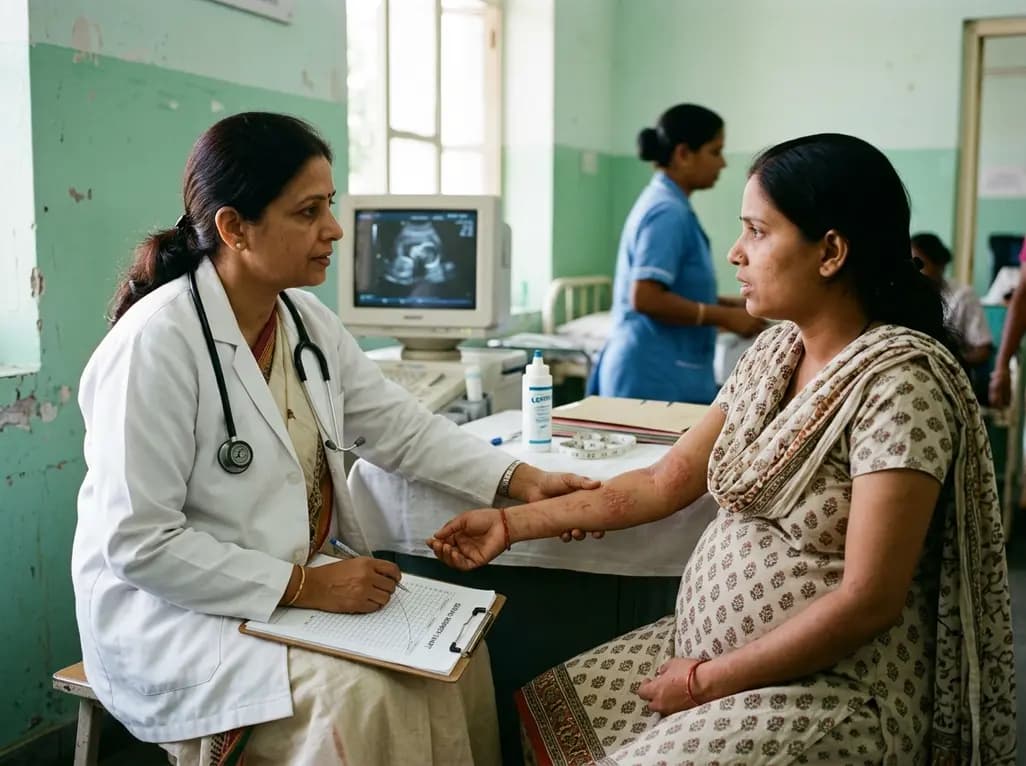
A comprehensive meta-analysis of over 278,000 women demonstrates that maternal atopic dermatitis significantly increases risks of premature rupture of membranes and low birth weight. Discover essential clinical insights on disease mechanisms, serial antenatal growth monitoring, and safe therapeutic interventions.
Today

Over 60 international public health researchers have advised FSSAI to mandate front-of-pack warning labels for any packaged product high in even one critical nutrient: sugar, saturated fat, or sodium. This reform counters phased rollouts to accelerate consumer protection and address India's chronic disease burden.
Today
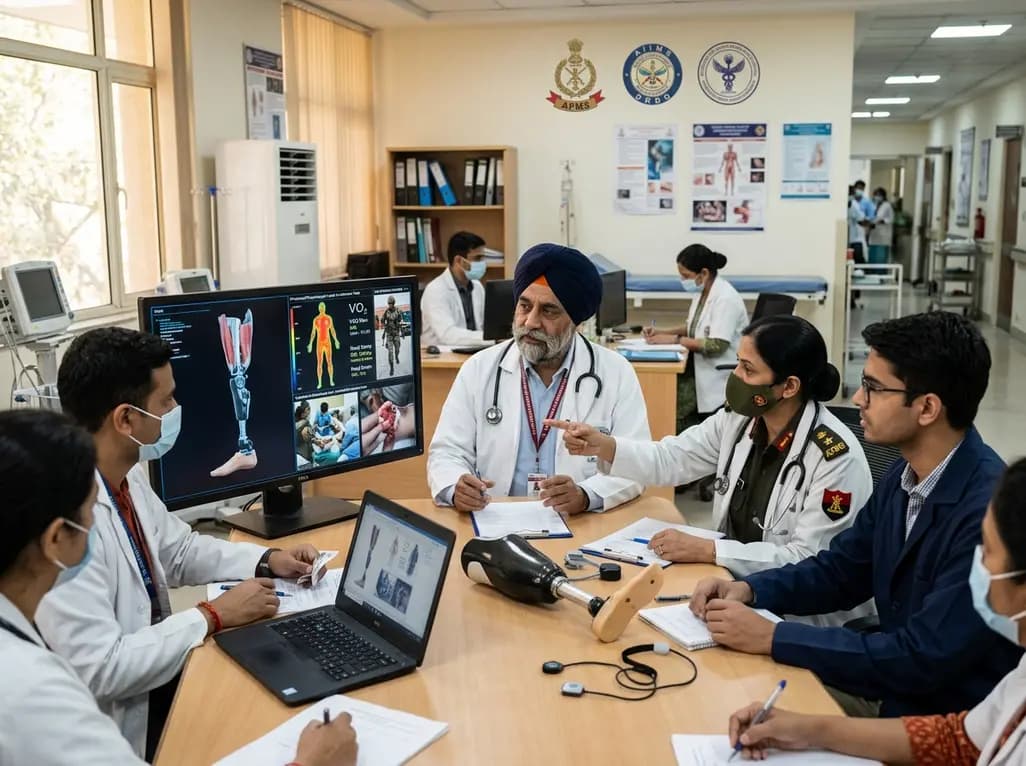
India's premier scientific bodies have joined the Armed Forces Medical Services to solve unique physiological and operational challenges faced by soldiers. The national collaboration covers combat casualty care, artificial intelligence diagnostics, bionic prosthetics, and extreme-environment physiological resilience.
Today

A cross-sectional study reveals that elevated METS-IR is independently associated with higher myopia odds in adolescents, showing biological synergy with obesity and highlighting the need for metabolic screening in pediatric eye care.
Yesterday
