.webp&w=384&q=75)

Loading, please wait...
Loading, please wait...
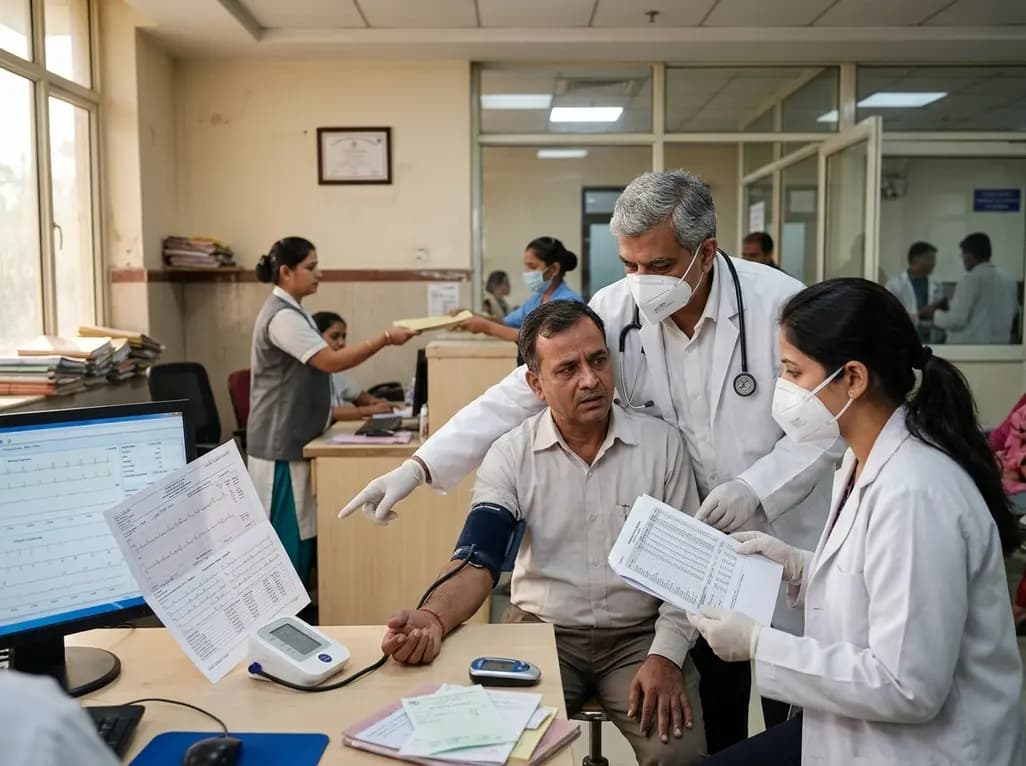
A landmark real-world study conducted in northern India highlights the expanding burden of hypertension and diabetes coexistence among urban adults. Researchers evaluated electronic health records from more than 56,000 individuals who underwent preventive health check-ups across Delhi-NCR hospital networks. Consequently, the empirical findings offer valuable epidemiological insights for primary care physicians, endocrinologists, and cardiometabolic specialists. The study demonstrated that nearly 5 percent of adult patients suffer from both chronic conditions simultaneously. Notably, this prevalence figure is almost twice the rate expected if the two disorders occurred completely independently. Therefore, clinicians must recognize that these metabolic diseases do not exist in clinical isolation. Instead, they interact synergistically to accelerate systemic vascular pathology and organ damage. Consequently, early identification through integrated clinical workflows becomes an urgent priority for practicing physicians.
Furthermore, the research highlights how modern urban lifestyles accelerate cardiometabolic disease progression. Elevated blood pressure and disrupted glucose metabolism share common pathophysiological mechanisms. Specifically, systemic insulin resistance, chronic endothelial inflammation, and sympathetic overactivity drive both conditions simultaneously. As a result, patients presenting with one metabolic disorder frequently exhibit subclinical markers for the other. Clinical teams should therefore maintain high diagnostic suspicion during routine outpatient assessments and preventive consultations.
The real-world investigation accessed anonymized electronic health records covering the period between January 2021 and December 2024. The study gathered detailed clinical data from major tertiary facilities, including Max Hospital Saket, BLK-Max Hospital, and Max Hospital Vaishali. Additionally, data came from prominent centers in Panchsheel Park, Noida, and Dwarka. This comprehensive multi-center network capture provides a highly representative epidemiological cross-section of urban adults in northern India. Furthermore, the mathematical analysis calculated a quantitative synergy factor measuring the overlapping burden between hypertension and diabetes.
Specifically, adults diagnosed with diabetes were nearly four times more likely to develop hypertension compared to non-diabetic peers. Conversely, individuals with existing hypertension faced a 2.5-fold higher risk of developing diabetes than normotensive individuals. Consequently, the presence of either disorder significantly increases the overall clinical probability of acquiring the second condition. These findings confirm that combined metabolic dysfunction is remarkably widespread in metropolitan healthcare settings. Therefore, health systems must adapt routine diagnostic protocols to capture dual cardiometabolic risk early in clinical care. In addition, recognizing this bidirectional association allows clinicians to implement preventive strategies before end-organ injury develops.
Age represents a pivotal demographic variable influencing dual disease manifestation across urban patient cohorts. The study revealed that hypertension and diabetes coexistence remains minimal among younger adult populations under thirty-five years of age. However, the prevalence increases rapidly beginning around age 40. The risk trajectory continues to climb steadily through the fifth and sixth decades of life. Subsequently, the combined prevalence reaches a peak around 58 years of age.
Eventually, the dual burden plateaus at approximately 17 percent by age 70. Therefore, middle age marks a critical inflection point for targeted cardiometabolic intervention in routine clinical practice. As individuals cross the age 40 threshold, age-related physiological changes accelerate vascular degradation and progressive metabolic decline. Consequently, routine screening must intensify significantly during this vulnerable decade. Doctors should systematically counsel patients that turning 40 requires proactive physiological monitoring. Thus, age-stratified preventive protocols are necessary to mitigate severe long-term organ damage across urban populations. Moreover, clinicians should utilize age-based risk stratification tools to identify vulnerable middle-aged individuals who require immediate multi-parametric evaluation.
Currently, healthcare systems often evaluate blood pressure and glycemic control in complete isolation from one another. However, isolated screening strategies fail to address overlapping cardiometabolic risks effectively in high-risk populations. Lead investigator Dr. Abhaya Indrayan emphasized the urgent necessity for integrated preventive screening assessments. Therefore, clinicians should perform simultaneous blood pressure measurements and blood glucose testing during routine outpatient visits. Furthermore, comprehensive health checks must become standard clinical practice for all adults over 40 years of age.
Additionally, electronic health records can streamline opportunistic screening in busy primary care settings. When a patient presents for routine consultation, clinicians should automatically order parallel cardiometabolic testing. Consequently, dual screening prevents missed diagnoses and enables timely clinical intervention before microvascular and macrovascular complications emerge. Early therapeutic measures stabilize endothelial function and reduce systemic vascular strain effectively. Thus, integrated diagnostic pathways improve long-term clinical trajectories and health outcomes significantly. In addition, establishing standardized health check protocols ensures consistent screening quality across hospital networks.
The coexistence of elevated blood pressure and chronic hyperglycemia creates a dangerous synergistic threat to the human vascular system. Together, these conditions drastically increase the risk of progressive end-organ damage over time. Specifically, patients face heightened vulnerability to coronary artery disease, ischemic stroke, and chronic kidney disease. Furthermore, coexisting metabolic dysfunction accelerates diabetic retinopathy and peripheral vascular disease. Therefore, controlling both blood pressure and blood glucose parameters aggressively is paramount for effective clinical management.
Physicians must adopt holistic management strategies combining evidence-based pharmacology and structured lifestyle modifications. Specifically, clinicians should prescribe antihypertensive agents with proven renal and vascular protection, such as angiotensin-converting enzyme inhibitors or angiotensin receptor blockers. Simultaneously, optimal glycemic control reduces microvascular complications effectively. In addition, aggressive lifestyle counseling regarding dietary salt reduction, regular aerobic exercise, and weight management remains foundational. Consequently, aggressive dual control safeguards long-term cardiovascular and renal health in middle-aged adults. Moreover, multidisciplinary management involving cardiologists, endocrinologists, and primary care physicians yields superior patient compliance and long-term functional recovery.
Q1: Why is hypertension and diabetes coexistence so frequent in urban Indian adults?
Hypertension and diabetes coexistence occurs frequently because both chronic disorders share fundamental pathophysiological mechanisms. Specifically, systemic insulin resistance, chronic low-grade inflammation, sympathetic nervous system overactivity, and arterial stiffness drive both conditions simultaneously. Furthermore, sedentary urban lifestyles, dietary changes, chronic stress, and visceral adiposity accelerate these vascular changes. Consequently, individuals diagnosed with one metabolic condition face significantly higher physiological risk for developing the second disorder over time.
Q2: At what age should adults in India start simultaneous screening for both conditions?
Clinical data indicates that dual disease prevalence rises sharply beginning around age 40. Therefore, all adults reaching 40 years of age should undergo routine simultaneous screening for elevated blood pressure and blood glucose. Furthermore, individuals with a family history of cardiovascular disease, obesity, or elevated lifestyle risk factors should begin integrated screening even earlier. Consequently, proactive middle-age monitoring enables timely clinical intervention before irreversible organ damage occurs.
Q3: How does having both diabetes and hypertension affect long-term complication risks?
Having both conditions simultaneously multiplies cardiovascular and microvascular risks significantly compared to having either condition alone. Specifically, the combination drastically accelerates endothelial damage, predisposing patients to myocardial infarction, stroke, heart failure, and chronic kidney disease. Furthermore, dual diagnosis increases the incidence and severity of diabetic retinopathy and peripheral neuropathy. Consequently, managing both blood pressure and blood sugar targets strictly is essential to preserve organ function.
Disclaimer: This content is for informational and educational purposes only. It does not constitute medical advice or replace professional judgment. Refer to the latest local and national guidelines for clinical practice.
References

Read summarized clinical updates, watch expert medical content, and earn CME certifications right from your smartphone.
Open your smartphone camera to scan and install.





A landmark study analyzing over 56,000 adult health records in Delhi-NCR reveals that hypertension and diabetes coexistence affects nearly 5% of adults. The prevalence doubles expected rates and rises sharply after age 40. Early integrated screening is essential to prevent microvascular and macrovascular complications.
last month

The JAKPPPOT feasibility trial evaluated oral upadacitinib in moderate-to-severe palmoplantar pustulosis. Meeting all feasibility goals with 95% adherence, upadacitinib demonstrated a substantial baseline-adjusted reduction in disease severity compared to historic placebo, supporting future randomised trials.
Today

Prenatal evaluation of fetal growth restriction requires an integrated diagnostic approach. While chromosomal microarray remains fundamental, exome sequencing offers significant diagnostic yield in isolated and syndromic cases, especially when ultrasound shows skeletal anomalies or normal placental function.
Today

Evaluating disagreement among Friedewald, Martin-Hopkins, and Sampson LDL-C equations reveals diagnostic uncertainty at statin cutoffs. An interpretable regime-aware calibration model rescues patient misclassifications without extra testing costs.
Today
A randomized controlled trial compared ultrasound-guided intra-articular injections of PRP, hydrolyzed type I collagen, and hyaluronic acid in knee osteoarthritis. All therapies demonstrated significant improvements in WOMAC and pain scores at six months, supporting hydrolyzed collagen as a viable biological option.
Today
A study reveals that salivary cortisone correlates more strongly with serum cortisol than salivary cortisol during dynamic adrenal testing, while salivary dexamethasone accurately confirms compliance. This provides a non-invasive, precise alternative to venipuncture for diagnosing adrenal disorders.
Today
