

Loading, please wait...
Loading, please wait...

Modern surgical suites increasingly utilize digital innovations to improve intraoperative precision and patient outcomes. Consequently, mixed reality surgical guidance has emerged as a promising tool for navigation, anatomical visualization, and real-time decision support. This technology merges virtual holograms with the real operating field, allowing surgeons to superimpose patient-specific radiological data directly onto tissue. However, pure computational precision cannot guarantee successful clinical translation. Surgeons encounter significant practical barriers when using these systems during live operative workflows. Therefore, clinical leaders must recognize that technological capability represents only half of the adoption equation. System designers must thoroughly prioritize human factors to bridge the gap between experimental prototypes and standard operative care. By evaluating usability, cognitive demand, and sensory tolerances, healthcare institutions can establish safer surgical environments.
Furthermore, early surgical trials reveal that device discomfort and unintuitive interfaces regularly hamper user performance. Operating teams frequently struggle when new digital platforms disrupt established manual routines. As a result, clinical adoption stalls despite positive laboratory metrics. This perspective highlights the critical necessity of evaluating physical, motor, and environmental factors across the complete surgical spectrum.
The physical footprint of head-mounted displays presents immediate ergonomic challenges for surgical teams. Extended operative procedures place substantial biomechanical strain on the cervical spine and neck musculature. Consequently, wearing heavy headsets for hours rapidly accelerates physical fatigue among operating staff. Moreover, poorly balanced devices shift the center of gravity forward, forcing practitioners into strained postures. Designers often overlook the visual and perceptual limitations inherent in current optical systems. Restricted fields of view force surgeons to make compensatory head movements, which intensifies mechanical neck strain. In addition, optical displays can induce visual fatigue, vergence-accommodation conflicts, and focal mismatch during delicate tissue manipulation.
Similarly, prolonged device usage often causes pressure hotspots around the forehead, nasal bridge, and temples. These physical discomforts distract the surgical team during high-stakes procedural phases. Therefore, hardware developers must prioritize lightweight materials and ergonomic weight distribution over incremental software features. Without substantial physical optimization, surgeons will continue to resist continuous intraoperative use. Hospital procurement committees must actively evaluate physical wearability before committing to clinical implementation.
Intraoperative guidance requires seamless, low-burden control mechanisms that never breach sterile boundaries. Traditionally, developers have championed touchless gesture recognition and voice commands for hands-free menu navigation. However, real-world operating rooms present severe acoustic and physical obstacles that compromise these control modalities. Loud surgical drills, suction devices, and background team communication regularly disrupt voice-recognition engines. Consequently, repeated failed verbal prompts frustrate operators and break cognitive focus. Gesture control systems frequently register unintentional hand gestures during routine surgical instrument manipulation. These erroneous inputs can inadvertently reposition critical anatomical holograms or obscure vital views.
Furthermore, mid-air gesturing during long procedures induces shoulder and arm muscle fatigue, commonly called gorilla arm syndrome. This physical fatigue directly degrades surgical dexterity and fine motor control. Therefore, engineers must design sterile, low-effort interaction alternatives that respect delicate procedural workflows. Hybrid systems combining targeted eye-tracking with discreet sterile foot switches provide promising solutions. Ultimately, interaction models must preserve surgical momentum without introducing unnecessary motor demands.
The operating theater represents a hostile operating environment for sensitive optical sensors and optical projection displays. Intense overhead surgical lighting, fluid splashes, and persistent glare constantly challenge tracking sensors. Consequently, bright illumination frequently washes out holographic overlays, impairing anatomical depth perception. Moreover, surgical staff, medical equipment, and mobile imaging systems constantly move through the sterile field. These physical movements create line-of-sight occlusion between cameras, reference markers, and wearable headsets. When spatial tracking drops unexpectedly, holographic projections drift away from anatomical targets, creating severe navigational errors.
Similarly, crowded physical spaces exacerbate cable management problems and increase accidental contamination hazards. Operating rooms require dependable resilience against unexpected electronic interference and lighting shifts. Hardware platforms must maintain tracking stability despite crowded surroundings and sudden visual obstructions. Therefore, developers must stress-test devices in authentic, chaotic surgical settings rather than clean laboratory rooms. Robust spatial resilience remains non-negotiable for safe patient intervention.
Beyond individual device interaction, successful implementation requires a comprehensive systems human factors approach. Most historical evaluations focus narrowly on the individual operating surgeon while ignoring the broader surgical team. However, intraoperative interventions represent deeply collaborative tasks involving scrub nurses, anesthetists, surgical assistants, and circulating staff. When a surgeon wears an isolating headset, mutual non-verbal communication and shared situational awareness deteriorate. Assistant personnel often cannot visualize what the lead surgeon sees, which disrupts procedural synchronization. Therefore, guidance systems should project coordinated displays onto shared scrub monitors to maintain team alignment.
Additionally, institutional governance and formal training frameworks demand urgent attention. Healthcare organizations rarely provide standardized curricula for mixed reality platform proficiency. As a result, practitioners must navigate steep learning curves during active clinical shifts. Structured credentialing protocols, simulation training, and clear device malfunction pathways are essential safeguards. Without sound institutional governance, hospitals risk unpredictable clinical errors and frustrated workforce culture.
Deploying advanced spatial computing across emerging healthcare markets, including tertiary centers in India, involves unique institutional considerations. High-volume Indian operating theaters manage exceptional patient turnover while maintaining strict infection prevention protocols. Consequently, surgical teams require devices that allow rapid turn-around times and swift sterile reprocessing. Fragile electronic equipment that requires complex calibration protocols risks stalling busy operative lists. Furthermore, institutions must justify major capital equipment investments through concrete improvements in operative accuracy or operative time.
Therefore, clinical leaders should initially integrate mixed reality tools into targeted surgical subspecialties such as complex spine surgery, skull base neurosurgery, and pelvic oncology. Multidisciplinary teams must establish localized human factors benchmarks to monitor team fatigue and workflow delays. In addition, hospitals should foster collaborative partnerships between clinical engineering departments and software vendors. By prioritizing context-specific usability, Indian healthcare facilities can safely harness spatial computing while safeguarding operational efficiency.
Virtual reality immerses the clinician entirely within an artificial digital environment, completely occluding direct views of real surroundings. In contrast, mixed reality superimposes responsive digital holograms onto the physical operative field in real time. This capability allows operating surgeons to view internal anatomical structures while simultaneously observing surgical instruments, patient tissue, and team members without losing direct contact with their surroundings.
Operating room head-mounted displays carry substantial physical weight that exerts continuous strain on cervical spine structures. Because surgeons routinely maintain fixed forward-tilted postures during delicate procedures, excessive headset mass quickly triggers neck fatigue, muscular spasms, and headaches. If devices fail to distribute weight evenly, physical discomfort disrupts surgical precision, increases cognitive exhaustion, and discourages routine clinical adoption.
Surgical departments should establish structured simulation curricula to build platform familiarity before live operative deployment. Furthermore, centers should procure systems featuring adaptable sterile controls, robust optical tracking, and multi-user video outputs. Involving biomedical engineers, scrub nurses, and surgical trainees in initial usability assessments ensures that new platforms integrate smoothly into existing institutional workflows and team cultures.
Disclaimer: This content is for informational and educational purposes only and should not be considered medical advice. Always consult a qualified healthcare professional before implementing new surgical technologies or clinical workflows. Refer to the latest local and national guidelines for clinical practice.
References
Bahadori S et al. Prioritizing Human Factors in the Clinical Translation of Mixed Reality Surgical Guidance. JMIR Hum Factors. 2026 Nov 09. doi: 10.2196/101995. PMID: 43002763.
Martins RF, Marques A, Pereira J, Coelho L. Mixed Reality in the Operating Room: A Systematic Review. J Med Syst. 2024;48(1):79. doi: 10.1007/s10916-024-02095-7.
Vervoorn MT, Wulfse M, van Doormaal TPC, et al. Mixed Reality in Modern Surgical and Interventional Practice: Narrative Review of the Literature. JMIR Serious Games. 2023;11:e41148. doi: 10.2196/41148.
Aebersold M, et al. Role of Extended Reality use in medical imaging interpretation for pre-surgical planning and intraoperative augmentation. J Med Imaging. 2024;11(6):062607. doi: 10.1117/1.JMI.11.6.062607.

Read summarized clinical updates, watch expert medical content, and earn CME certifications right from your smartphone.
Open your smartphone camera to scan and install.





The successful clinical translation of mixed reality surgical guidance demands rigorous human factors engineering. Surgeons and developers must address ergonomic burdens, sensory constraints, sterile interaction challenges, and operating room team dynamics to ensure safe intraoperative adoption.
Today

Despite proven efficacy in preventing severe morbidity and mortality, adult immunization coverage among Indian seniors remains below two percent. Pulmonologists and geriatricians urge widespread adoption of seasonal influenza, pneumococcal conjugate, and recombinant zoster vaccines to curb preventable hospitalizations.
Today
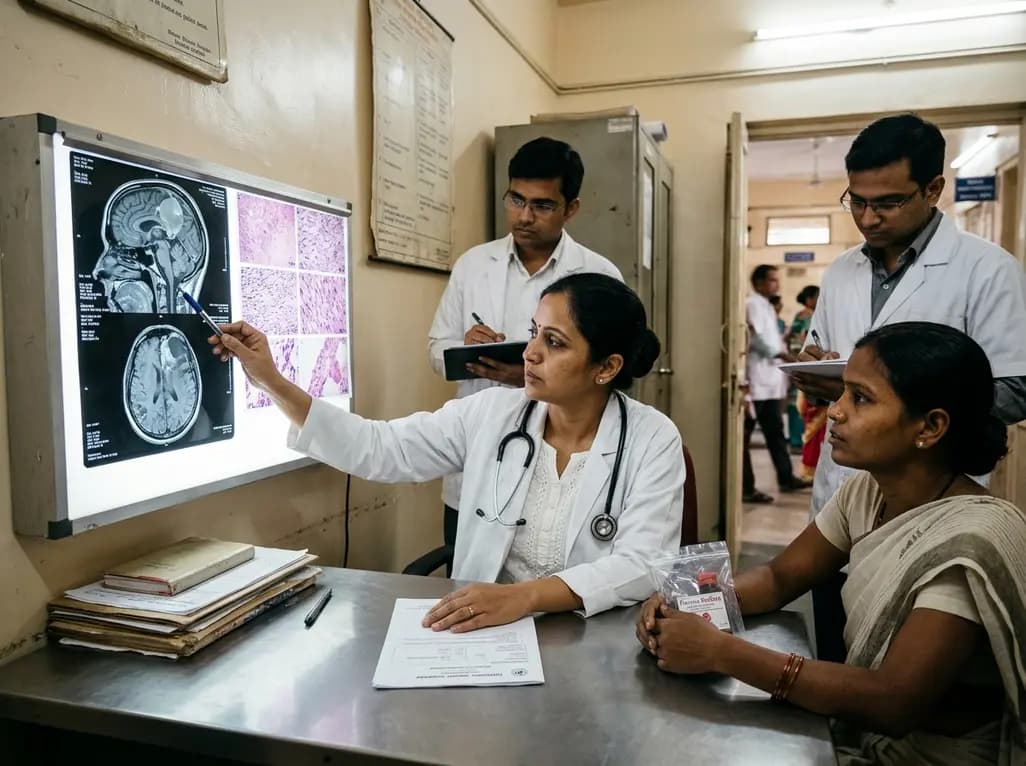
An intracranial EWSR1::CREM fusion sarcoma in a 31-year-old female manifested as a paraneoplastic inflammatory syndrome with anemia and secondary infertility. The dural mass mimicked meningioma, but gross-total resection resolved her systemic inflammation and restored natural fertility within one month.
Today
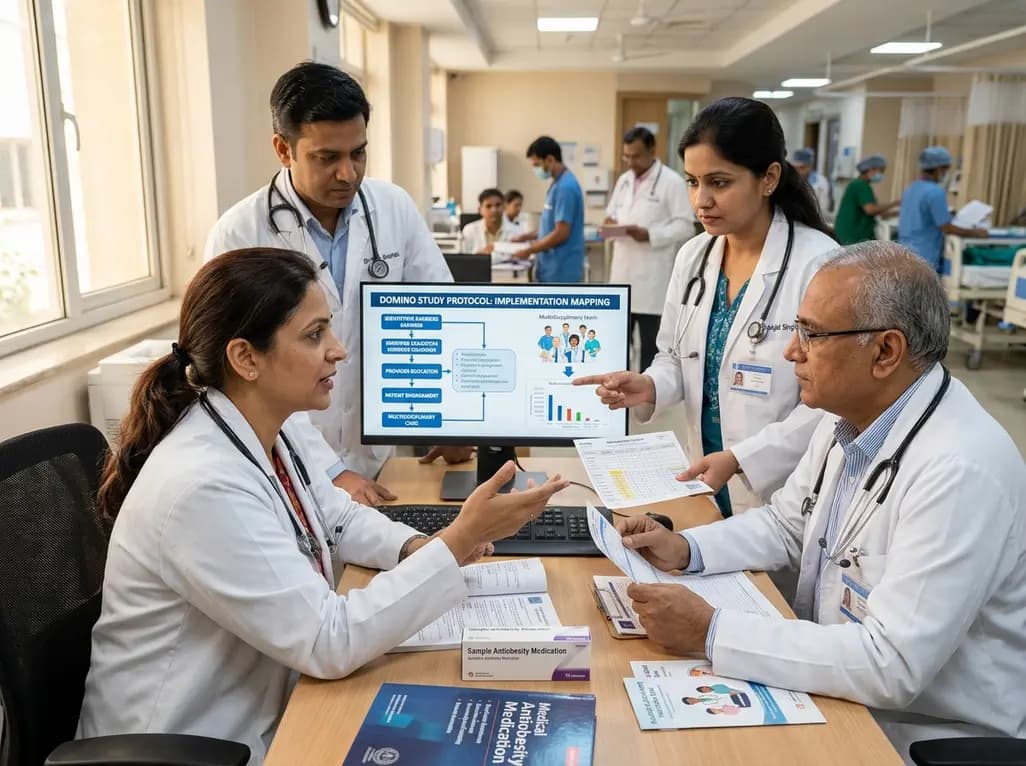
The DOMINO study protocol presents a multidisciplinary implementation mapping approach to overcome provider, patient, and payer barriers to antiobesity medications, offering vital insights for Indian clinicians managing the growing diabesity burden.
Today
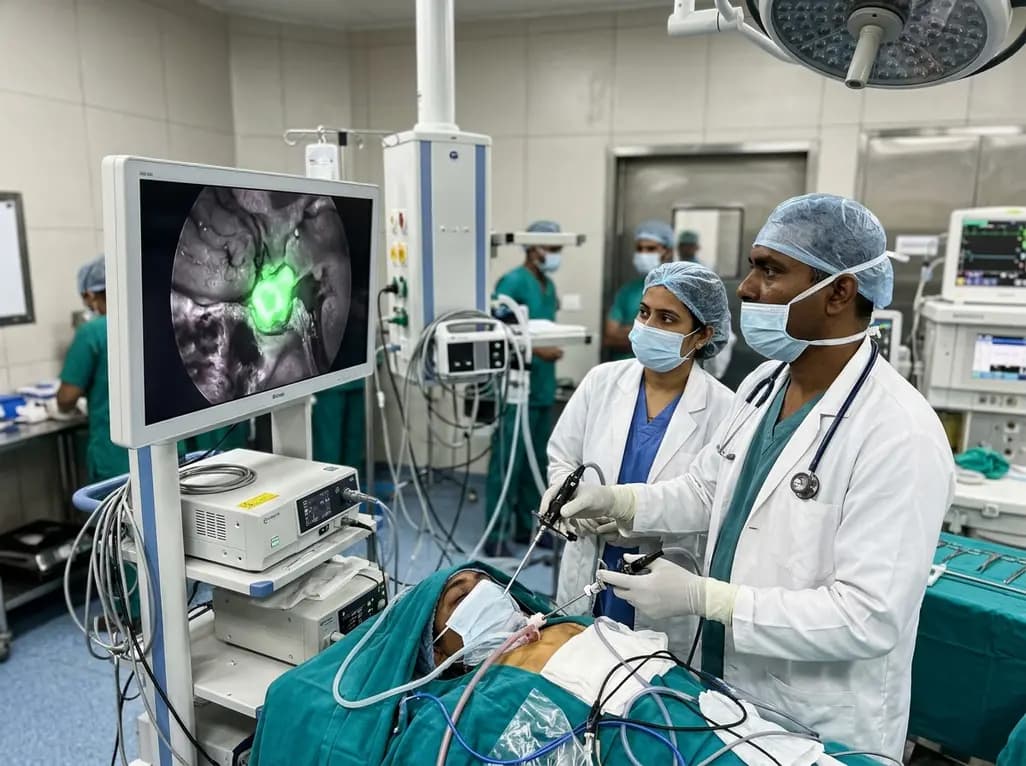
Near-infrared autofluorescence provides real-time label-free optical guidance during endoscopic transsphenoidal pituitary surgery. By highlighting stark signal contrasts between normal pituitary gland and adenomas, this technique aids gross-total tumor resection while safeguarding critical endocrine function.
Today
