.webp&w=384&q=75)

Loading, please wait...
Loading, please wait...
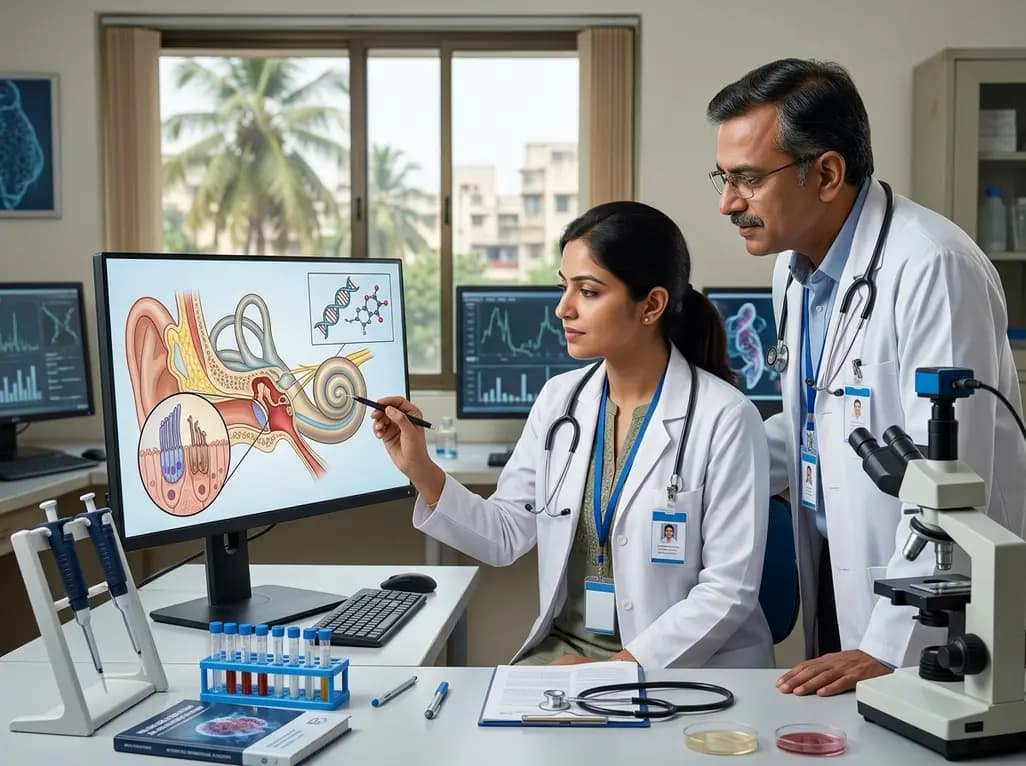
Cholesterol homeostasis is fundamental to various cellular functions across the human body. Recent research has highlighted that disruptions in this balance often underlie a wide range of diseases. Notably, the role of cholesterol biosynthesis in auditory physiology was previously poorly understood. A groundbreaking study now reveals that HSD17B7 hearing loss is a significant factor in sensorineural deafness. HSD17B7, or 17β-Hydroxysteroid dehydrogenase type 7, serves as a critical enzyme that catalyzes the conversion of zymosterone to zymosterol. This conversion is a vital step in the post-lanosterol cholesterol biosynthetic pathway.
Consequently, researchers discovered that HSD17B7 is highly enriched in the sensory hair cells of both zebrafish and mice. These hair cells are essential for converting sound vibrations into electrical signals. When HSD17B7 is deficient, intracellular cholesterol levels drop significantly. This reduction compromises the mechanoelectrical transduction (MET) process and acoustic startle responses. Therefore, maintaining adequate cholesterol levels through HSD17B7 activity is essential for hearing preservation.
The research identified a specific heterozygous nonsense variant, c.544G>T (p.E182*), in an individual suffering from bilateral profound hearing loss. Furthermore, experimental models demonstrated that the mRNA of this variant failed to rescue impaired auditory functions. Mechanistically, this mutation decreases mRNA abundance and significantly reduces the total protein available within the cell. However, the impact goes beyond simple protein deficiency.
Moreover, the p.E182* mutation disrupts the critical interaction between HSD17B7 and the ER retention receptor RER1. This disruption leads to aberrant subcellular localization and altered cholesterol distribution within the hair cells. This imbalance exacerbates hair cell dysfunction, eventually leading to permanent sensorineural damage. Additionally, these findings suggest that HSD17B7 is a primary candidate gene for diagnosing and potentially treating sensorineural hearing loss in the future.
For clinicians in India, identifying genetic markers like HSD17B7 can enhance early diagnosis of congenital hearing disorders. Furthermore, understanding the metabolic pathways involved in hair cell health opens new avenues for therapeutic intervention. Because cholesterol plays such a nuanced role in the inner ear, targeted metabolic therapies might one day supplement existing treatments like cochlear implants. Consequently, medical educators emphasize the importance of genetic screening in pediatric cases presenting with idiopathic profound hearing loss.
HSD17B7 regulates the synthesis of cholesterol by converting zymosterone to zymosterol, which is essential for the structural integrity and function of sensory hair cells.
The mutation reduces the amount of HSD17B7 protein and causes it to be localized incorrectly within the cell, leading to depleted cholesterol and impaired sound signal transduction.
Currently, it is a genetic condition; however, identifying the gene allows for early intervention and research into metabolic therapies that might stabilize hair cell function.
Disclaimer: This content is for informational and educational purposes only. It should not be used as a substitute for professional medical advice, diagnosis, or treatment. Always seek the advice of your physician or other qualified health provider with any questions you may have regarding a medical condition. Refer to the latest local and national guidelines for clinical practice.
References
Shen Y et al. HSD17B7 is required for the function of sensory hair cells by regulating cholesterol synthesis. Elife. 2026 Jun 03. doi: undefined. PMID: 42233258.
Zhou B et al. Impact of cholesterol homeostasis within cochlear cells on auditory development and hearing loss. Front Cell Dev Biol. 2024;11:1301287. doi:10.3389/fcell.2023.1301287.
Zerenturk EJ et al. The role of cholesterol synthesis in the auditory system. J Lipid Res. 2013;54(10):2666-2673.
"
Read summarized clinical updates, watch expert medical content, and earn CME certifications right from your smartphone.
Open your smartphone camera to scan and install.





Researchers identify HSD17B7 as a key regulator of cholesterol in hair cells, showing that its deficiency leads to profound sensorineural hearing loss....
4 months ago

Explore vital recurrent stroke predictors in lacunar stroke patients managed with intensive blood pressure lowering. This analysis examines trial findings from SPS3 to uncover residual vascular risks, metabolic factors, and targeted secondary prevention strategies for high-risk neurological patients.
Today

A comprehensive scoping review synthesises evidence linking prenatal maternal mental health to long-term offspring neurodevelopment, evaluating neuroendocrine, inflammatory, and epigenetic pathways while highlighting clinical screening and future research priorities.
Today

The Directorate General of Health Services directs Indian states to halt the hazardous reuse and reprocessing of single-use medical devices. Discover regulatory implications under the Drugs and Cosmetics Act, critical infection risks, legal liabilities, and operational changes required across clinical specialties.
Today
Mitochondria-targeted nanoparticles self-assembled from EGCG and L-glutamic acid effectively restore mitochondrial homeostasis, suppress synovial inflammation, and attenuate chondrocyte senescence in osteoarthritis, offering a promising disease-modifying nanotherapy.
Today

India is advancing preventive healthcare by integrating genomics, artificial intelligence, and quantum technologies. With the SANGAM programme sequencing one million Indian genomes, clinicians can unlock personalized therapies, detect cardiometabolic risks early, and curb the burden of diabetes and heart disease.
Today
