.webp&w=384&q=75)

Loading, please wait...
Loading, please wait...

Precision oncology is evolving rapidly as researchers explore the deep connections between genomic biomarkers. The integration of HRD and Replication Stress (RS) has emerged as a vital strategy for improving cancer treatment in India and globally. These two hallmarks of genomic instability often occur together and offer unique opportunities for therapeutic targeting.
Recent pan-cancer analyses highlight that combining poly ADP-ribose polymerase inhibitors (PARPi) with immune checkpoint blockade (ICB) increases efficacy significantly. Furthermore, targeting the replication stress response can effectively overcome resistance often seen in mono-therapies. This synergistic approach aims to maximize tumor cell death while maintaining manageable toxicity levels.
Consequently, experts are developing a unified therapeutic axis that focuses on both HRD and RS pathways simultaneously. In addition, novel assays are now helping to identify patients who will benefit most from these next-generation strategies. Therefore, integrating functional assessments with immune contexture will likely become the future standard for guiding precision oncology.
They are interconnected hallmarks of genomic instability. HRD increases susceptibility to DNA damage, while replication stress involves the stalling of replication forks. Together, they create a functional axis for targeted drugs.
Combining PARP inhibitors with replication stress inhibitors or immunotherapy can improve treatment efficacy. This approach often overcomes the resistance found in traditional monotherapy regimens.
Disclaimer: This content is for informational and educational purposes only. It is not intended as a substitute for professional medical advice, diagnosis, or treatment. Always seek the advice of your physician or other qualified health provider with any questions you may have regarding a medical condition. Refer to the latest local and national guidelines for clinical practice.
References
1. Ozmen TY et al. Integrating homologous recombination deficiency and replication stress: converging strategies unlocking new frontiers in precision oncology. Expert Rev Clin Pharmacol. 2026 Apr 26. doi: 10.1080/17512433.2026.2665447. PMID: 42035488.
2. Lord CJ, Ashworth A. PARP inhibitors: Synthetic lethality in the clinic. Science. 2017 Mar 17;355(6330):1152-1158.
3. Zeman MK, Cimprich KA. Causes and consequences of replication stress. Nat Cell Biol. 2014 Jan;16(1):2-9.

Read summarized clinical updates, watch expert medical content, and earn CME certifications right from your smartphone.
Open your smartphone camera to scan and install.





This article reviews how the intersection of HRD and replication stress provides a foundation for next-generation, functionally guided cancer treatments....
5 months ago
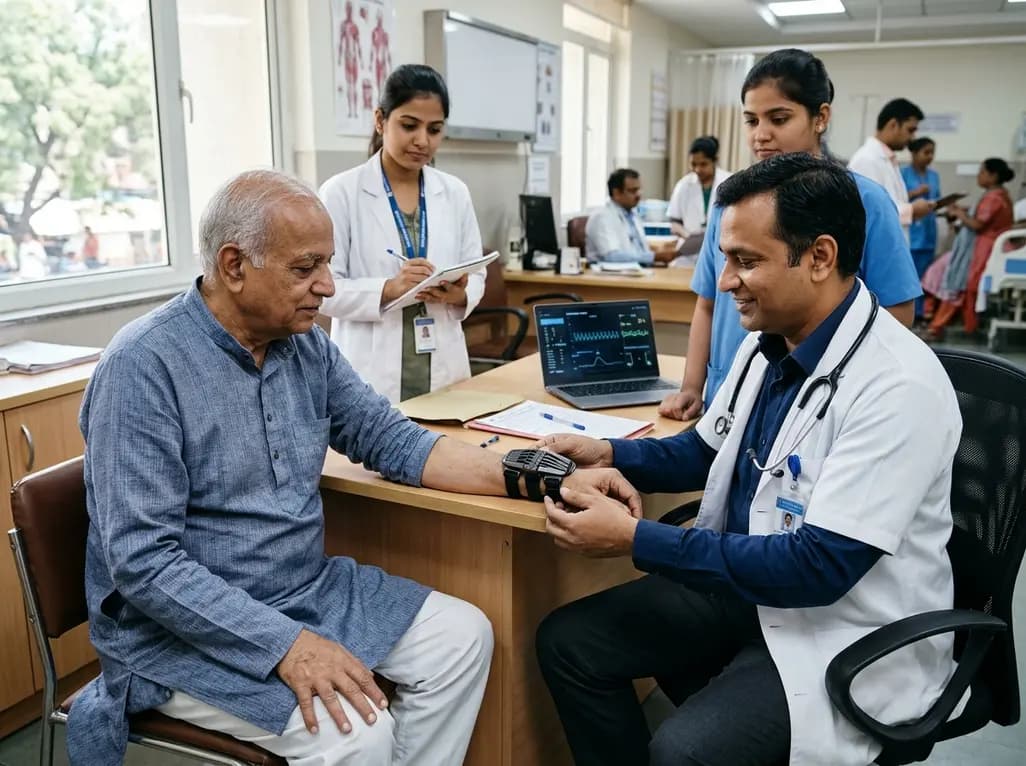
The TREM-AB open-label pilot study evaluated a wearable passive nonlinear vibration absorber for essential tremor. The Nonlinear Energy Sink bracelet reduced clinical Fahn-Tolosa-Marin tremor scores by 32.1% and electrophysiological tremor power by 49.2% with no adverse effects reported.
Today

A population-based study of 20,928 children reveals that small vulnerable newborns face sex-divergent mental capital outcomes at ages 6-7: term SGA girls show higher behavioral difficulties and lower resilience, while preterm non-SGA boys experience increased behavioral problems.
Today
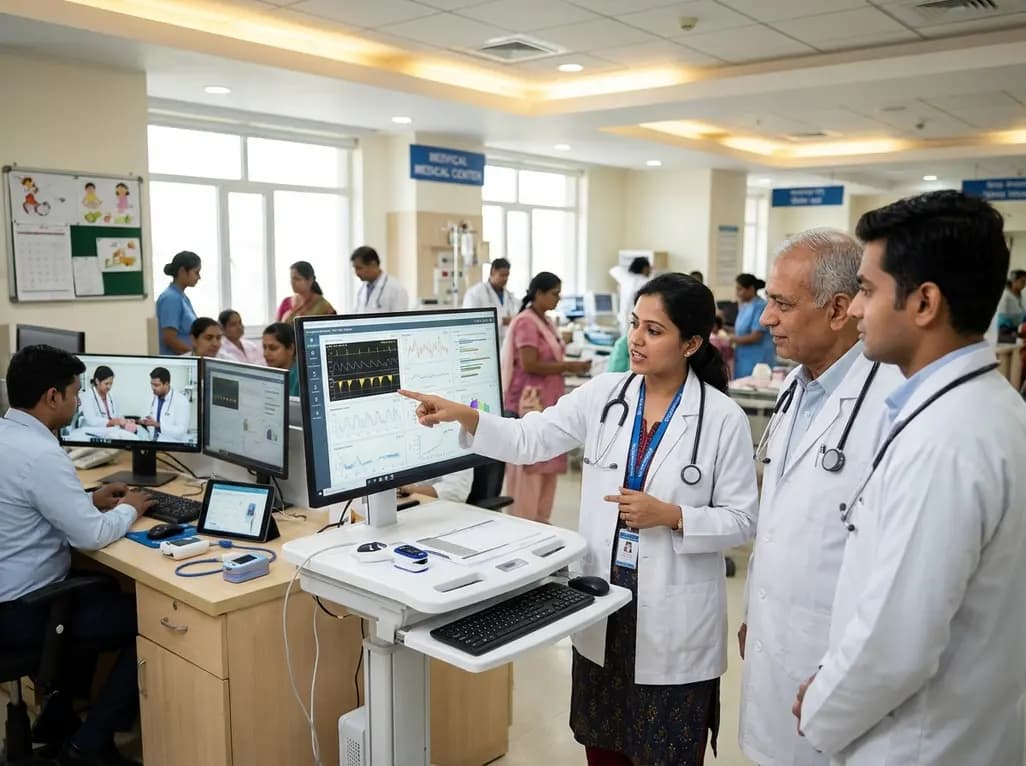
A landmark study details how an enterprise pediatric remote patient management model expanded from a single cardiology pilot to 16 diverse specialty programs by combining centralized digital operations with specialty clinical leadership.
Today

A comparative review of tension band wiring and intramedullary screw fixation in thumb metacarpophalangeal arthrodesis, evaluating union rates, hardware complications, and clinical outcomes.
Today
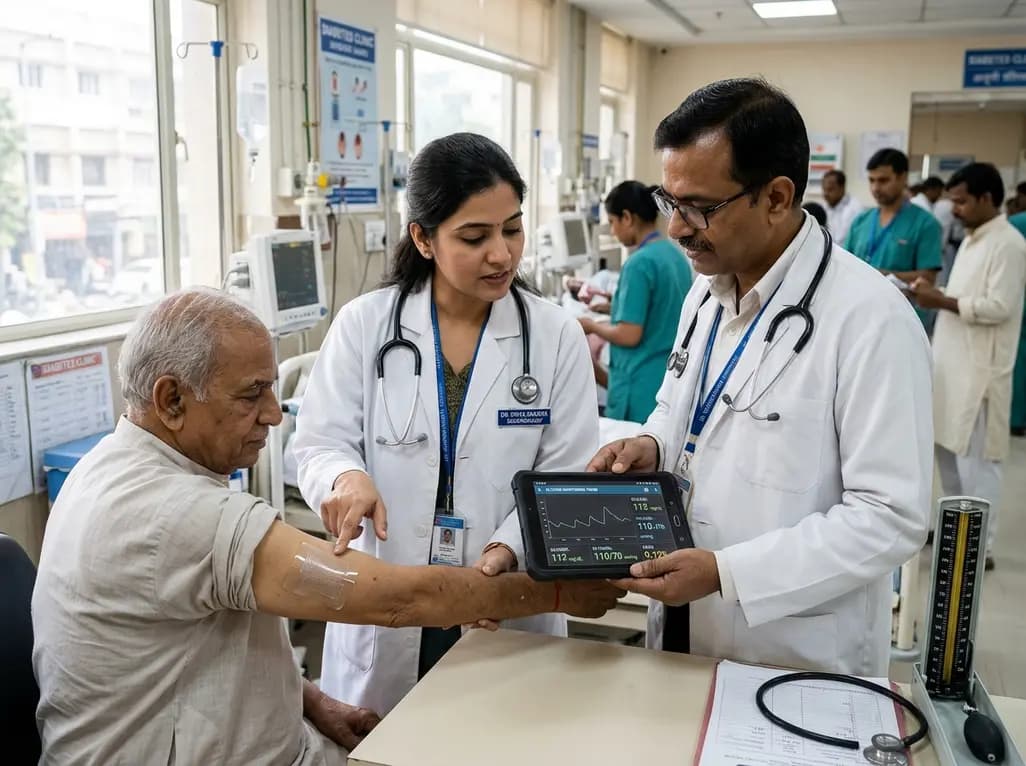
A breakthrough ultrathin multimodal sensor decouples physical hemodynamic monitoring from disposable electrochemical calibration, achieving long-term wearable glucose prediction with 81.36% accuracy and a 9.12% MARD. This offers a robust, drift-free solution for outpatient metabolic surveillance.
Today
