.webp&w=384&q=75)

Loading, please wait...
Loading, please wait...
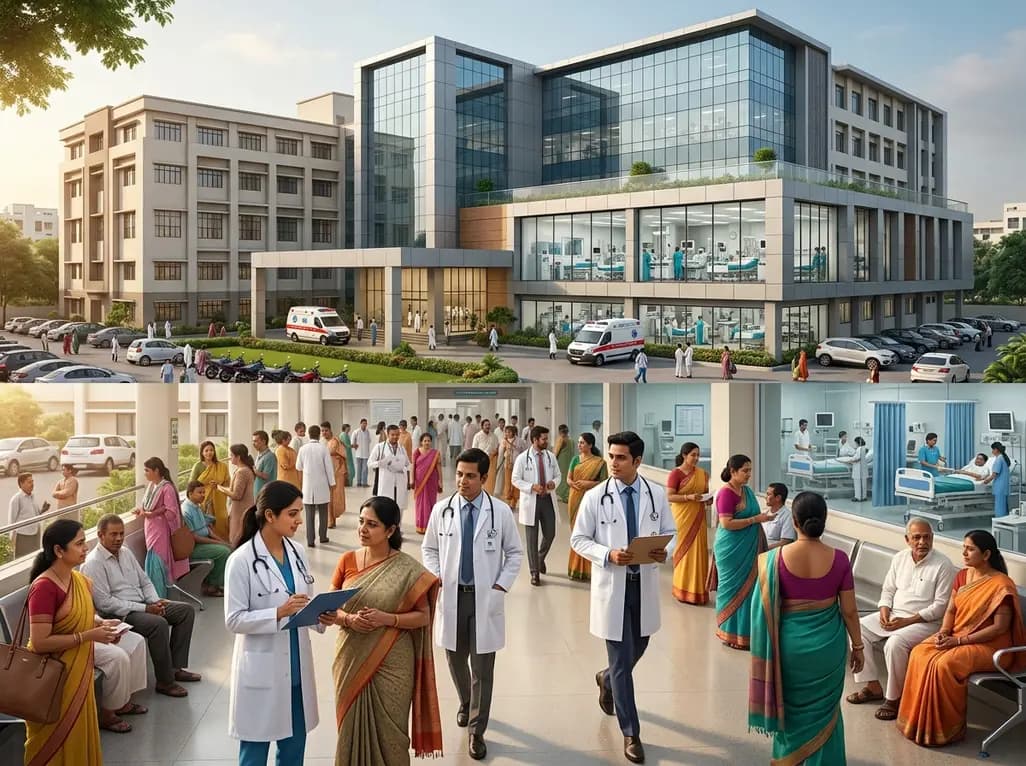
The healthcare sector is undergoing a massive transformation, driven by an aggressive hospital expansion in India. According to a recent Kotak Securities report, listed hospital networks are sustaining a robust 18% revenue growth. Consequently, this capacity creation is reshaping the financial landscape of Indian healthcare. Therefore, healthcare administrators must understand these dynamics to navigate future clinical investments.
Most hospital chains are rapidly increasing their operational bed counts by 5% to 21% year-on-year. However, this aggressive expansion often compresses short-term profitability due to high initial startup costs. For instance, new hospital units in Noida, Thane, and Bengaluru require substantial upfront investments. Furthermore, these new units suffer initial losses before achieving optimal occupancy. As a result, operating profit margins remain rangebound between 24% and 26% across major networks. Nevertheless, mature facilities continue to deliver strong cash flows, which effectively subsidize the new expansions.
Average revenue per occupied bed (ARPOB) grew by 6% to 14% for most healthcare providers. Specifically, shorter patient stays and a complex specialty mix drive this growth. For example, KIMS Hospitals posted healthy growth due to contributions from high-value urban markets. Meanwhile, Max Healthcare experienced slower ARPOB growth due to regulatory pricing caps and a lower oncology share. Therefore, hospital administrators are shifting focus toward high-margin tertiary care to maintain profitability. Additionally, the diagnostics sector is performing well, with Metropolis and Dr. Lal PathLabs showing strong organic sales growth. Consequently, improved wellness testing and reduced online discounting are boosting diagnostics margins.
Q1: Why are hospital operating margins currently rangebound despite strong revenue growth?
Operating margins remain rangebound because hospitals are undergoing an intensive bed-addition cycle. Consequently, initial startup losses and high capital expenditure of new facilities temporarily offset the high profitability of mature units.
Q2: What is driving the healthy growth in Average Revenue Per Occupied Bed (ARPOB)?
A reduction in the average length of stay and a shift toward high-value specialties primarily drive ARPOB growth. Additionally, better pricing and a higher mix of complex surgical cases support this upward trend.
Q3: How are diagnostic laboratories performing during this expansion phase?
Diagnostic networks are experiencing strong double-digit sales growth. Specifically, a higher share of wellness packages, organic sample volume growth, and reduced online discounting are boosting this performance.
Disclaimer: This content is for informational and educational purposes only. It does not constitute medical advice or replace professional judgment. Refer to the latest local and national guidelines for clinical practice.
References

Read summarized clinical updates, watch expert medical content, and earn CME certifications right from your smartphone.
Open your smartphone camera to scan and install.





Kotak Securities reports that despite rangebound EBITDA margins due to bed additions, India's listed hospitals will sustain a 18% YoY revenue growth....
4 months ago

As monsoon seasons elevate arboviral disease threats, Tamil Nadu has initiated an ICMR-monitored evaluation of the tetravalent dengue vaccine in Tenkasi district. Clinicians emphasize clinical monitoring, public prevention, and high-quality early pediatric care to reduce disease morbidity across endemic regions.
Today

Leucine Rich Bio has introduced South Asia's first comprehensive vaginal microbiome test, BugSpeaks. By profiling microbial dysbiosis, pathogens, and antimicrobial resistance, this next-generation diagnostic platform provides clinicians with deeper insights into recurrent infections, fertility, and reproductive health.
Today

Review how tailored exercise programs benefit frail older patients with heart failure. Explore pathophysiological mechanisms, individualized training prescriptions, and strategies to overcome adherence barriers in clinical practice.
Today

This comparative study evaluates posterior labral tears with and without glenohumeral instability, highlighting distinct demographic patterns, MRI underestimation in stable shoulders, and successful arthroscopic repair outcomes.
Today

A clinical study demonstrates that early intervention with tocilizumab, either as monotherapy or bridged with corticosteroids, achieves significant proptosis reduction and resolves active inflammation in treatment-naive thyroid eye disease.
Today
