.webp&w=384&q=75)

Loading, please wait...
Loading, please wait...
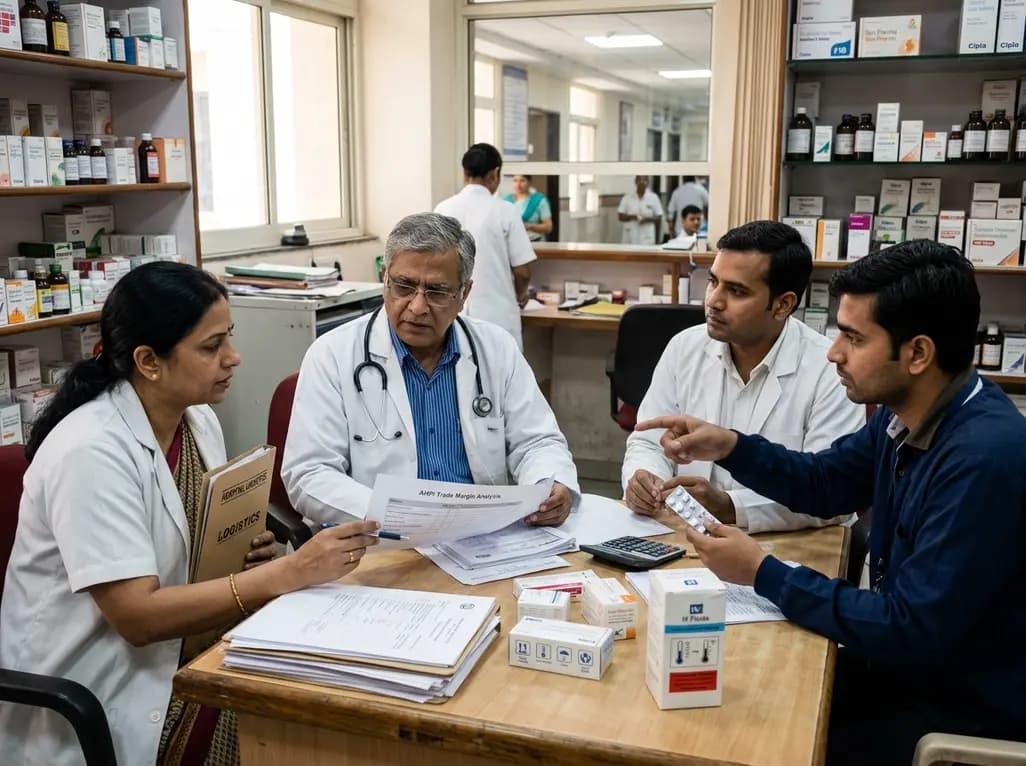
The ongoing hospital drug pricing debate has intensified following recent judicial observations in India regarding wide markups on critical therapeutics. In response to concerns raised by the Supreme Court regarding steep price discrepancies in oncology formulations, healthcare provider organizations have urged policymakers to adopt a measured, multidimensional approach. The Association of Healthcare Providers of India has firmly advised against imposing a uniform 16 percent margin across all pharmaceutical formulations and consumables. Stakeholders emphasize that simplistic price caps could severely disrupt clinical procurement, product availability, and patient safety across tertiary care environments.
Judicial scrutiny recently highlighted extreme disparities between procurement costs and final retail prices charged to consumers. Specifically, the Supreme Court examined instances where specialized oncology infusions supplied to distributors at modest rates carried tenfold retail price tags. Consequently, the court questioned whether authorities should enforce a standardized 16 percent retailer margin, similar to limits governing scheduled formulations under the Drugs Prices Control Order. Judicial authorities expressed deep concern regarding the financial toxicity borne by vulnerable families. Moreover, the court noted that high retail markups inflate the financial burden on state-funded public health programs and private insurance mechanisms.
In addition, the bench scrutinized hospital retail practices that compel admitted patients to purchase medicines exclusively from in-house dispensaries. Consequently, legal representatives urged the central government to formulate comprehensive measures that protect consumer welfare. However, healthcare leaders argue that broad judicial characterizations overlook essential operational distinctions between commercial retail chemists and institutional clinical pharmacies. Therefore, translating retail pharmacy regulations directly into high-acuity inpatient settings demands careful examination of administrative realities.
The Association of Healthcare Providers of India highlights that pharmaceutical logistics encompass diverse product categories with distinct handling requirements. Fast-moving oral formulations for chronic conditions follow predictable inventory turnover and minimal storage expenditures. In contrast, specialized biological molecules, advanced monoclonal antibodies, and temperature-sensitive antineoplastic agents demand rigorous cold-chain integrity. Furthermore, critical care facilities must constantly maintain low-volume, life-saving antidotes and specialized surgical adhesives that carry high holding costs and frequent expiration waste. Applying an identical trade margin across these disparate categories ignores critical logistical overhead.
Consequently, capping retailer margins at a rigid 16 percent could make essential low-turnover drugs economically unviable to inventory. If private healthcare facilities cannot recover specialized storage and spoilage costs, critical inventory shortages could emerge quickly. In addition, hospitals frequently stock specialized emergency formulations that remain unused for months before saving a single critically ill patient. Therefore, differentiated pricing models must accommodate actual cold-chain compliance, fragile transport protocols, and specialized wastage reserves rather than relying on uniform margin restrictions.
Central to the current hospital drug pricing debate is the financial structure of contemporary institutional inpatient reimbursement. The Association of Healthcare Providers of India points out that modern hospitals treat most inpatients under bundled package rates. Both private insurance underwriters and public health initiatives like Ayushman Bharat utilize fixed package rates for common surgical and medical admissions. Under these established reimbursement packages, healthcare institutions cannot invoice pharmaceutical consumables separately. Thus, facilities absorb all fluctuations in drug acquisition costs directly within the preset institutional package fee.
For independent cash-paying patients, hospitals dispense products according to the Maximum Retail Price printed directly by pharmaceutical manufacturers. Crucially, healthcare institutions do not unilaterally establish retail price tags. Manufacturers calculate these price ceilings within prevailing statutory guidelines set by the National Pharmaceutical Pricing Authority. When hospitals negotiate volume procurement discounts from manufacturers, those operating margins directly subsidize institutional infrastructure, extensive nursing support, and charitable inpatient beds. Consequently, eliminating trade discounts without restructuring package tariffs could severely destabilize private hospital solvency across Tier-2 and Tier-3 urban centers.
Hospital pharmacies perform intricate clinical functions that extend far beyond traditional commercial dispensing. Clinical leadership stresses that institutions deliver continuous, round-the-clock clinical services that safeguard patient wellbeing. Institutional pharmacists conduct rigorous barcode verification, dilution calculations, and sterile compounding inside certified laminar airflow biological safety cabinets. For instance, oncology pharmacy technicians prepare cytotoxic intravenous regimens under strictly controlled conditions to prevent microbial contamination and hazardous occupational exposure. Moreover, specialized oncology nurses administer these complex infusions using precision electronic volumetric pumps under continuous physician oversight.
Furthermore, hospital clinical pharmacists systematically reconcile medication profiles to avoid adverse drug interactions and catastrophic prescribing errors. These specialized clinical workflows require substantial capital investments in cleanroom technology, automated dispensing cabinets, and ongoing professional staff training. In addition, healthcare facilities bear complete legal and clinical responsibility for ensuring optimal therapeutic outcomes and prompt management of adverse reactions. Therefore, viewing drug dispensing purely as a retail trade transaction fundamentally undervalues the rigorous continuum of multidisciplinary hospital care.
Developing a rational pricing framework requires balanced engagement between healthcare providers, regulatory authorities, and patient advocacy representatives. Healthcare leaders strongly recommend evidence-based pricing methodologies instead of blunt across-the-board margin ceilings. The National Pharmaceutical Pricing Authority previously demonstrated successful trade margin rationalization within select oncology therapeutic categories. Under that pilot framework, regulators capped margins based on price-to-stockist levels rather than dictating uniform retail caps across the entire pharmaceutical sector. Consequently, patients experienced meaningful price reductions without compromising commercial drug availability.
Furthermore, authorities should encourage transparent institutional pricing schedules alongside robust public insurance reimbursement reforms. Government agencies must revise bundled package rates periodically to reflect genuine clinical inflation and technological upgrades. Simultaneously, hospitals should uphold transparent billing practices and eliminate restrictive procurement mandates that disadvantage ambulatory outpatients. Ultimately, achieving sustainable healthcare financing requires protecting patient affordability while simultaneously preserving the financial vitality of advanced clinical delivery ecosystems across India.
Q1: Why does AHPI oppose a uniform 16 percent margin on hospital drugs and consumables?
The Association of Healthcare Providers of India opposes a uniform 16 percent margin because pharmaceutical products possess vastly diverse handling requirements. Fast-moving oral tablets, fragile cold-chain biologics, and rare emergency antidotes carry drastically different overhead and storage risks. Enforcing a flat margin could make essential, low-volume, and temperature-sensitive drugs economically unviable for hospitals to stock, thereby creating critical medicine shortages and jeopardizing acute patient care.
Q2: How do hospital drug markups interact with bundled health insurance packages?
Most hospitalized patients utilize private medical insurance or public welfare schemes that pay hospitals through comprehensive, bundled case packages. These fixed institutional packages do not permit separate billing for individual medications or surgical consumables. Consequently, hospitals absorb pharmaceutical acquisition expenses within predetermined treatment rates, meaning that procurement discounts often serve to offset broad clinical overhead rather than inflating direct patient invoices.
Q3: How does institutional clinical dispensing differ from commercial retail pharmacy?
Institutional pharmacies operate as an integrated part of continuous clinical care rather than standard mercantile retailers. In-house pharmacy teams execute sterile compounding in laminar airflow biosafety cabinets, verify complex antineoplastic dosing, and maintain rigorous cold-chain integrity. Furthermore, hospitals employ dedicated clinical staff to administer therapeutics safely, monitor for adverse drug reactions, and ensure desired clinical outcomes round the clock.
Disclaimer: This content is for informational and educational purposes only. It does not constitute medical advice or replace professional judgment. Refer to the latest local and national guidelines for clinical practice.
References

Read summarized clinical updates, watch expert medical content, and earn CME certifications right from your smartphone.
Open your smartphone camera to scan and install.





AHPI has opposed a blanket 16% trade margin cap on hospital medicines and consumables following Supreme Court scrutiny over markups. The association urges an evidence-based approach, emphasizing complex cold-chain handling, round-the-clock clinical preparation, bundled packages, and diverse supply chains.
Today

With post-monsoon dengue surges threatening South Asian health systems, physicians must refine triage and management. This guide covers vital warning signs, plasma leakage detection, crystalloid titration, and vector containment strategies to prevent mortality during seasonal arboviral epidemics.
Today

Findings from Project Viva indicate that sustained postpartum weight retention, rather than excessive gestational weight gain alone, directly worsens women's mid-life cardiovascular health, degrading blood pressure and glycemic parameters decades after delivery.
Today
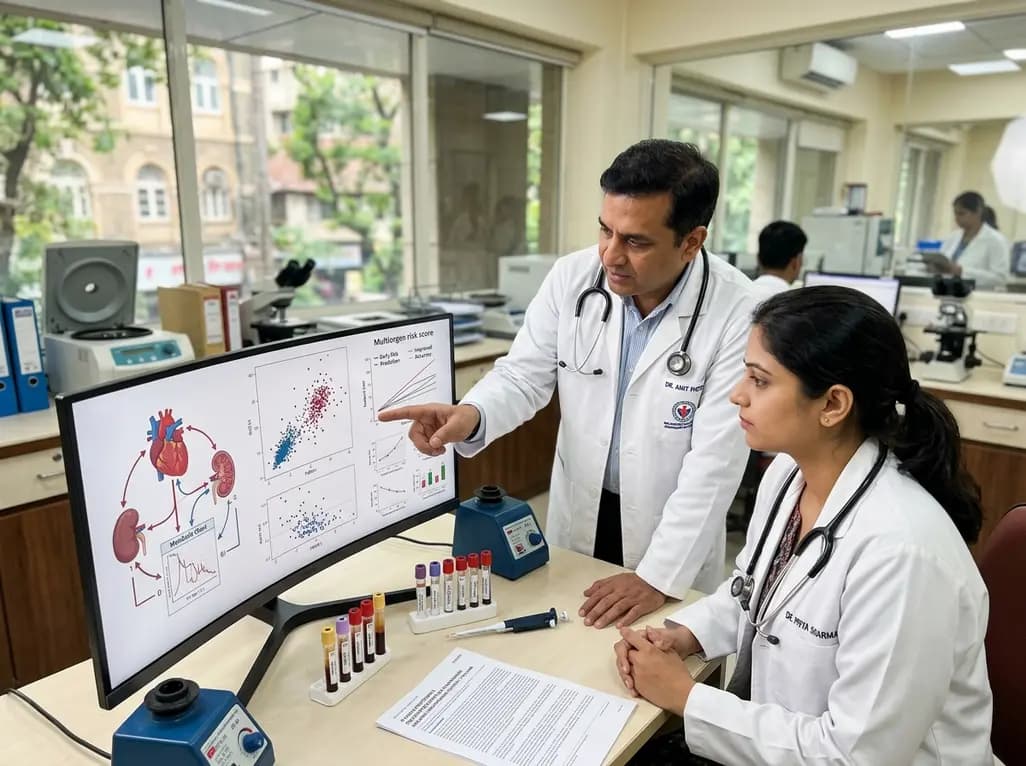
A large UK Biobank study reveals that plasma proteomic signatures capture preclinical organ damage and improve multiorgan risk prediction across early CKM syndrome stages 0 to 2 beyond traditional PREVENT clinical models.
Today
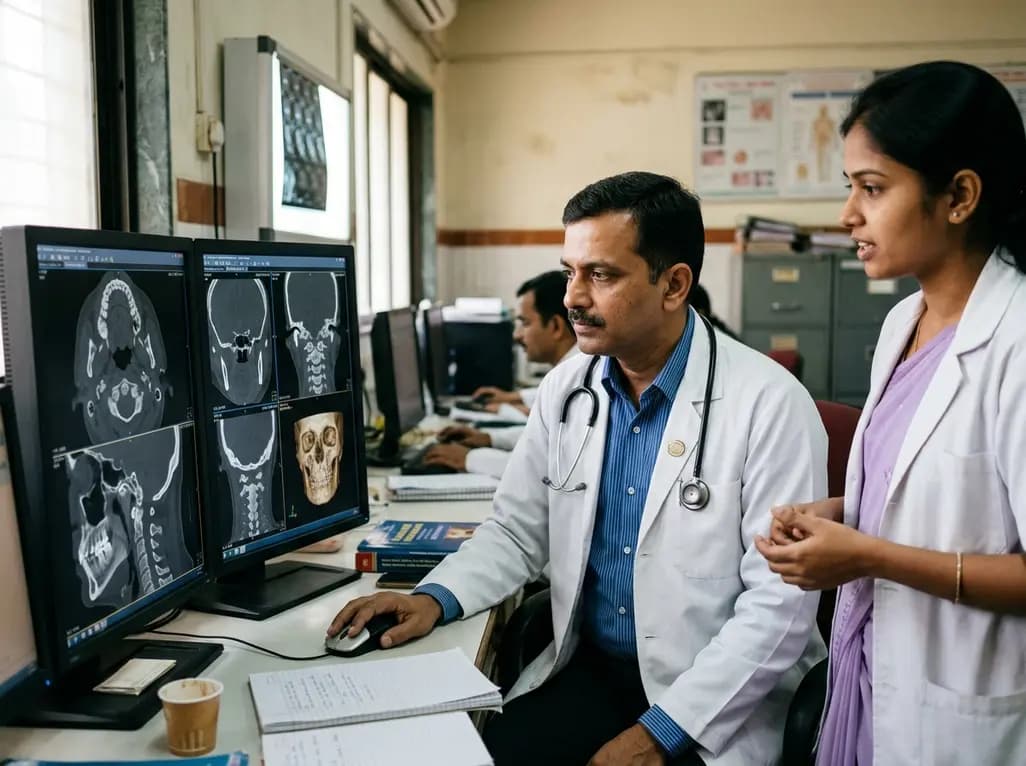
A retrospective CBCT study reveals that superior TMJ space asymmetry correlates moderately with occipital condyle-atlas-axis asymmetry in unilateral TMJ osteoarthritis, highlighting an imaging correlate between jaw biomechanics and upper cervical alignment rather than a standalone diagnostic marker.
Today

A Bayesian multilevel meta-analysis reveals that aerobic training combined with moderate carbohydrate restriction modestly lowers HbA1c in type 2 diabetes. However, sparse data and very low certainty leave incremental benefits over exercise or diet alone unproven, highlighting the need for individualized care.
Today
