.webp&w=384&q=75)

Loading, please wait...
Loading, please wait...

The Supreme Court of India recently highlighted serious regulatory gaps regarding hospital drug mark-ups in private healthcare facilities. A judicial bench raised urgent concerns regarding massive price differences between wholesale acquisition rates and retail costs. Consequently, healthcare equities faced severe market corrections as regulatory scrutiny intensified across corporate institutions. This critical judicial intervention underscores how extreme markups directly impact affordability for patients. Furthermore, it challenges how clinical centers balance administrative revenue with therapeutic access.
During recent court proceedings, Justices Vikram Nath and Sandeep Mehta addressed the expanding commercialization of clinical treatment. The judges noted that corporate hospitals frequently operate as profit-driven enterprises rather than compassionate service providers. Therefore, the bench questioned why vulnerable individuals must absorb dramatic markups on essential therapies. The court emphasized that excessive retail margins create unjustified financial toxicity for families confronting life-threatening diagnoses. In response, the Solicitor General acknowledged that the current distribution system requires comprehensive administrative evaluation. The court subsequently granted authorities two weeks to assess regulatory remedies and examine hospital revenue frameworks. Notably, major private healthcare networks witnessed significant stock depreciations following these pointed judicial inquiries. Investors rapidly recognized that potential statutory price caps could alter traditional revenue streams derived from pharmaceutical sales. Meanwhile, medical ethicists welcomed the judicial intervention as an overdue step toward fair billing practices. Furthermore, genuine transparency in clinical drug costs remains fundamental to establishing lasting patient trust across private facilities. Thus, the top legal proceedings signal an impending structural shift in how Indian healthcare authorities oversee commercial hospital operations.
The Supreme Court highlighted a particularly stark example involving an essential oncology formulation during the hearings. Specifically, the bench examined a cancer medication supplied to retail dispensaries for approximately twenty-seven hundred rupees. However, the exact same drug carried a manufacturer maximum retail price of twenty-seven thousand rupees. Justice Mehta described this ten-fold price inflation as plain carnage inflicted directly upon suffering citizens. In oncology, systemic antineoplastic regimens already demand prolonged administration cycles that drain family life savings. Therefore, compounding manufacturer margins with exorbitant retail prices exacerbates catastrophic out-of-pocket health expenditure. Many oncologists acknowledge that steep drug expenses frequently force vulnerable individuals to abandon life-saving therapies entirely. When life-saving molecules carry tenfold markups, economic hardship replaces clinical efficacy as the primary therapeutic determinant. Consequently, clinicians often find themselves navigating painful discussions about therapy affordability instead of pure medical indications. The bench observed that intermediate trade participants extract massive economic rents from critically ill cancer patients. Pharmaceutical manufacturers often provide steep procurement discounts, but institutions still bill patients at inflated maximum prices. Accordingly, judicial authorities demand clear statutory accountability regarding who captures this massive monetary surplus.
To resolve uncontrolled retail inflation, the Supreme Court asked the Union Government to evaluate a sweeping reform. Specifically, the bench proposed establishing a uniform sixteen percent trade margin ceiling across all pharmaceutical products. Under the current Drugs Prices Control Order of 2013, scheduled formulations already adhere to defined retail caps. However, non-scheduled medications and specialized hospital drugs currently enjoy wide pricing discretion outside these rigid thresholds. Justice Mehta questioned why health authorities maintain artificial distinctions between essential and non-essential therapeutic compounds. The bench suggested that every pharmaceutical agent warrants structured margin limits to protect consumer welfare. If implemented, a standardized sixteen percent margin above the procurement price would drastically curtail retail pricing abuse. Furthermore, this structural cap would eliminate the artificial inflation currently observed between hospital purchase rates and billings. Healthcare economists believe that strict trade margin rationalization would enhance therapeutic compliance across chronic disease cohorts. Additionally, standardized pricing rules could simplify procurement calculations for tertiary care hospitals and charitable organizations alike. As the central government formulates its response, policy analysts anticipate substantial debate regarding sustainable distributor compensation. Nevertheless, aligning non-scheduled drug markups with national health priorities remains a necessary public interest reform.
The Supreme Court also scrutinized restrictive commercial practices that mandate patients purchase supplies exclusively from in-house dispensaries. Many private hospital establishments prohibit admitted individuals from procuring identical branded or generic drugs from competitive external outlets. In some distressing instances, medical centers reportedly decline clinical care if families source medications from outside pharmacies. The bench condemned these practices, emphasizing that patients must retain fundamental consumer autonomy when choosing pharmacy providers. Restrictive pharmacy mandates strip families of the ability to negotiate discounts or purchase affordable generic equivalents. Moreover, tying clinical treatment guarantees to internal dispensary sales violates basic ethical canons of medical governance. Clinicians often find their ethical commitment to patient welfare compromised by corporate retail directives. When administrative policies force captive patients to buy at top retail rates, therapeutic dignity suffers immensely. Consequently, legal advocates have urged health regulators to enforce strict patient choice across all accredited facilities. Eliminating closed pharmacy monopolies would foster healthy price competition and lower out-of-pocket medical bills. Furthermore, hospital managements must clearly separate clinical admission guidelines from pharmaceutical dispensary revenues. Therefore, establishing transparent pharmacy policies represents an essential requirement for rebuilding public trust in institutional clinical care.
Uncontrolled pharmaceutical markups not only hurt self-paying individuals but also directly compromise public welfare financing. During the proceedings, the bench observed that state-sponsored insurance programs, such as Ayushman Bharat, bear substantial reimbursement burdens. Corporate facilities often acquire life-saving medications at wholesale discounts but claim full reimbursements against published maximum retail prices. Thus, public treasury funds and taxpayer contributions effectively subsidize inflated commercial profit margins instead of expanding clinical coverage. The court remarked that such billing disparities undermine the fiscal sustainability of national universal healthcare initiatives. In addition, these pricing controversies place practicing doctors in an uncomfortable professional and ethical predicament. Physicians enter medicine to heal patients, yet institutional billing systems can create profound moral distress among care teams. When clinical recommendations lead directly to devastating medical bills, therapeutic alliances inevitably begin to fracture. Therefore, aligning institutional procurement with ethical billing standards protects both healthcare providers and vulnerable patients. Establishing verifiable procurement-to-billing audit trails would prevent questionable markups under public health programs. Ultimately, genuine healthcare reform requires aligning corporate financial viability with sacred clinical ethics and transparent societal responsibility.
Q1: Why did the Supreme Court raise concerns over hospital drug mark-ups?
The Supreme Court raised urgent concerns after examining severe price gaps between wholesale procurement costs and maximum retail prices. Specifically, the bench highlighted an essential cancer medication supplied for twenty-seven hundred rupees but billed at twenty-seven thousand rupees. Justices emphasized that these tenfold retail markups place an unacceptable financial burden on vulnerable families and publicly funded insurance reimbursement programs. Consequently, the judicial bench demanded immediate policy intervention from the central government.
Q2: What is the proposed uniform sixteen percent trade margin on medicines?
The proposed margin reflects the retailer profit ceiling established under the Drugs Prices Control Order of 2013. During recent proceedings, the Supreme Court suggested extending this standardized cap to all pharmaceutical products, including non-scheduled formulations. This regulatory adjustment aims to prevent intermediate distributors and private hospitals from inflating consumer bills. Therefore, it ensures uniform and affordable treatment access across all therapeutic disciplines in India.
Q3: Why are mandatory in-house hospital pharmacies facing legal scrutiny?
The Supreme Court questioned hospital policies that force admitted patients to purchase medicines exclusively from internal hospital pharmacies. Often, these proprietary dispensaries charge full maximum retail prices while prohibiting patients from purchasing discounted identical drugs outside. Furthermore, the bench warned that conditioning clinical care on internal dispensary purchases violates fundamental consumer autonomy. Consequently, such restrictive practices unduly exploit vulnerable families during critical healthcare emergencies.
Disclaimer: This content is for informational and educational purposes only. It does not constitute medical advice or replace professional judgment. Refer to the latest local and national guidelines for clinical practice.
References

Read summarized clinical updates, watch expert medical content, and earn CME certifications right from your smartphone.
Open your smartphone camera to scan and install.





The Supreme Court of India has raised serious concerns regarding extreme retail price inflation on life-saving pharmaceuticals. The court questioned corporate hospital markups, proposing a standardized sixteen percent margin to curb catastrophic out-of-pocket healthcare expenses for Indian patients and families.
Today

Artificial intelligence is transitioning healthcare from reactive diagnosis to proactive forecasting. By evaluating plasma proteomic profiles and longitudinal health trajectories, clinicians can identify early systemic decline, stratify multimorbidity risk, and personalize preventive interventions effectively.
Today

Scandinavian register evidence reveals that neonatal birth length strongly predicts adult health and mortality, whereas birth weight dictates cognitive capacity. Symmetric growth restriction causes far more severe long-term deficits than asymmetric restriction, underscoring the need for comprehensive anthropometry.
Today

Haryana Chief Minister Nayab Singh Saini has rolled out landmark performance-linked financial incentives for public sector clinicians and allied staff. The comprehensive reform introduces free intravitreal diabetic retinopathy management, flexible empanelment for private specialists, and digital infrastructure upgrades.
Today

A cross-sectional study reveals a strong positive correlation between problematic internet use and kinesiophobia in adults aged 18-45 with non-specific low back pain, highlighting how digital overuse reinforces movement fear and complicates musculoskeletal recovery.
Today
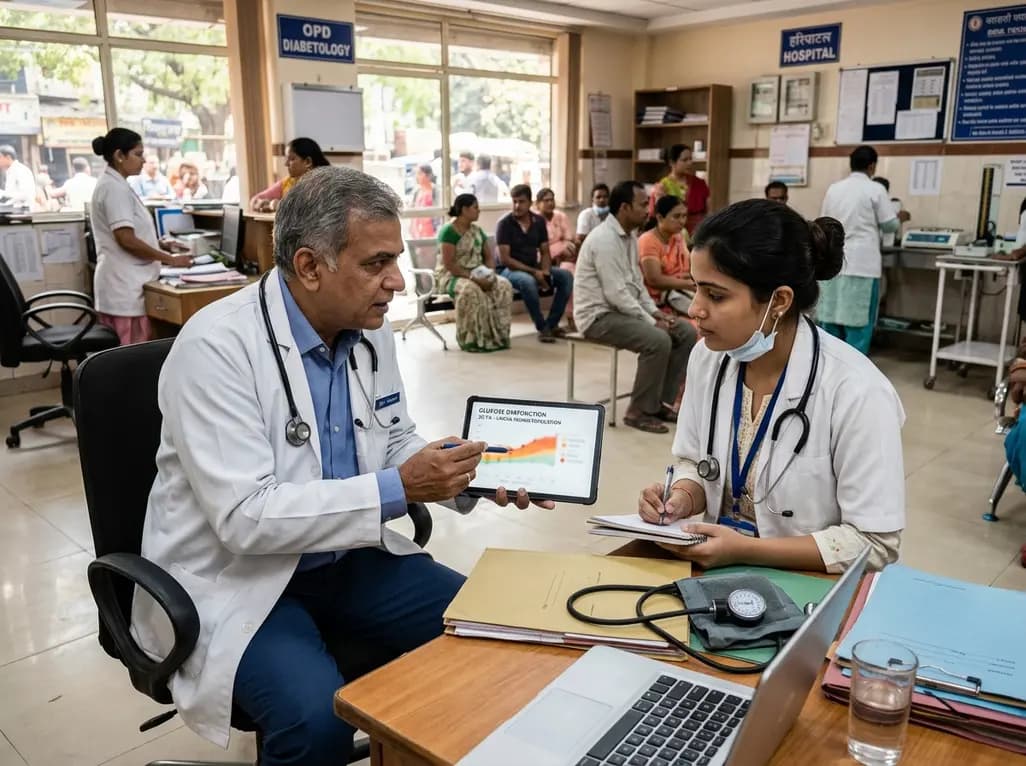
Data from the 2026 Workforce Health Index reveals that 38.7% of urban employees and dependents exhibit abnormal glycemic control. Emerging at increasingly younger ages, this metabolic shift intersects with severe vitamin deficiencies, highlighting the urgent need for early workplace screenings and targeted clinical care.
Today
