

Loading, please wait...
Loading, please wait...

Understanding rare hemoglobin variants remains critical for internal medicine specialists and hematologists evaluating unexpected laboratory findings. Hereditary persistence of fetal hemoglobin represents a unique condition where fetal globin production continues beyond infancy. While heterozygous carriers rarely present with overt hematological abnormalities, homozygous deletional HPFH produces a striking laboratory profile that easily confuses clinicians. Recently, an incidental diagnosis in monozygotic Ghanaian twins highlighted this condition. The presentation demonstrated how total adult expression of fetal hemoglobin manifests with elevated red cell mass yet normal red cell indices.
During human development, globin gene expression undergoes a coordinated developmental transition. Erythroid precursors initially synthesize fetal hemoglobin, composed of two alpha and two gamma chains. Soon after birth, transcriptional repressors silence gamma-globin genes and activate adult beta-globin production. Consequently, healthy adult erythrocytes contain less than one percent fetal hemoglobin.
However, specific deletions within the beta-globin cluster located on chromosome 11 permanently alter this transition. These large structural deletions remove the delta- and beta-globin genes along with nearby regulatory elements. As a result, erythroid cells fail to transition toward beta-globin expression. Instead, persistent transcription of gamma-globin genes continues throughout adult life. In heterozygous carriers, this mutation produces fetal hemoglobin levels between fifteen and thirty percent. In contrast, homozygous inheritance completely removes the genomic template for adult beta and delta chains. Therefore, affected individuals synthesize fetal hemoglobin as their sole oxygen carrier. Because regulatory mechanisms preserve balanced globin chain synthesis, red cells avoid hemolysis. Thus, patients preserve erythrocyte integrity despite lacking adult hemoglobin.
Clinicians frequently discover hereditary persistence of fetal hemoglobin unexpectedly during evaluations for unrelated medical symptoms. For instance, the Ghanaian twin index case presented solely with transient flank pain, lacking constitutional symptoms or hemolytic manifestations. Initial high-performance liquid chromatography identified one hundred percent fetal hemoglobin without detectable hemoglobin A or hemoglobin A2.
Furthermore, physical examination revealed no splenomegaly or jaundice, which typically accompany severe hemoglobin disorders. Monozygotic twin testing confirmed an identical phenotypic profile, underscoring identical inherited genetic architecture. Moreover, maternal screening demonstrated a fetal hemoglobin elevation of twenty-nine percent, representing a classic heterozygous carrier state. Meanwhile, testing in another sibling revealed completely normal hemoglobin electrophoresis patterns. Importantly, homozygous deletional HPFH causes minimal clinical morbidity when inherited without concurrent hemoglobin mutations. Red blood cell indices remain normocytic and normochromic because gamma chains fully replace absent beta chains. Patients enjoy normal growth and exercise tolerance. Consequently, physicians must recognize that complete absence of adult hemoglobin does not invariably signal severe pathology.
Although homozygous carriers remain asymptomatic, laboratory examinations often demonstrate pronounced erythrocytosis. Fetal hemoglobin possesses a substantially higher oxygen affinity than adult hemoglobin A. Specifically, fetal hemoglobin binds 2,3-bisphosphoglycerate weakly due to a critical amino acid substitution in the gamma chain. Consequently, red blood cells hold oxygen more tightly within peripheral capillaries, shifting the oxygen dissociation curve leftward.
This altered binding affinity restricts oxygen offloading into peripheral microvascular beds under physiological conditions. Renal peritubular interstitial cells detect this relative tissue hypoxia and upregulate hypoxia-inducible factors. As a result, the kidneys increase erythropoietin secretion into the bloodstream. Elevated erythropoietin accelerates erythroid precursor survival and proliferation within bone marrow niches. Therefore, patients develop an increased total red cell count and elevated hematocrit to guarantee tissue oxygenation. Crucially, red cell indices like mean corpuscular volume remain entirely normal. Clinicians must not confuse this benign compensatory erythrocytosis with polycythemia vera. Recognizing this distinction prevents unnecessary bone marrow biopsies and therapeutic phlebotomies.
Differentiating hereditary persistence of fetal hemoglobin from delta-beta thalassemia represents an essential diagnostic challenge for hematologists. Both genetic conditions involve extensive deletions in the beta-globin gene complex and produce high fetal hemoglobin levels. However, their cellular physiology and clinical behavior diverge substantially.
In delta-beta thalassemia, unequal deletion breaks compromise gamma-globin expression, causing an imbalance between alpha and non-alpha globin chains. Consequently, free alpha-globin chains precipitate within developing erythroblasts, causing ineffective erythropoiesis, microcytosis, and mild anemia. In contrast, deletional HPFH mutations preserve highly efficient gamma-chain transcription. Therefore, globin chain synthesis remains balanced, and red blood cells exhibit normal morphology without hemolysis. Additionally, flow cytometric analysis shows a uniform, pancellular distribution of fetal hemoglobin across red cells in deletional HPFH. Conversely, delta-beta thalassemia displays a heterocellular distribution with unequal fetal hemoglobin concentrations among cell populations. Clinicians should utilize molecular characterization whenever routine electrophoretic patterns leave uncertainty. Establishing this distinction prevents misclassifying a benign condition as a symptomatic thalassemia syndrome.
In regions with high hemoglobinopathy prevalence, such as India and Sub-Saharan Africa, detecting HPFH holds profound clinical relevance. While isolated homozygous HPFH is benign, co-inheritance with other globin gene mutations dramatically alters clinical phenotypes. For example, co-inheriting HPFH with sickle cell disease significantly attenuates sickling complications. High intracellular fetal hemoglobin concentrations inhibit sickle hemoglobin polymerization, preventing vaso-occlusive crises and end-organ damage.
Similarly, when patients co-inherit HPFH with beta-thalassemia mutations, elevated gamma-globin production compensates for missing beta chains. Consequently, this genetic combination converts transfusion-dependent beta-thalassemia major into a mild thalassemia intermedia phenotype. Therefore, identifying these deletions during premarital or antenatal screening provides critical prognostic guidance. Genetic counselors must interpret these electrophoresis profiles accurately to provide appropriate guidance to prospective parents. Inadvertently mistaking HPFH for thalassemia major could trigger unnecessary psychological distress and inappropriate interventions. Furthermore, understanding the molecular mechanisms of deletional HPFH has inspired modern gene editing therapies designed to reactivate fetal hemoglobin.
Homozygous deletional HPFH produces one hundred percent fetal hemoglobin without causing anemia because gamma-globin synthesis matches alpha-globin output. In contrast, homozygous beta-thalassemia causes severe alpha-globin chain imbalance, severe hemolysis, and life-threatening anemia requiring regular blood transfusions. While beta-thalassemia patients develop microcytosis, splenomegaly, and skeletal abnormalities, individuals with HPFH maintain normal red cell indices, normal physical development, and an entirely asymptomatic clinical course without requiring medical therapy.
Individuals with this genetic variant develop secondary erythrocytosis due to the high oxygen affinity of fetal hemoglobin. Fetal hemoglobin binds oxygen more tightly than adult hemoglobin, which reduces oxygen release into peripheral capillary networks. Renal oxygen sensors detect this local tissue hypoxia and stimulate endogenous erythropoietin secretion. Consequently, erythroid bone marrow activity increases red blood cell production to maintain systemic oxygen delivery, raising hematocrit and total red cell count safely.
Diagnostic confirmation begins with high-performance liquid chromatography or capillary hemoglobin electrophoresis to quantify elevated fetal hemoglobin. High-performance liquid chromatography reveals elevated fetal hemoglobin with complete absence of adult hemoglobin in homozygous cases. Flow cytometry or Kleihauer-Betke staining demonstrates pancellular distribution of fetal hemoglobin across all circulating red cells. Finally, multiplex ligation-dependent probe amplification or targeted genomic sequencing confirms the specific large deletion within the beta-globin cluster, differentiating it definitively from delta-beta thalassemia.
Disclaimer: This content is for informational and educational purposes only and should not be considered professional medical advice, diagnosis, or treatment. Always consult qualified healthcare professionals before making medical decisions. Refer to the latest local and national guidelines for clinical practice.
References

Read summarized clinical updates, watch expert medical content, and earn CME certifications right from your smartphone.
Open your smartphone camera to scan and install.





A rare case of homozygous deletional hereditary persistence of fetal hemoglobin (HPFH) in Ghanaian twins reveals 100% HbF and erythrocytosis with normal red cell indices, providing key insights into globin gene regulation, differential diagnosis from delta-beta thalassemia, and clinical implications.
Today
The 2026 KASID guidelines provide comprehensive clinical recommendations on sexuality, fertility, pregnancy, and lactation for patients with inflammatory bowel disease, prioritizing sustained remission and multidisciplinary care to optimize maternal and neonatal outcomes.
Today
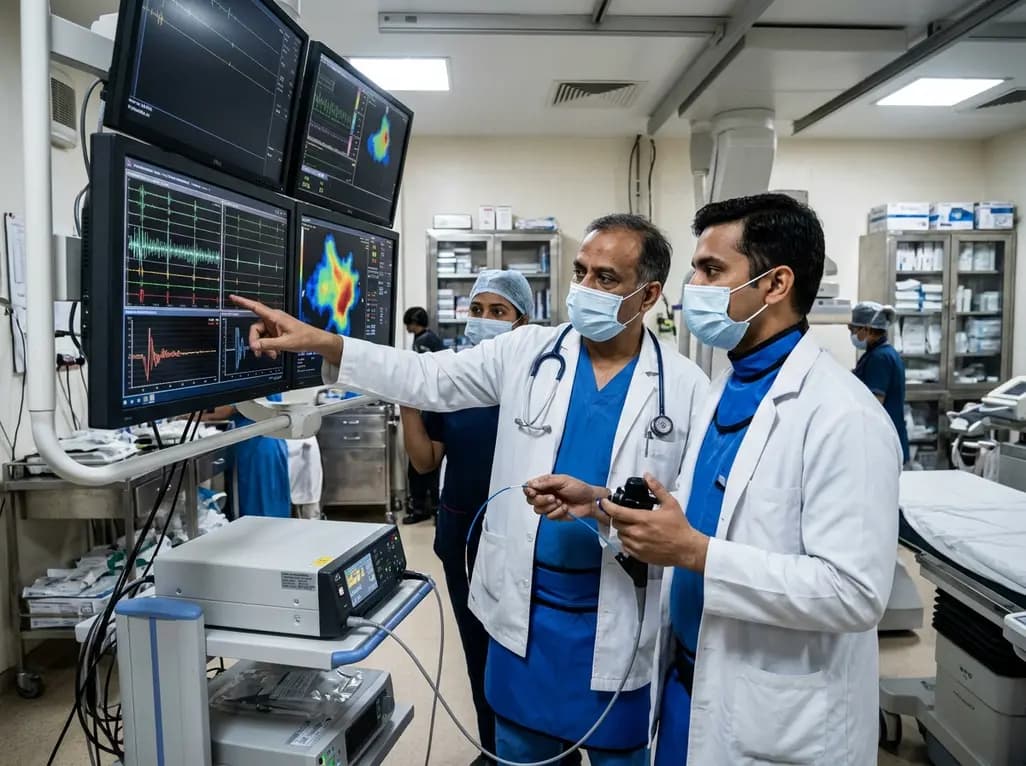
A comparative non-contact study reveals that high-power radiofrequency delivery with the QDOT MICRO catheter induces an artifactual contact force rise. Electrophysiologists must understand this power-dependent thermal and electrical phenomenon to avoid inadvertent catheter withdrawal and ineffective ablation.
Today

A novel proof-of-concept study presents a six-degree-of-freedom articulated manikin neck equipped with linear potentiometers. The system provides real-time kinematic motion feedback during cervical immobilisation, delivering sub-degree tracking accuracy to improve pre-hospital trauma training and patient safety.
Today

Novel glucose-responsive mPEG-PSA nanocarriers deliver insulin aspart on demand, achieving dual postprandial and basal glycemic control without hypoglycemia in diabetic models. This biomaterial breakthrough offers promising clinical implications for physiologic diabetes management.
Today
