.webp&w=384&q=75)

Loading, please wait...
Loading, please wait...

People living with HIV (PLWH) face a significantly higher risk for allograft rejection after receiving a kidney transplant. While this risk is well-documented, the underlying biological mechanisms remain somewhat elusive. Some researchers have suggested that immune dysregulation and chronic inflammation, driven by HIV latency, might play a role. A new study by Sulaiman A et al. recently explored the connection between the HIV reservoir transplant rejection risk and clinical outcomes in these patients.
In this investigation, the research team focused on kidney transplant recipients who received organs from both HIV-positive and HIV-negative donors. They specifically looked at the latent viral reservoir (LVR) size at baseline and through 52 weeks post-transplant. To measure the reservoir accurately, they utilized the advanced intact proviral DNA assay. Consequently, they compared the LVR levels between participants who experienced rejection and those who did not.
The results were quite revealing for the transplant community. Surprisingly, the researchers found no significant differences in the size of the latent reservoir between the two groups. This lack of difference held true regardless of the donor's HIV status. Therefore, the presence or size of the latent virus does not seem to be the primary driver of acute rejection episodes in this population.
These findings provide essential evidence supporting the feasibility of organ transplantation between HIV-positive individuals. Furthermore, the study suggests that the increased rejection risk in PLWH likely stems from other factors. These factors may include complex interactions with immunosuppressive medications or specific T-cell responses. Physicians can now feel more confident in the safety profiles of donor-positive transplants regarding viral reservoir dynamics.
Clinicians should continue to monitor kidney transplant recipients with HIV closely for rejection. However, they can take reassurance from the fact that the latent reservoir size does not appear to correlate with rejection risk. As we expand the use of the HOPE Act protocols, these biological insights remain vital for optimizing patient management and long-term graft survival.
No, recent research indicates there is no significant difference in the latent HIV reservoir size between patients who experience rejection and those who do not.
Yes, data from the latest studies support the feasibility and safety of HIV+ to HIV+ organ transplantation, showing no negative impact related to the viral reservoir.
The study used the intact proviral DNA assay to evaluate the reservoir size at baseline and up to one year after the transplant procedure.
Disclaimer: This content is for informational and educational purposes only. It does not constitute medical advice or establish a doctor-patient relationship. Always seek the advice of a qualified healthcare provider for any medical condition or treatment. Refer to the latest local and national guidelines for clinical practice.
References
1. Sulaiman A et al. Allograft Rejection and the Latent HIV Reservoir in Kidney Transplant Recipients with HIV. J Infect Dis. 2026 Mar 13. doi: undefined. PMID: 41823991.
2. Glicklich D, Nog R. HIV in kidney transplantation. Curr Opin Organ Transplant. 2022 Feb 1;27(1):65-71.
3. Durand CM et al. Safety of Kidney Transplantation from Donors with HIV. N Engl J Med. 2024 Oct 17;391(15):1390-1401.

Read summarized clinical updates, watch expert medical content, and earn CME certifications right from your smartphone.
Open your smartphone camera to scan and install.





New research finds no link between latent HIV reservoir size and kidney transplant rejection, supporting the feasibility of HIV+ to HIV+ organ donation....
7 months ago
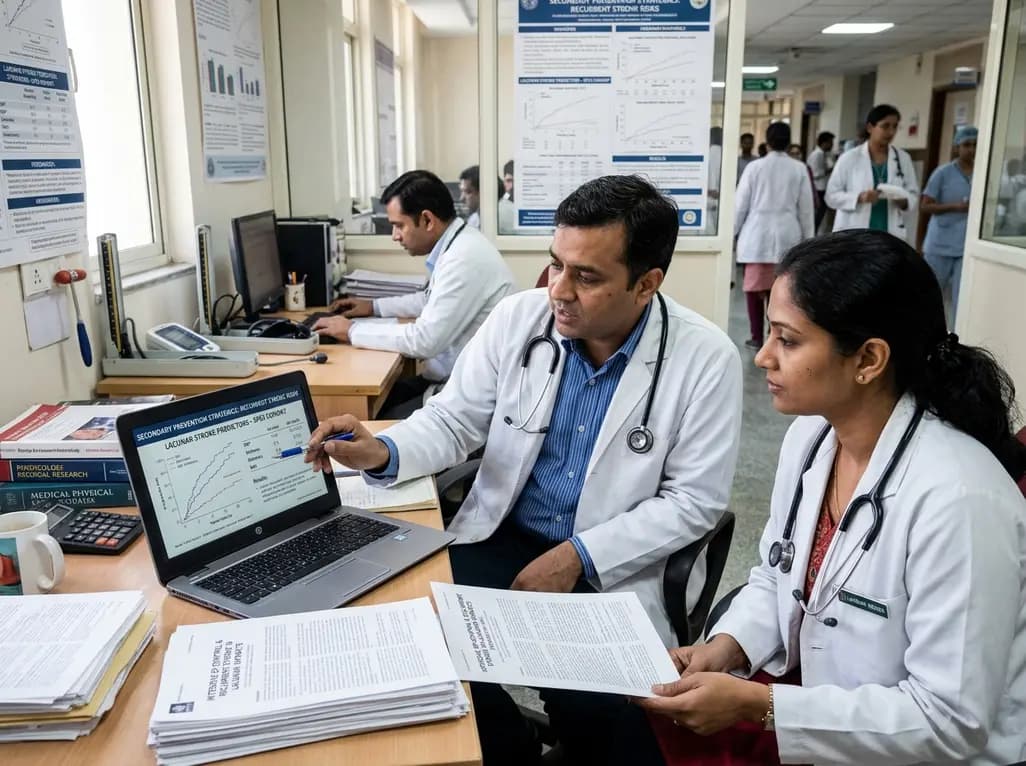
Explore vital recurrent stroke predictors in lacunar stroke patients managed with intensive blood pressure lowering. This analysis examines trial findings from SPS3 to uncover residual vascular risks, metabolic factors, and targeted secondary prevention strategies for high-risk neurological patients.
Today

Odisha has established India's first state-level clinical protocol specifically tailored for pregnant women with sickle cell disease. Developed with NHM and UNICEF, the framework provides structured antenatal screening, crisis mitigation, standardized referral pathways, and specialized interdisciplinary care.
Today

The Directorate General of Health Services directs Indian states to halt the hazardous reuse and reprocessing of single-use medical devices. Discover regulatory implications under the Drugs and Cosmetics Act, critical infection risks, legal liabilities, and operational changes required across clinical specialties.
Today

Mitochondria-targeted nanoparticles self-assembled from EGCG and L-glutamic acid effectively restore mitochondrial homeostasis, suppress synovial inflammation, and attenuate chondrocyte senescence in osteoarthritis, offering a promising disease-modifying nanotherapy.
Today

India is advancing preventive healthcare by integrating genomics, artificial intelligence, and quantum technologies. With the SANGAM programme sequencing one million Indian genomes, clinicians can unlock personalized therapies, detect cardiometabolic risks early, and curb the burden of diabetes and heart disease.
Today
