.webp&w=384&q=75)

Loading, please wait...
Loading, please wait...
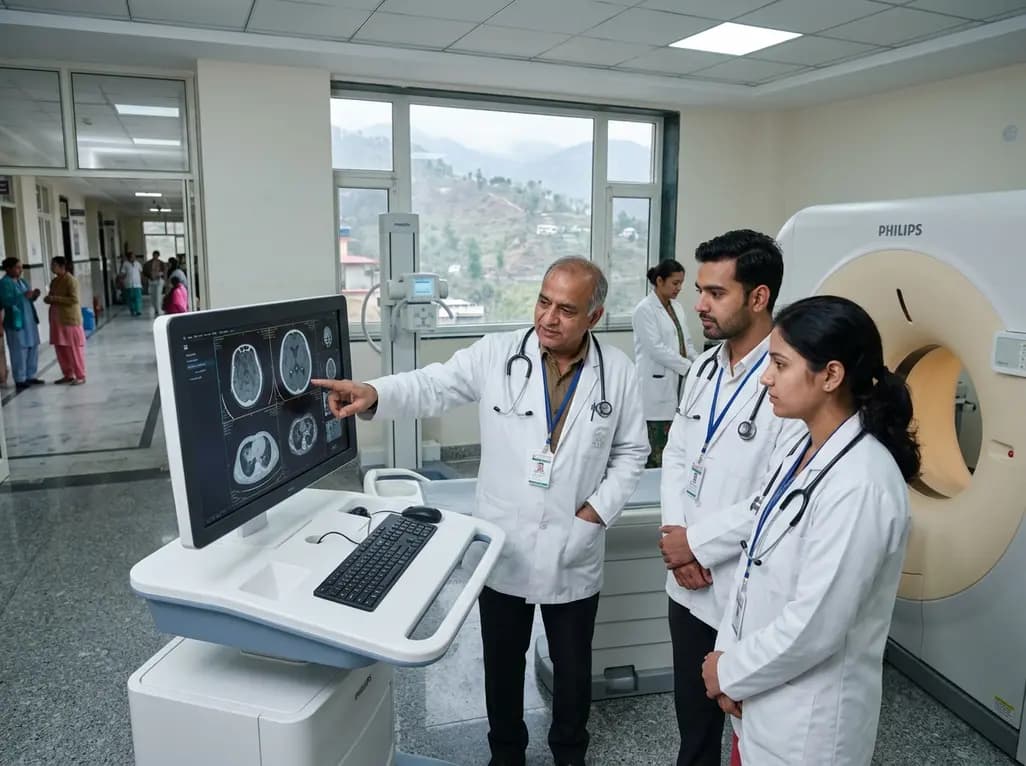
The state government is aggressively upgrading public healthcare facilities in Himachal by allocating approximately ₹3,000 crore toward medical modernization. This substantial capital investment seeks to overhaul diagnostic capabilities and expand specialized surgical services across regional medical institutions. Consequently, healthcare delivery in remote mountainous regions will witness meaningful qualitative improvements. Health and Family Welfare Minister Dr. Dhani Ram Shandil outlined this vision during the recent Board of Directors meeting of the Himachal Pradesh Medical Services Corporation Limited. Historically, mountainous topographies have posed severe logistical bottlenecks for emergency transfers and tertiary consultations. Therefore, modernizing local clinical infrastructure directly reduces the historical dependency on outside healthcare hubs.
Strengthening public health infrastructure remains a cornerstone of the state's strategic development roadmap. Consequently, the ongoing allocation of ₹3,000 crore prioritizes replacing obsolete machinery that has served institutions for over two decades. Many district hospitals and medical colleges currently manage aging equipment that requires frequent servicing and calibration. Therefore, transitioning to state-of-the-art diagnostic and therapeutic machinery is critical for modern clinical practice. In addition, this technological modernization ensures that patients in rural districts receive advanced diagnostic evaluations at their doorstep. Specialized medical interventions will no longer require exhausting journeys to major metropolitan centers. Furthermore, hospital administrators are establishing dedicated facilities to house complex modalities safely. Government medical colleges are actively preparing updated clinical wards, stable power backings, and temperature-controlled installations. Thus, these coordinated investments establish a robust foundation for modern evidence-based clinical practice statewide.
Centralized procurement operations managed by the Himachal Pradesh Medical Services Corporation Limited serve as the catalyst for transparent procurement. Previously, decentralized purchasing models frequently caused administrative delays, erratic price variations, and prolonged supply shortages. However, the centralized corporation has dismantled these cumbersome bureaucratic barriers. As a result, hospitals now receive essential drugs, surgical items, and specialized consumables through standardized rate contracts. Moreover, the corporation enforces rigorous quality benchmarks for all prospective vendors. This approach ensures that public institutions obtain durable, certified medical hardware at optimal value. In addition, transparent digital tendering reduces the lead time between project approval and machine commissioning. Medical superintendents can now track consignment deliveries in real time through unified inventory portals. Consequently, clinical teams experience fewer interruptions during routine diagnostic procedures and surgical operations.
Diagnostic precision forms the cornerstone of effective disease management and early therapeutic intervention. Therefore, the modernization scheme heavily emphasizes the phased installation of advanced imaging systems across government hospitals. Specifically, authorities are procuring high-resolution Positron Emission Tomography scanners, digital mammography units, and modern colour Doppler systems. In addition, digital radiography setups are replacing conventional film units to minimize patient radiation exposure. These digital modalities enable instant picture archiving and seamless tele-radiological consultations between remote clinics and tertiary centers. Consequently, general practitioners working in remote hills can collaborate effortlessly with expert radiologists in teaching hospitals. Furthermore, reliable early detection of oncological and vascular disorders significantly reduces late-stage disease presentations. Thus, advanced imaging access bridges longstanding healthcare disparities across diverse socioeconomic strata.
Cardiovascular diseases and acute surgical emergencies require rapid intervention and sophisticated monitoring infrastructure. In response, the state government is procuring advanced digital subtraction angiography systems and complete cardiac catheterization laboratories. Clinicians will now perform primary percutaneous coronary interventions and electrophysiological studies locally. Furthermore, high-end echocardiography and digital electrocardiography machines will support primary triage in zonal community hospitals. In the surgical domain, hospitals are actively acquiring modern laparoscopic equipment and minimally invasive surgical towers. These advanced tools reduce intraoperative blood loss, shorten postoperative hospital stays, and accelerate functional patient recovery. Additionally, blood transfusion safety will improve through the nationwide rollout of automated blood component separators. Thus, tertiary centers will deliver prompt, life-saving critical interventions during polytrauma and hemorrhagic emergencies.
For practicing physicians and resident doctors across Himachal Pradesh, these infrastructural enhancements represent a transformative paradigm shift. Historically, doctors in peripheral facilities faced significant diagnostic ambiguity due to outdated hardware and absent tertiary tools. Consequently, clinicians frequently had to refer unstable patients across perilous mountain roads. Now, the introduction of point-of-care diagnostics, digital radiography, and automated analyzers empowers practitioners to establish definitive diagnoses rapidly. Moreover, the availability of advanced laparoscopic and cardiac equipment creates valuable opportunities for continuous surgical skill development. Young specialists can hone their procedural expertise on contemporary platforms within government medical colleges. Ultimately, this comprehensive technical transformation fosters professional satisfaction, curbs clinical burnout, and improves patient retention within the public healthcare sector.
Q1: What is the primary objective of the ₹3,000 crore healthcare investment in Himachal Pradesh?
The state government has allocated ₹3,000 crore to replace obsolete medical machinery, upgrade government hospital infrastructure, and modernize diagnostic capabilities across Himachal Pradesh. This phased modernization initiative aims to deliver accessible, high-quality tertiary healthcare directly to residents in remote and urban areas alike.
Q2: How does HPMSCL improve the medical equipment procurement process?
The Himachal Pradesh Medical Services Corporation Limited streamlines institutional purchasing by centralizing tenders, enforcing stringent quality compliance, and eliminating bureaucratic delays. This transparent digital procurement framework ensures the timely, cost-effective distribution of advanced medical devices, surgical equipment, and essential pharmaceuticals across state medical facilities.
Q3: Which major diagnostic and surgical modalities are being installed under this initiative?
The initiative encompasses advanced diagnostic and interventional technologies, including PET scanners, colour Doppler machines, digital X-ray units, and digital mammography systems. Furthermore, hospitals are receiving advanced laparoscopic towers, cardiac cath lab equipment, DSA machines, blood component separators, and high-end echocardiography devices to support comprehensive specialized care.
Disclaimer: This content is for informational and educational purposes only. It does not constitute medical advice or replace professional judgment. Refer to the latest local and national guidelines for clinical practice.
References

Read summarized clinical updates, watch expert medical content, and earn CME certifications right from your smartphone.
Open your smartphone camera to scan and install.





The Himachal Pradesh government has committed ₹3,000 crore to overhaul public healthcare infrastructure. Managed via HPMSCL, this phased initiative focuses on replacing legacy medical machinery across state medical colleges and hospitals, significantly expanding diagnostic precision and tertiary clinical delivery.
Today
Researchers reveal that marine heatwaves are emerging as critical public health threats. Beyond damaging marine ecosystems, extreme ocean temperatures intensify severe weather disasters, trigger toxic algal blooms, disrupt seafood supply chains, and exacerbate eco-anxiety and grief among coastal populations.
Today
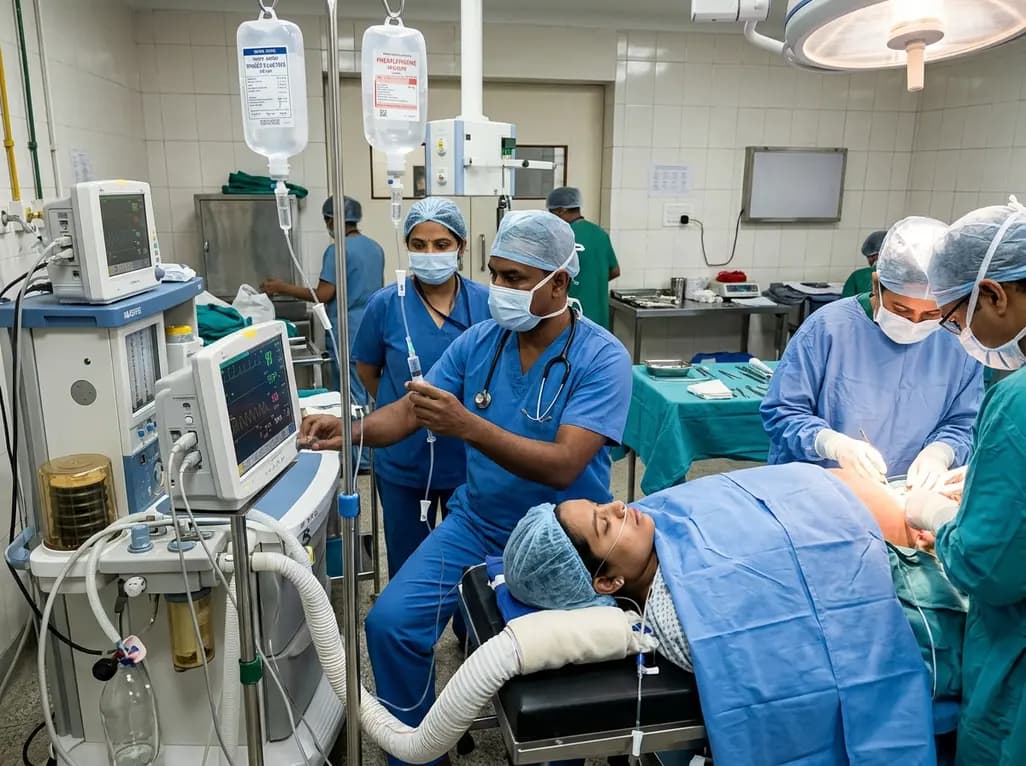
A multicenter MPOG database study of 289,047 cesarean delivery cases analyzed adherence to obstetric anesthesia best practices. General anesthesia avoidance reached 97.0%, while post-spinal vasopressor infusions (55.4%) and hypothermia prevention (56.7%) showed the lowest compliance, highlighting key targets.
Yesterday
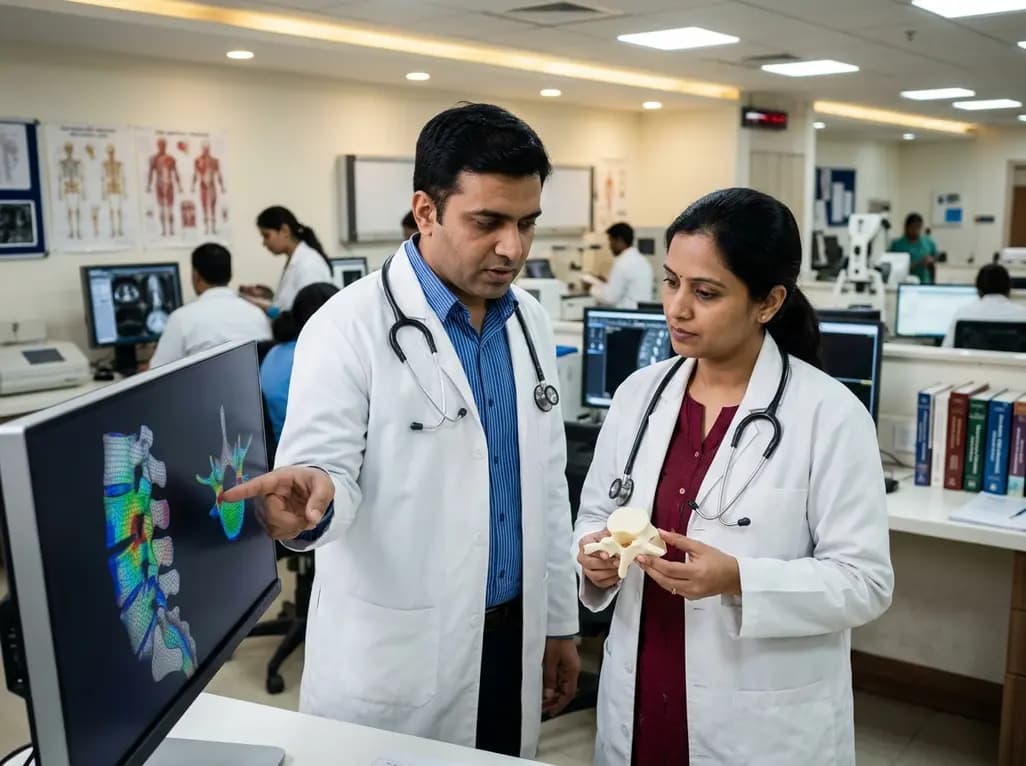
Recent research assesses an automated pipeline for CT-based vertebral finite element analysis, revealing how boundary condition components—especially load-point assignment—impact fracture-load accuracy in spinal biomechanics.
Today
The Supreme Court of India has sharply criticized the Food Safety and Standards Authority of India for delaying front-of-package warning labels. With non-communicable diseases causing over 6 million deaths annually, clear nutritional warnings are critical to combat childhood obesity, diabetes, and cardiovascular risk.
Today
