.webp&w=384&q=75)

Loading, please wait...
Loading, please wait...
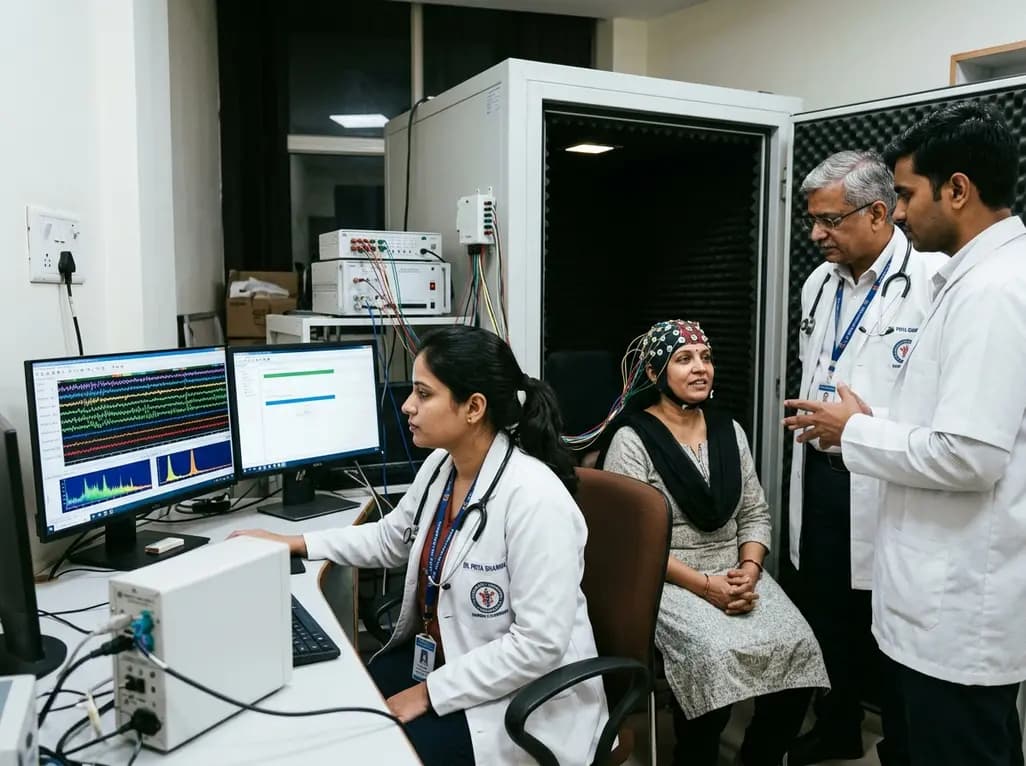
Understanding everyday communication in complex acoustic environments relies heavily on hierarchical speech processing across multiple cortical networks. When individuals converse in noisy rooms, the central auditory system must convert raw acoustic energy into meaningful linguistic constructs. Clinicians frequently encounter patients who struggle with speech-in-noise comprehension despite having normal peripheral audiograms. Electrophysiological investigations using continuous speech encoding models now demonstrate that electroencephalography (EEG) can dissociate low-level acoustic tracking from higher-order phonological and lexical processing. Consequently, examining these neural dynamics clarifies how auditory degradation impairs specific stages of language comprehension.
Human speech perception operates through distinct, interconnected computational stages. The ascending auditory pathway first captures low-level acoustic information, including the speech amplitude envelope, spectral variations, and rapid acoustic onsets. Subsequently, intermediate cortical structures translate these acoustic features into phonemes and phonetic categories. Finally, higher-order cortical regions integrate lexical probabilities and semantic context to extract meaning. Recent electrophysiological studies show that EEG neural tracking accurately reflects each tier of this auditory architecture during natural continuous listening.
Importantly, background noise disrupts these hierarchical levels in fundamentally different ways. Low-level acoustic representations remain relatively resilient even as the signal-to-noise ratio declines. In contrast, higher-level linguistic features, such as context-based word predictability and phoneme surprisal, experience substantial degradation under adverse listening conditions. Therefore, speech comprehension failures in noise do not arise solely from degraded acoustic capture. Instead, they reflect an inability of higher cortical networks to construct coherent linguistic representations from impoverished sensory inputs.
Recent encoding models reveal that decreasing signal-to-noise ratios exert their greatest toll on linguistic feature tracking. While cortical tracking of acoustic envelopes persists in moderate background noise, neural tracking of lexical surprisal and phoneme probability drops precipitously. This selective vulnerability explains why patients with central auditory processing difficulties report disproportionate cognitive exhaustion during everyday conversations. Furthermore, these findings emphasize that intelligibility and comprehension depend on intact semantic integration rather than basic sound detection.
Researchers observed that behavioral performance correlates with both low-level and high-level neural tracking metrics depending on acoustic demands. In quiet environments, high-level lexical surprisal tracking predominantly drives comprehension scores. Conversely, in severe noise, listener success relies heavily on robust acoustic onset tracking alongside top-down lexical compensation. Thus, the brain dynamically shifts its processing strategies to preserve comprehension as environmental listening demands fluctuate.
A key mechanism facilitating speech understanding in adverse environments is predictive coding. The human brain continuously generates top-down predictions regarding upcoming words based on linguistic context, syntax, and world knowledge. Electrophysiological data confirm that top-down, context-based predictions actively modulate bottom-up sensory processing in auditory cortex. Consequently, when acoustic signals become ambiguous due to masking noise, prior semantic context guides the interpretation of degraded acoustic tokens.
Neural markers tracking this predictive influence directly correlate with subjective and objective comprehension scores. When top-down predictive mechanisms function optimally, listeners maintain speech comprehension despite substantial background noise. However, when neurodegenerative conditions, cognitive decline, or temporal processing deficits impair predictive signaling, speech perception fails rapidly. Therefore, evaluating bidirectional interactions between bottom-up acoustic encoding and top-down semantic prediction provides an objective metric for assessing complex auditory processing.
These electrophysiological insights hold profound diagnostic value for neurologists, audiologists, and otolaryngologists. Standard pure-tone audiometry evaluates peripheral hearing thresholds but fails to assess central speech comprehension in noise. As a result, clinicians frequently fail to identify central auditory processing disorders, hidden hearing loss, and early cognitive impairment using conventional tests. Applying hierarchical EEG speech tracking allows clinicians to objectively isolate the exact stage where speech processing breaks down.
Furthermore, this objective framework enhances the assessment of auditory rehabilitation strategies. Clinicians can measure whether hearing aids, directional microphones, or cochlear implants successfully restore higher-level linguistic tracking rather than merely amplifying raw sound pressure. Similarly, neurologists can utilize natural speech EEG paradigms to identify early cortical deficits in aphasia, frontotemporal dementia, and mild cognitive impairment. Because naturalistic listening tasks require minimal active response, they serve as reliable diagnostic tools for diverse clinical populations.
Integrating machine learning with electrophysiological speech tracking will transform auditory neurodiagnostics over the coming decade. Continuous natural speech paradigms provide a more ecologically valid assessment than traditional repetitive click or tone-burst evoked potentials. By analyzing continuous EEG responses to audiobooks, clinicians can simultaneously quantify acoustic, phonemic, and lexical processing within a single ten-minute recording session. Moreover, rapid advancements in wearable EEG technology may soon bring these diagnostic capabilities directly into outpatient clinics.
Ultimately, linking hierarchical indices of neural speech tracking to behavioral speech comprehension bridges the gap between basic neurobiology and clinical practice. As computational encoding models continue to mature, they will provide standardized normative baselines for multilingual and diverse clinical populations. Consequently, healthcare providers will gain the ability to deliver targeted auditory and cognitive interventions tailored to individual neurophysiological profiles.
Acoustic speech tracking measures how auditory cortex entrains to physical sound properties, such as amplitude envelopes and spectral frequencies. Linguistic tracking evaluates higher-level neural responses to phonemes, syntactic structures, and lexical predictability. While acoustic tracking reflects basic sensory encoding, linguistic tracking captures semantic comprehension and language interpretation within higher cortical areas.
Background noise masks subtle spectrotemporal cues necessary for categorical phonemic perception and lexical recognition. Although the auditory system still detects the overall sound envelope, degraded acoustic inputs prevent higher cortical networks from resolving semantic ambiguity. Consequently, neural markers of word surprisal and linguistic processing exhibit steeper signal-to-noise ratio reductions than basic acoustic markers.
Hierarchical speech EEG paradigms objectively isolate specific processing failures along the central auditory pathway without requiring active patient participation. They help clinicians differentiate peripheral hearing loss from central auditory processing disorders, hidden hearing loss, and early cognitive decline. Furthermore, these metrics provide objective outcome measures for evaluating hearing aids and neurorehabilitation therapies.
Disclaimer: This content is for informational and educational purposes only and does not constitute medical advice, diagnosis, or treatment regimens. Healthcare professionals should evaluate clinical cases individually and verify information with updated peer-reviewed literature. Refer to the latest local and national guidelines for clinical practice.
References

Read summarized clinical updates, watch expert medical content, and earn CME certifications right from your smartphone.
Open your smartphone camera to scan and install.





New electrophysiological research reveals how the brain tracks hierarchical speech processing across acoustic and linguistic tiers in noisy settings. These findings offer crucial insights into central auditory processing and diagnostic electrophysiology for hearing and cognitive impairment.
last month

Small airway dysfunction affects over 64% of asthma patients across GINA steps. Utilizing impulse oscillometry provides crucial diagnostic insight, revealing persistent peripheral resistance linked to frequent exacerbations, suboptimal asthma control, and impaired patient quality of life.
Today

A large UK cohort study of 1.4 million women shows that pregnancy complications, including gestational diabetes, hypertension, and preterm birth, substantially raise long-term risks for hypertension, chronic kidney disease, type 2 diabetes, and cardiovascular events, highlighting early postpartum intervention needs.
Today
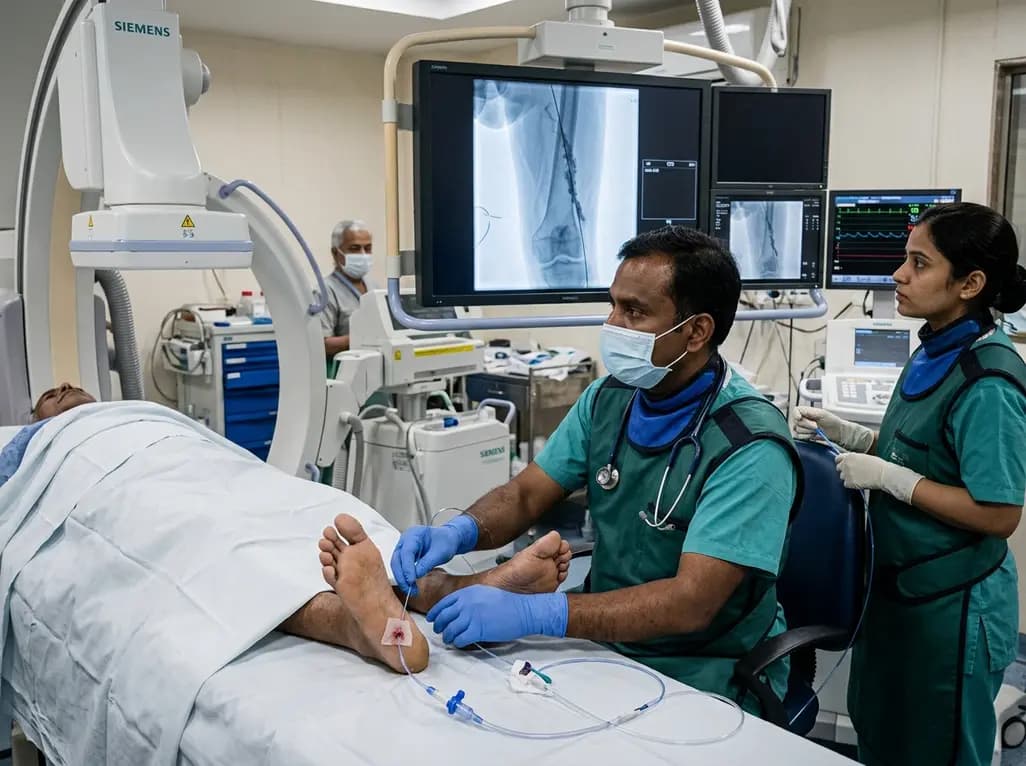
A clinical study demonstrates that retrograde pedal access achieves a 90.9% technical success rate for intraluminal crossing in complex infrainguinal chronic total occlusions, securing outstanding limb salvage, complete wound healing, and durable patency in patients with chronic limb-threatening ischemia.
Today
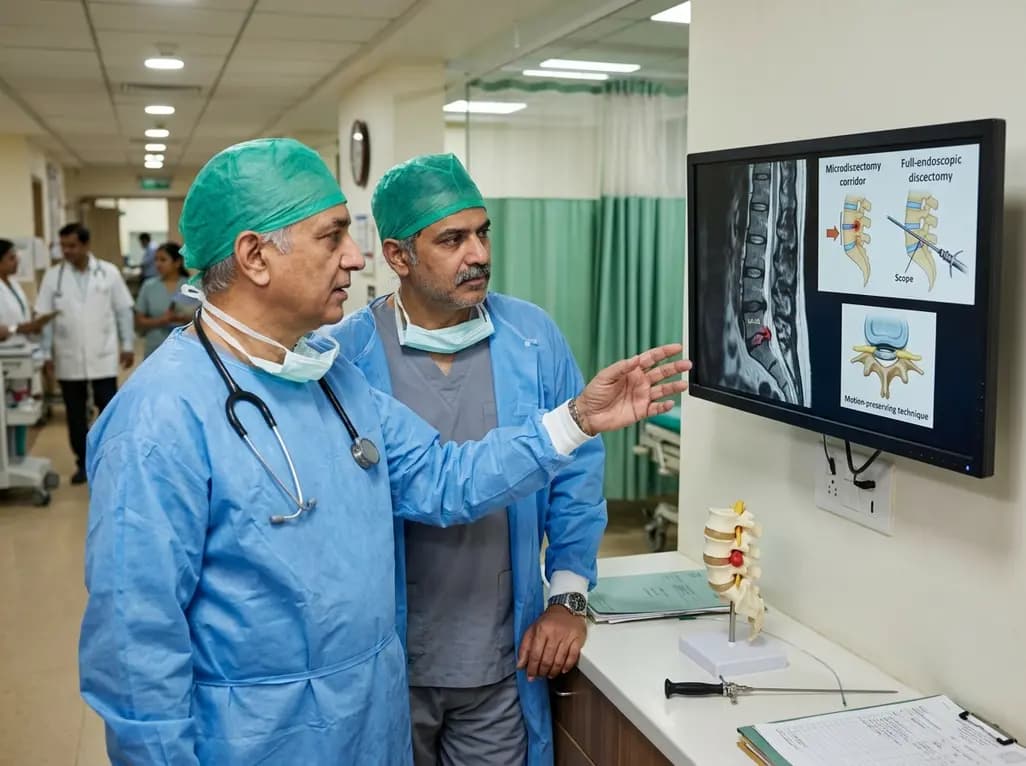
This clinical overview examines recent advancements in lumbar disc herniation surgery, comparing microscopic and full-endoscopic discectomy while highlighting biportal techniques and emerging motion-preserving innovations for spine specialists.
Today

The World Health Organization has issued its first global guidelines for managing child and adolescent obesity. The recommendations strongly endorse family-based dietary interventions, regular physical activity, and behavioral support as frontline therapy, reserving GLP-1 therapies and surgery for select cases.
Today
