.webp&w=384&q=75)

Loading, please wait...
Loading, please wait...

India has reaffirmed its commitment toward global hepatitis elimination 2030 targets during a high-level United Nations General Assembly side event. Union Health Secretary Punya Salila Srivastava emphasized that the country follows a comprehensive, people-centred healthcare model. Furthermore, this initiative prioritizes prevention, robust screening, prompt diagnostic testing, and evidence-based clinical therapy. Simultaneously, central health authorities highlighted the urgent need to protect organ health by curbing medication misuse.
India continues to accelerate interventions under the National Viral Hepatitis Control Program to achieve the Sustainable Development Goals. Consequently, public health leaders focus on eliminating hepatitis B and hepatitis C as major public health threats. Chronic viral hepatitis often progresses silently over decades without causing overt symptoms. Therefore, untreated infections frequently lead to irreversible cirrhosis, portal hypertension, and hepatocellular carcinoma.
To avert these adverse outcomes, national healthcare programs integrate viral hepatitis services across primary, secondary, and tertiary health tiers. In particular, universal hepatitis B birth-dose immunization provides vital protection for newborns against vertical transmission. Additionally, routine antenatal screening ensures early detection of maternal infection. Healthcare workers administer both vaccine and immunoglobulin when indicated, successfully safeguarding infants.
Moreover, community outreach teams organize viral screening camps in high-prevalence districts to link undetected individuals to specialized clinical care. Furthermore, the national roadmap emphasizes equitable access to diagnostic and therapeutic resources. Public health facilities across Indian states now offer direct acting antivirals and nucleoside analogues without cost to eligible individuals. Therefore, decentralized care models allow rural patients to receive continuous medical monitoring without traveling long distances. This systematic strategy significantly lowers morbidity and mortality across vulnerable communities.
Early detection remains the cornerstone of successful viral hepatitis management. Consequently, Indian healthcare institutions have established decentralized testing centers to identify asymptomatic carriers quickly. Clinicians utilize point-of-care rapid diagnostic kits alongside quantitative molecular assays to confirm active viremia. In addition, simplified treatment algorithms empower primary care physicians to initiate and monitor direct antiviral regimens confidently.
Pan-genotypic direct acting antivirals achieve sustained virologic response rates exceeding ninety-five percent for hepatitis C. Furthermore, standard twelve-week oral regimens produce minimal adverse effects compared to older interferon-based protocols. For hepatitis B, clinicians rely on high-barrier nucleoside analogues, such as tenofovir or entecavir, to suppress viral replication. Thus, sustained viral suppression halts hepatic fibrosis progression and reduces liver cancer risks considerably.
Therefore, decentralized diagnostic workflows remove bureaucratic bottlenecks and ensure rapid therapeutic initiation. However, clinical teams must maintain vigilant follow-up protocols for treated individuals. Regular monitoring of liver function tests and viral loads ensures therapeutic compliance and confirms virologic suppression. In addition, periodic abdominal ultrasonography and alpha-fetoprotein screening detect early malignant transformations in cirrhotic patients. Accordingly, robust surveillance programs protect long-term patient survival while curbing community transmission rates across all demographics.
While combating viral hepatitis, healthcare practitioners must also protect organ reserve against drug-induced systemic toxicities. Notably, chronic liver inflammation increases overall physiological vulnerability, making renal autoregulation more precarious. When hepatorenal hemodynamics deteriorate, common pharmaceuticals can trigger acute or progressive kidney injury. Therefore, practitioners must balance therapeutic interventions with rigorous pharmacological stewardship.
Simultaneously, the Central Drugs Standard Control Organisation issued a critical advisory regarding nephrotoxicity. The national drug controller warned against the indiscriminate use of painkillers, particularly non-steroidal anti-inflammatory drugs, and systemic antibiotics. Unchecked self-medication and irrational over-prescribing significantly elevate the risk of developing chronic kidney disease. Consequently, clinicians must recognize that renal insults exacerbate the complex medical management of patients with chronic liver pathology.
Furthermore, drug-induced kidney disease frequently presents as acute interstitial nephritis or acute tubular necrosis. Non-steroidal analgesics inhibit prostaglandin synthesis, which disrupts compensatory renal vasodilation during hypovolemia or underlying cirrhosis. As a result, sudden reductions in glomerular filtration rate can quickly induce acute-on-chronic organ failure. Hence, physicians must assess baseline creatinine, volume status, and baseline hepatic function before recommending analgesics or nephrotoxic anti-infectives. Additionally, clinical teams should monitor urine output during inpatient analgesic therapy.
To curb rising kidney morbidity, the Directorate General of Health Services highlighted existing legal statutes. The CDSCO circular dated September 21, 2026, reinforces strict statutory controls under the Drugs and Cosmetics Act. According to national regulations, retail pharmacies cannot dispense prescription-grade analgesics and antimicrobial agents without a registered medical practitioner's prescription.
Specifically, most non-steroidal anti-inflammatory drugs reside under Schedule H of the Drugs Rules, 1945. Under Rule 97, manufacturers must print clear warning labels restricting retail sales without valid prescriptions. Similarly, most systemic antibiotics fall under Schedule H1, carrying explicit statutory warnings against non-indicated administration. These restrictive classifications exist because indiscriminate antimicrobial therapy drives dangerous resistance patterns, while unmonitored analgesic intake damages renal tubules.
Moreover, the regulatory circular explicitly directs healthcare practitioners to prescribe these agents only for verified clinical indications. Doctors must calculate appropriate dosages and limit therapeutic durations to the shortest period necessary. In particular, community pharmacists must cease over-the-counter dispensing of these potent formulations for minor ailments. Furthermore, state licensing authorities have received instructions to inspect pharmacy logbooks and verify prescription records systematically. Accordingly, regulatory vigilance and professional compliance work together to eliminate preventable drug-induced nephrotoxicity across India.
Clinicians play an indispensable role in safeguarding community health while fulfilling national health priorities. First, healthcare providers must screen high-risk populations for viral hepatitis, including pregnant women, hemodialysis patients, and household contacts. When screening tests confirm infection, doctors should promptly link patients to National Viral Hepatitis Control Program centers. Furthermore, healthcare teams must advocate for complete hepatitis B immunization series across all age groups.
In addition, physicians must exercise heightened caution when selecting analgesic and antimicrobial therapies. Clinicians should thoroughly evaluate pre-existing comorbidities, including hypertension, diabetes, and borderline renal impairment, prior to prescribing analgesics. Whenever mild to moderate pain arises, doctors should consider paracetamol at liver-safe doses or non-pharmacological modalities. Consequently, this prudent approach prevents unnecessary exposure to nephrotoxic non-steroidal anti-inflammatory medications.
Similarly, antimicrobial stewardship requires strict adherence to diagnostic evidence before initiating antibiotic therapy. Medical practitioners must resist patient pressure to prescribe antibiotics for self-limiting viral upper respiratory infections. Additionally, healthcare facilities should implement regular audits of prescription trends to detect irrational drug combinations. Through these proactive measures, clinicians protect vital organ function, curb antimicrobial resistance, and advance national disease elimination goals.
Q1: What are the main targets of the National Viral Hepatitis Control Program by 2030?
India aligns its national health goals with the global Sustainable Development Goals to eliminate viral hepatitis as a public health threat by 2030. Specifically, the initiative aims to reduce new hepatitis B and C infections by ninety percent and curb hepatitis-related mortality by sixty-five percent. To achieve this, the program expands universal infant vaccination, provides free diagnostic testing, and delivers direct acting antivirals across all public health centers nationwide.
Q2: Why did the CDSCO issue an advisory restricting NSAID and antibiotic sales?
The Central Drugs Standard Control Organisation issued this advisory because widespread, unsupervised use of painkillers and antibiotics causes preventable chronic kidney disease. Non-steroidal anti-inflammatory drugs reduce renal perfusion, whereas inappropriate antibiotics induce interstitial nephritis and accelerate antimicrobial resistance. Consequently, the drug regulator reiterated that these medications belong under Schedule H and Schedule H1, requiring a valid prescription from a registered medical practitioner before retail dispensing.
Q3: How should clinicians adjust analgesic prescribing in patients with chronic liver disease?
Clinicians treating patients with chronic liver pathology must avoid non-steroidal anti-inflammatory drugs because these agents impair renal autoregulation and provoke hepatorenal syndrome. Furthermore, these medications exacerbate gastrointestinal bleeding risks in portal hypertension. Instead, physicians should recommend low-dose paracetamol, strictly limiting total daily intake to two grams for brief durations. Moreover, doctors must thoroughly evaluate volume status, baseline renal parameters, and concurrent medications before recommending any systemic analgesic.
Disclaimer: This content is for informational and educational purposes only. It does not constitute medical advice or replace professional judgment. Refer to the latest local and national guidelines for clinical practice.
References

Read summarized clinical updates, watch expert medical content, and earn CME certifications right from your smartphone.
Open your smartphone camera to scan and install.





At a UN General Assembly side event, India reaffirmed its commitment to eliminate viral hepatitis B and C by 2030. Simultaneously, national drug authorities have cautioned clinicians and pharmacists against the indiscriminate prescription of NSAIDs and antibiotics to prevent drug-induced chronic kidney disease.
Today

A school-based intervention using the Health Action Process Approach (HAPA) significantly enhanced adolescents' perceived benefits of consulting healthcare providers and promoted proactive menstrual health behaviors, offering key clinical insights for managing adolescent dysmenorrhea and endometriosis.
Today
A landmark dose-response meta-analysis of 8.8 million adults reveals that high ultra-processed food intake significantly elevates risks for cardiovascular disease, cancer, diabetes, depression, and all-cause mortality, highlighting urgent needs for clinical lifestyle interventions.
Today
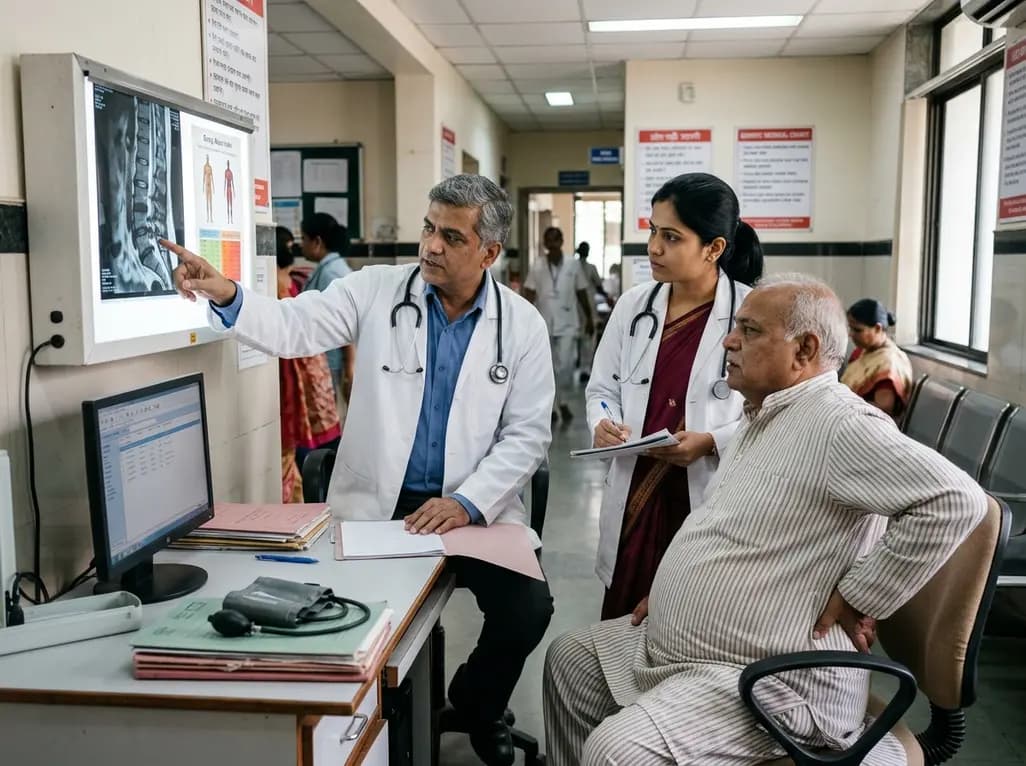
A cross-sectional study reveals that sarcopenic obesity independently increases functional impairment and severe disc degeneration in patients with degenerative lumbar spinal stenosis, highlighting the need for body composition assessment.
Today

Non-invasive biospecimen sampling offers exciting opportunities for stress medicine. This article examines a pioneering protocol comparing cortisol, inflammatory cytokines, and metabolic markers across blood plasma, whole saliva, and oral mucosal transudate during baseline and acute stress states.
Today
