.webp&w=384&q=75)

Loading, please wait...
Loading, please wait...

Recent global meteorological reports highlight a concerning spike in temperatures across Europe. Spain recently experienced its hottest first semester in 2026. Indeed, this severe environmental shift correlates directly with a staggering rise in excess mortality. Consequently, clinicians must quickly recognize heatwave health impacts to safeguard vulnerable individuals. The Spanish weather agency, Aemet, reported that temperatures averaged 1.6°C above normal. In addition, this severe warming represents a broader continental crisis. Intense thermal anomalies have swept through Germany, France, and the United Kingdom. These trends show that extreme climate events are no longer rare. Public health officials warn that persistent thermal stress places immense pressure on emergency rooms. As ambient temperatures surge globally, understanding the physiology of heat stress becomes critical. Meanwhile, medical professionals in India must analyze these European patterns. Similar spikes in heat-related illness regularly occur during local summers. Therefore, developing a clear clinical protocol is essential to prevent avoidable deaths. Proactive planning helps hospital systems manage patient surges. Clinicians must lead these adaptation efforts in their local clinics. For instance, they can educate patients about proper hydration and cooling techniques. This proactive approach significantly reduces the risk of severe thermal injury.
When ambient heat exceeds the biological threshold, the human body struggles to maintain homeostasis. Thermoregulation relies primarily on sweating and cutaneous vasodilation. However, these mechanisms place an immense workload on the cardiovascular system. The heart must pump rapidly to divert blood to the skin. Specifically, this response increases cardiac output and can precipitate acute coronary events. Dehydration further worsens this physiologic strain. As fluid loss increases, blood volume drops significantly. This depletion leads to hemoconcentration and elevates the risk of thrombosis. Consequently, patients with pre-existing ischemic disease face heightened risks during extreme weather. Furthermore, high core temperatures directly damage cellular structures. This process triggers a systemic inflammatory response. As a result, cellular proteins denature, leading to widespread cell death. If untreated, this condition can cause severe rhabdomyolysis and acute kidney injury. The kidneys suffer from both direct thermal damage and decreased perfusion. Eventually, multi-organ dysfunction syndrome may develop, which carries a very high mortality rate. To prevent this, clinicians must recognize that these physiological cascades progress rapidly. Therefore, immediate cooling is necessary to disrupt this destructive cycle. Understanding these underlying pathways allows doctors to intervene before irreversible damage occurs. Early identification of fluid deficits can prevent severe complications. Intravenous hydration remains a cornerstone of therapy.
Not all individuals face the same level of risk during a severe heatwave. Geriatric patients are particularly vulnerable to extreme temperature shifts. Aging naturally diminishes the body's cardiovascular reserve and sweating efficiency. Consequently, older adults struggle to dissipate heat effectively. Many elderly individuals also live alone, which reduces their access to immediate help. Additionally, infants and young children are highly susceptible. Their larger surface-area-to-mass ratio increases heat absorption. They also rely entirely on caregivers to provide adequate hydration. Patients with chronic medical conditions represent another major high-risk group. Diabetes, chronic renal disease, and congestive heart failure directly impair thermoregulation. Furthermore, certain daily medications interfere with natural cooling. For example, diuretics promote rapid dehydration and electrolyte imbalances. Meanwhile, beta-blockers limit the necessary increase in heart rate. Similarly, anticholinergics inhibit sweating, which is the body's main defense against hyperthermia. Healthcare providers must perform comprehensive medication reviews for these patients. In particular, they should counsel patients on rising thermal risks. Adjusting drug dosages during peak summer weeks may also prevent severe complications. By identifying these vulnerable groups early, clinicians can prevent avoidable hospitalizations. Proactive education remains our most powerful tool during extreme seasonal shifts.
Distinguishing between heat exhaustion and heat stroke is a critical clinical skill. For instance, heat exhaustion typically presents with heavy sweating, rapid pulse, and muscle cramps. Additionally, patients often complain of intense headache, dizziness, and nausea. Their mental status remains completely intact during this stage. In contrast, heat stroke is a true medical emergency. It features a core body temperature exceeding 40°C. Central nervous system dysfunction is the hallmark of this condition. Specifically, patients may exhibit confusion, delirium, seizures, or even coma. Their skin is often hot and dry, though sweating may persist in exertional cases. Clinicians must perform a rapid, thorough physical evaluation. Therefore, they should obtain an accurate rectal temperature, as oral readings are unreliable. Diagnostic workups must include blood counts, electrolytes, and renal panels. Urinalysis is vital to check for myoglobinuria, which indicates muscle breakdown. Moreover, elevated liver enzymes often signal early hepatic injury. Coagulation profiles help monitor for disseminated intravascular coagulation. Doctors must act immediately upon suspecting heat stroke. Specifically, they should not wait for laboratory results to initiate aggressive treatment. Delaying therapy significantly increases the risk of permanent brain damage or death.
The primary goal in treating heat stroke is rapid cooling. Therefore, clinicians must reduce the core temperature to safe levels within thirty minutes. Evaporative cooling stands as the most practical and effective method. For instance, you should spray the patient with lukewarm water while using fans to circulate air. Cold-water immersion remains another highly effective option for young, fit patients. However, this method requires continuous cardiovascular monitoring. Alternatively, clinicians can apply ice packs to axillae and groin, but they should avoid antipyretics like acetaminophen. Indeed, these medications are ineffective because heat stroke does not involve hypothalamic set-point changes. They may also exacerbate liver or kidney injury. Intravenous fluid resuscitation is crucial to restore circulation. However, doctors must avoid aggressive over-hydration, which can trigger pulmonary edema. Beyond immediate emergency care, public health measures are essential. Hospitals must implement early warning systems to prepare for patient surges during heatwaves. For example, collaborative efforts with local government can help establish cooling centers for vulnerable citizens. Educating the community on heat safety significantly lowers emergency room visits. By combining clinical vigilance with strong public health initiatives, we can mitigate these rising environmental dangers.
Q1: How do clinicians differentiate between heat exhaustion and heat stroke?
Heat exhaustion typically presents with heavy sweating, headache, and nausea, but the patient's mental status remains completely normal. Conversely, heat stroke is a life-threatening medical emergency defined by a core temperature exceeding 40°C and severe central nervous system dysfunction. This profound dysfunction leads to confusion, delirium, seizures, or coma. Immediate aggressive cooling is mandatory for heat stroke, whereas rest and oral rehydration can usually resolve heat exhaustion.
Q2: Why are antipyretic medications contraindicated in heat stroke management?
Antipyretic medications, including acetaminophen and aspirin, are completely ineffective for treating heat stroke. These drugs work by lowering the hypothalamic temperature set-point, which is elevated during infectious fevers. In contrast, heat stroke involves a pure failure of thermoregulation rather than a change in the hypothalamus. Furthermore, these medications can exacerbate pre-existing hepatic or renal injury, worsening patient outcomes. Clinicians should rely strictly on physical cooling methods instead of pharmacology.
Q3: Which chronic medications place patients at higher risk during a heatwave?
Several common daily medications can impair the body's natural heat-dissipation mechanisms. Diuretics promote dehydration and prompt severe electrolyte imbalances. Beta-blockers limit the essential cardiovascular response by preventing the heart rate from rising sufficiently. Additionally, anticholinergic drugs directly inhibit sweating, which is the body's primary cooling mechanism. Clinicians should carefully review patient medication lists and temporarily adjust dosages when extreme heatwaves occur in order to prevent hospitalization.
Disclaimer: This content is for informational and educational purposes only. It does not constitute medical advice or replace professional judgment. Refer to the latest local and national guidelines for clinical practice.
References

Read summarized clinical updates, watch expert medical content, and earn CME certifications right from your smartphone.
Open your smartphone camera to scan and install.





As extreme temperatures break records globally, understanding heat-induced illness is crucial. This medical guide explores the pathophysiology of thermoregulatory failure, clinical identification of heat stroke versus exhaustion, and emergency management strategies to protect highly vulnerable patient groups.
3 months ago

An observational study from the NIH All of Us Research Program reveals that adding a multi-ancestry polygenic risk score to machine learning models provides only modest improvements in predicting adult weight gain, underscoring the enduring significance of routine clinical and lifestyle factors.
Today

A study in JAMIA Open shows lightweight open-source reasoning LLMs achieve up to 95% sensitivity and accelerate evidence synthesis screening by nearly twentyfold, presenting a cost-effective, scalable AI solution for biomedical research and systematic reviews.
Today

A landmark study details how an enterprise pediatric remote patient management model expanded from a single cardiology pilot to 16 diverse specialty programs by combining centralized digital operations with specialty clinical leadership.
Today

A comparative review of tension band wiring and intramedullary screw fixation in thumb metacarpophalangeal arthrodesis, evaluating union rates, hardware complications, and clinical outcomes.
Yesterday
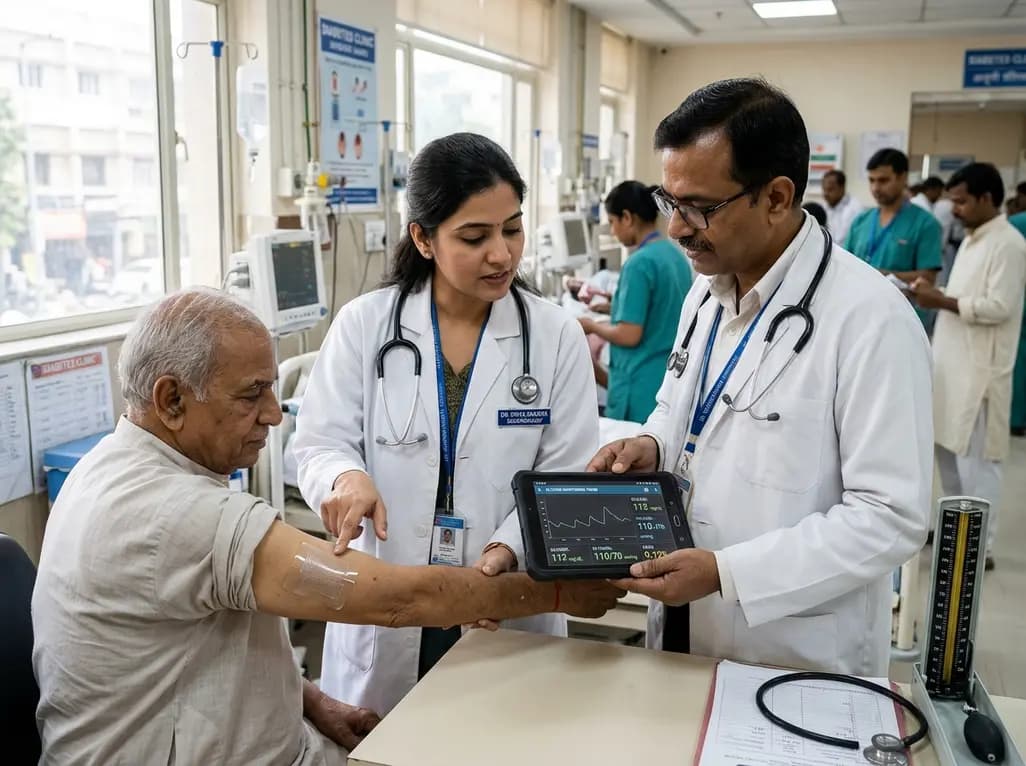
A breakthrough ultrathin multimodal sensor decouples physical hemodynamic monitoring from disposable electrochemical calibration, achieving long-term wearable glucose prediction with 81.36% accuracy and a 9.12% MARD. This offers a robust, drift-free solution for outpatient metabolic surveillance.
Yesterday
