.webp&w=384&q=75)

Loading, please wait...
Loading, please wait...

Mobile devices have become indispensable tools in modern clinical settings. However, a recent observational study highlights that healthcare worker mobile phones are significant reservoirs for multidrug-resistant organisms (MDROs). Researchers at a German university hospital found that these devices often harbor pathogens like VRE and MRSA. Furthermore, the study compared these findings with devices from the general public, revealing a stark difference in bacterial colonization levels.
The investigation showed that MDRO prevalence was significantly higher on phones used by medical staff compared to non-healthcare workers. Specifically, 15.1% of healthcare phones tested positive for resistant bacteria, whereas only 0.4% of phones from the control group showed contamination. Consequently, this suggests that the hospital environment directly contributes to the colonization of personal devices. Moreover, whole-genome sequencing identified various clonal clusters. This finding proves that identical bacterial strains circulate between different departments and even between patients and staff devices.
The identified pathogens included Vancomycin-resistant Enterococci (VRE), MRSA, and ESBL-producing Enterobacterales. These organisms pose a serious threat to patient safety, particularly in critical care settings. Therefore, clinicians must recognize that mobile phones act as portable high-touch surfaces that bridge clinical and private environments.
Fortunately, the study also explored practical solutions to this hygiene challenge. Researchers discovered that using alcohol-based wipes reduced the overall bacterial count by a staggering 98%. Therefore, regular cleaning is a highly effective way to mitigate transmission risks. Despite the clear benefits, many clinicians still lack a consistent routine for device disinfection. In addition, hand hygiene alone is insufficient if the phone remains contaminated. Implementing standardized protocols and using dedicated hygiene stations could significantly lower the rates of healthcare-associated infections. Specifically, staff education regarding the role of mobile phones as vectors is essential for maintaining safety in hospitals across India and globally.
Ideally, healthcare workers should disinfect their phones at the start and end of every shift. Furthermore, cleaning should occur after any contact with high-risk patient environments or after using the device in a clinical area.
Studies show that 70% alcohol-based wipes are highly effective, reducing bacterial loads by up to 98%. However, always check the manufacturer’s guidelines to ensure the disinfectant does not damage the screen or device casing.
Yes, research confirms that mobile phones can harbor pathogens like VRE and MRSA. These organisms can be transferred between staff, patients, and different hospital departments, making phones a significant vector for cross-contamination.
Disclaimer: This content is for informational and educational purposes only. It does not constitute professional medical advice, diagnosis, or treatment. Always seek the advice of your physician or other qualified healthcare provider with any questions you may have regarding a medical condition. Refer to the latest local and national guidelines for clinical practice.
References
Hack D et al. Molecular epidemiology of multidrug-resistant organisms on mobile phones: an observational study conducted at a German university hospital. Antimicrob Resist Infect Control. 2026 Apr 04. doi: 10.1186/s13756-026-01739-2. PMID: 41935340.
Debnath T et al. Presence of Multi-Resistant Bacteria on Mobile Phones of Healthcare Workers. The Journal of Microscopy & Ultrastructure. 2018;6(3):165-169.
Venkatesan A et al. The role of hand hygiene and mobile phones in transmitting hospital acquired infection. International Journal of Biomedical and Advance Research. 2015;6(05):435-437.

Read summarized clinical updates, watch expert medical content, and earn CME certifications right from your smartphone.
Open your smartphone camera to scan and install.





A study finds high MDRO prevalence on HCW mobile phones and confirms that alcohol-based wipes can reduce bacterial contamination by 98%....
6 months ago
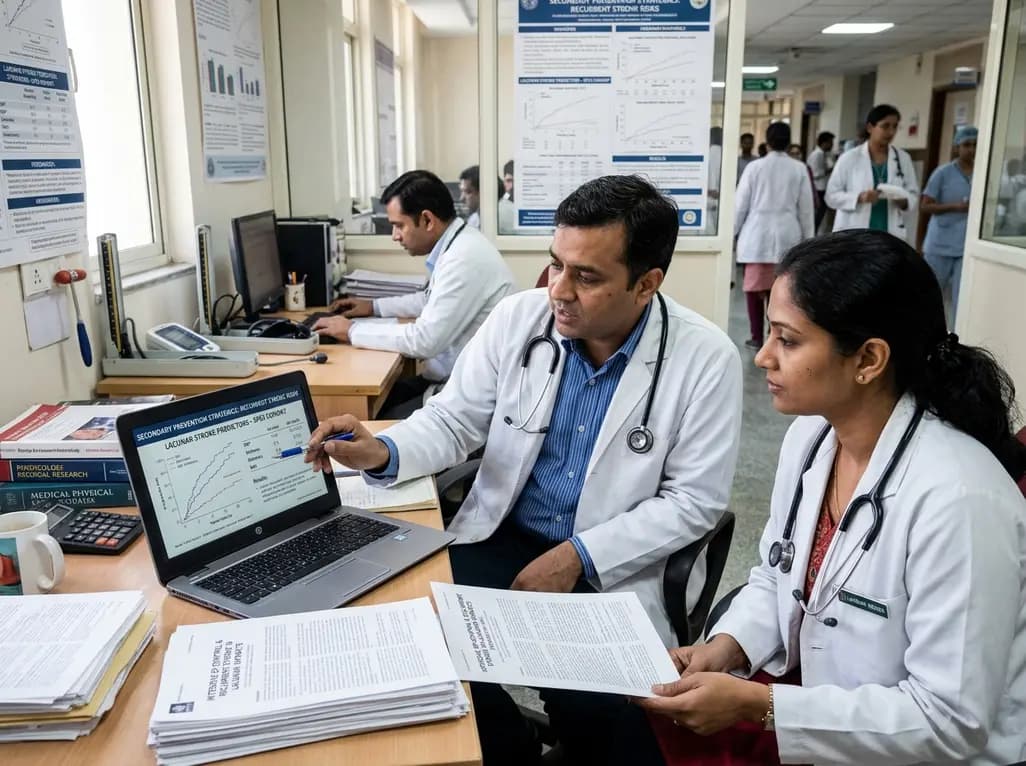
Explore vital recurrent stroke predictors in lacunar stroke patients managed with intensive blood pressure lowering. This analysis examines trial findings from SPS3 to uncover residual vascular risks, metabolic factors, and targeted secondary prevention strategies for high-risk neurological patients.
Today

A comprehensive scoping review synthesises evidence linking prenatal maternal mental health to long-term offspring neurodevelopment, evaluating neuroendocrine, inflammatory, and epigenetic pathways while highlighting clinical screening and future research priorities.
Today

The Directorate General of Health Services directs Indian states to halt the hazardous reuse and reprocessing of single-use medical devices. Discover regulatory implications under the Drugs and Cosmetics Act, critical infection risks, legal liabilities, and operational changes required across clinical specialties.
Today
Mitochondria-targeted nanoparticles self-assembled from EGCG and L-glutamic acid effectively restore mitochondrial homeostasis, suppress synovial inflammation, and attenuate chondrocyte senescence in osteoarthritis, offering a promising disease-modifying nanotherapy.
Today

India is advancing preventive healthcare by integrating genomics, artificial intelligence, and quantum technologies. With the SANGAM programme sequencing one million Indian genomes, clinicians can unlock personalized therapies, detect cardiometabolic risks early, and curb the burden of diabetes and heart disease.
Today
