.webp&w=384&q=75)

Loading, please wait...
Loading, please wait...
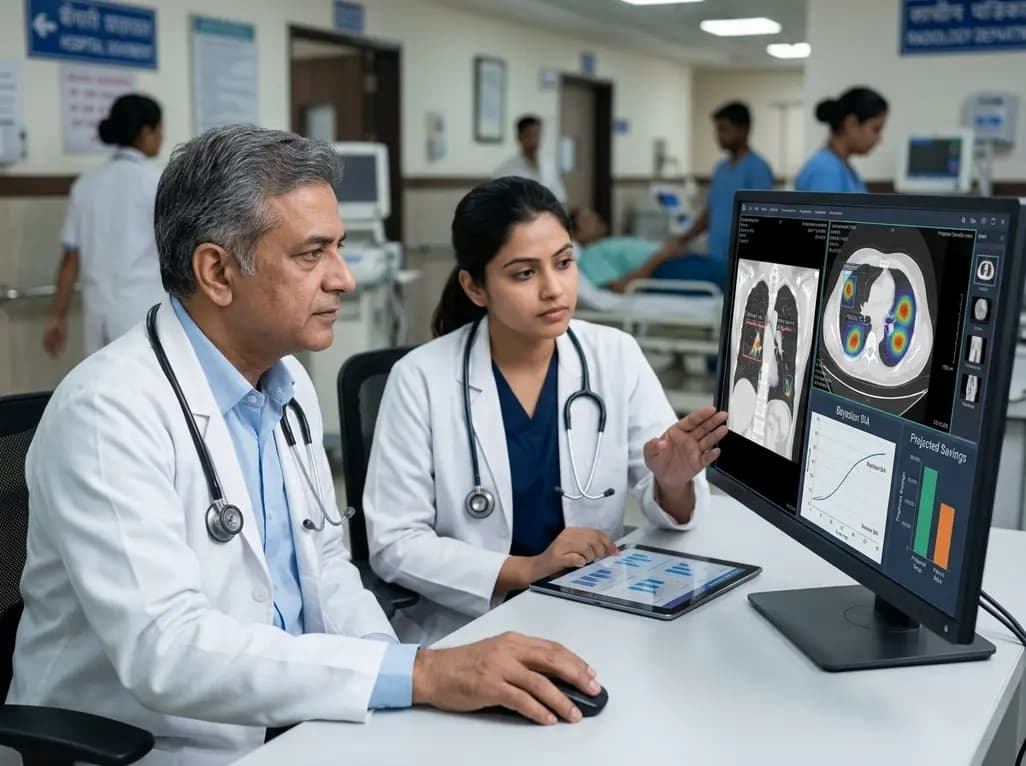
Modern health networks face severe fiscal constraints alongside exponential increases in clinical demand. Consequently, healthcare executives and clinical leaders increasingly look toward artificial intelligence to curb expenditures while preserving high standards of patient care. A landmark cross-sector investigation evaluated the probabilistic reality of healthcare AI cost savings across the National Health Service in the United Kingdom and Australia's healthcare system. By applying a sophisticated Bayesian budget-impact framework, the researchers quantified realistic financial gains across clinical radiology, administrative workflow, and hospital workforce operations.
Traditional economic forecasting frequently relies on deterministic models that overlook real-world friction. In contrast, this cross-sector investigation utilized a sequential Monte Carlo simulation with 1000 particles to generate empirical posterior distributions. The core savings mathematical function integrated baseline expenditures, sector weightings, adoption velocity, clinical effectiveness, and implementation failure risk. Furthermore, the investigators structured informative priors from multi-study domain reviews, accounting for heteroscedastic noise. Standard deviations followed exponential priors, with means established at fifteen percent of observed sector savings. The model anchored effectiveness estimates to published clinical cost reductions while directly integrating real-world technology failure rates.
Consequently, the Bayesian methodology captured genuine uncertainty across complex health ecosystems. Rather than presenting static point forecasts, the probabilistic architecture provided nuanced planning distributions. The posterior baseline estimates demonstrated annual gross expenditure savings of 949 million US dollars for the United Kingdom. Similarly, the model identified 737 million US dollars in annual gross savings for Australia. Across extensive scenario evaluations, projected annual savings spanned from 357 million to 1.845 billion dollars in the United Kingdom, whereas Australian estimates ranged between 267.2 million and 1.454 billion dollars.
A granular sector analysis revealed that workforce optimization delivered the largest proportion of gross fiscal value in both countries. Specifically, workforce optimization contributed 62.4 percent of total savings in the United Kingdom, generating approximately 591.9 million US dollars annually. In Australia, workforce interventions achieved an even higher share, accounting for 76.2 percent of total gross savings, which equates to 561.4 million US dollars. These operational gains stem primarily from reducing administrative burdens, automating documentation, streamlining triage, and minimizing non-clinical scheduling overhead.
However, health economists emphasize a vital operational distinction regarding these projections. Clinical administrators must interpret workforce savings as capacity enhancements rather than direct cash extractions. Automated workflows liberate clinical hours, allowing physicians and nursing staff to redirect their time toward high-acuity interventions and direct patient communication. Therefore, hospital leaders should view these financial metrics as resources to expand service bandwidth, alleviate professional burnout, and clear surgical backlogs rather than immediate budgetary reductions.
Radiology and operational workflows also demonstrated robust expenditure reductions. AI algorithms in medical imaging enhance diagnostic throughput, detect abnormalities rapidly, and diminish secondary diagnostic reviews. Nevertheless, the study highlighted that technological parity alone does not guarantee economic success. While deep learning diagnostic tools achieve clinical equivalence with human experts in specific image detection tasks, their ultimate fiscal impact depends heavily on end-to-end integration within radiology information systems and picture archiving systems.
Furthermore, operational workflow interventions streamline bed management, patient scheduling, and discharge planning. These automated processes shorten emergency wait times, optimize inpatient bed turnover, and reduce hospital-acquired complications. As a result, healthcare facilities experience decreased average length of stay and fewer readmissions. When hospitals coordinate diagnostic imaging algorithms with automated hospital-wide scheduling tools, the cumulative efficiency gains substantially improve operational margins.
The study clearly identified implementation risk as the primary bottleneck limiting technology value realization. Prior expectations originally placed implementation failure rates between 49.1 percent and 57.2 percent. However, empirical anchoring using deployment failure observations refined posterior implementation risk estimates to between 35.5 percent and 47.4 percent. Although this represents an improvement over historical assumptions, substantial failure risks persist across health networks.
Major barriers include fragmented electronic health records, legacy IT architecture, inadequate data pipelines, and clinician resistance to poorly designed user interfaces. Additionally, regulatory compliance, data privacy governance, and model maintenance impose significant operational hurdles. Therefore, health systems that neglect structured change management, technical support, and clinical workflow redesign often experience project abandonment. Successful digital integration demands robust institutional governance and collaborative clinical leadership to convert algorithmic capability into tangible operational value.
Looking ahead, cumulative economic projections from 2024 through 2030 underscore enormous structural value. Baseline multi-year forecasts project cumulative expenditure reductions of 10.1 billion US dollars in the United Kingdom and 8.0 billion US dollars in Australia. Extensive sensitivity analyses perturbed prior means by twenty percent and varied noise scaling parameters, confirming the high stability and robustness of these posterior estimates under shifting economic conditions.
These international findings offer vital lessons for healthcare systems worldwide, including emerging economies and private health conglomerates. Health ministries and hospital networks must avoid treating artificial intelligence as a simple plug-and-play capital purchase. Instead, leadership must establish clear probabilistic targets, invest in digital infrastructure, and design comprehensive training programs for medical staff. By aligning technological investment with strategic clinical restructuring, healthcare systems can unlock substantial operational capacity and long-term financial sustainability.
The study demonstrated that artificial intelligence can generate annual gross savings of 949 million US dollars in the United Kingdom and 737 million US dollars in Australia. The researchers identified workforce optimization as the primary financial driver. However, the authors emphasized that implementation risks remain the biggest obstacle, requiring healthcare leaders to focus on systemic adoption rather than relying solely on raw software capabilities.
Workforce AI savings primarily reflect recovered clinical and administrative hours rather than direct budgetary cash savings. When automated documentation and triage tools save clinicians time, hospitals do not simply cut staff. Instead, leadership can redeploy this liberated capacity to reduce patient waiting lists, alleviate staff burnout, manage higher patient volumes, and improve overall clinical care quality across busy healthcare facilities.
The primary implementation risks include legacy information technology infrastructure, fragmented electronic health record systems, poor clinical workflow integration, and inadequate staff training. When institutions fail to manage change effectively or address user friction, clinicians frequently abandon digital tools. Consequently, the research estimated posterior implementation failure risks between 35.5 and 47.4 percent across health systems.
Disclaimer: This content is for informational and educational purposes only and is not intended as a substitute for professional medical advice, diagnosis, or treatment. Always seek the advice of your physician or other qualified health provider with any questions you may have regarding a medical condition or clinical practice decisions. Refer to the latest local and national guidelines for clinical practice.
References
Sarkar J et al. Bayesian Analysis of AI-Driven Cost Savings in UK and Australian Health Care Systems: Cross-Sector Implementation Study. JMIR Med Inform. 2026 Aug 26. doi: 10.2196/89113. PMID: 42647854.
Maghsoodi A, Kurz J, Lawrenson R, Parsons M, Walker C, O'Sullivan M, Rouse P. Artificial Intelligence for Decision-Making in Healthcare: A Critical Review of Decision-Maker-Governed Hybrid Systems Across Clinical, Operational, and Policy Settings. Health Policy Technol. 2026;15(1):101292.
Reddy S, Fox J, Purohit MP. Artificial intelligence-enabled healthcare delivery. J R Soc Med. 2019;112(1):22-28.

Read summarized clinical updates, watch expert medical content, and earn CME certifications right from your smartphone.
Open your smartphone camera to scan and install.





A landmark Bayesian budget-impact study quantifies AI-driven gross expenditure savings across UK and Australian health systems, demonstrating massive potential in workforce and radiology optimization while highlighting deployment failure risks as the primary constraint.
last month

Novel ex vivo evidence demonstrates that the next-generation triple combination vanzacaftor/tezacaftor/deutivacaftor partially rescues CFTR channel function in patients harboring the treatment-refractory L467F;F508del complex allele, overcoming non-responsiveness to elexacaftor/tezacaftor/ivacaftor.
Today

A pharmacometric and machine learning study reveals that specific vaginal bacteria alter cervical antiretroviral exposure, highlighting the need for precision HIV PrEP strategies.
Yesterday
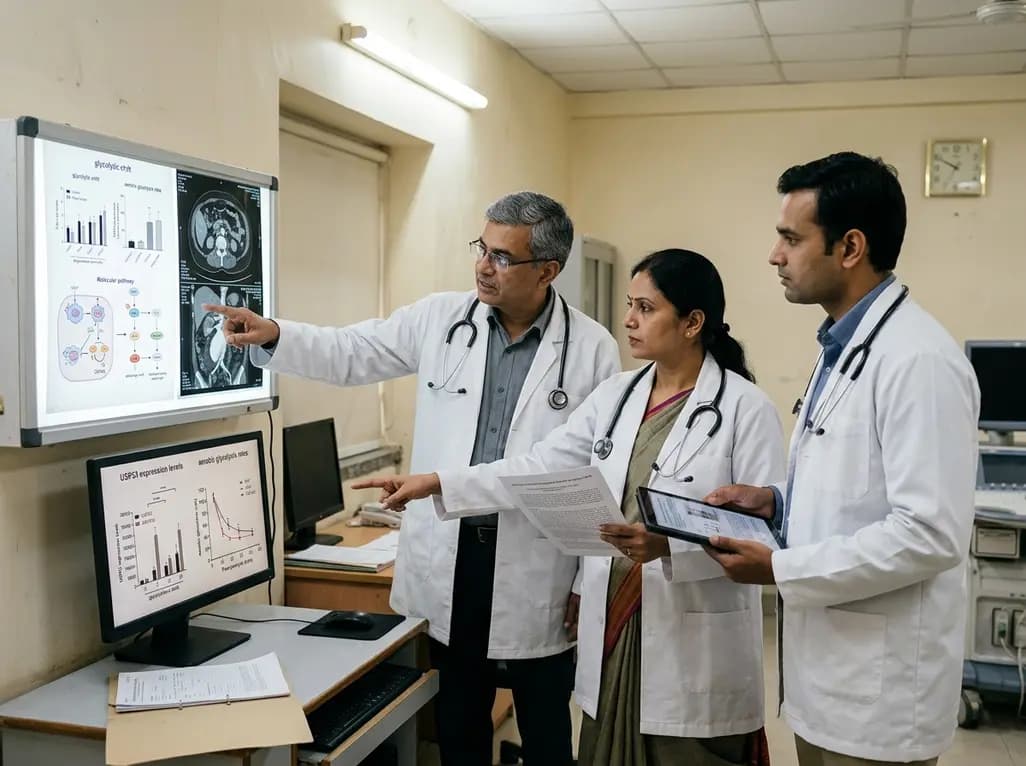
Abdominal aortic aneurysm rupture remains a catastrophic vascular emergency. Groundbreaking research reveals that USP53 accelerates aneurysm progression by reprogramming smooth muscle cell metabolism toward aerobic glycolysis, highlighting a promising target beyond conventional diameter-based surveillance.
Today
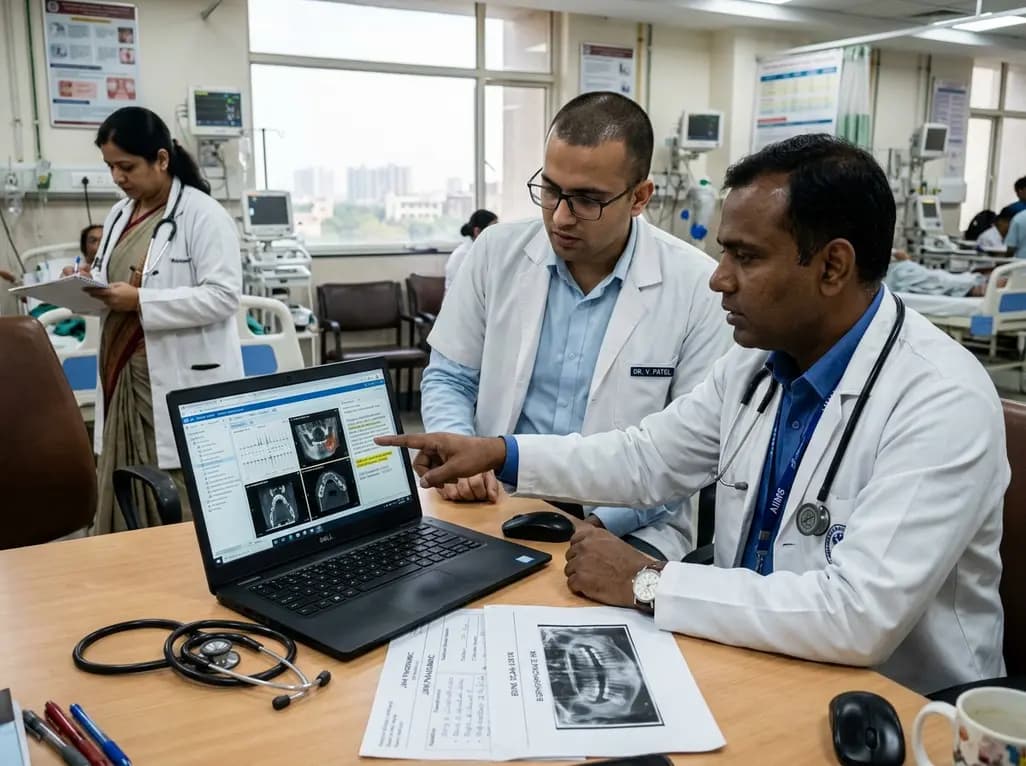
A breakthrough study leverages natural language processing to accurately identify incident medication-related osteonecrosis of the jaw and track antiresorptive drug holidays from clinical narratives in electronic health records, advancing osteoporosis pharmacovigilance and dental safety.
Today

Recent research defines ferro-aging as a conserved iron-lipid axis driving organ decline across primates. Age-related iron dyshomeostasis stimulates ACSL4-mediated lipid peroxidation, promoting cellular senescence. Notably, vitamin C directly inhibits ACSL4, suppressing phospholipid oxidation and multi-organ decay.
Yesterday
