.webp&w=384&q=75)

Loading, please wait...
Loading, please wait...
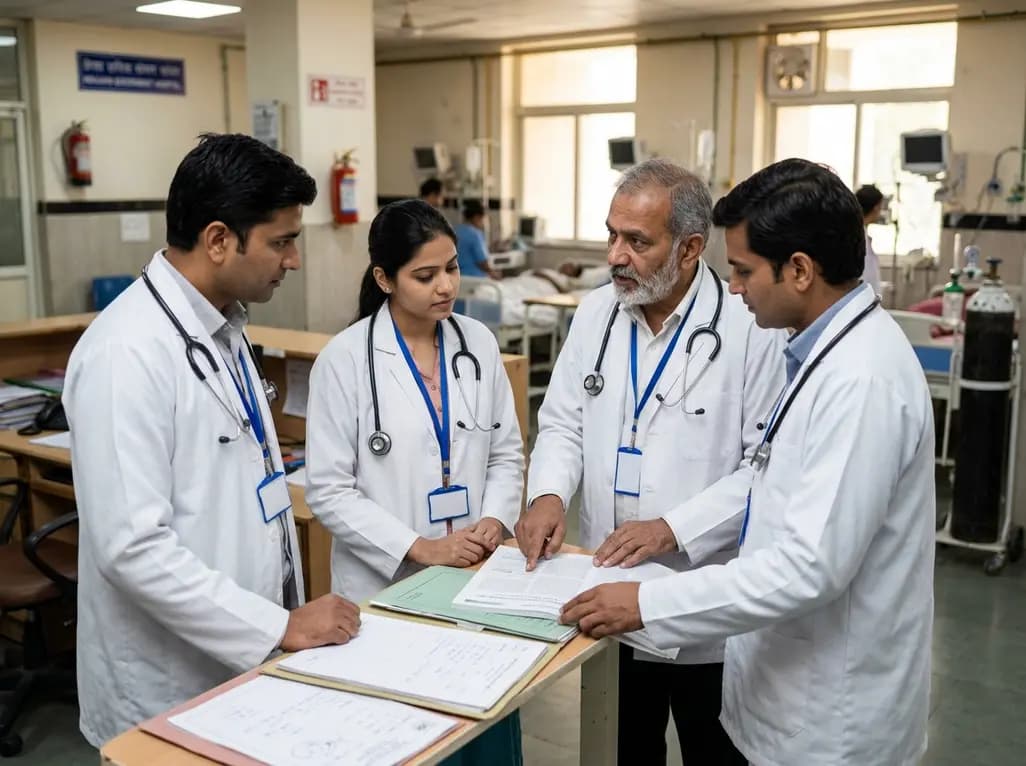
As the demographic landscape of the Indian subcontinent shifts toward an aging population, the concept of health system responsiveness India has gained critical importance. Health system responsiveness, or HSR, refers to the ability of a healthcare framework to meet the non-clinical, legitimate expectations of its users. This metric assesses the quality of interaction between patients and providers rather than just the medical outcomes themselves. Recent data derived from the Longitudinal Ageing Study in India (LASI) Wave 1 highlights a complex reality for seniors. While India has made strides in expanding healthcare access, the responsiveness of the system remains inconsistent, particularly for those with functional limitations. Clinicians and policymakers must recognize that meeting clinical needs is only half of the healthcare equation. Consequently, understanding how patients perceive their care in terms of dignity, communication, and speed is essential for building trust. When healthcare systems fail to be responsive, patients often delay seeking care, which eventually leads to worsened health outcomes and increased mortality rates among the elderly. Therefore, integrating responsiveness into routine quality assessments is no longer optional but a fundamental requirement for the Indian medical community.
To measure health system responsiveness India accurately, researchers typically evaluate six core domains that define the patient experience. These domains include prompt attention, dignity, communication, confidentiality, choice of providers, and the quality of basic amenities. Prompt attention evaluates whether patients face excessive waiting times before receiving care. Dignity focuses on whether healthcare providers treat patients with respect and sensitivity. Communication measures how clearly doctors explain diagnoses and treatment options to their patients. Confidentiality remains a cornerstone of medical ethics, ensuring that personal health information is protected. Furthermore, the choice of providers allows patients to have a say in who manages their health, which fosters a sense of autonomy. Finally, the quality of amenities refers to the cleanliness and comfort of the facility itself. According to the LASI findings, the median HSR score across these domains in India is approximately 75 on a scale of 0 to 100. Although this figure suggests a moderate level of performance, it masks significant disparities. Specifically, users of private facilities often report higher satisfaction with amenities and promptness compared to those using overcrowded public clinics.
Older adults who experience functional limitations face unique hurdles when navigating the health system. These limitations are often defined as difficulties in performing Activities of Daily Living (ADLs), such as bathing or dressing, and Instrumental Activities of Daily Living (IADLs), like managing medications or finances. The research indicates that individuals with one or more functional limitations report significantly lower health system responsiveness India scores. Specifically, the regression analysis showed a negative association between functional disability and HSR in both outpatient and inpatient settings. Patients with physical or cognitive impairments often require more time and specialized communication from their healthcare providers. However, busy clinical environments may not always accommodate these needs, leading to perceptions of being rushed or ignored. When a patient cannot move easily or follow complex instructions, a lack of responsiveness can result in poor treatment adherence. Moreover, the study highlights that these patients often feel their dignity is compromised during medical examinations. Addressing these gaps requires a shift toward person-centered care that explicitly accounts for the physical and cognitive challenges faced by the geriatric population.
Socio-economic vulnerability significantly influences how older adults experience the healthcare system in India. The LASI data revealed that members of lower castes and individuals from poorer economic backgrounds report much lower levels of responsiveness. These disparities are particularly pronounced in public healthcare facilities, which often serve as the primary source of care for marginalized groups. In contrast, while private facilities generally provide better responsiveness, they remain financially inaccessible to many. This creates a double burden for the poor; they either receive less responsive care in public hospitals or face catastrophic health expenditures in the private sector. Furthermore, the interaction between socio-economic status and functional limitations creates a compounding effect. A low-income senior with a physical disability is significantly less likely to receive prompt attention or respectful communication than their wealthier counterparts. Consequently, the health system inadvertently reinforces existing social hierarchies. Improving health system responsiveness India therefore necessitates targeted interventions that protect the rights of the most vulnerable. Policymakers must ensure that public health infrastructure is not only medically competent but also socially equitable and culturally sensitive to all patients.
One of the most profound conclusions of recent geriatric research is the presence of systemic ableism within the Indian healthcare framework. Ableism refers to the social prejudice and discrimination against people with disabilities. In the medical context, it manifests when the healthcare system is designed solely for the non-disabled, thereby marginalizing those with functional limitations. This study suggests that the poorer health system responsiveness India scores reported by disabled seniors are a direct symptom of this bias. For example, clinical protocols may not allow for the extra time needed for a patient with a hearing impairment or a mobility issue. Additionally, healthcare staff might lack the specific training required to interact respectfully with elderly patients who have cognitive declines. To combat this, medical education must include modules on geriatric sensitivity and disability rights. Healthcare facilities also need to be audited for physical accessibility beyond just ramps and elevators. Notably, fostering an inclusive environment requires a fundamental change in the attitudes of medical professionals. By actively identifying and dismantling ableist practices, physicians can ensure that every patient, regardless of their physical or cognitive state, receives care that is truly responsive and respectful.
The findings regarding health system responsiveness India provide a clear roadmap for future policy reforms. The National Programme for Health Care of the Elderly (NPHCE) must expand its focus to include responsiveness as a key performance indicator. Furthermore, the implementation of the National Patient Safety Implementation Framework (NPSIF) should integrate guidelines that address the needs of patients with functional limitations. Training programs for frontline healthcare workers should emphasize the importance of the six HSR domains, particularly in public sector settings. Providing incentives for facilities that achieve high responsiveness scores could also drive improvement. Additionally, digital health initiatives should be designed with the elderly in mind, ensuring that technology does not become another barrier to care. Researchers must continue to monitor these trends using longitudinal data to assess whether interventions are closing the gap for marginalized groups. Ultimately, the goal is to create a healthcare system that values the experience of the patient as much as the clinical outcome. By prioritizing responsiveness, India can build a more resilient and equitable system that honors the dignity of its aging citizens. This transition is vital for achieving universal health coverage and fulfilling the ethical obligations of the medical profession.
In India, health system responsiveness measures how well healthcare facilities meet the non-clinical expectations of patients. It focuses on six specific domains: dignity, prompt attention, communication, confidentiality, choice, and amenities. Unlike clinical effectiveness, which evaluates medical outcomes, responsiveness assesses the quality of the interaction between the provider and the patient. This is particularly important for seniors who may have complex social and physical needs that require a more empathetic and organized approach to care delivery.
Older adults with functional limitations, such as difficulties with mobility or cognitive tasks, often require additional time and specialized assistance during medical visits. When healthcare systems are overcrowded or lack geriatric training, these patients may experience long wait times and poor communication. Furthermore, the lack of physical accessibility in many facilities can lead to a perceived lack of dignity. This research suggests that the system is currently better suited for able-bodied individuals, leading to a disparity in care quality.
Socio-economic factors deeply influence the patient experience in India. Research shows that individuals from lower castes and lower wealth quintiles often report poorer responsiveness, especially in public healthcare settings. This is frequently due to systemic biases, lack of resources in facilities serving the poor, and social hierarchies that translate into the clinical environment. Addressing these disparities requires targeted policy interventions that ensure equitable treatment and respectful care for all citizens, regardless of their social background or financial status.
Disclaimer: This content is for informational and educational purposes only and does not constitute medical advice, diagnosis, or treatment. Always seek the advice of your physician or another qualified health provider with any questions you may have regarding a medical condition. Refer to the latest local and national guidelines for clinical practice.
References
Nguyen TV et al. Health system responsiveness to older adults with functional limitations and socio-economic vulnerability in India. Glob Health Action. 2026 Dec undefined. doi: 10.1080/16549716.2026.2678648. PMID: 42359666.
World Health Organization. Health systems responsiveness: Concepts, domains and operationalization. 2021.
Das S and Ayalon L. Ageism, ableism, and their intersection: Evidence from the Longitudinal Ageing Study in India wave 1. International Psychogeriatrics. 2025.
Ministry of Health and Family Welfare. National Programme for Health Care of the Elderly (NPHCE) Guidelines. Government of India. 2023.
"
Read summarized clinical updates, watch expert medical content, and earn CME certifications right from your smartphone.
Open your smartphone camera to scan and install.





A comprehensive analysis of health system responsiveness in India reveals that older adults with functional limitations, lower caste status, and economic vulnerability face significant barriers to quality care, suggesting systemic ableism within the national healthcare framework.
3 months ago

A breakthrough study evaluated H5N1 transmission efficiency across mammalian isolates. Researchers discovered that human-derived D1.1 harboring the PB2 D701N mutation spread efficiently in ferrets, unlike strains carrying PB2 E627K. This finding highlights critical genetic markers for zoonotic surveillance.
Today

A comparative cohort study evaluates vNOTES vs TLH hysterectomy for benign conditions, demonstrating shorter operative duration, faster return to daily activities, and equivalent female sexual function scores without increased dyspareunia.
Today

Review how tailored exercise programs benefit frail older patients with heart failure. Explore pathophysiological mechanisms, individualized training prescriptions, and strategies to overcome adherence barriers in clinical practice.
Yesterday

This comparative study evaluates posterior labral tears with and without glenohumeral instability, highlighting distinct demographic patterns, MRI underestimation in stable shoulders, and successful arthroscopic repair outcomes.
Yesterday

A clinical study demonstrates that early intervention with tocilizumab, either as monotherapy or bridged with corticosteroids, achieves significant proptosis reduction and resolves active inflammation in treatment-naive thyroid eye disease.
Today
