.webp&w=384&q=75)

Loading, please wait...
Loading, please wait...

Managing health literacy and prehypertension is essential for preventing long-term cardiovascular complications. A recent study utilizing the 2023 Korea National Health and Nutrition Examination Survey (KNHANES) highlights a critical association between these two factors. Specifically, individuals with low health literacy exhibit a significantly higher risk of elevated blood pressure. Because many adults struggle to understand medical instructions, they often miss early warning signs of vascular disease. Consequently, clinicians must prioritize clear communication to mitigate these risks effectively.
Furthermore, the researchers analyzed data from 1,873 participants aged 19 and older. They found that approximately 17% of the cohort met the criteria for prehypertension. In contrast, over 58% of the group demonstrated low health literacy levels. After adjusting for sociodemographic factors, the results showed that low literacy increased the odds of prehypertension by 43%. This finding strongly suggests that health literacy serves as a modifiable determinant for heart health and preventive care.
Addressing these literacy deficits requires a multifaceted approach in clinical practice. For instance, the study identified three primary mechanisms for effective intervention. First, healthcare providers should focus on motivating patients who depend heavily on health information, such as middle-aged adults or those with lower education. Second, high-income urban groups may benefit from a synergy between literacy and existing healthcare resources. Additionally, preventive efficacy remains particularly high in low-risk populations. Therefore, targeted educational programs can bridge the gap between receiving information and taking clinical action.
Moreover, health literacy acts as a compensatory resource for many patients. This is particularly true for populations with limited healthcare access. Because prehypertension often precedes chronic hypertension, early intervention is vital for long-term health. Consequently, doctors should screen for literacy barriers during routine check-ups. By doing so, they can improve patient adherence to lifestyle modifications. Ultimately, enhancing patient understanding is a cost-effective way to reduce the global burden of cardiovascular disease.
Prehypertension refers to a systolic blood pressure between 130 and 139 mm Hg or a diastolic blood pressure between 80 and 89 mm Hg. It indicates a high risk for developing clinical hypertension.
Low health literacy limits a patient's capacity to comprehend, process, and apply health-related information. This often leads to poor dietary choices, physical inactivity, and a lack of awareness regarding cardiovascular risks.
Yes, health literacy is a modifiable factor. Targeted interventions, such as simplified medical literature and patient-centered communication, can help individuals manage their blood pressure more effectively.
Disclaimer: This content is for informational and educational purposes only and does not constitute medical advice or a professional relationship. Always seek the advice of a qualified healthcare provider regarding any medical condition. Refer to the latest local and national guidelines for clinical practice.
References
Chun J et al. Association Between Health Literacy and Prehypertension in South Korean Adults: Cross-Sectional Study Using the 2023 Korea National Health and Nutrition Examination Survey. JMIR Public Health Surveill. 2026 Mar 20. doi: 10.2196/82684. PMID: 41861384.
American Heart Association. Health Literacy and Cardiovascular Health: A Scientific Statement From the American Heart Association. Circulation. 2018.
World Health Organization. Health literacy development for the prevention and control of noncommunicable diseases. 2022.

Read summarized clinical updates, watch expert medical content, and earn CME certifications right from your smartphone.
Open your smartphone camera to scan and install.





A study of 1,873 adults shows that low health literacy is linked to a 43% higher risk of prehypertension, highlighting its role in cardiovascular prevention...
7 months ago

Explore vital recurrent stroke predictors in lacunar stroke patients managed with intensive blood pressure lowering. This analysis examines trial findings from SPS3 to uncover residual vascular risks, metabolic factors, and targeted secondary prevention strategies for high-risk neurological patients.
Today

Odisha has established India's first state-level clinical protocol specifically tailored for pregnant women with sickle cell disease. Developed with NHM and UNICEF, the framework provides structured antenatal screening, crisis mitigation, standardized referral pathways, and specialized interdisciplinary care.
Today

India is advancing preventive healthcare by integrating genomics, artificial intelligence, and quantum technologies. With the SANGAM programme sequencing one million Indian genomes, clinicians can unlock personalized therapies, detect cardiometabolic risks early, and curb the burden of diabetes and heart disease.
Today
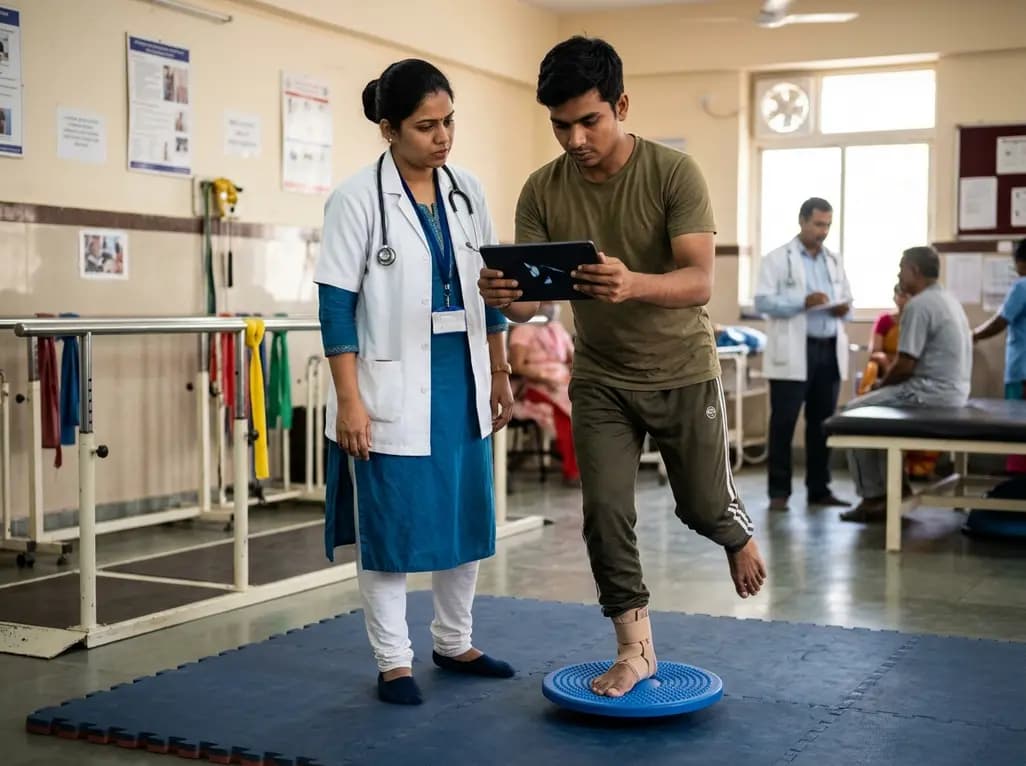
A randomized controlled trial demonstrates that an eight-week dual-task training intervention significantly improves static and dynamic postural control over standard balance exercises in individuals with chronic ankle instability, addressing critical neurocognitive deficits during athletic and daily activities.
Today

A retrospective cohort study of 7,716 ICU patients from the MIMIC-IV database demonstrates that Gradient Boosting Decision Trees significantly outperform traditional SOFA scores in predicting in-hospital mortality among patients with sepsis and diabetes, with SHAP analysis providing clinical interpretability.
Today
