.webp&w=384&q=75)

Loading, please wait...
Loading, please wait...

The landscape of health insurance in India is undergoing a dramatic transformation according to the latest government data. Recently, the National Sample Survey revealed that rural coverage has surprisingly overtaken urban penetration for the first time. Specifically, rural coverage reached 47.4% in 2025, a massive leap from just 14.1% a few years ago. This shift suggests that government-sponsored programs are effectively reaching the grassroots level. Consequently, millions of rural families now have a financial safety net for medical emergencies.
Government initiatives have played a pivotal role in this expansion. In rural sectors, state-sponsored schemes now cover 45.5% of the population. Meanwhile, urban areas also saw growth, reaching 44.3% total coverage. Despite these improvements, the financial burden on patients remains significant. The average cost per hospitalization reached Rs 34,064 in 2025. However, public hospitals continue to offer a more affordable alternative for many. Therefore, the choice of facility remains a critical factor in managing out-of-pocket expenditures.
The report also highlights a concerning trend in morbidity across the nation. Over 13% of the population reported ailments during a 15-day period in 2025. Morbidity was notably higher in urban settings compared to rural villages. Moreover, chronic conditions like cardiovascular and metabolic diseases are becoming more prevalent after age 30. Geriatric patients over 60 years old face the highest burden of illness at nearly 44%. Because of these rising rates, the demand for specialized healthcare services is expected to climb steadily.
Institutional deliveries have become nearly universal across the country, hitting 96% in 2025. This milestone reflects a significant success for maternal health policies. In terms of clinical presentations, infections remain the leading cause of hospital admissions at 20.7%. Injuries and gastrointestinal conditions also account for a substantial portion of the hospital workload. Consequently, clinicians must stay prepared for a diverse range of acute and chronic presentations. Understanding these demographic shifts is essential for effective healthcare delivery in the coming years.
Q1: Which states in India currently report the highest morbidity rates?
Kerala recorded the highest morbidity rate at 39.7%, followed by West Bengal at 24.5% and Andhra Pradesh at 21.1%.
Q2: What is the primary driver of increased insurance coverage in rural areas?
Government-sponsored schemes are the main driver, covering 45.5% of the rural population compared to only 12.9% in previous years.
Q3: What are the most common reasons for hospitalization in 2025?
Infections are the leading cause at 20.7%, followed by injuries at 11.2% and cardiovascular conditions at 10.9%.
Disclaimer: This content is for informational and educational purposes only. It does not constitute medical advice or replace professional judgment. Refer to the latest local and national guidelines for clinical practice.
References

Read summarized clinical updates, watch expert medical content, and earn CME certifications right from your smartphone.
Open your smartphone camera to scan and install.





India's health insurance coverage surges, with rural areas hitting 47.4%. Explore rising morbidity rates, hospitalization costs, and NCD trends in 2025....
6 months ago

Novel diimide and hydrazone scaffolds, particularly compound #C4, synergistically reactivate latent HIV-1 when combined with JQ1 or PKC activators. Demonstrating donor-matched proviral transcription ex vivo and non-canonical signaling, these findings advance shock and kill strategies toward reservoir eradication.
Today
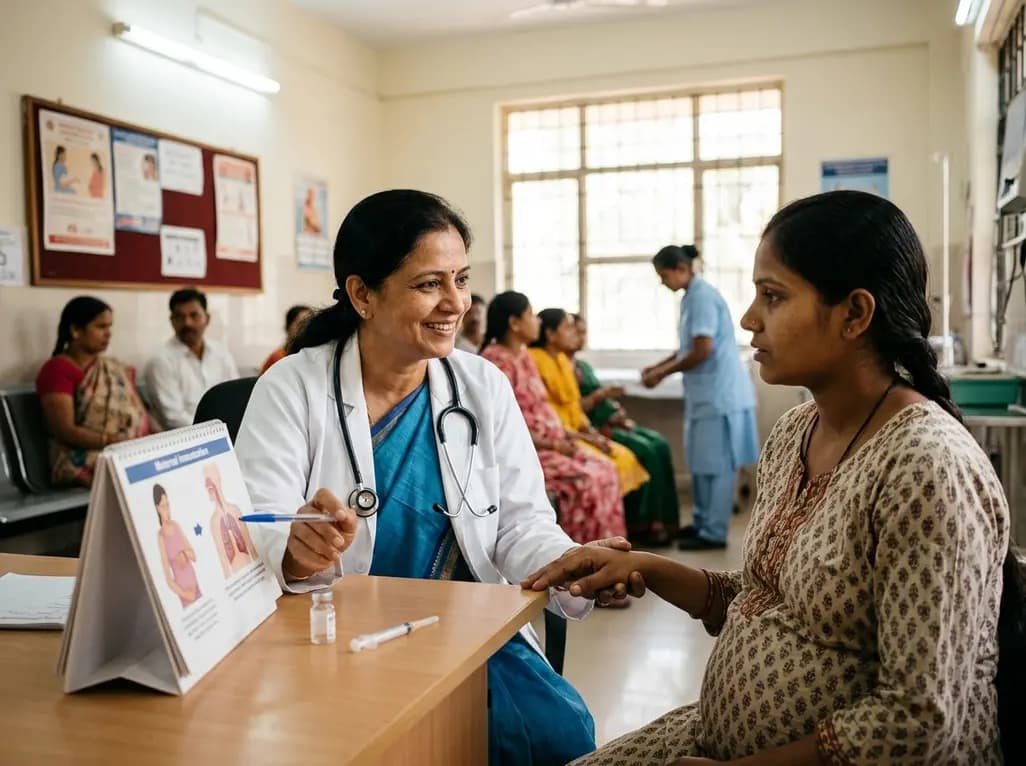
A cross-sectional study reveals that maternal RSV vaccination coverage reached only 43.7% in Argentina, with maternal vaccine knowledge being the sole independent predictor of uptake. Clinicians play a crucial role in eliminating informational and structural barriers to optimize infant health.
Today

Review how tailored exercise programs benefit frail older patients with heart failure. Explore pathophysiological mechanisms, individualized training prescriptions, and strategies to overcome adherence barriers in clinical practice.
Yesterday

This comparative study evaluates posterior labral tears with and without glenohumeral instability, highlighting distinct demographic patterns, MRI underestimation in stable shoulders, and successful arthroscopic repair outcomes.
Yesterday

A clinical study demonstrates that early intervention with tocilizumab, either as monotherapy or bridged with corticosteroids, achieves significant proptosis reduction and resolves active inflammation in treatment-naive thyroid eye disease.
Yesterday
