.webp&w=384&q=75)

Loading, please wait...
Loading, please wait...
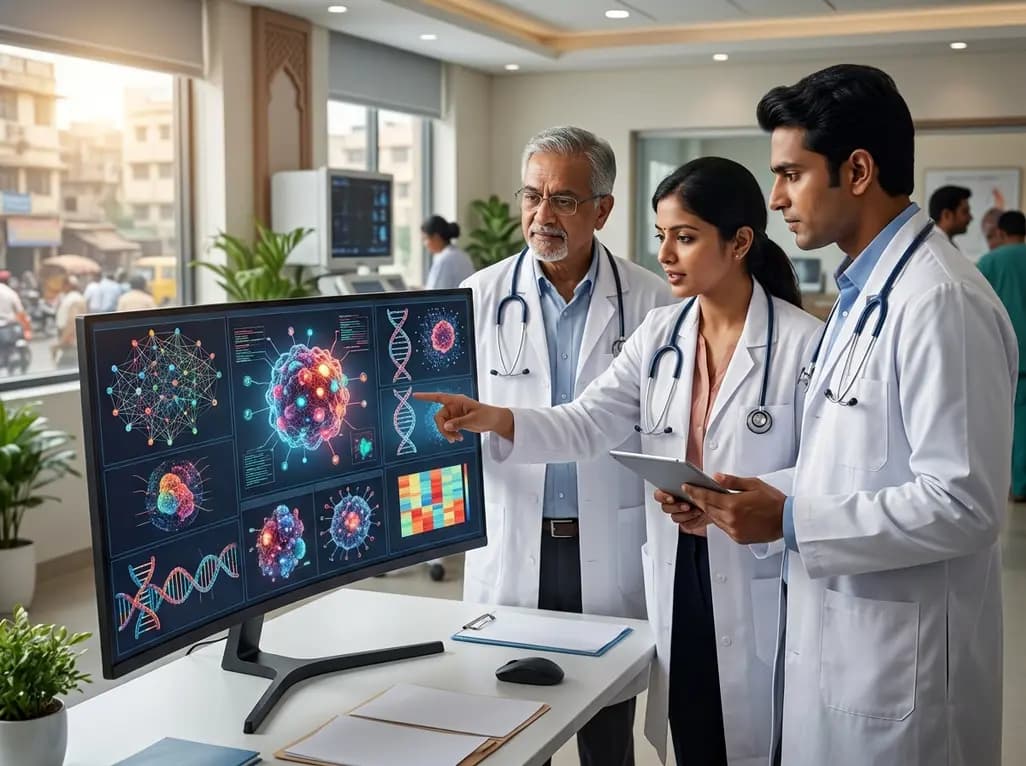
In recent years, the integration of advanced digital technologies has dramatically reshaped clinical practices in India. Specifically, Healthcare Global Enterprises (HCG) leads this transformation by leveraging artificial intelligence to improve clinical outcomes. Under the guidance of founder BS Ajaikumar, the institution successfully integrates complex clinical datasets. Consequently, they are actively developing machine learning algorithms to champion precision oncology and deliver highly personalized therapeutic regimens. Therefore, these computational platforms allow clinicians to optimize decision-making workflows.
To achieve customized therapeutic pathways, HCG is carefully categorizing cancer patients based on their specific therapy responses. Specifically, clinicians analyze complex patient files to divide cohorts into distinct clinical buckets. This structured methodology allows oncologists to predict with high accuracy how a newly admitted patient will respond to certain therapies. Consequently, doctors can choose the most effective treatment immediately, thereby reducing the traditional trial-and-error approach.
Furthermore, the foundation of this clinical classification lies in HCG's massive historical patient database. Over the past two decades, the healthcare group has gathered extensive records on diverse patient demographics. Therefore, medical scientists can easily identify reliable historical patterns that match new clinical cases. This digital repository enables clinicians to make highly informed, data-backed decisions that enhance overall safety.
Moreover, this systematic grouping enhances overall therapeutic efficacy and lowers the occurrence of adverse side effects. Patients receive only the therapies that possess a high probability of success. Consequently, HCG aims to improve its clinical success rates. Through these initiatives, the hospital chain successfully translates vast historical archives into real-world clinical benefits for patient populations.
A key driver of HCG's technical evolution is the utilization of advanced multi-omic data. Specifically, researchers are combining clinical, genomic, and proteomic data to fully understand tumor biology. This multidimensional approach helps clinicians understand why certain patients respond exceptionally well to specific drugs while others show no improvement. Consequently, oncology specialists can look beyond generic tumor classifications to study the unique molecular alterations in each patient.
Furthermore, analyzing proteomic structures allows doctors to examine active protein expressions within cancerous tissues. This detailed molecular view is critical because genomic sequences alone do not always predict actual drug interactions. Therefore, combining genomics with proteomics provides a complete biological map of the disease. This integrated workflow helps clinicians design highly accurate therapeutic pathways that target specific molecular anomalies.
Importantly, this advanced focus on molecular profiling represents a major paradigm shift for oncology clinics across India. By adopting these advanced diagnostics, HCG is establishing new benchmarks in precision oncology. Ultimately, these biological insights provide the foundation for safer, highly customized, and predictable cancer care.
To accelerate its clinical research capabilities, HCG established a strategic partnership with Accenture in late 2024. Through this collaboration, the hospital chain is deploying state-of-the-art image analysis software and complex informatics platforms. These digital tools analyze patient data at an unprecedented speed, allowing for faster diagnostic turnaround times. Consequently, oncology teams can implement targeted treatment strategies much earlier in the disease cycle.
Moreover, the collaboration leverages advanced machine learning algorithms to identify subtle molecular alterations in cancer tissues. These algorithms can process massive volumes of radiographic and pathology images to detect minute structural changes. Therefore, clinicians can detect disease recurrence or treatment resistance before visible symptoms occur. This proactive approach significantly enhances the long-term management of high-risk oncology patients.
Additionally, this digital initiative serves as a model for private healthcare providers throughout South Asia. By integrating cloud computing and deep learning, HCG is building a highly scalable research infrastructure. This robust system supports the ongoing search for novel biomarkers and therapeutic targets. Ultimately, this tech-driven collaboration ensures that Indian patients receive world-class care that matches international standards of safety and efficacy.
Currently, HCG's AI-driven research efforts are concentrating on head and neck cancers, alongside gastrointestinal (GI) malignancies. These specific cancers represent a substantial healthcare burden in India due to distinct lifestyle and environmental factors. Therefore, developing targeted solutions for these patient groups is a critical priority for public health. To support this research, HCG is utilizing its expanding network of specialized laboratories.
Specifically, head and neck cancers present unique anatomical challenges that require highly precise radiation and surgical planning. Fortunately, AI algorithms can analyze complex tumor boundaries adjacent to critical structures like nerves and blood vessels. As a result, clinicians can deliver radiation with extreme accuracy, preserving healthy tissues and reducing side effects. This level of precision is particularly vital for maintaining the patient's quality of life.
Similarly, gastrointestinal cancers benefit greatly from predictive algorithms that analyze chemotherapy response patterns. By identifying specific genetic biomarkers, doctors can avoid ineffective drug regimens and select optimal therapies immediately. Consequently, patients avoid unnecessary toxicity and experience better clinical outcomes. This targeted approach is paving the way for highly effective, personalized cancer therapies across the country.
The integration of digital technology in oncology is also happening alongside major corporate developments at HCG. Notably, global private equity firm KKR acquired a 54% controlling stake in the hospital chain in February 2025. This significant capital injection provides HCG with the financial resources needed to scale its digital initiatives rapidly. However, founder BS Ajaikumar continues to lead HCG's medical vision as its non-executive chairman.
Furthermore, the recent Global Healthcare Academy's AI Conclave in Bengaluru showcased HCG's pioneering role in the industry. The event brought together clinicians, AI scientists, policymakers, and industry giants like Google, Roche, and Siemens. Participants discussed how India can leverage its massive patient volumes to build affordable, globally relevant digital health solutions. Therefore, India possesses the ideal infrastructure to become a global leader in medical AI technologies.
Ultimately, Dr. Ajaikumar emphasizes that while technology is incredibly powerful, patient safety and ethical oversight must remain central. Artificial intelligence must always serve to strengthen, rather than replace, clinical decision-making. Consequently, HCG's future strategy focuses on combining technological innovation with deep clinical expertise. This balanced approach will ensure safe, ethical, and highly effective care for cancer patients.
Q1: How does HCG use AI to personalize cancer care?
HCG leverages machine learning algorithms to analyze clinical, genomic, and proteomic data from its massive patient database. Specifically, this technology classifies oncology patients into distinct clinical buckets based on historical responses to therapies. Consequently, when a new patient arrives, clinicians can quickly identify the most effective, data-backed treatment. This digital approach minimizes trial-and-error and significantly improves long-term clinical outcomes.
Q2: What is the goal of HCG's Accenture partnership?
The strategic collaboration with Accenture aims to accelerate advanced, data-driven cancer research. Specifically, HCG is deploying sophisticated image analysis software, advanced informatics platforms, and novel algorithms to study molecular alterations. Therefore, this initiative allows clinicians to identify unique molecular signatures and predict therapeutic responses more accurately. Ultimately, this tech-driven partnership enhances diagnostic accuracy, optimizes treatment planning, and elevates patient care.
Q3: Why are genomics and proteomics vital in precision oncology?
Genomics and proteomics provide a comprehensive molecular blueprint of a patient's tumor, which goes beyond generic cancer classifications. Specifically, genomic sequencing identifies DNA mutations, while proteomic analysis reveals active protein expressions driving tumor growth. Therefore, combining these multi-omic data streams helps clinicians understand why certain patients respond well to therapies. This biological understanding enables oncologists to design highly targeted, safer, and effective regimens.
Disclaimer: This content is for informational and educational purposes only. It does not constitute medical advice or replace professional judgment. Refer to the latest local and national guidelines for clinical practice.
References

Read summarized clinical updates, watch expert medical content, and earn CME certifications right from your smartphone.
Open your smartphone camera to scan and install.





Discover how Healthcare Global Enterprises (HCG) utilizes artificial intelligence, genomics, and proteomics to personalize oncology treatment, minimize therapeutic trial-and-error, and drive clinical success across India.
3 months ago

Discover the crucial role of glymphatic dysfunction in stroke, where perivascular clearance failure and neuroinflammation exacerbate cerebral edema and post-stroke brain injury.
Today

A prenatal case highlights severe glutaric acidemia type II presenting as bilateral hyperechoic cystic kidneys at 18 weeks. Whole-exome sequencing revealed a novel homozygous ETFDH frameshift variant, demonstrating the power of rapid genetic testing in fetal renal anomalies.
Today

Review how tailored exercise programs benefit frail older patients with heart failure. Explore pathophysiological mechanisms, individualized training prescriptions, and strategies to overcome adherence barriers in clinical practice.
Yesterday

This comparative study evaluates posterior labral tears with and without glenohumeral instability, highlighting distinct demographic patterns, MRI underestimation in stable shoulders, and successful arthroscopic repair outcomes.
Yesterday

A clinical study demonstrates that early intervention with tocilizumab, either as monotherapy or bridged with corticosteroids, achieves significant proptosis reduction and resolves active inflammation in treatment-naive thyroid eye disease.
Yesterday
