.webp&w=384&q=75)

Loading, please wait...
Loading, please wait...

Hepatocellular carcinoma (HCC) remains a global threat to liver health due to late-stage diagnosis and limited early symptoms. Recent research into HCC EV protein biomarkers reveals a transformative approach for noninvasive liquid biopsy. These circulating extracellular vesicles (EVs) carry vital proteomic information that reports early pathophysiological changes. Consequently, they offer significantly higher sensitivity than traditional diagnostic tools like alpha-fetoprotein. Therefore, integrating these biomarkers into clinical workflows could bridge a critical unmet need in liver cancer management.
Extracellular vesicles act as essential messengers between tumor cells and the liver microenvironment. Specifically, these vesicles transport proteins that drive tumor progression, metastasis, and immune evasion. Moreover, identifying these cargo proteins allows clinicians to detect cancer before clinical symptoms manifest. Functional insights into these proteins guide the identification of clinically relevant markers. Therefore, understanding these mechanisms is the first step toward developing robust diagnostic assays for precision oncology.
Modern proteomic technologies now enable the profiling of HCC EV protein biomarkers in large patient cohorts. Specifically, researchers use state-of-the-art biochip-based platforms to achieve high-throughput detection. These platforms accelerate the transition from laboratory research to routine clinical practice. However, several challenges remain for widespread adoption. For instance, the lack of standardized analytical workflows can lead to inconsistent results across different laboratories. Consequently, multicenter validation is necessary to ensure reproducibility and robust biomarker performance in diverse healthcare settings.
Bridging mechanistic insights with analytical innovation will undoubtedly accelerate the deployment of EV-based tests. These advancements will likely improve risk stratification and treatment monitoring for patients globally. Eventually, these biomarkers could become a standard component of routine liver cancer management and screening. By focusing on reproducible performance, the medical community can move closer to achieving effective early detection for all at-risk patients.
Alpha-fetoprotein (AFP) often lacks the sensitivity needed for reliable early-stage detection. Conversely, EV-associated proteins reflect real-time tumor biology and can indicate pathophysiological changes much earlier than serum proteins alone.
The primary obstacles include the absence of standardized isolation methods and the need for large-scale multicenter clinical validation. Nevertheless, high-throughput biochips and standardized proteomic workflows are currently narrowing this gap.
Disclaimer: This content is for informational and educational purposes only. It does not constitute medical advice or a professional relationship. Always consult a qualified healthcare provider for diagnosis and treatment. Refer to the latest local and national guidelines for clinical practice.
References
Zhuang Y et al. Developing blood extracellular vesicle protein biomarkers for hepatocellular carcinoma: mechanisms, methods, and translation. J Nanobiotechnology. 2026 Apr 18. doi: 10.1186/s12951-026-04463-6. PMID: 42001157.
Li K, Zuo Z, Ou X, Yang M, Qin Y, Zhang B, et al. Unlocking the Future of Hepatocellular Carcinoma Early Diagnosis: The Promise of Extracellular Vesicle Biomarkers. J Clin Transl Hepatol. 2026. doi: 10.14218/JCTH.2025.00589.
Lee YT, Tran BV, Wang JJ, et al. The Role of Extracellular Vesicles in Disease Progression and Detection of Hepatocellular Carcinoma. Medicina. 2023;59(9):1599. doi: 10.3390/medicina59091599.
"
Read summarized clinical updates, watch expert medical content, and earn CME certifications right from your smartphone.
Open your smartphone camera to scan and install.





A comprehensive review of extracellular vesicle protein biomarkers for the early detection and management of hepatocellular carcinoma....
6 months ago
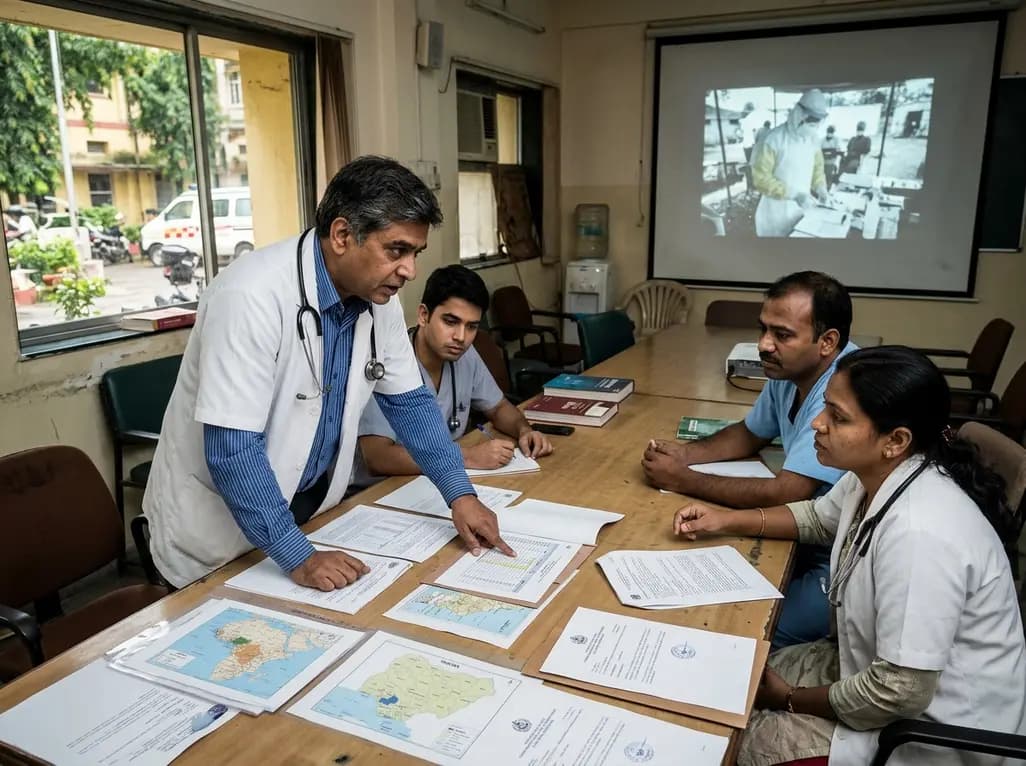
Following Nigeria's first recorded Ebola case linked to regional travel, the Africa CDC has convened an emergency ministerial summit. This alert underscores critical clinical priorities for healthcare professionals, including differentiating early viral infection from malaria, implementing barrier nursing, and triage.
Today

Leucine Rich Bio has introduced South Asia's first comprehensive vaginal microbiome test, BugSpeaks. By profiling microbial dysbiosis, pathogens, and antimicrobial resistance, this next-generation diagnostic platform provides clinicians with deeper insights into recurrent infections, fertility, and reproductive health.
Today

Review how tailored exercise programs benefit frail older patients with heart failure. Explore pathophysiological mechanisms, individualized training prescriptions, and strategies to overcome adherence barriers in clinical practice.
Today

This comparative study evaluates posterior labral tears with and without glenohumeral instability, highlighting distinct demographic patterns, MRI underestimation in stable shoulders, and successful arthroscopic repair outcomes.
Today

A clinical study demonstrates that early intervention with tocilizumab, either as monotherapy or bridged with corticosteroids, achieves significant proptosis reduction and resolves active inflammation in treatment-naive thyroid eye disease.
Today
