.webp&w=384&q=75)

Loading, please wait...
Loading, please wait...

Chronic hepatitis B (CHB) remains a leading global cause of hepatocellular carcinoma (HCC). Although nucleos(t)ide analogs (NAs) successfully suppress virus replication, a residual risk of cancer persists. Consequently, clinicians need precise tools to identify high-risk individuals. A recent study introduced the HBsAg-HCC Score, which significantly improves prediction accuracy by including viral markers often ignored by older models. This novel score helps bridge the gap in clinical risk stratification for patients undergoing long-term antiviral therapy.
Existing tools like PAGE-B and aMAP primarily focus on age and liver function. However, they often overlook the quantitative level of hepatitis B surface antigen (HBsAg). Because HBsAg levels reflect the activity of the virus more directly, including them creates a more robust assessment. Therefore, the researchers developed this model to address the limitations of conventional prediction systems.
The study identified five independent risk factors that drive the development of HCC in treated patients. These factors include higher HBsAg levels, older age, and male sex. Additionally, hypoproteinaemia and an elevated Aspartate Aminotransferase-to-Platelet Ratio Index (APRI) are significant markers. Specifically, the HBsAg-HCC Score combines these variables to provide a comprehensive look at both viral activity and liver health. This multi-faceted approach ensures a more stable prediction than models relying on fewer parameters.
Furthermore, the performance of this new model was compared with established tools like mPAGE-B. In the training cohort, the score achieved impressive 5-year AUCs of 0.872. This result significantly outperformed older models. In addition, internal and external cross-validation confirmed that the findings are reliable across different patient groups. Consequently, this tool offers a more tailored strategy for monitoring CHB patients.
Implementing this score could change how physicians manage surveillance. Instead of a one-size-fits-all approach, doctors can now prioritize patients with the highest scores for more frequent screening. Moreover, identifying low-risk patients may reduce unnecessary medical costs and patient anxiety. As a result, the healthcare system can allocate resources more efficiently while improving patient outcomes. This shift toward personalized medicine is essential for managing the long-term risks associated with CHB.
It is a clinical prediction tool that calculates the risk of developing liver cancer in chronic hepatitis B patients. It uniquely includes HBsAg quantification along with age, sex, and liver markers like APRI.
HBsAg levels reflect the transcriptional activity of the virus within the liver. Even when the viral load is suppressed by drugs, high HBsAg levels can indicate a higher residual risk of developing hepatocellular carcinoma.
APRI is a non-invasive marker for liver fibrosis. Since advanced fibrosis is a primary driver of cancer, including this index helps the score capture the physical state of the liver alongside viral activity.
Disclaimer: This content is for informational and educational purposes only and does not constitute medical advice. It is not intended to replace professional medical judgment. Always seek the advice of a qualified healthcare provider for any medical condition or treatment. Refer to the latest local and national guidelines for clinical practice.
References
Guo YF et al. HBsAg Quantification-Based Models for Predicting Hepatocellular Carcinoma Risk in Nucleos(t)ide Analogs-Experienced Patients With Chronic Hepatitis B: The HBsAg-HCC Score. Aliment Pharmacol Ther. 2026 Apr 03. doi: 10.1111/apt.70652. PMID: 41933428.
Papatheodoridis G et al. Hepatocellular carcinoma risk prediction in chronic hepatitis B patients on long-term entecavir or tenofovir therapy. J Hepatol. 2020.
Fan R et al. aMAP score: a universal tool for predicting HCC risk in chronic liver disease. J Hepatol. 2020.
"
Read summarized clinical updates, watch expert medical content, and earn CME certifications right from your smartphone.
Open your smartphone camera to scan and install.





The HBsAg-HCC Score improves liver cancer risk prediction in chronic hepatitis B patients by incorporating HBsAg levels and clinical markers....
6 months ago

Explore vital recurrent stroke predictors in lacunar stroke patients managed with intensive blood pressure lowering. This analysis examines trial findings from SPS3 to uncover residual vascular risks, metabolic factors, and targeted secondary prevention strategies for high-risk neurological patients.
Today

Odisha has established India's first state-level clinical protocol specifically tailored for pregnant women with sickle cell disease. Developed with NHM and UNICEF, the framework provides structured antenatal screening, crisis mitigation, standardized referral pathways, and specialized interdisciplinary care.
Today

India is advancing preventive healthcare by integrating genomics, artificial intelligence, and quantum technologies. With the SANGAM programme sequencing one million Indian genomes, clinicians can unlock personalized therapies, detect cardiometabolic risks early, and curb the burden of diabetes and heart disease.
Today
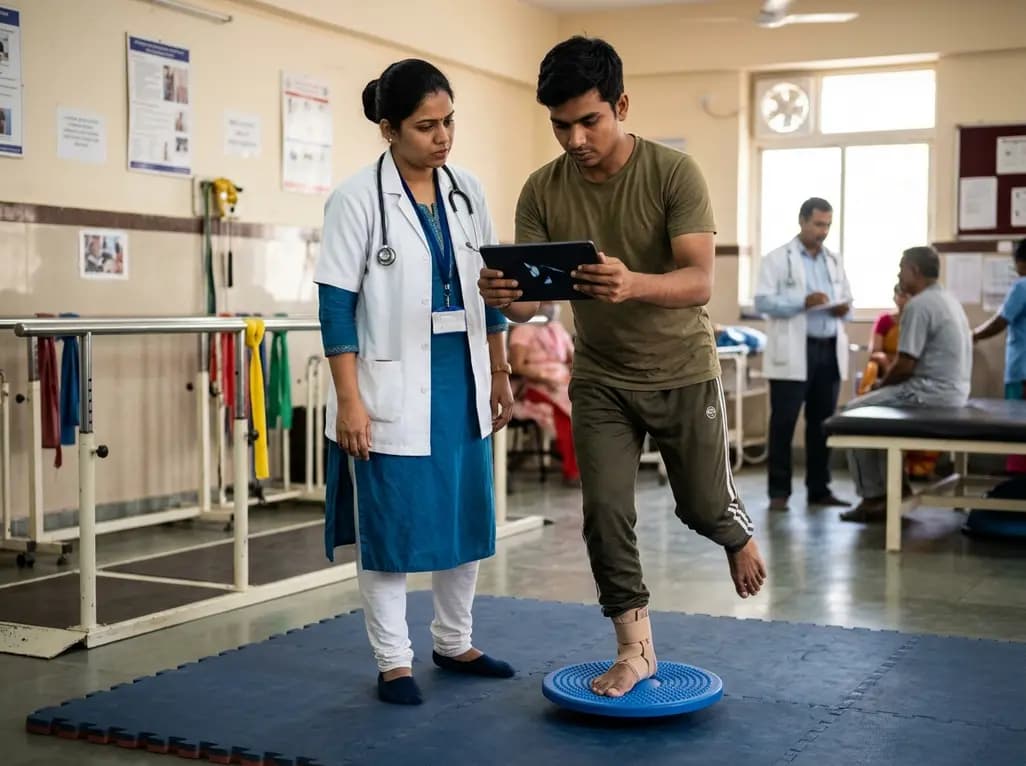
A randomized controlled trial demonstrates that an eight-week dual-task training intervention significantly improves static and dynamic postural control over standard balance exercises in individuals with chronic ankle instability, addressing critical neurocognitive deficits during athletic and daily activities.
Today

A retrospective cohort study of 7,716 ICU patients from the MIMIC-IV database demonstrates that Gradient Boosting Decision Trees significantly outperform traditional SOFA scores in predicting in-hospital mortality among patients with sepsis and diabetes, with SHAP analysis providing clinical interpretability.
Today
