.webp&w=384&q=75)

Loading, please wait...
Loading, please wait...
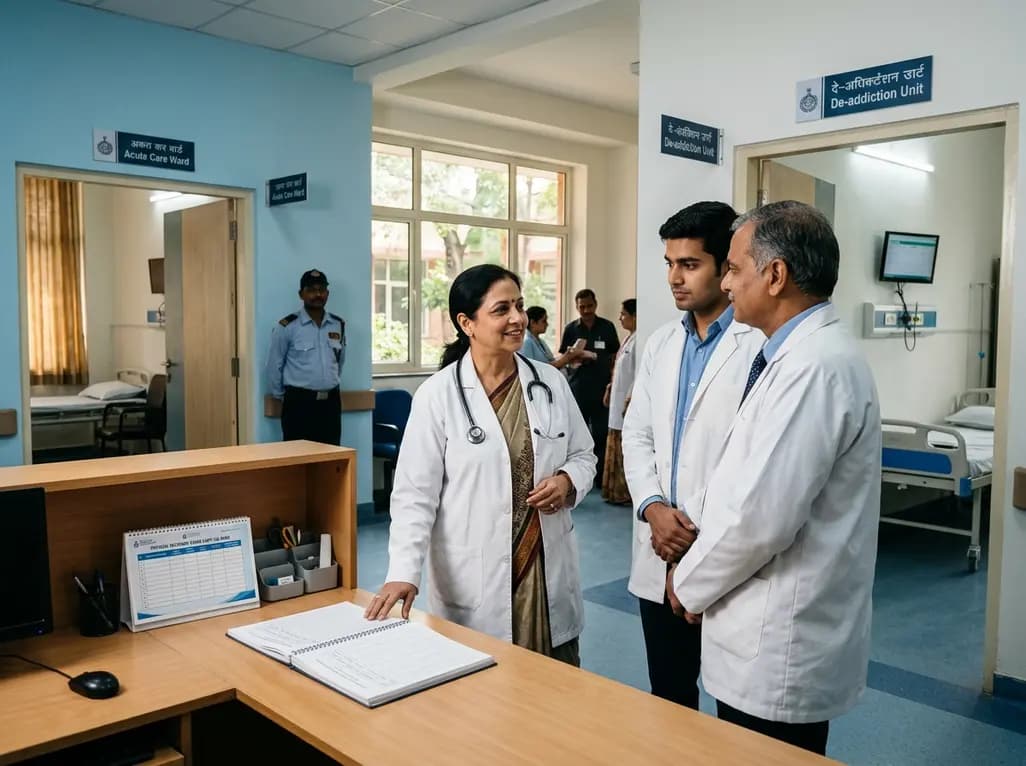
The Health and Family Welfare Department of Haryana has notified the Mental Healthcare (State Mental Health Authority) Regulations, 2026, to enforce statutory oversight across psychiatric facilities. Issued under the Mental Healthcare Act, 2017, these sweeping mental health regulations establish structured quality parameters for clinical establishments across the state. Consequently, healthcare administrators and clinicians must now follow uniform mandates regarding licensing, staffing benchmarks, patient dignity, and emergency procedures. This reform directly addresses persistent gaps in mental healthcare delivery while safeguarding the legal rights of vulnerable psychiatric patients.
The state regulatory framework classifies all mental health facilities into six distinct categories, designated A through F. Therefore, clinical oversight now extends well beyond traditional standalone psychiatric hospitals. Specifically, the categories encompass academic psychiatric departments within medical colleges, inpatient psychiatric wards of general multi-speciality hospitals, and residential psychosocial rehabilitation centres. Furthermore, standalone de-addiction units and emergency substance-use stabilisation clinics fall squarely within these statutory boundaries.
Government authorities designed this categorization to eliminate regulatory ambiguity across both public and private sectors. For instance, multi-speciality hospitals operating consultative or acute inpatient psychiatric beds must comply with the identical baseline standards that apply to dedicated institutes. In addition, halfway homes and community-based rehabilitation centres must maintain formal accountability for patient outcomes. As a result, the regulations establish clear operational parameters tailored to the acuity and scope of mental healthcare delivered at each level. Medical administrators must therefore identify their specific institutional category to fulfill subsequent licensing and procedural obligations without administrative delay.
Under Section 65 of the Mental Healthcare Act, 2017, every operating facility must secure formal statutory registration. Consequently, the state authority has prescribed a standardized fee of twenty-five thousand rupees for permanent registration. Healthcare establishments must submit comprehensive documentary evidence proving compliance with prescribed minimum operational standards before receiving operational approval. Thus, unverified facilities can no longer operate legally without rigorous state scrutiny.
Furthermore, the registration process evaluates infrastructure capability, professional qualifications of treating staff, and facility safety certifications. The State Mental Health Authority requires explicit proof of adequate medical equipment, fire department clearances, and barrier-free disability access. Additionally, institutions must present verifiable credentialing records for psychiatrists, clinical psychologists, psychiatric social workers, and registered nursing personnel. Therefore, hospital managements must conduct comprehensive internal audits before submitting their licensing applications. By enforcing these financial and administrative benchmarks, the state prevents substandard institutions from offering unsupervised care to vulnerable individuals.
The framework establishes uncompromised baselines for physical environment, hygiene, and inpatient accommodation. Most notably, the rules explicitly prohibit institutions from forcing patients to sleep on the floor under any circumstance. Facilities must provide separate, elevated beds with clean, regularly sanitized bedding for every admitted individual. In addition, buildings must feature proper cross-ventilation, functional power backups, reliable potable water supplies, and compliant biomedical waste management protocols.
Moreover, patient privacy and dignity form the core of these structural requirements. Hospitals must provide completely segregated, secure sanitation facilities for male and female patients to preserve safety and modesty. Furthermore, clinical teams must guarantee absolute privacy during psychiatric evaluations, nursing interventions, and family counseling sessions. The regulations also mandate gender-sensitive treatment spaces that prevent any form of exploitation or discrimination. Consequently, healthcare organizations must upgrade their physical wards and administrative protocols immediately to satisfy these stringent, human-rights-focused statutory criteria.
Addressing clinical abuses in inpatient settings, the framework introduces stringent restrictions on mechanical and physical restraint. The regulations stipulate that physical restraint represents an extraordinary measure of last resort. Therefore, clinical personnel may employ restraint solely to prevent imminent self-harm or severe violence toward others. Moreover, nurses cannot initiate restraints independently; an on-duty medical practitioner or consultant psychiatrist must authorize every intervention in writing.
In addition, healthcare establishments must train all clinical and security staff in verbal de-escalation techniques and non-violent crisis management. Treatment teams must meticulously document every instance of restraint in the official medical record, noting specific justifications, clinical observations, and exact durations. Crucially, inpatient institutions face strict external accountability through mandatory reporting. Facilities must compile comprehensive monthly restraint audits and submit them to their respective District Mental Health Review Board within the first week of every month. Consequently, this continuous oversight minimizes involuntary coercion and reinforces ethical clinical psychiatric practice.
The updated regulations establish targeted oversight mechanisms for substance-use disorders and rehabilitation facilities. Standalone de-addiction centres categorized under Category D must compulsorily register every admitted patient on the centralized Haryana De-addiction Monitoring System Portal. Similarly, Category F institutions that deliver emergency medical detoxification and acute substance stabilization must maintain continuous psychiatric supervision. These facilities must also transmit real-time patient data directly into the state digital repository.
Furthermore, district administrative bodies must coordinate rapidly to bring existing rehabilitation centres into full alignment with the National Action Plan for Drug Demand Reduction. The regulations also enforce strict protection over electronic medical records, guaranteeing patient confidentiality against unauthorized disclosures. Additionally, clinical teams must institute clear administrative procedures for executing and recording advance directives concerning future mental healthcare choices. Thus, the integrated digital platform ensures total institutional accountability, enhances longitudinal substance abuse tracking, and upholds statutory patient autonomy across Haryana.
Q1: What are the primary facility categories governed by these regulations?
The regulatory framework classifies establishments into six distinct categories, designated A through F. These cover standalone psychiatric hospitals, psychiatric departments in medical colleges, inpatient psychiatric wards of general multi-speciality hospitals, dedicated de-addiction facilities, residential psychosocial rehabilitation centres, and specialized emergency substance management institutions. Consequently, every facility offering formal mental healthcare services across Haryana must register under its respective category.
Q2: When can clinicians legally authorize physical restraint under the new norms?
Clinicians may authorize physical restraint solely as an emergency intervention to prevent patients from causing immediate harm to themselves or others. Furthermore, an authorized medical practitioner on duty or consultant psychiatrist must approve every restraint episode in writing after alternative crisis de-escalation techniques fail. Additionally, facilities must log detailed clinical notes and submit comprehensive monthly reports to the District Mental Health Review Board.
Q3: How must de-addiction centres handle patient data and digital tracking?
Standalone de-addiction centres under Category D and emergency withdrawal facilities under Category F must record all admitted patients on the Haryana De-addiction Monitoring System Portal. While transmitting data to this centralized registry, facilities must uphold rigid confidentiality protocols under the Mental Healthcare Act. This digital tracking prevents fraudulent operations, standardizes detoxification protocols, and aligns state facilities with national drug reduction guidelines.
Disclaimer: This content is for informational and educational purposes only. It does not constitute medical advice or replace professional judgment. Refer to the latest local and national guidelines for clinical practice.
References

Read summarized clinical updates, watch expert medical content, and earn CME certifications right from your smartphone.
Open your smartphone camera to scan and install.





The Haryana Health Department has notified the Mental Healthcare Regulations, 2026, establishing a six-category classification system for psychiatric facilities and de-addiction centres. The framework enforces strict infrastructure standards, digital tracking, and rigorous audits on physical restraint usage.
Today

A retrospective study shows that symptom-monitored loading with lorazepam, chlordiazepoxide, or gabapentin significantly reduces hospital length of stay compared to CIWA-Ar-only therapy in severe alcohol withdrawal, providing a safer, more proactive management strategy.
Today

A retrospective cohort study of 5,481 children aged 3–6 years evaluated whether surgical sperm retrieval for ICSI affects offspring cognitive and physical growth compared with ejaculated sperm and IVF. Results demonstrate comparable IQ scores and growth parameters, providing reassuring safety evidence for clinical practice.
Today
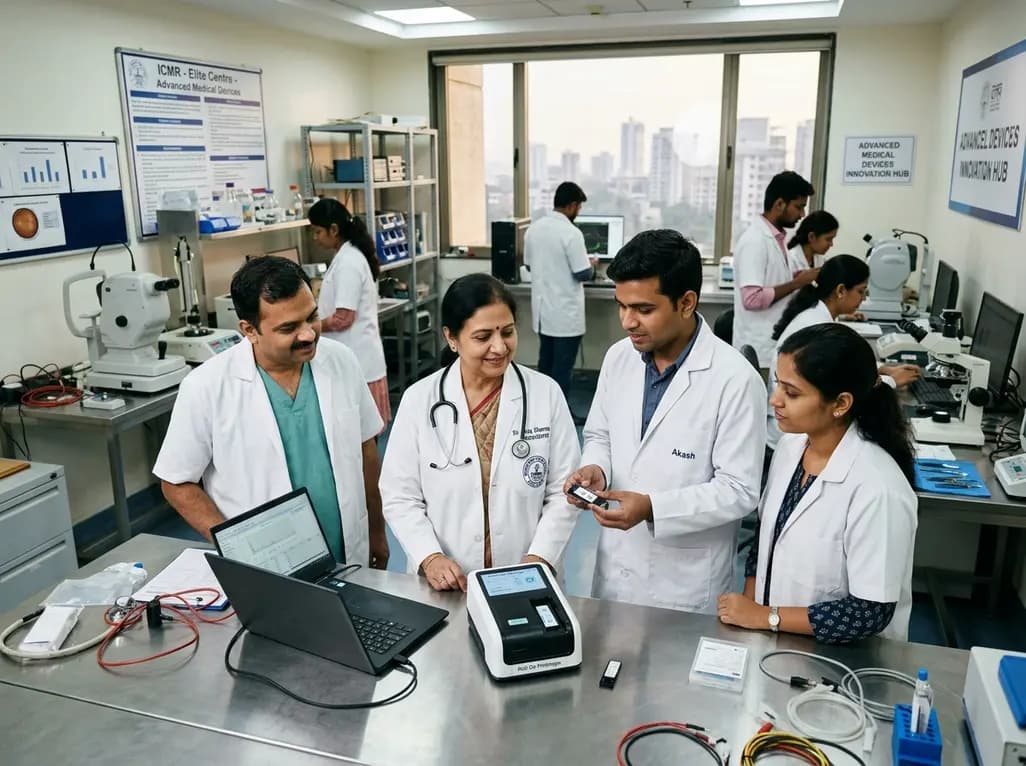
The Indian Council of Medical Research has funded seven top academic hubs to build indigenous healthcare technologies. Targeting point-of-care diagnostics, biomaterials, and ophthalmology, these multidisciplinary centres aim to tackle unmet clinical needs and make medical care affordable across India.
Today

A meta-analysis evaluates the impact of preoperative transthoracic echocardiography on surgical delay and hospital stay in geriatric hip fracture patients. Evidence emphasizes balancing cardiac workups against operative urgency and adhering to clinical guidelines.
Today

A multicenter cross-sectional study of 1,315 adults with type 1 diabetes reveals that the GMI/HbA1c ratio does not independently predict microvascular complications. Clinicians should prioritize sustained time in range and blood pressure management over glycation discordance metrics.
Today
