.webp&w=384&q=75)

Loading, please wait...
Loading, please wait...
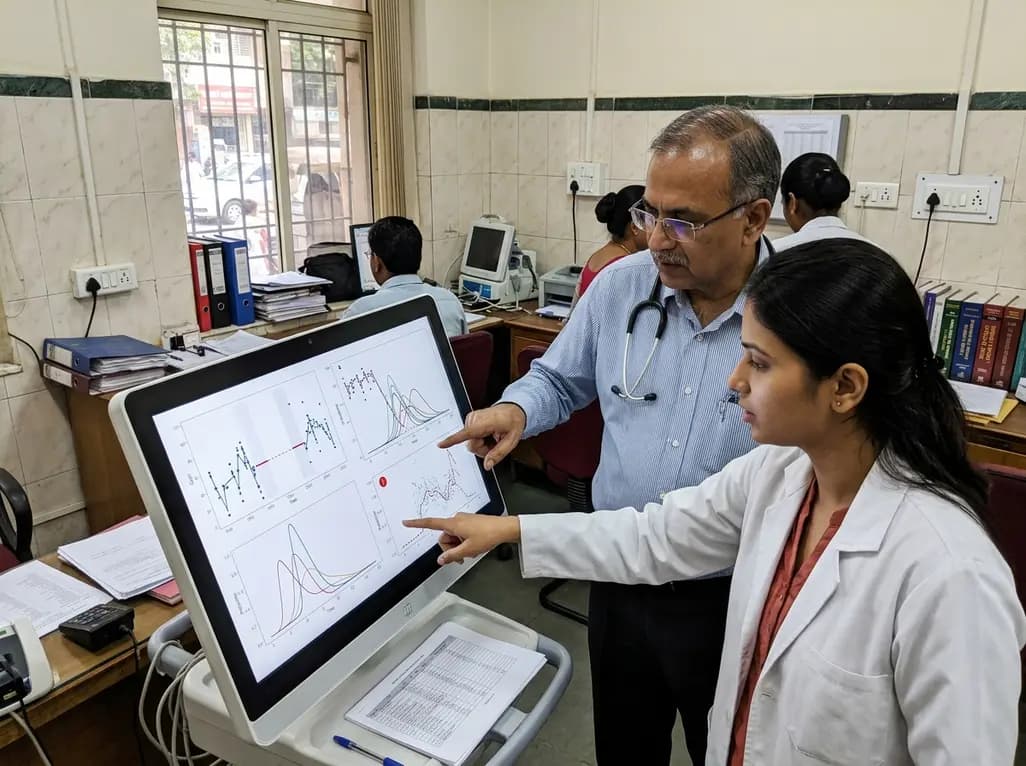
The proliferation of digital health tools, such as wearable biosensors and smartphone-based ecological momentary assessment, has revolutionized clinical research. These advancements allow for the collection of intensive longitudinal data, providing a granular look at patient health by capturing minute-to-minute fluctuations that traditional designs often miss. However, this high-frequency data collection introduces a significant statistical hurdle: Intensive Longitudinal Data Missingness. Unlike cross-sectional surveys where a single missing response is manageable, the sequential nature of longitudinal data means that even small gaps can disrupt the analysis of temporal dynamics. Researchers often encounter mixed missingness, where some data is absent due to random technical glitches while other points are missing because the patient felt too unwell to respond. Navigating these complexities requires a robust understanding of statistical mechanisms and the appropriate selection of handling methods. Without a clear strategy, clinicians risk drawing biased conclusions about treatment efficacy. This article explores the latest simulation-based evidence regarding the effectiveness of Kalman filters and Bayesian models in managing these data gaps. By understanding the limits of these methods, researchers can enhance the validity of their longitudinal findings.
To effectively manage missing data, clinicians must first distinguish between the various mechanisms that drive its occurrence. In the realm of Intensive Longitudinal Data Missingness, we classify these mechanisms as Missing Completely at Random (MCAR), Missing at Random (MAR), or Missing Not at Random (MNAR). Specifically, MCAR occurs when the absence of data is unrelated to any observed or unobserved variables, such as a random battery failure. MAR is slightly more complex; it suggests that the missingness relates to observed data but not the missing values themselves. For instance, a patient might skip a check-in because they previously reported high stress, which the model already captures. In contrast, MNAR represents a non-ignorable mechanism where the reason for missing data is directly tied to the missing value itself. A patient suffering from a severe depressive episode might be unable to complete a mood assessment exactly because their mood is so low. Handling these mixed mechanisms concurrently is a challenge because most standard statistical packages assume data is MAR. Recognizing these nuances is the first step toward choosing an estimation framework that maintains statistical power.
The Kalman filter has emerged as a powerful tool for addressing Intensive Longitudinal Data Missingness, particularly when the underlying mechanism is ignorable. Originally designed for aerospace engineering to track objects through noisy signals, this filter is ideally suited for time-series data in clinical medicine. It works through a recursive process of prediction and correction, estimating the true state of a patient based on previous observations and current noisy inputs. One of the most significant findings from recent simulation studies is the filter's remarkable tolerance for high levels of missingness. Under certain conditions, such as a sample of 100 individuals followed over 50 measurement occasions, the Kalman filter maintains accurate estimation even when 70% of the data is missing, provided the missingness is MCAR or MAR. This makes it an invaluable asset for mHealth studies where participants frequently miss check-ins throughout the day. However, the filter's performance is strictly tied to the assumption that the data are ignorable. When the missingness shifts toward non-ignorable patterns, the Kalman filter’s recursive logic can begin to propagate bias rather than correcting it. Therefore, researchers must verify their data collection process before relying solely on this method.
When researchers suspect that the missingness in their study is non-ignorable, they should turn to more sophisticated approaches like Bayesian selection models. These models explicitly account for the relationship between the missing data and the values that would have been observed. In an Intensive Longitudinal Data Missingness context, Bayesian frameworks allow for the simultaneous estimation of the measurement model and the missingness mechanism. This dual-track approach provides a more realistic representation of patient behavior, acknowledging that the probability of a missing data point may depend on the patient's current clinical status. Simulation studies demonstrate that correctly specified Bayesian selection models consistently outperform the Kalman filter when MNAR mechanisms are present. These models are particularly useful in psychiatric and chronic pain research, where symptom severity often dictates whether a patient can comply with the study protocol. By incorporating prior knowledge and modeling the selection process directly, Bayesian methods provide a path toward unbiased parameter estimation. However, the complexity of these models requires careful specification. If the model incorrectly characterizes the relationship between the data and the missingness, it can lead to results that are more biased than simpler approaches.
Despite the advancements in Bayesian modeling, there is a sobering reality regarding the limits of managing non-ignorable data. Research indicates that even under optimal model specifications, the tolerable proportion of MNAR missingness remains strikingly low. On average, if more than 3% of the total missing data is driven by non-ignorable factors, the accuracy of the estimation deteriorates rapidly. This finding provides critical simulation-based guidance for clinicians and data scientists. It suggests that while we have the tools to handle Intensive Longitudinal Data Missingness, the most effective strategy remains the prevention of non-ignorable gaps through better study design. In clinical trials, this might involve simplifying reporting requirements during periods of high symptom severity. For researchers analyzing existing datasets, the 3% threshold serves as a warning bell. If the suspected proportion of MNAR data exceeds this level, even the most sophisticated Bayesian selection models struggle to recover true treatment effects. Consequently, researchers should prioritize identifying the drivers of missingness and use simulation-informed methods to determine if their data configuration is sufficient for reliable analysis. Ultimately, the choice of method must be justified by the likely missingness mechanism.
For the medical community in India, the rise of digital health initiatives and the National Digital Health Mission underscores the importance of mastering Intensive Longitudinal Data Missingness. As we integrate wearables into rural healthcare and urban chronic disease management, the volume of longitudinal data will only increase. High-density data collection via mobile apps is becoming a staple in Indian psychiatry and cardiology research to monitor patient compliance. However, unique factors such as intermittent internet connectivity and varying levels of digital literacy can create complex, mixed missingness patterns. Indian researchers must be at the forefront of adopting rigorous statistical handling methods to ensure domestic clinical trials meet international standards. Utilizing the Kalman filter for routine missingness while reserving Bayesian models for sensitive patient-reported outcomes can significantly improve data quality. Furthermore, understanding the limitations of these methods helps in designing more resilient digital interventions that minimize patient burden. By applying these simulation-based insights, Indian clinicians can contribute more robust evidence to global medical literature, ensuring that the nuances of our diverse patient population are accurately represented in future longitudinal studies.
Missing Completely at Random (MCAR) means data is absent due to random factors unrelated to the study variables, like a lost signal. Conversely, Missing Not at Random (MNAR) is non-ignorable, meaning the missingness is directly caused by the unobserved data itself. For example, a patient might fail to report pain because their pain is too intense to use the device. Distinguishing these is vital for choosing the correct statistical model.
The Kalman filter is an excellent choice for Intensive Longitudinal Data Missingness when the missing mechanism is ignorable, such as MCAR or MAR. It handles high levels of missingness—up to 70%—efficiently and provides recursive updates that are computationally faster than Bayesian models. However, if there is a strong suspicion of non-ignorable missingness (MNAR), Bayesian selection models are required, as the Kalman filter cannot adjust for the bias inherent in value-dependent data gaps.
The 3% threshold represents the point where even the most advanced Bayesian models begin to fail at accurately recovering true data patterns. Clinicians must realize that while statistical methods can mitigate some bias, they cannot fix a dataset heavily compromised by non-ignorable missingness. This highlights the importance of proactive study design and participant engagement to keep MNAR levels low, ensuring that the resulting clinical conclusions remain valid and representative of the patient's true health status.
Disclaimer: This content is for informational and educational purposes only. It is not intended to be a substitute for professional medical advice, diagnosis, or treatment. Always seek the advice of your physician or other qualified health provider with any questions you may have regarding a medical condition. Refer to the latest local and national guidelines for clinical practice.
References
Wan Z et al. Handling Missing Data in Intensive Longitudinal Data with Mixed Missing Mechanisms. Multivariate Behav Res. 2026 Jul 12. doi: 10.1080/00273171.2026.2700050. PMID: 42437454.
Asparouhov T, Muthén B. Dynamic structural equation modeling of intensive longitudinal data. Psychol Methods. 2018;23(2):327-347.
Little RJA, Rubin DB. Statistical Analysis with Missing Data. 3rd Edition. Wiley; 2019.

Read summarized clinical updates, watch expert medical content, and earn CME certifications right from your smartphone.
Open your smartphone camera to scan and install.





Intensive longitudinal studies face unique missing data challenges. Research reveals that while Kalman filters handle random gaps up to 70%, Bayesian models are essential for non-ignorable patterns, though they struggle when non-random missingness exceeds 3%. Learn to navigate these mechanisms.
3 months ago

Review how tailored exercise programs benefit frail older patients with heart failure. Explore pathophysiological mechanisms, individualized training prescriptions, and strategies to overcome adherence barriers in clinical practice.
Today

Leucine Rich Bio has introduced South Asia's first comprehensive vaginal microbiome test, BugSpeaks. By profiling microbial dysbiosis, pathogens, and antimicrobial resistance, this next-generation diagnostic platform provides clinicians with deeper insights into recurrent infections, fertility, and reproductive health.
Today

In high-risk pulmonary embolism complicated by severe anemia and active uterine bleeding, systemic thrombolysis is contraindicated. Large-bore aspiration thrombectomy provides rapid hemodynamic rescue without fibrinolysis, supported by inferior vena cava filter placement and multidisciplinary critical care.
Today

This comparative study evaluates posterior labral tears with and without glenohumeral instability, highlighting distinct demographic patterns, MRI underestimation in stable shoulders, and successful arthroscopic repair outcomes.
Today

A clinical study demonstrates that early intervention with tocilizumab, either as monotherapy or bridged with corticosteroids, achieves significant proptosis reduction and resolves active inflammation in treatment-naive thyroid eye disease.
Today
