.webp&w=384&q=75)

Loading, please wait...
Loading, please wait...
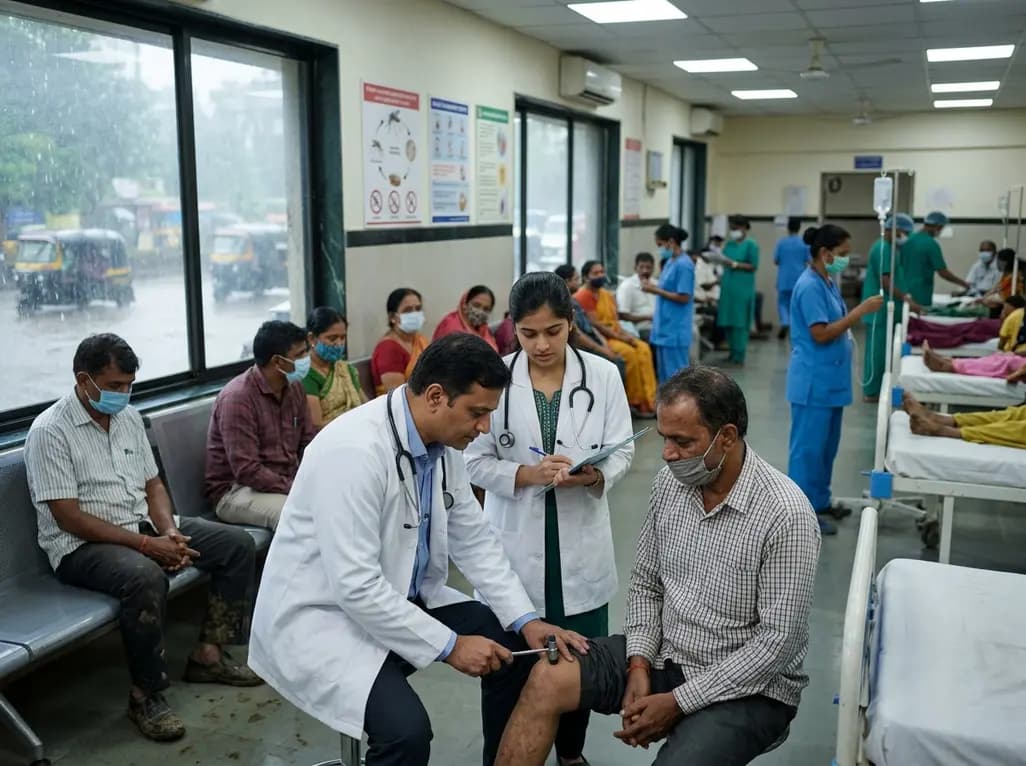
Monsoon seasons in Western India routinely bring predictable surges in tropical infections. However, the recent epidemiological shift in Maharashtra has caught public health experts off guard. Official BMC data shows H1N1 cases in Mumbai during the first six months of this year trebled. Confirmed infections rose sharply from 41 to 113. Furthermore, this unexpected escalation occurred alongside a noticeable rise in other vector-borne diseases. Clinicians across the metropolitan region currently observe a complex clinical landscape where multiple pathogens circulate concurrently. Consequently, differentiating between these seasonal diseases remains a primary diagnostic challenge. This spike highlights the critical need for early clinical suspicion, prompt diagnostic testing, and timely therapy.
The sudden escalation in swine flu cases has surprised many municipal clinical practitioners. Infectious disease specialists attribute this sharp rise directly to erratic weather patterns. Historically, influenza peaks during late August and September. However, the current cycle shows a much earlier acceleration due to temperature fluctuations and high humidity. These factors create a highly conducive environment for aerosol stability and viral transmission. While many cases present as mild respiratory infections, some patients experience severe respiratory distress. Specifically, elderly patients over sixty and individuals with chronic comorbidities are highly vulnerable. Several high-risk patients have already required mechanical ventilation in intensive care units. Consequently, early clinical recognition remains paramount. Physicians must maintain a low threshold for diagnostic testing when presenting symptoms include high-grade fever, cough, and dyspnea. Prompt antiviral therapy with oseltamivir should begin within forty-eight hours of symptom onset for high-risk patients. This clinical strategy significantly reduces hospital stay duration. Additionally, early treatment helps mitigate the risk of severe viral pneumonia and secondary complications.
Alongside the flu, Mumbai has seen a dramatic increase in classical vector-borne pathogens. Malaria infections rose significantly during the first half of the year compared to the prior season. Similarly, dengue cases registered a substantial upward trend. Leptospirosis, a bacterial zoonosis triggered by wading in contaminated floodwaters, also surged during this period. Historically, these diseases peak primarily during the heavy rainfall months. However, changing local climate patterns and extensive urban construction have altered this dynamic. Consequently, mosquito breeding cycles continue almost throughout the entire year rather than being restricted to the monsoon. This ecological shift demands constant clinical vigilance. Clinicians must routinely order peripheral smear examinations or rapid antigen tests for fever cases. Moreover, early identification of dengue warning signs, such as persistent vomiting or mucosal bleeding, is crucial. Proper hydration management remains the cornerstone of dengue therapy. For malaria, identifying the specific species is essential to guide appropriate antimalarial selection. Joint efforts in vector control are urgent to curb transmission rates.
While Plasmodium falciparum traditionally causes lethal cerebral malaria, Plasmodium vivax is increasingly presenting with life-threatening complications. Clinical experts in Mumbai have observed severe presentations of vivax malaria across all patient age brackets. For instance, a notable case involved a nineteen-year-old male who developed severe vivax malaria. Subsequently, this patient acquired a highly resistant nosocomial bacterial infection. This secondary complication led directly to gram-negative sepsis and multi-organ dysfunction. Such cases demonstrate that Plasmodium vivax can no longer be considered a benign parasite. Instead, it requires aggressive monitoring and timely therapeutic intervention. Furthermore, the development of secondary bacterial sepsis in hospitalized malaria patients highlights the critical importance of strict infection control. Critical care units must enforce hand hygiene and sterile catheter management meticulously. Additionally, clinicians should restrict broad-spectrum antibiotics to cases with confirmed or highly suspected secondary bacterial infections. Routine surveillance of local antimicrobial susceptibility patterns is vital to optimize empirical therapy regimens. Ultimately, early discharge and outpatient management for stable patients can prevent these dangerous hospital-acquired complications.
An especially rare and severe complication observed in post-malarial patients is the development of Guillain-Barré syndrome. Indeed, this acute, immune-mediated demyelinating polyradiculoneuropathy typically manifests a few weeks after the initial infection clears. Clinically, patients present with progressive, ascending symmetrical muscle weakness and diminished deep tendon reflexes. In the specific nineteen-year-old patient mentioned earlier, GBS emerged as a late post-infectious complication. The pathophysiological mechanism involves molecular mimicry, where the host's immune response cross-reacts with peripheral nerve antigens. Consequently, prompt diagnostic evaluation with nerve conduction studies and cerebrospinal fluid analysis is vital. Moreover, treatment must begin immediately to prevent irreversible nerve damage. Intravenous immunoglobulin therapy or therapeutic plasma exchange represents the standard of care. Because GBS can progress rapidly to diaphragmatic weakness and respiratory failure, close monitoring of vital capacity is crucial. Therefore, physicians must be prepared to initiate mechanical ventilation in a timely manner. Additionally, managing these complex cases requires a highly collaborative multidisciplinary team. Neurologists, critical care specialists, and physical therapists must work closely together. This comprehensive care model ultimately ensures optimal long-term functional recovery for patients.
Controlling the rise of seasonal illnesses requires a robust, proactive public health response from civic bodies and healthcare providers. The municipal corporation has initiated massive screening drives and vector-control measures across high-risk urban sectors. Specifically, stagnant water elimination and chemical larviciding represent critical steps to reduce mosquito breeding sites. Additionally, municipal authorities have conducted targeted health surveys in construction zones and densely populated communities. These efforts help identify subclinical malaria and dengue cases early. For clinicians, educating patients on individual prevention strategies is equally important. Patients should use insect repellents, install window screens, and avoid wading in logged water. Furthermore, promoting the annual influenza vaccination remains a highly effective strategy to mitigate H1N1 severity. Healthcare facilities should stock adequate supplies of diagnostic kits and essential therapeutic drugs. Subsequently, establishing rapid-response fever clinics can help manage the patient influx during peak transmission months. Through these coordinated clinical and public efforts, cities can dramatically reduce the morbidity associated with monsoon-related ailments. Continuous clinical surveillance and timely reporting will ensure the healthcare infrastructure remains fully resilient during major outbreaks.
Q1: Why are H1N1 cases in Mumbai rising earlier than usual this year?
The early rise in H1N1 cases is primarily driven by highly erratic weather patterns, featuring sudden temperature fluctuations and high humidity levels. These environmental changes create an exceptionally stable environment for respiratory aerosols, which significantly enhances viral transmission. Consequently, the typical late-monsoon surge has shifted earlier in the year. Clinicians should therefore remain vigilant and test early, particularly when managing elderly patients or individuals with pre-existing chronic respiratory and metabolic comorbidities.
Q2: Can Plasmodium vivax malaria cause severe life-threatening neurological complications?
Yes, although Plasmodium vivax is historically considered a benign malaria species, it can indeed trigger severe and life-threatening complications. In rare cases, the host's post-infectious immunological response cross-reacts with peripheral myelin antigens due to molecular mimicry. Consequently, this autoimmune cascade can lead to the development of Guillain-Barré syndrome. Therefore, physicians must carefully monitor malaria patients for any signs of ascending motor weakness or diminished tendon reflexes to initiate early treatment.
Q3: What clinical strategies are recommended to prevent hospital-acquired infections in malaria patients?
Preventing hospital-acquired infections requires strict adherence to infection control protocols within critical care units. Healthcare staff must practice rigorous hand hygiene and maintain sterile techniques during invasive catheter insertions. Additionally, clinicians should implement strict antimicrobial stewardship to prevent the selection of multi-drug resistant gram-negative bacteria. Finally, keeping hospital stays as short as possible and transitioning stable patients to outpatient management effectively minimizes exposure to highly resistant nosocomial pathogens.
Disclaimer: This content is for informational and educational purposes only. It does not constitute medical advice or replace professional judgment. Refer to the latest local and national guidelines for clinical practice.
References

Read summarized clinical updates, watch expert medical content, and earn CME certifications right from your smartphone.
Open your smartphone camera to scan and install.





BMC health data reveals that H1N1 cases in Mumbai have trebled to 113, accompanied by a surge in malaria, dengue, and leptospirosis. This clinical guide explores weather-driven shifts, patient risk profiles, and critical post-malarial complications like Guillain-Barré syndrome.
3 months ago

Review how tailored exercise programs benefit frail older patients with heart failure. Explore pathophysiological mechanisms, individualized training prescriptions, and strategies to overcome adherence barriers in clinical practice.
Today

Leucine Rich Bio has introduced South Asia's first comprehensive vaginal microbiome test, BugSpeaks. By profiling microbial dysbiosis, pathogens, and antimicrobial resistance, this next-generation diagnostic platform provides clinicians with deeper insights into recurrent infections, fertility, and reproductive health.
Today

In high-risk pulmonary embolism complicated by severe anemia and active uterine bleeding, systemic thrombolysis is contraindicated. Large-bore aspiration thrombectomy provides rapid hemodynamic rescue without fibrinolysis, supported by inferior vena cava filter placement and multidisciplinary critical care.
Today

This comparative study evaluates posterior labral tears with and without glenohumeral instability, highlighting distinct demographic patterns, MRI underestimation in stable shoulders, and successful arthroscopic repair outcomes.
Today

A clinical study demonstrates that early intervention with tocilizumab, either as monotherapy or bridged with corticosteroids, achieves significant proptosis reduction and resolves active inflammation in treatment-naive thyroid eye disease.
Today
