.webp&w=384&q=75)

Loading, please wait...
Loading, please wait...
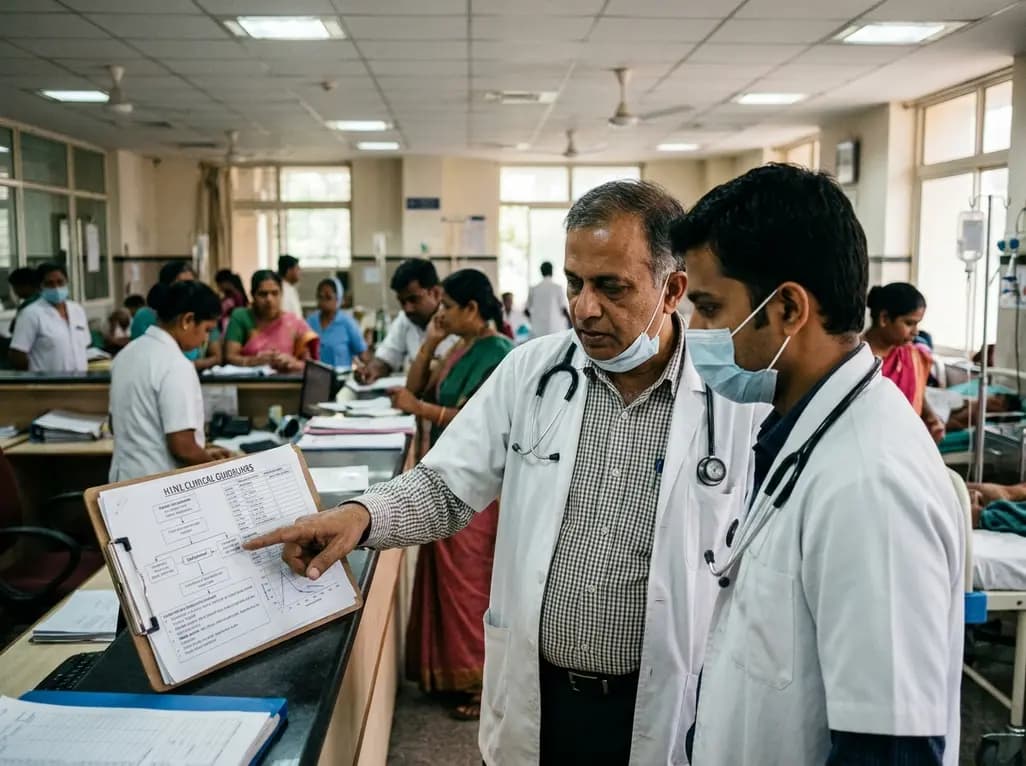
Recent epidemiological surveillance reports highlight a noticeable rise in seasonal respiratory infections across several states, with Karnataka and Delhi recording thousands of laboratory-confirmed infections. Healthcare professionals are actively monitoring these localized transmission clusters as public concern grows regarding rising H1N1 cases in India. However, leading critical care and pulmonary specialists emphasize that this surge represents an expected epidemiological trend rather than an unprecedented health emergency. The primary pathogen responsible for this wave remains the seasonal influenza A virus. Therefore, primary care physicians and hospital teams must maintain robust diagnostic vigilance to protect vulnerable populations and prevent severe clinical outcomes during this period.
Several environmental and behavioral factors explain why specific metropolitan regions observe sharp spikes in seasonal respiratory admissions. Monsoon weather transitions bring rapid fluctuations in ambient temperature and atmospheric humidity. Consequently, these environmental shifts enhance viral stability and prolong the survival of respiratory droplets in the air. Furthermore, seasonal rainfall prompts individuals to spend extended periods indoors, which significantly increases household and workplace viral transmission. Another major contributing factor involves dynamic shifts in community immunity. Because influenza viruses undergo continuous minor genetic modifications, preexisting antibodies from prior seasons or past vaccinations may offer incomplete protection. Additionally, enhanced clinical surveillance, higher testing rates, and dense urban populations make clusters appear more prominent in cities like Bengaluru and New Delhi. Therefore, healthcare providers should view these geographic clusters as natural seasonal waves rather than indicators of heightened pathogen virulence. Clinicians working in outpatient departments should remain cognizant of these ambient transmission dynamics. Consequently, understanding seasonal clustering patterns allows clinical facilities to allocate diagnostic resources and hospital beds more effectively across affected districts.
The Indian Council of Medical Research recently confirmed that circulating strains do not represent novel viral mutations. Genomic sequencing across national reference laboratories shows standard seasonal influenza A (H1N1) pdm09 lineages. Notably, this virus behaves as a typical seasonal pathogen following predictable epidemic trajectories. Viral strains undergo subtle genetic alterations known as antigenic drift over successive seasons. However, these natural evolutionary changes do not indicate increased intrinsic virulence or lethality. Consequently, health authorities emphasize that overall mortality rates have remained low across all monitored territories. Surveillance networks demonstrate that influenza cases generally follow a standard bell curve, reaching a peak before subsiding spontaneously over several weeks. Therefore, clinicians must avoid unwarranted diagnostic overutilization in mild, uncomplicated presentations. Instead, clinical focus must rest on identifying early physiological decompensation in patients who carry elevated baseline risks. Understanding these virological characteristics prevents therapeutic overreach and reassures anxious patients during routine outpatient consultations. Furthermore, routine public health tracking ensures early identification of any unexpected genetic shifts. As a result, healthcare teams can rely confidently on established therapeutic algorithms while treating seasonal influenza presentations.
Standardized national guidelines classify influenza patients into three distinct operational categories to streamline outpatient and inpatient care. Category A includes individuals who present with mild low-grade fever, sore throat, cough, body ache, or mild gastrointestinal symptoms. These patients require supportive home care, hydration, rest, and antipyretics without diagnostic testing or antiviral therapy. In contrast, Category B encompasses patients who exhibit high-grade fever and severe sore throat, alongside high-risk underlying characteristics. This high-risk category includes pregnant women, older adults aged over 65 years, young children, and individuals suffering from chronic pulmonary, cardiovascular, renal, or metabolic disorders. Clinicians should administer prompt oral antiviral therapy to Category B patients while closely monitoring their clinical trajectory at home. Meanwhile, Category C comprises individuals who demonstrate overt signs of respiratory compromise, such as persistent breathlessness, chest pain, cyanosis, hypotension, altered mental status, or low oxygen saturation. Consequently, all Category C patients require immediate hospital admission, rigorous diagnostic testing, and broad supportive critical care. Therefore, adhering strictly to this triage structure prevents hospital overcrowding. Furthermore, it ensures that high-risk patients receive prompt therapeutic attention before life-threatening complications emerge.
The cornerstone of targeted medical treatment for vulnerable influenza patients remains the neuraminidase inhibitor oseltamivir. When indicated, clinicians should initiate oseltamivir within 48 hours of symptom onset to maximize clinical efficacy and reduce viral shedding. However, physicians should exercise strong antimicrobial stewardship by avoiding empirical antibiotics in uncomplicated viral presentations. Inappropriate antibiotic use fails to alter viral progression while accelerating broader community antimicrobial resistance. Nevertheless, severe cases occasionally develop primary viral pneumonia or secondary bacterial infections, most frequently caused by Streptococcus pneumoniae or Staphylococcus aureus. Clinicians must observe patients for biphasic fever patterns, purulent sputum production, and sudden respiratory deterioration, which signal secondary bacterial superinfections. In such scenarios, doctors should promptly perform microbiological evaluations and institute appropriate targeted antibacterial coverage. Additionally, severe pulmonary complications such as acute respiratory distress syndrome require intensive respiratory support, including non-invasive ventilation or invasive mechanical ventilation in specialized critical care settings. Consequently, close clinical monitoring during the acute infectious phase remains imperative. Thus, prompt intervention during critical windows substantially lowers the likelihood of intensive care admission and prolonged morbidity.
Following the resolution of acute fever, many recovering individuals experience persistent post-viral symptoms. Common lingering complaints include mild dry cough, generalized malaise, and reduced physical stamina lasting for two to three weeks. These self-limiting post-viral manifestations generally improve with adequate rest, balanced nutrition, and appropriate hydration. However, healthcare providers must educate patients and caregivers regarding specific red flag symptoms that necessitate urgent medical re-evaluation. Patients should seek immediate emergency care if they develop worsening shortness of breath, new-onset pleuritic chest discomfort, recurrent high fever, haemoptysis, or sudden confusion. Furthermore, pulse oximetry readings dropping below 94% on room air demand rapid institutional evaluation. Vulnerable individuals, particularly those with underlying chronic obstructive pulmonary disease, asthma, or congestive heart failure, face an increased risk of severe disease exacerbation during convalescence. Therefore, clinicians should establish proactive follow-up plans for high-risk cohorts to ensure complete physiological recovery and prevent avoidable readmissions. Additionally, promoting routine annual influenza vaccination among eligible high-risk groups offers valuable preventive protection for future seasons. Consequently, structured patient education significantly enhances community health resilience.
Q1: Why is India currently experiencing a sudden spike in H1N1 cases?
The current rise stems from seasonal weather transitions, increased indoor congregation, and routine variations in population immunity against circulating influenza strains. Surveillance confirms that the circulating virus is the standard seasonal influenza A (H1N1) pdm09 strain rather than a novel or highly virulent mutant. Consequently, case counts represent typical seasonal fluctuations commonly observed during monsoon and post-monsoon periods across urban centers.
Q2: Which patient populations face the highest risk of severe influenza complications?
Individuals at highest risk include adults aged over 65 years, pregnant women, children younger than five years, and immunocompromised individuals. Additionally, patients suffering from chronic medical conditions such as diabetes mellitus, chronic obstructive pulmonary disease, coronary artery disease, chronic kidney disease, and liver disorders face elevated risks. Therefore, these vulnerable cohorts require prompt clinical assessment and early antiviral intervention.
Q3: When should clinicians consider prescribing antiviral medications like oseltamivir?
Clinicians should prescribe oseltamivir for patients classified under Category B (high-risk individuals with severe flu symptoms) and Category C (patients with respiratory distress or severe systemic symptoms). Antiviral treatment provides optimal clinical efficacy when initiated within 48 hours of symptom onset. Conversely, mild Category A cases in healthy individuals generally require only symptomatic supportive management without antiviral agents.
Disclaimer: This content is for informational and educational purposes only. It does not constitute medical advice or replace professional judgment. Refer to the latest local and national guidelines for clinical practice.
References

Read summarized clinical updates, watch expert medical content, and earn CME certifications right from your smartphone.
Open your smartphone camera to scan and install.





With rising H1N1 cases reported across Karnataka, Delhi, and other states, health authorities clarify that seasonal clustering is expected. This clinical overview outlines the virological profile, patient categorization, oseltamivir indications, and red flags for high-risk cohorts.
4 weeks back

Recent research defines ferro-aging as a conserved iron-lipid axis driving organ decline across primates. Age-related iron dyshomeostasis stimulates ACSL4-mediated lipid peroxidation, promoting cellular senescence. Notably, vitamin C directly inhibits ACSL4, suppressing phospholipid oxidation and multi-organ decay.
Today
A retrospective cohort study evaluated 1,000 low-risk singleton births to assess maternal and neonatal outcomes during office-hours versus off-hours. Off-hours deliveries were significantly associated with higher odds of intrapartum cesarean sections and episiotomies, highlighting critical obstetric staffing considerations.
Today

New clinical evidence demonstrates a shift away from strict exercise restrictions in genetic heart disease. While patients with channelopathies engage in more vigorous activity than those with cardiomyopathies, shared decision-making and individualized risk assessments ensure safe, beneficial exercise participation.
Today
Sarcopenia significantly impairs functional independence and amplifies fracture risks in patients with osteoarthritis and osteoporosis. Learn about modern diagnostic strategies, GLP-1 therapy considerations, and evidence-based non-pharmacological management across multidisciplinary clinical settings.
Today

Discover how to identify superimposed entrapment neuropathy in diabetic patients. This review details clinical evaluation, surgical decompression evidence, and a structured algorithm for primary care referrals to prevent ulcers and preserve limb function.
Today
