.webp&w=384&q=75)

Loading, please wait...
Loading, please wait...

Schizophrenia represents a multifaceted neuropsychiatric illness defined by cognitive impairment, positive psychotic symptoms, and prominent negative deficits. Although genetic predispositions and central neurotransmitter imbalances drive classic disease models, peripheral biological pathways also contribute significantly. Recent translational studies highlight the bidirectional gut-brain axis as an essential mediator of central nervous system function. In particular, alterations in the gut microbiota in schizophrenia have emerged as a critical biological area of investigation. Intestinal microorganisms generate neuroactive metabolites, modulate systemic inflammatory cascades, and influence mucosal gene expression across the gastrointestinal tract.
Consequently, psychiatric researchers increasingly investigate how intestinal microbial shifts might trigger behavioral disruptions. Human microbiome studies reveal significant structural and taxonomic dysbiosis in individuals diagnosed with psychotic disorders compared to healthy cohorts. Furthermore, preclinical investigators utilize rodent models to examine whether these microbial perturbations directly induce neurobehavioral phenotypes. Transplanting donor stool samples into germ-free or antibiotic-depleted mice demonstrates that intestinal communities can modulate host memory, sociability, and sensory processing. Therefore, unraveling specific molecular pathways between gut dysbiosis and central neural signaling represents an urgent clinical objective.
To establish whether schizophrenia-associated microbes cause functional neurobehavioral impairments, investigators performed fecal microbiota transplantation in an animal model. Researchers transplanted fecal samples from patients with schizophrenia into male C57BL/6N mice. Remarkably, the recipient animals rapidly exhibited marked behavioral abnormalities that reflect fundamental endophenotypes of human psychotic disorders. Specifically, the colonized mice demonstrated impaired short-term recognition memory during standardized novel object recognition assessments.
Furthermore, behavioral testing demonstrated a significant reduction in social novelty preference during social interaction trials. In addition, the transplanted mice displayed a marked deficit in prepulse inhibition of the acoustic startle reflex. Prepulse inhibition evaluates sensorimotor gating, which filters redundant sensory stimuli in the mammalian brain. Clinicians frequently observe sensorimotor gating failure in human schizophrenia patients. In contrast, control mice receiving microbiota from healthy individuals preserved intact cognitive performance and standard sensorimotor gating. Thus, schizophrenia donor microbiota directly transferred distinct cognitive, social, and sensorimotor gating deficits to the recipient host.
To uncover the physiological mechanism connecting gut dysbiosis to neurobehavioral deficits, researchers analyzed host colonic gene expression. Transcriptomic profiling of colonic tissue revealed a significant downregulation of the host Prodh gene. This critical gene encodes proline dehydrogenase, a mitochondrial enzyme that catalyzes the initial rate-limiting step of proline catabolism. Proline dehydrogenase oxidizes L-proline to pyrroline-5-carboxylate, maintaining systemic amino acid balance and cellular redox homeostasis.
Concurrently, metabolomic profiling demonstrated elevated circulating plasma proline levels in mice receiving the schizophrenia donor microbiota. This biological state of hyperprolinemia mirrors clinical findings where elevated serum proline correlates with disease severity. Notably, genetic PRODH deletions within the human 22q11.2 chromosomal locus significantly elevate schizophrenia risk. Excess peripheral proline readily crosses the blood-brain barrier and impairs central synaptic plasticity. Elevated proline also disrupts NMDA receptor signaling and glutamatergic neurotransmission in the hippocampus and prefrontal cortex. Consequently, colonic PRODH downregulation serves as a peripheral driver that promotes hyperprolinemia and subsequent central neural dysfunction.
To identify the specific microbial drivers behind intestinal PRODH suppression, researchers performed comparative metagenomic analyses. They identified a distinct five-species bacterial consortium consistently enriched in the schizophrenia donor microbiota. This candidate consortium comprised Escherichia fergusonii, Shigella sonnei, Morganella morganii, Citrobacter freundii, and Enterococcus faecalis. Notably, these bacterial species function as opportunistic pathobionts that interact with mucosal tissues and induce host immune perturbations.
Subsequently, researchers administered this synthetic five-species mixture orally to healthy C57BL/6N mice to test direct sufficiency. Impressively, this isolated bacterial consortium faithfully reproduced the exact pathological phenotype observed after full fecal transplantation. The colonized mice exhibited significant downregulation of colonic PRODH expression alongside marked systemic hyperprolinemia. Furthermore, the animals developed impaired short-term recognition memory, reduced social interaction, and defective prepulse inhibition. In contrast, colonization with benign commensal strains failed to induce these metabolic or behavioral derangements. Therefore, discrete pathogenic bacterial combinations, rather than indiscriminate microbial shifts, govern mucosal PRODH suppression and behavioral impairment.
These experimental observations present substantial implications for translational psychiatry, clinical neurology, and gastroenterology. Traditionally, psychiatric frameworks attribute psychotic symptomatology exclusively to intrinsic brain pathology, focusing heavily on central dopaminergic and glutamatergic pathways. However, these new findings prove that gut-derived signals and altered colonic enzymatic expression can directly alter systemic amino acid concentrations and influence behavior. Hyperprolinemia represents a quantifiable metabolic biomarker that bridges peripheral gut ecology with central cognitive processing.
Nevertheless, clinicians must maintain appropriate clinical perspective when evaluating these animal findings. Preclinical rodent models cannot capture the intricate cognitive, emotional, and social complexities of clinical schizophrenia in human patients. In addition, no current evidence supports replacing approved antipsychotic medications with dietary supplements, prebiotics, or fecal transplantation. Standard psychopharmacotherapy and evidence-based psychotherapy remain indispensable pillars of psychiatric care. However, future clinical studies may investigate whether screening plasma proline levels identifies distinct patient subgroups. Ultimately, targeting mucosal metabolic pathways could inspire novel adjunctive interventions for treatment-resistant neuropsychiatric symptoms.
Proline dehydrogenase metabolizes circulating proline into downstream intermediates. When gut dysbiosis downregulates intestinal PRODH expression, peripheral proline clearance decreases significantly, inducing systemic hyperprolinemia. Elevated plasma proline readily crosses the blood-brain barrier and modulates central neurotransmission. Specifically, excess brain proline alters NMDA receptor activity, disrupts the balance between glutamatergic excitation and GABAergic inhibition, and impairs synaptic plasticity. Consequently, this peripheral-to-central biochemical cascade triggers behavioral abnormalities, cognitive deficits, and impaired sensorimotor gating.
Researchers identified a distinct five-species bacterial consortium derived from donor schizophrenia microbiomes. This microbial consortium consists of Escherichia fergusonii, Shigella sonnei, Morganella morganii, Citrobacter freundii, and Enterococcus faecalis. Oral colonization with this defined consortium was sufficient to suppress colonic PRODH expression, elevate circulating proline, and trigger behavioral anomalies in recipient mice. These findings demonstrate that discrete combinations of gut pathobionts, rather than general microbial imbalance alone, can drive host metabolic dysfunction and neurobehavioral impairment.
Clinicians should not currently recommend probiotics, prebiotics, or fecal transplantation as standard schizophrenia treatments. Although preclinical rodent models reveal compelling mechanistic connections between gut bacteria and brain chemistry, robust randomized clinical trials in humans are lacking. Unregulated dietary supplements or unverified interventions carry risks and lack proven therapeutic efficacy. Therefore, clinicians must adhere to established psychiatric guidelines, prioritizing evidence-based antipsychotic medications and psychosocial rehabilitation while ongoing translational research evaluates future microbiome-targeted therapeutic interventions.
Disclaimer: This content is for informational and educational purposes only and does not constitute medical advice, diagnosis, or treatment. Healthcare professionals should exercise their independent clinical judgment when interpreting these research findings. Refer to the latest local and national guidelines for clinical practice.
References

Read summarized clinical updates, watch expert medical content, and earn CME certifications right from your smartphone.
Open your smartphone camera to scan and install.





A preclinical study reveals that gut microbiota from schizophrenia patients suppresses colonic PRODH expression, elevating systemic proline and inducing memory, social, and sensorimotor gating deficits via a specific five-species consortium.
Today

A retrospective cohort study of 5,481 children aged 3–6 years evaluated whether surgical sperm retrieval for ICSI affects offspring cognitive and physical growth compared with ejaculated sperm and IVF. Results demonstrate comparable IQ scores and growth parameters, providing reassuring safety evidence for clinical practice.
Today
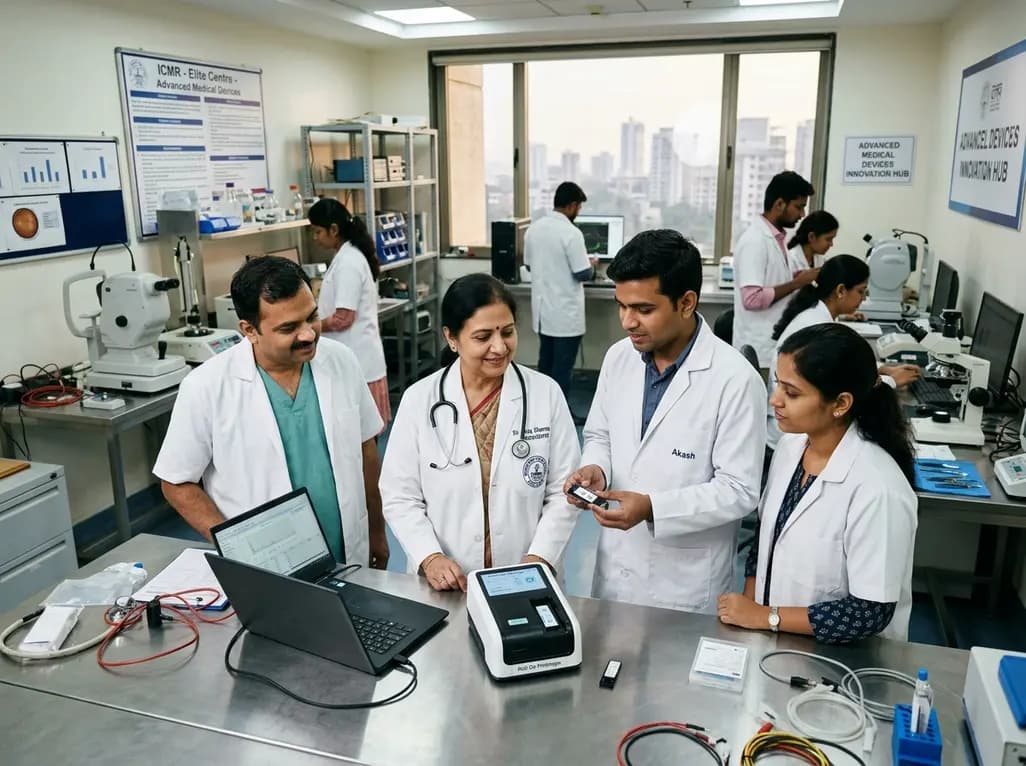
The Indian Council of Medical Research has funded seven top academic hubs to build indigenous healthcare technologies. Targeting point-of-care diagnostics, biomaterials, and ophthalmology, these multidisciplinary centres aim to tackle unmet clinical needs and make medical care affordable across India.
Today

Diagnostic data shows that nearly one in four spine investigations now involve patients younger than 40 years. This comprehensive overview explores the drivers behind this demographic trend, evaluates ergonomic hazards, clarifies red-flag signs, and highlights clinical indications for judicious diagnostic imaging.
Today

A multicenter cross-sectional study of 1,315 adults with type 1 diabetes reveals that the GMI/HbA1c ratio does not independently predict microvascular complications. Clinicians should prioritize sustained time in range and blood pressure management over glycation discordance metrics.
Today
