

Loading, please wait...
Loading, please wait...

The therapeutic integration of guselkumab in psoriatic arthritis marks an important milestone in modern rheumatology. Psoriatic arthritis remains a debilitating, chronic inflammatory condition. The disease frequently drives progressive peripheral joint destruction, dactylitis, enthesitis, and cutaneous psoriasis. Consequently, affected individuals often experience irreversible physical disability and severe functional impairment. Guselkumab operates as a targeted, human monoclonal antibody. Specifically, it binds selectively to the p19 subunit of interleukin-23 while also interacting with CD64 receptors on key immune effector cells. This specialized action potently neutralizes downstream proinflammatory signaling cascades that promote synovial inflammation and pathological osteoclast activation. Although conventional synthetic disease-modifying antirheumatic drugs reduce systemic markers of inflammation, they frequently fail to prevent irreversible structural destruction in active joint disease. Therefore, clinicians require advanced biological agents capable of protecting joint architecture and providing lasting cutaneous clearance simultaneously. The multicenter, Phase 3b APEX study investigated whether sustained interleukin-23 suppression could preserve long-term joint health in biologic-naïve adult patients. Ultimately, the 48-week trial findings confirm remarkable structural protection alongside comprehensive symptom reduction.
To evaluate long-term joint outcomes reliably, the randomized, double-blind, placebo-controlled APEX trial enrolled 1,020 biologic-naïve adults. All enrolled participants presented active, severe psoriatic arthritis despite prior non-biologic therapy. Specifically, trial inclusion required at least three tender joints, three swollen joints, and an elevated baseline C-reactive protein. Furthermore, all participants presented documented radiographic erosion in at least two peripheral joints within their hands or feet. Researchers randomly assigned patients into three parallel treatment arms to compare therapeutic regimens. The first arm received subcutaneous guselkumab 100 milligrams every four weeks. Meanwhile, the second group received guselkumab 100 milligrams at weeks zero and four, followed by dosing every eight weeks. The third cohort received matching placebo injections every four weeks until week 24. At week 24, all placebo-treated participants transitioned to guselkumab every four weeks through week 48. Notably, 93 percent of the enrolled participants successfully completed study intervention through week 48. Therefore, the trial achieved outstanding participant retention, reinforcing the internal validity of the clinical observations. In summary, the APEX protocol carefully selected individuals at substantial risk for rapid, permanent skeletal damage.
Over 48 weeks of continuous management, guselkumab induced durable clinical improvements across peripheral joints, axial symptoms, and cutaneous lesions. Specifically, participants maintained high American College of Rheumatology response rates across both dosing schedules. At week 48, ACR20 responses reached 71 to 74 percent, while ACR50 responses reached 51 to 56 percent. Furthermore, 31 to 35 percent of participants achieved stringent ACR70 benchmarks, reflecting major disease suppression. In addition to articular control, guselkumab delivered dramatic clearance of cutaneous psoriatic plaques. Overall, 74 to 80 percent of participants achieved a 90 percent reduction in baseline Psoriasis Area and Severity Index scores. Patients also experienced substantial functional recovery throughout daily life. Clinically meaningful improvements in physical function occurred in 60 to 64 percent of individuals on the Health Assessment Questionnaire-Disability Index. Consequently, 36 to 41 percent achieved minimal disease activity status, indicating comprehensive multisystem disease control. Importantly, both four-week and eight-week dosing regimens delivered highly comparable clinical benefits. Thus, clinicians can confidently tailor administration frequency without sacrificing long-term disease suppression or quality of life improvements.
Halting permanent skeletal damage remains the definitive clinical goal in psoriatic arthritis management. Investigators in the APEX study evaluated radiographic structural progression using the psoriatic arthritis-modified van der Heijde-Sharp score. Remarkably, participants on continuous guselkumab experienced minimal radiographic progression from baseline through week 48. Specifically, the least squares mean change in total Sharp score was only 0.60 to 0.78 points across active cohorts. Furthermore, radiographic progression was lower during weeks 24 through 48 than during the initial 24 weeks. Results from the placebo crossover cohort offer compelling evidence of disease modification. During the first 24 weeks on placebo, participants accumulated substantial joint damage, exhibiting a mean Sharp score progression of 0.96. However, after transitioning to guselkumab at week 24, their structural damage rate slowed by more than half, dropping to 0.41. Therefore, initiating guselkumab effectively halted established bone destruction, preserving anatomical joint structures. In summary, these findings confirm that targeted interleukin-23 inhibition protects vulnerable joints against cumulative erosive pathology over extended treatment courses.
Successful long-term therapeutic regimens require a favorable safety profile alongside sustained clinical efficacy. Fortunately, the 48-week APEX data demonstrated reassuring safety and high tolerability across all treated cohorts. Adverse event rates remained completely consistent with observations from the initial 24-week placebo-controlled phase. Furthermore, exposure-adjusted adverse event rates remained thoroughly stable throughout the 48-week treatment window without unexpected safety signals. Patients transitioning from placebo to active guselkumab at week 24 experienced no increase in adverse event frequency. Consequently, these robust data offer reassuring guidance for clinicians selecting long-term biologic therapy in daily clinical practice. In rheumatology care, preserving structural joint architecture protects manual dexterity, mobility, and socioeconomic productivity. Conversely, delaying advanced biologic therapy allows irreversible bony ankylosis, erosive mutilans changes, and secondary disability to accumulate. Therefore, treating rheumatologists should consider initiating guselkumab early for biologic-naïve patients presenting with erosive, active joint manifestations. Ultimately, comprehensive control of synovial inflammation and bone remodeling establishes a new therapeutic standard in contemporary psoriatic arthritis management.
Guselkumab selectively inhibits interleukin-23 by binding directly to its p19 subunit and targeting CD64-positive myeloid cells. Consequently, this targeted mechanism prevents downstream production of osteoclast-activating cytokines, such as interleukin-17 and receptor activator of nuclear factor kappa-B ligand. In clinical studies, this targeted biological action markedly suppressed bone erosion and joint space narrowing on radiographs. Therefore, guselkumab effectively preserves structural joint integrity in patients at high risk of rapid disease progression.
Patients receiving guselkumab achieve durable, multidimensional improvements across arthritis symptoms, physical function, and skin plaques. In the APEX trial, approximately 71 to 74 percent of participants reached ACR20 responses, while over 50 percent attained ACR50 responses at week 48. Furthermore, up to 80 percent achieved clear or almost clear skin via PASI90 scores. Additionally, more than 60 percent experienced clinically meaningful functional improvements in physical disability, demonstrating comprehensive systemic symptom relief.
Evidence from the crossover arm shows that switching to guselkumab promptly curbs radiographic joint damage progression. Placebo-treated participants accumulated substantial structural joint damage during the first 24 weeks of the trial. However, after transitioning to guselkumab every four weeks, their mean progression score decreased by more than half between weeks 24 and 48. This dramatic reduction confirms that guselkumab can successfully attenuate destructive joint disease even after radiographic damage has actively started.
Disclaimer: This content is for informational and educational purposes only... Refer to the latest local and national guidelines for clinical practice.
References

Read summarized clinical updates, watch expert medical content, and earn CME certifications right from your smartphone.
Open your smartphone camera to scan and install.





The Phase 3b APEX study demonstrates that guselkumab provides durable joint symptom reduction, significant skin clearance, and sustained inhibition of radiographic structural damage progression through 48 weeks in biologic-naïve patients with active and erosive psoriatic arthritis.
Today
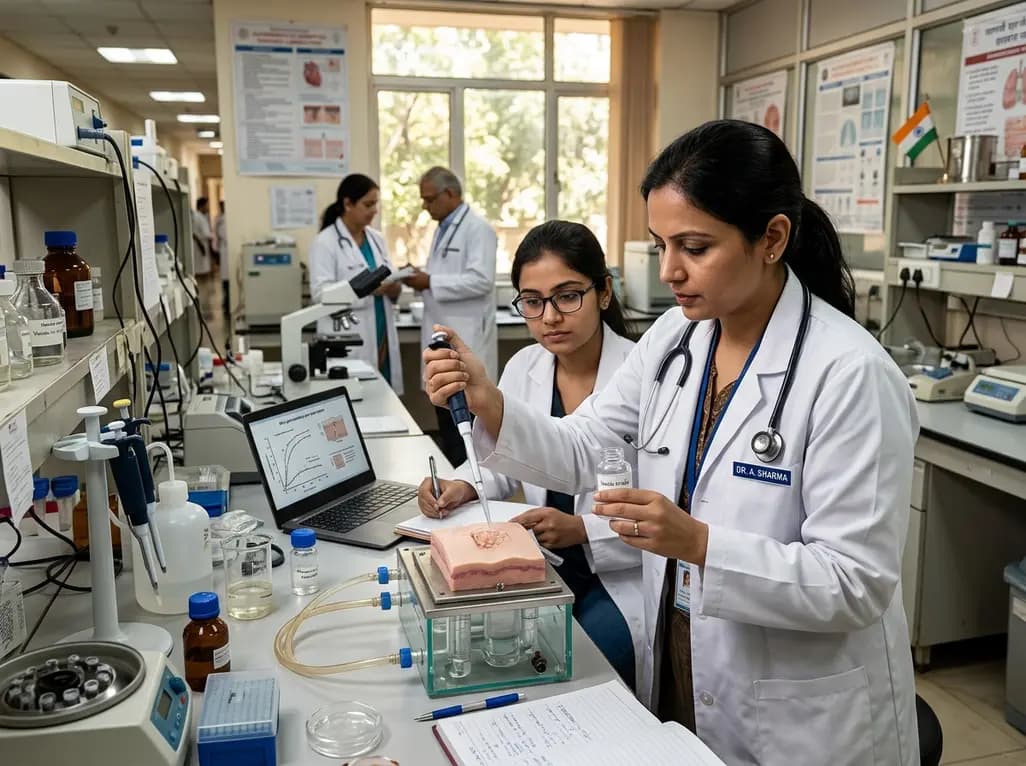
A novel high-permeation vesicle-in-gel platform enhances transdermal fulvestrant delivery, achieving sustained release, robust intradermal retention, and superior antitumor efficacy in breast cancer models while circumventing the drawbacks of painful intramuscular depot injections.
Today

A landmark ten-year WHO report reveals how socioeconomic status, geography, and gender disparities profoundly aggravate chronic disease risks, diagnosis delays, and therapeutic outcomes globally. Discover actionable primary care strategies to bridge screening divides and optimize vulnerable patient management.
Today
A recent single-institution analysis identifies advanced patient age and progressive systemic disease as primary negative prognostic factors for five-year survival in chondrosarcoma, underscoring the urgent necessity of precise risk stratification, clear surgical margins, and dedicated oncologic follow-up.
Today

A critical review evaluates whether starch-polyphenol complexes meet structural and metabolic criteria to qualify as type 5 resistant starch. The proposed tiered evidence framework distinguishes true inclusion complexes from simple mixtures, clarifying mechanisms for glycemic modulation and gut fermentation.
Today
