.webp&w=384&q=75)

Loading, please wait...
Loading, please wait...

Hematopoietic stem cell transplantation (HSCT) remains a vital curative treatment for hematologic malignancies and non-malignant blood disorders. Historically, clinical protocols required complete human leukocyte antigen (HLA) matching across five classical loci to prevent graft-versus-host disease (GVHD). However, clinical practice now frequently evaluates extended typing across nine loci, including HLA-A, B, C, DRB1, DQB1, DPA1, DQA1, DPB1, and DRB3/4/5. Furthermore, post-transplant cyclophosphamide (PTCy) regimens have revolutionized donor selection by allowing transplantation with up to three HLA mismatches. Despite these medical advances, legacy donor search tools cannot efficiently process multiple mismatches across extended loci in real time. Consequently, search centers experience significant delays when identifying compatible donors for urgent cases. To resolve this bottleneck, researchers introduced a high-performance HLA matching algorithm named GRIMM-II. This framework leverages graph theory to accelerate registry searches dramatically. As a result, it enables rapid donor matching across multi-ethnic registries while maintaining biological accuracy.
GRIMM-II utilizes a two-stage computational architecture designed for maximum efficiency. The framework contains two primary engines: Multi-Locus GRIM (ML-GRIM) for imputation and Multi-Locus GRMA (ML-GRMA) for matching. ML-GRIM functions as an advanced HLA imputation algorithm that converts low-resolution or incomplete donor typings into high-resolution genotypes. Rather than analyzing nine loci simultaneously, ML-GRIM partitions genotypes into Class I and Class II components. Class I includes HLA-A, B, and C, whereas Class II includes the remaining extended loci. This strategic division reduces memory overhead while preserving essential haplotype linkage data. By incorporating population multi-ethnic haplotype frequencies, ML-GRIM traverses partial haplotype graphs to resolve phase ambiguity rapidly. Consequently, the algorithm completes multi-locus imputations in less than one second per candidate. Furthermore, testing on low-resolution typings demonstrates that imputation accuracy strongly correlates with mutual information between typed loci and complete genotypes.
Searching millions of volunteer donors for multi-locus mismatches poses a monumental computational challenge. Standard relational algorithms often stall when evaluating complex mismatch permutations. ML-GRMA addresses this challenge by searching pre-imputed donor graph networks. Instead of executing exhaustive pairwise comparisons across an entire database, ML-GRMA uses graph traversal techniques to reduce candidate pools rapidly. Once candidate pools are filtered, the algorithm calculates asymmetric graft-versus-host (GvH) and host-versus-graft (HvG) mismatch probabilities. This distinction provides vital clinical value. For example, a donor who is homozygous at a specific locus presents a one-way mismatch in the GvH direction while remaining matched in the HvG direction. Traditional search systems frequently misclassify these subtle genetic configurations, leading to the erroneous exclusion of viable donors. In contrast, ML-GRMA incorporates asymmetric mismatch probabilities directly into compatibility assessments, delivering accurate results in one to thirteen seconds.
Validation studies confirm the exceptional accuracy and speed of the GRIMM-II framework. Researchers validated ML-GRMA using the World Marrow Donor Association (WMDA3) dataset, successfully reproducing all known donor matches. Additionally, ML-GRMA identified numerous suitable candidate donors that legacy algorithms missed. To test specificity and sensitivity, investigators analyzed ten thousand simulated patient profiles with artificially introduced allele mismatches. ML-GRMA demonstrated hundred percent sensitivity and specificity across zero to three mismatch levels. Furthermore, researchers evaluated ML-GRIM using simulated nine-locus typings from over eight million US donors in the NMDP registry. The algorithm accurately imputed complete genotypes across variable typing resolutions while integrating diverse ethnic haplotype tables. Crucially, GRIMM-II achieved real-time performance without demanding massive computational resources. Because graph databases support dynamic updates, registry managers can incorporate new donor records seamlessly without re-indexing whole databases.
The clinical benefits of this advanced HLA matching algorithm are especially vital for diverse patient populations. Finding fully matched unrelated donors remains a significant barrier for ethnic minority groups. Caucasian patients currently have an eighty percent chance of finding a fully matched donor, whereas ethnic minority patients face probabilities below thirty percent due to limited registry representation. By enabling reliable donor matching with up to three HLA mismatches, GRIMM-II expands the available donor pool significantly. Moreover, combining expanded mismatch thresholds with PTCy prophylaxis allows clinicians to consider donors who were previously deemed unsuitable. Because ML-GRMA accounts for directional GvH and HvG mismatch probabilities, transplant teams can select mismatched donors with lower immunological risk profiles. Consequently, patients who lack full matches can proceed to transplantation faster, reducing disease progression risks during extended searches.
The transition to graph-based histocompatibility tools marks a major advance in immunogenetics. As clinical research evolves, transplantation protocols will likely incorporate additional non-classical HLA loci and functional immune markers. Traditional relational databases struggle to adapt to expanding genetic parameters without comprehensive restructuring. Conversely, the modular graph structure of GRIMM-II easily accommodates new loci, functional matching rules, and custom mismatch algorithms. Furthermore, both ML-GRIM and ML-GRMA are freely available as open-source software and web applications. This open access empowers transplantation centers worldwide to integrate advanced computational matching directly into routine clinical practice. Ultimately, these innovations help democratize allogeneic transplantation for patients globally.
Traditional HLA matching algorithms rely on relational databases that struggle with complex multi-locus queries. They often slow down or fail when evaluating multiple mismatched loci across millions of registry candidates. In contrast, GRIMM-II utilizes a graph-theoretic framework that partitions HLA loci into Class I and Class II networks. This architecture allows real-time matching with up to three mismatches in under thirteen seconds while accounting for asymmetric graft-versus-host and host-versus-graft relationships.
Post-transplant cyclophosphamide, commonly known as PTCy, selectively eliminates alloreactive T cells after donor stem cell infusion. This targeted immunosuppression significantly lowers the incidence and severity of graft-versus-host disease. Consequently, clinical protocols can now safely incorporate donors with up to three HLA mismatches. Algorithms like GRIMM-II exploit this broader tolerance by rapidly identifying partially matched donors who were previously considered unsuitable, thereby greatly expanding treatment access for diverse patient populations.
Ethnic minority patients frequently possess unique or complex HLA haplotypes that are underrepresented in global donor registries. Traditional search tools often struggle to impute missing genomic information accurately for these groups. GRIMM-II leverages multi-ethnic haplotype frequency tables within a flexible graph structure to predict full genotypes rapidly. By efficiently identifying mismatched donors who are immunologically compatible, the system significantly increases transplantation opportunities for patients from underrepresented racial backgrounds.
Disclaimer: This content is for informational and educational purposes only and does not constitute medical advice, diagnosis, or treatment. Refer to the latest local and national guidelines for clinical practice.
References

Read summarized clinical updates, watch expert medical content, and earn CME certifications right from your smartphone.
Open your smartphone camera to scan and install.





GRIMM-II provides a two-stage graph algorithm for nine-locus HLA imputation and real-time donor matching with up to three mismatches. Validated on millions of donors, it completes searches in seconds, expanding donor availability particularly for underrepresented ethnic minority patients.
last month
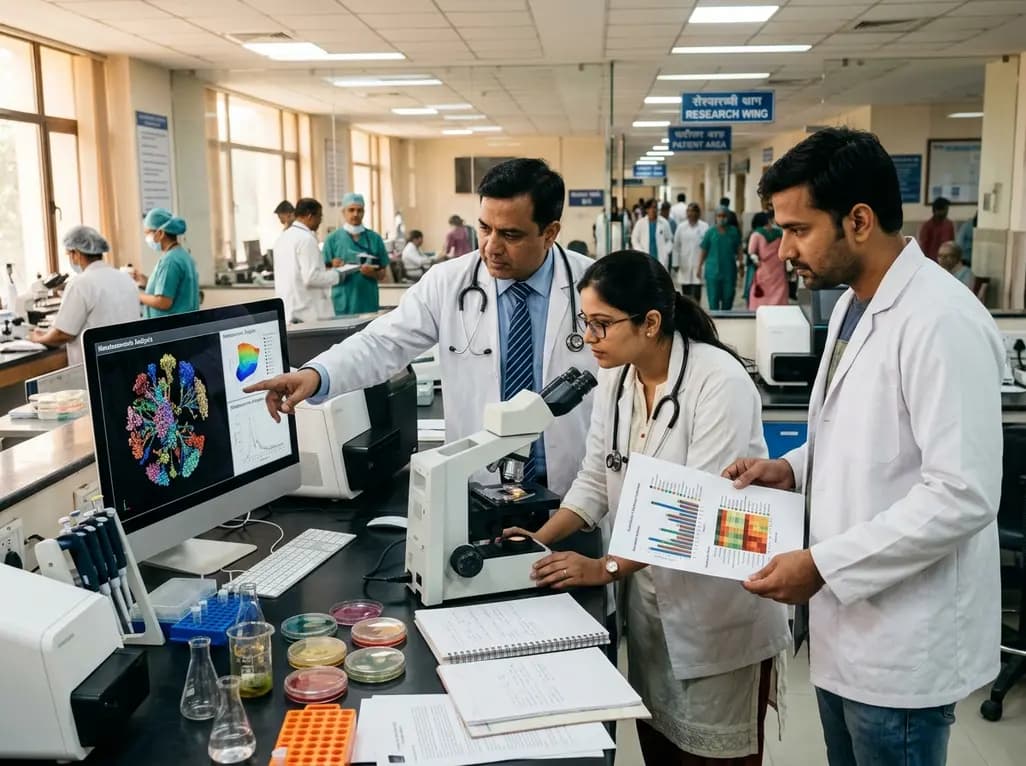
A metataxonomic study reveals distinct gut bacteriome biomarkers in type 2 diabetes, obesity, and cardiovascular complications, identifying specific bacterial shifts that pave the way for precision metabolic medicine.
Today

Researchers have engineered HER2-targeted AIE nanotheranostics to overcome SHR-A1811 resistance in breast cancer. By inducing immunogenic pyroptosis and reprogramming tumor-associated macrophages, this multimodal nanoplatform achieves near-complete tumor regression in refractory preclinical models.
Today

A global dose-response meta-analysis of 8.8 million adults reveals that consuming an extra 100 grams of processed food daily raises cardiovascular event risk by 14%. Explore how industrial additives, systemic inflammation, and metabolic disruption heighten long-term multimorbidity and cardiometabolic risks.
Today

A psychometric validation study confirms that the Turkish Copenhagen Hip and Groin Outcome Score (HAGOS-T) offers excellent reliability, construct validity, and interpretability for patients with hip osteoarthritis, providing clinicians with a robust tool for functional assessment.
Today
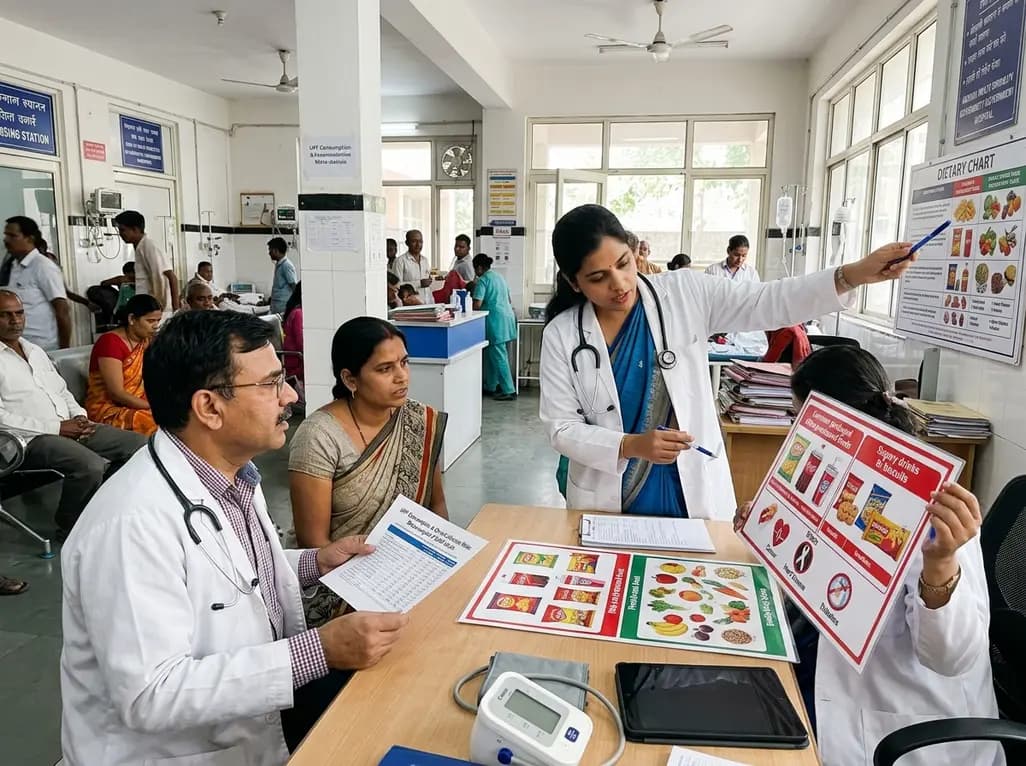
A landmark dose-response meta-analysis of 8.8 million adults reveals that high ultra-processed food intake significantly elevates risks for cardiovascular disease, cancer, diabetes, depression, and all-cause mortality, highlighting urgent needs for clinical lifestyle interventions.
Today
