.webp&w=384&q=75)

Loading, please wait...
Loading, please wait...

Emergency departments around the globe face escalating pressure to manage complex, vulnerable populations. Optimizing geriatric emergency care requires actionable strategies tailored to frontline clinicians who directly deliver rapid assessments. Nurses frequently encounter significant hurdles when assessing acute geriatric syndromes under high-volume pressure. A recent multicenter European quality improvement study sheds critical light on nurse-perceived operational barriers and evaluates practical, low-burden interventions designed to improve acute care delivery for vulnerable older adults in busy emergency units.
Delivering high-quality triage and care to older adults presents unique clinical and logistical challenges in acute care settings. In the initial phase of this multicenter quality improvement project, researchers surveyed eighty-two emergency nurses across eight acute care centers in Belgium, Germany, Switzerland, and Iceland to pinpoint major daily obstacles. The findings revealed that operational time constraints constituted the single largest barrier, cited by nearly forty percent of participating nursing staff. Rapid clinical turnaround expectations often clash directly with the meticulous evaluation required for complex older individuals presenting with multimorbidities. Furthermore, thirteen percent of nurses highlighted acute behavioral disorders, such as delirium or agitation, as substantial clinical impediments. Additionally, eleven percent identified severe communication difficulties, including sensory impairments and cognitive deficits, as major hindrances to accurate baseline history taking. Consequently, standard fast-track emergency workflows frequently fail to accommodate the nuanced physical, cognitive, and social needs of frail geriatric patients. Recognizing these primary obstacles provided the necessary empirical foundation for co-designing feasible nurse-led interventions.
To systematically address these operational barriers, the multicenter trial utilized three iterative Plan-Do-Study-Act cycles across participating hospitals between 2024 and 2025. Structured quality improvement frameworks offer operational discipline, allowing healthcare teams to test small-scale interventions rapidly and refine them based on direct practitioner feedback. During the first cycle, clinicians established comprehensive baseline data regarding nurse perspectives and routine intake challenges. During the second cycle, the multidisciplinary team designed three potential practical solutions aimed at mitigating time constraints and communication bottlenecks. These proposed tools included an innovative QR-code leaflet designed to assist family members in providing detailed collateral geriatric history, interactive educational workshops for nursing staff, and an informative poster emphasizing active family involvement during triage. Emergency nurses systematically evaluated each proposed strategy for perceived clinical helpfulness, administrative feasibility, and operational burden. By actively engaging bedside staff throughout every development phase, the project ensured that proposed care workflows aligned directly with real-world clinical demands.
Direct bedside feedback played a decisive role in shaping the final intervention selection during the second quality cycle. Nursing professionals overwhelmingly favored low-friction, practical tools that integrate seamlessly into rapid intake procedures without increasing documentation burden. Consequently, staff rated the QR-code family leaflet and the informational involvement poster as the most helpful and operationally feasible strategies. In contrast, time-intensive educational sessions were viewed as less adaptable to unpredictable shift dynamics and heavy acute clinical workloads. The QR-code mechanism allowed relatives to independently record essential baseline information—such as premorbid functional status, cognitive baseline, and current medication lists—directly onto digital intake portals while waiting. Simultaneously, the visual poster encouraged family members to proactively share critical clinical insights with the emergency care team. By leveraging informal caregivers effectively, the strategy decentralized data collection without adding administrative weight to busy nursing staff. This participatory design approach highlights the absolute necessity of matching quality initiatives with daily operational realities.
During the third project cycle, investigators integrated the combined poster and QR-code intervention across all eight international emergency departments. Implementation across diverse Western European healthcare systems demonstrated high adaptability and strong staff acceptance. Bedside emergency nurses reported that the intervention streamlined family engagement and improved the routine collection of vital collateral history. However, quantitative evaluation during this initial rollout phase revealed no immediate, statistically measurable impact on clinical throughput or total emergency department length of stay. This finding reflects common reality in healthcare quality improvement, where meaningful culture shifts and systemic clinical outcomes require extended adoption timelines. Complex emergency environments involve numerous confounding variables, ranging from hospital bed availability to nurse-to-patient staffing ratios, which can temporarily obscure the measurable impacts of novel nursing tools. Nevertheless, qualitative feedback confirmed high user satisfaction and enhanced baseline intake quality. Establishing reliable intake mechanisms represents a critical preliminary step toward long-term care optimization.
The empirical findings from this multicenter European study offer valuable insights for emergency departments in India, where patient volumes are exceptionally high and resources are frequently stretched. Indian emergency rooms care for a rapidly growing population of older adults presenting with complex chronic illnesses, making efficient intake strategies essential. Implementing low-cost visual posters and digital collateral history tools, such as QR codes accessible via personal smartphones, can significantly reduce the intake burden on Indian emergency nursing staff. In Indian healthcare settings, family members are almost always present during emergency presentations and actively participate in patient care. Empowering relatives to provide structured history while waiting in intake areas leverages existing social support systems effectively. Additionally, adopting structured iterative frameworks, such as Plan-Do-Study-Act cycles, allows Indian hospital administrators to customize workflow interventions to local hospital dynamics. Sustainable quality improvement requires continuous stakeholder feedback, low operational friction, and persistent refinement across clinical teams.
In the study, emergency nurses identified time constraints as the primary barrier, affecting nearly forty percent of staff. Behavioral disorders like acute delirium accounted for thirteen percent of reported difficulties, while severe communication barriers represented eleven percent. These factors combined to hinder thorough clinical assessments within fast-paced emergency settings, demonstrating the necessity for streamlined collateral history tools and supportive family-centered communication strategies during acute triage.
Emergency nurses overwhelmingly favored the QR-code leaflet and informational poster because these tools provided low-burden, highly feasible methods to gather vital clinical data. By empowering family members to submit collateral history independently, the intervention reduced administrative pressure on bedside staff. In contrast, time-intensive educational sessions were viewed as less practical within unpredictable, fast-paced emergency workflows where rapid patient assessment remains the top operational priority.
Iterative frameworks, such as Plan-Do-Study-Act cycles, allow healthcare organizations to systematically identify operational bottlenecks and test small-scale interventions before full implementation. By continuously gathering clinician feedback across multiple cycles, care teams can refine tools to match real-world emergency dynamics. This structured process ensures high adoption rates, fosters clinician engagement, and establishes sustainable workflow improvements across diverse acute care healthcare settings over time.
Disclaimer: This content is for informational and educational purposes only and does not constitute medical advice. Refer to the latest local and national guidelines for clinical practice.
References

Read summarized clinical updates, watch expert medical content, and earn CME certifications right from your smartphone.
Open your smartphone camera to scan and install.





A Western European multicenter study evaluated nurse-led interventions to improve geriatric emergency care. Using PDSA cycles, researchers developed a poster and QR-code leaflet to engage families and streamline collateral history collection, addressing key barriers like time constraints.
last month

A metataxonomic study reveals distinct gut bacteriome biomarkers in type 2 diabetes, obesity, and cardiovascular complications, identifying specific bacterial shifts that pave the way for precision metabolic medicine.
Today

Researchers have engineered HER2-targeted AIE nanotheranostics to overcome SHR-A1811 resistance in breast cancer. By inducing immunogenic pyroptosis and reprogramming tumor-associated macrophages, this multimodal nanoplatform achieves near-complete tumor regression in refractory preclinical models.
Today
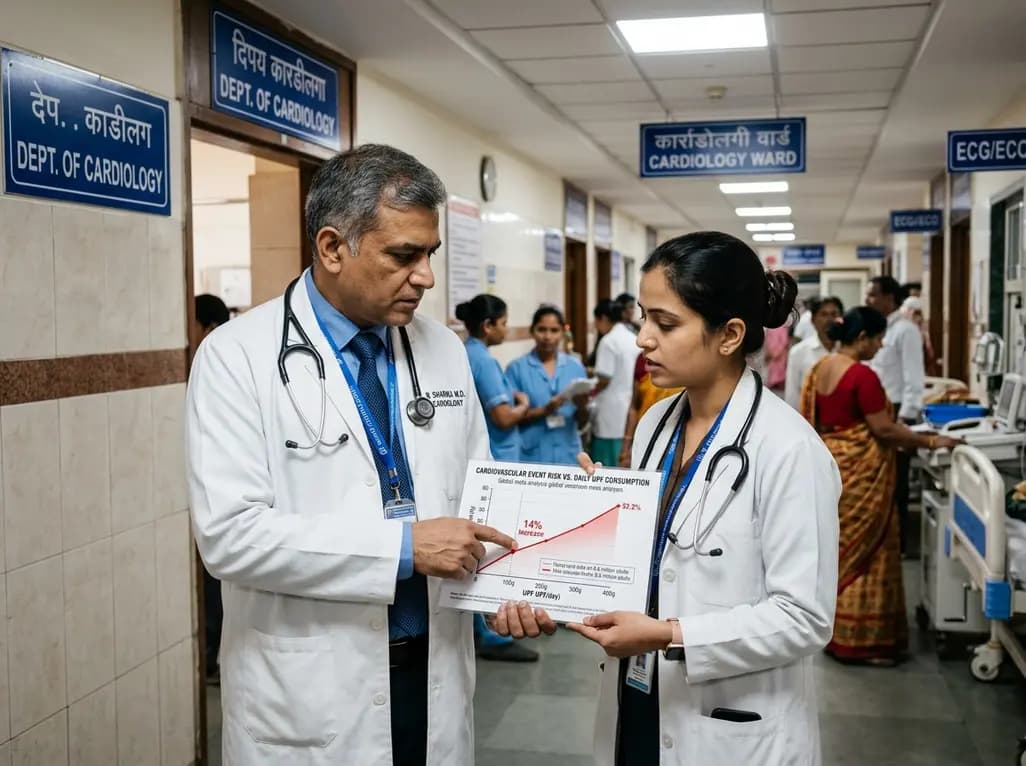
A global dose-response meta-analysis of 8.8 million adults reveals that consuming an extra 100 grams of processed food daily raises cardiovascular event risk by 14%. Explore how industrial additives, systemic inflammation, and metabolic disruption heighten long-term multimorbidity and cardiometabolic risks.
Today

A psychometric validation study confirms that the Turkish Copenhagen Hip and Groin Outcome Score (HAGOS-T) offers excellent reliability, construct validity, and interpretability for patients with hip osteoarthritis, providing clinicians with a robust tool for functional assessment.
Today
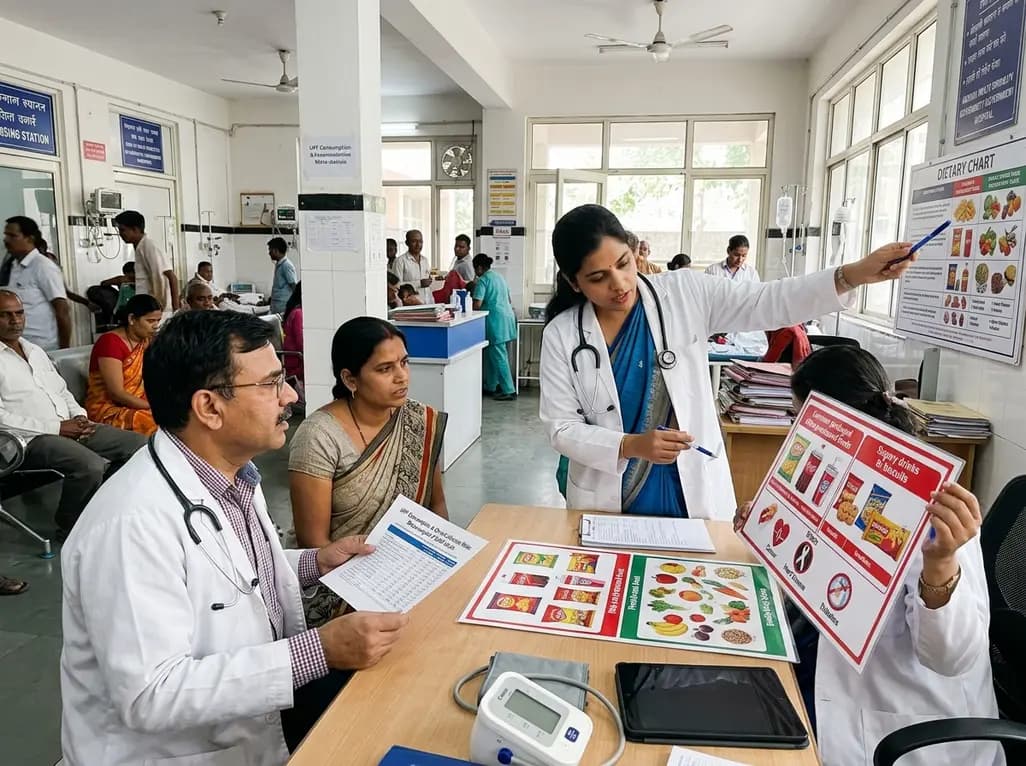
A landmark dose-response meta-analysis of 8.8 million adults reveals that high ultra-processed food intake significantly elevates risks for cardiovascular disease, cancer, diabetes, depression, and all-cause mortality, highlighting urgent needs for clinical lifestyle interventions.
Today
