.webp&w=384&q=75)

Loading, please wait...
Loading, please wait...
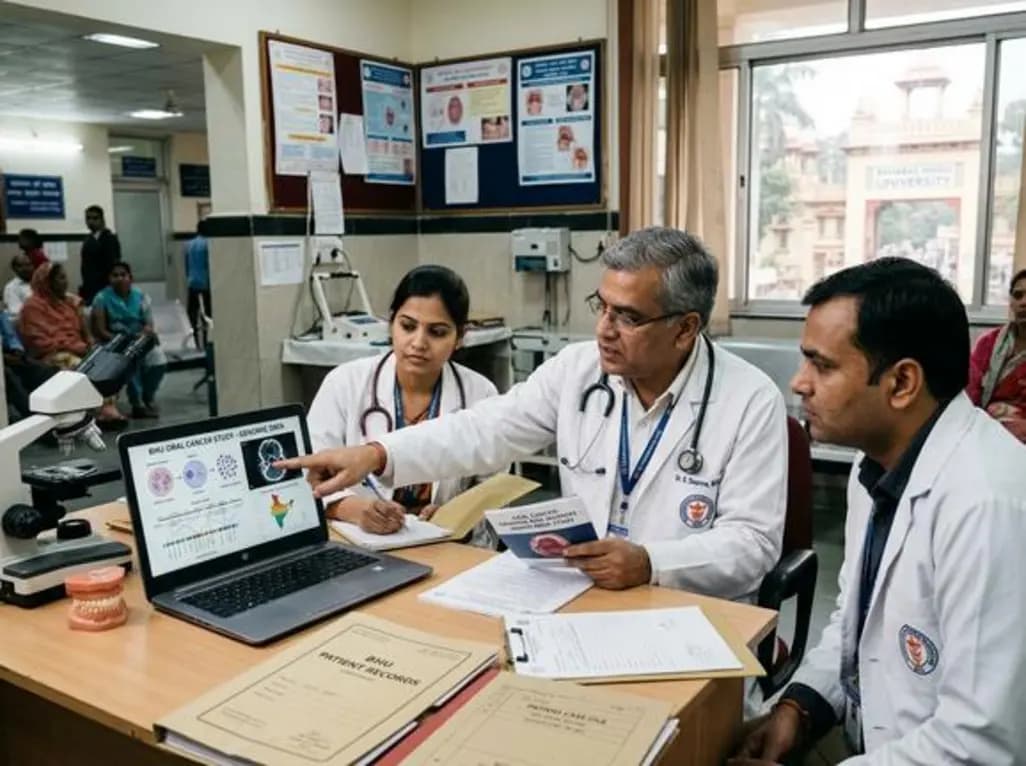
Researchers at Banaras Hindu University (BHU) recently discovered population-specific genomic risk markers for oral cancer in eastern Uttar Pradesh. This critical finding addresses the deadliest form of oral cancer in high-burden regions where communities deeply embed smokeless tobacco use. Consequently, this breakthrough could pave the way for earlier diagnoses and personalized screening strategies. Furthermore, global databases do not adequately represent the genetic diversity of North Indian communities. Therefore, developing population-specific tools is absolutely essential.
The dual-genomic study integrated mitochondrial DNA profiling and whole-exome sequencing of patients from the Purvanchal region. Specifically, the researchers analyzed samples from ninety-eight individuals in Varanasi, Gorakhpur, and neighboring districts. They discovered that the 16223C polymorphism in the mitochondrial genome was significantly less frequent in cancer patients. Consequently, the absence of this polymorphism increased the risk of developing oral cancer by 8.1 times. Moreover, individuals belonging to Western Eurasian haplogroups showed a much higher susceptibility to the disease. Conversely, those with South Asian haplogroups, particularly M5a, demonstrated a protective trend.
Furthermore, whole-genome sequencing revealed three novel genes that global cancer databases had never reported before. Combined with six previously known genes, the total number of genes associated with this condition is now nine. Importantly, North Indian populations remain underrepresented in existing global databases. Tobacco consumption in Uttar Pradesh significantly exceeds the national average, making local research highly critical. For this reason, physicians in India must adopt precision medicine strategies that fit their specific patient demographics. Early intervention can drastically improve the five-year survival rate, which currently sits between twenty and forty-five percent.
Q1: What are the main genomic risk markers identified in the BHU study?
The study identified the absence of the 16223C polymorphism in the mitochondrial genome as a major risk factor, increasing oral cancer risk by 8.1-fold. Additionally, the researchers identified Western Eurasian haplogroups as higher risk, whereas South Asian haplogroups like M5a showed protective trends.
Q2: Why are population-specific genomic tools necessary for North Indian communities?
Global genomic databases do not adequately represent the genetic architecture of North Indian populations. Since oral cancer in high-burden regions like Purvanchal arises from genetics and tobacco use, tailored genomic tools are crucial.
Q3: Which novel genes were discovered during this research?
The BHU research team identified three previously unreported genes associated with oral cancer. Consequently, the total number of globally identified genes linked to this condition increased from six to nine.
Disclaimer: This content is for informational and educational purposes only. It does not constitute medical advice or replace professional judgment. Refer to the latest local and national guidelines for clinical practice.
References

Read summarized clinical updates, watch expert medical content, and earn CME certifications right from your smartphone.
Open your smartphone camera to scan and install.





Banaras Hindu University researchers have discovered population-specific genomic risk markers for oral cancer in North India. This breakthrough could revolutionize early detection and screening strategies, especially in high-risk regions where smokeless tobacco consumption is significantly elevated.
3 months ago

As monsoon seasons elevate arboviral disease threats, Tamil Nadu has initiated an ICMR-monitored evaluation of the tetravalent dengue vaccine in Tenkasi district. Clinicians emphasize clinical monitoring, public prevention, and high-quality early pediatric care to reduce disease morbidity across endemic regions.
Today

A comparative cohort study evaluates vNOTES vs TLH hysterectomy for benign conditions, demonstrating shorter operative duration, faster return to daily activities, and equivalent female sexual function scores without increased dyspareunia.
Today

Review how tailored exercise programs benefit frail older patients with heart failure. Explore pathophysiological mechanisms, individualized training prescriptions, and strategies to overcome adherence barriers in clinical practice.
Yesterday

This comparative study evaluates posterior labral tears with and without glenohumeral instability, highlighting distinct demographic patterns, MRI underestimation in stable shoulders, and successful arthroscopic repair outcomes.
Yesterday

A clinical study demonstrates that early intervention with tocilizumab, either as monotherapy or bridged with corticosteroids, achieves significant proptosis reduction and resolves active inflammation in treatment-naive thyroid eye disease.
Today
