.webp&w=384&q=75)

Loading, please wait...
Loading, please wait...
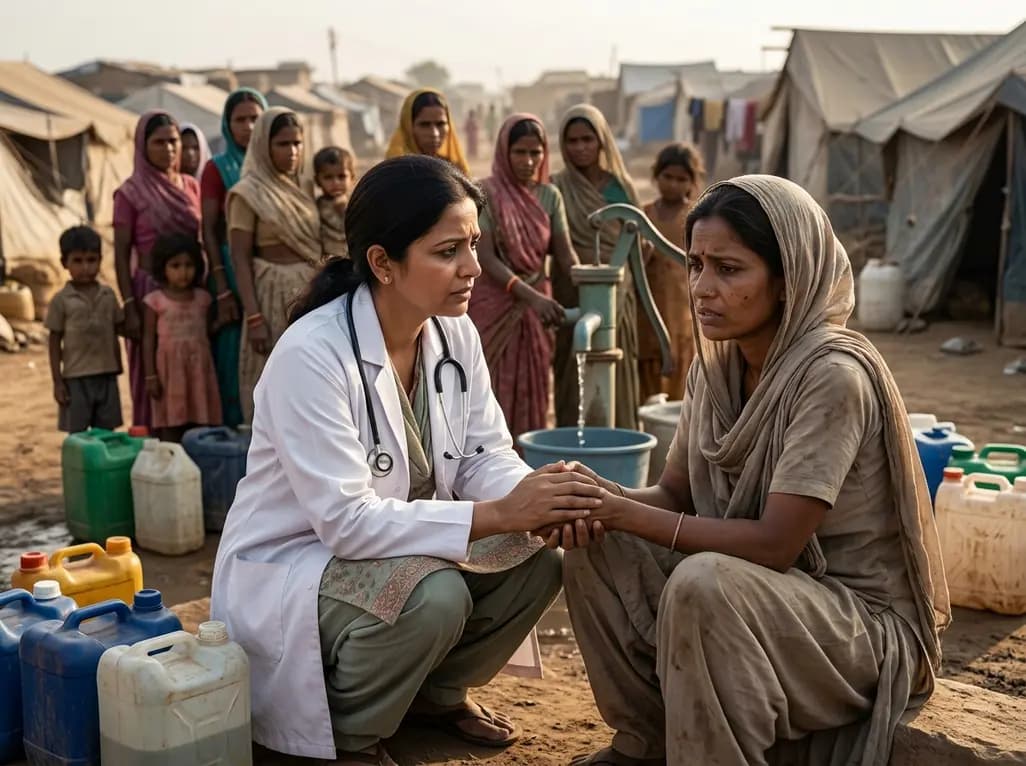
Climate change acts as a potent threat multiplier, particularly in fragile displacement settings where infrastructure already faces immense pressure. In such environments, water, sanitation, and hygiene (WaSH) systems often struggle to meet the escalating demands of rising temperatures and extreme weather events. A recent qualitative study by Hessami N et al. explores these dynamics within the Zaatari Refugee Camp in Jordan, uncovering a profound phenomenon termed gendered water management stress. While engineers often focus on the technical aspects of water delivery, this research highlights the human cost of system failures. Syrian refugees living in the camp describe a reality where water scarcity is not merely a logistical hurdle but a chronic psychosocial stressor. Consequently, understanding how individuals navigate these shortages is essential for developing effective public health interventions. This research specifically investigates how heatwaves and dust storms exacerbate existing infrastructure vulnerabilities, creating a cycle of anxiety for residents. By examining the lived experiences of refugees, we can better understand the intersection of environmental stress and mental wellbeing. Furthermore, the study underscores that water management is rarely a gender-neutral task. Instead, household roles heavily influence who carries the emotional and cognitive burden of ensuring family survival during acute scarcity events.
In many protracted displacement settings, the WaSH infrastructure is often a patchwork of emergency measures and semi-permanent networks. This study reveals that system functioning in Zaatari is highly uneven, dictated by timing, water pressure, and geographic location. Residents must often plan their entire lives around the unpredictable arrival of water. When climate events like extreme summer heatwaves or dust storms occur, the demand for water spikes precisely when the system is most vulnerable. Moreover, these climate events can physically damage infrastructure or hinder the delivery of trucked water supplies. Therefore, the intersection of climate and infrastructure creates a volatile environment where water access becomes a daily gamble. Participants in the focus groups reported that summer brings predictable reductions in supply, which compounds the stress felt during the hottest months. In addition, the geographical layout of the camp means that households at the end of a pipeline might receive significantly less water or lower pressure than those closer to the source. This spatial inequality fosters a sense of injustice and increases social friction among neighbors. As a result, the technical failures of a WaSH system translate directly into localized social and psychological distress, requiring a more nuanced approach to resource governance.
One of the most striking findings of the Hessami study is the distinct gendered division of labor regarding water management. Women in the Zaatari camp are typically the primary managers of domestic water use, taking on the responsibility for monitoring, rationing, and enforcing use within the family. This constant state of vigilance leads to significant psychosocial strain, as women must make difficult decisions about which basic needs to prioritize. For instance, a mother might have to choose between providing enough water for bathing her children or for cleaning the home after a dust storm. Consequently, women more frequently reported feelings of anxiety, frustration, and exhaustion related to water insecurity. In contrast, men in the camp often described their stress as episodic, usually triggered by sudden system failures or the need to procure water from external sources. While men might feel the pressure of the "provider" role, they generally do not experience the same level of sustained, daily cognitive load associated with rationing. Therefore, the gendered water management stress identified in the study is not just about physical labor; it is about the emotional labor of managing a scarce and vital resource. This disparity highlights the need for gender-sensitive approaches in both mental health support and WaSH programming.
To cope with the persistent threat of water scarcity, refugee households employ a variety of creative and highly effective water conservation strategies. These include recycling graywater for cleaning, strictly limiting the frequency of laundry, and using ingenious methods to monitor tank levels. While these practices demonstrate incredible resilience and technical skill, they also demand a high degree of sustained vigilance. This vigilance is a form of cognitive labor that never truly ends, especially during the summer months when the risk of running out is highest. Additionally, the need to enforce strict water rules within the household can lead to interpersonal conflict. Women, as the primary enforcers, often find themselves in the difficult position of policing the hygiene habits of their children or husbands. This constant monitoring creates a tense household environment where every drop of water is scrutinized. Furthermore, the study suggests that while these conservation strategies are effective at extending the available water supply, they do not alleviate the underlying psychosocial stress. In fact, the intense focus required to maintain these systems may actually amplify feelings of restriction and loss of control. Thus, creative conservation is a double-edged sword that ensures survival but often at the cost of the family's overall mental wellbeing.
The lessons learned from the Zaatari camp carry significant weight for countries like India, which faces some of the world's most acute water security challenges. India’s diverse geography means that water stress manifests differently, from the drought-prone regions of Maharashtra to the densely populated urban slums of Delhi and Chennai. However, the gendered nature of water management remains a consistent theme across these settings. Just as in refugee camps, women in rural India often walk several kilometers daily to fetch water, while urban women spend hours waiting for water tankers. Consequently, the psychosocial toll described in the Jordan study—characterized by anxiety, vigilance, and the burden of rationing—is mirrored in millions of Indian households. Moreover, the increasing frequency of heatwaves in India adds another layer of stress to an already strained system. The "water wives" of Maharashtra, where men marry multiple times just to ensure someone is available to fetch water, represent an extreme adaptation to this crisis. Therefore, the findings from Hessami et al. emphasize that the mental health implications of water insecurity are a global public health priority. By recognizing the specific gendered water management stress that women face, policymakers in India can design more holistic interventions that go beyond laying pipes and building tanks.
Addressing water insecurity in protracted displacement and low-resource settings requires a paradigm shift in how we approach WaSH interventions. The Hessami study concludes that infrastructure improvements alone are insufficient if they do not account for the psychosocial and gendered dimensions of water management. Therefore, future programs must integrate mental health and psychosocial support (MHPSS) directly into WaSH strategies. This could include community-based support groups where women can share coping mechanisms and express the frustrations associated with rationing. Additionally, WaSH governance should meaningfully engage refugees—and specifically women—as lived-experience experts. Their insights into the daily realities of water use can lead to more efficient and equitable distribution schedules. Furthermore, gender-responsive programming should ensure that water delivery systems are designed to minimize the physical and emotional burden on female household members. For example, installing more reliable household connections or automated monitoring systems can reduce the need for constant vigilance. Ultimately, an integrated approach that values mental wellbeing as much as technical efficiency will be more sustainable and humane. By acknowledging the complex interplay between climate, gender, and stress, we can move toward a future where water access is a source of security rather than a cause of chronic anxiety.
Climate change intensifies water scarcity through heatwaves and altered rainfall, which increases the time and effort required to manage household supplies. In many cultures, women are the primary water managers. When water becomes scarce, their workload increases significantly as they must spend more time fetching, rationing, and monitoring water. This creates a disproportionate physical and emotional burden, leading to higher levels of stress and exhaustion compared to men.
Chronic water insecurity functions as a persistent psychosocial stressor, often leading to anxiety, depression, and a sense of powerlessness. The constant need for vigilance regarding water levels and the difficult decisions involved in rationing can cause significant cognitive fatigue. Furthermore, the social humiliation of being unable to maintain personal or household hygiene due to water shortages can damage self-esteem and exacerbate feelings of social isolation among vulnerable populations.
Gender-responsive WaSH programs should actively involve women in the planning and governance of water systems to ensure their specific needs are met. This includes designing infrastructure that reduces the physical labor of water collection and implementing distribution schedules that consider domestic routines. Additionally, programs should integrate mental health support and promote shared household responsibility for water management to alleviate the disproportionate cognitive and emotional burden currently carried by women.
Disclaimer: This content is for informational and educational purposes only. It does not constitute medical advice or a professional healthcare recommendation. The findings discussed are based on specific qualitative research in a refugee camp setting and may not be universally applicable. Refer to the latest local and national guidelines for clinical practice.
References
Hessami N et al. Water management practices under climate and infrastructure stress in Zaatari Refugee Camp: A gendered qualitative study. Int J Hyg Environ Health. 2026 Jul 03. doi: undefined. PMID: 42398160.
Bisung E, Elliott SJ. Psychosocial impacts of the lack of access to water and sanitation in low- and middle-income countries: a scoping review. J Water Health. 2017;15(1):17-30.
Sahoo KC et al. Water and sanitation hygiene practices for women's health and dignity: a qualitative study in slums of Bhubaneswar, India. BMC Public Health. 2015;15:1287.

Read summarized clinical updates, watch expert medical content, and earn CME certifications right from your smartphone.
Open your smartphone camera to scan and install.





A new qualitative study in Zaatari Refugee Camp reveals that water scarcity acts as a chronic psychosocial stressor, disproportionately affecting women who manage daily rationing and monitoring. The findings highlight the need for gender-responsive WaSH interventions that integrate mental wellbeing.
3 months ago

Discover the crucial role of glymphatic dysfunction in stroke, where perivascular clearance failure and neuroinflammation exacerbate cerebral edema and post-stroke brain injury.
Today

A prenatal case highlights severe glutaric acidemia type II presenting as bilateral hyperechoic cystic kidneys at 18 weeks. Whole-exome sequencing revealed a novel homozygous ETFDH frameshift variant, demonstrating the power of rapid genetic testing in fetal renal anomalies.
Today

Review how tailored exercise programs benefit frail older patients with heart failure. Explore pathophysiological mechanisms, individualized training prescriptions, and strategies to overcome adherence barriers in clinical practice.
Yesterday

This comparative study evaluates posterior labral tears with and without glenohumeral instability, highlighting distinct demographic patterns, MRI underestimation in stable shoulders, and successful arthroscopic repair outcomes.
Yesterday

A clinical study demonstrates that early intervention with tocilizumab, either as monotherapy or bridged with corticosteroids, achieves significant proptosis reduction and resolves active inflammation in treatment-naive thyroid eye disease.
Yesterday
