.webp&w=384&q=75)

Loading, please wait...
Loading, please wait...
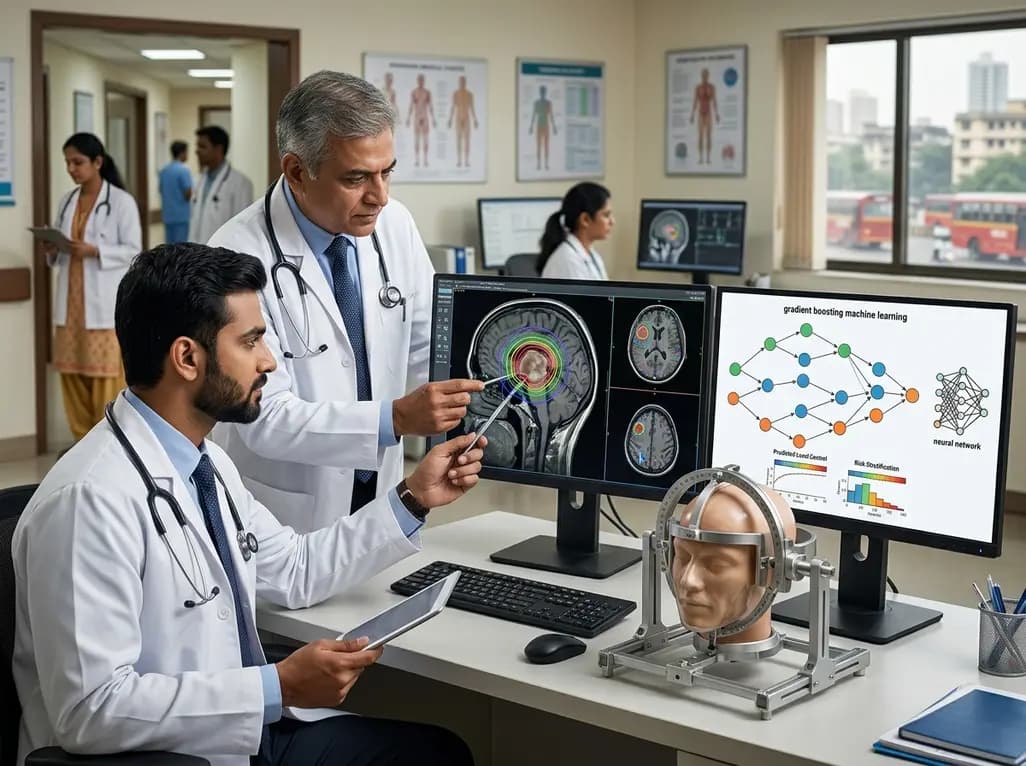
Managing large, symptomatic brain metastases remains a significant challenge for neurosurgeons and radiation oncologists globally. For these patients, the standard of care often involves initial surgical resection to alleviate mass effect and obtain a pathological diagnosis. Subsequently, adjuvant treatment such as Gamma Knife radiosurgery is frequently utilized to sterilize the resection cavity. This approach aims to reduce the risk of local recurrence while avoiding the neurocognitive side effects associated with whole-brain radiation therapy. However, achieving consistent Gamma Knife radiosurgery local control is difficult because outcomes are highly variable among different patient populations. Identifying which cavities are at a higher risk of failure is crucial for tailoring follow-up surveillance and potentially intensifying treatment for high-risk individuals. Traditional clinical assessment often relies on simple metrics, yet these may not capture the complex interactions between patient-specific and tumor-specific variables.
In a recent breakthrough study, researchers led by Reyes JS evaluated the efficacy of machine learning in predicting these outcomes. They specifically focused on post-resection cavities, a clinical scenario where target definition and dose prescription are particularly nuanced. By leveraging advanced computational models, the team sought to create a more reliable method for risk stratification. This shift toward quantitative, data-driven decision-making represents the next frontier in neuro-oncology. Consequently, clinicians may soon have access to tools that provide individualized probability scores for local failure. Such advancements could transform how multidisciplinary teams approach the management of brain metastases, ensuring that every patient receives a plan optimized for their unique clinical profile.
The research team performed a comprehensive retrospective study involving 401 post-resection cavities treated at a single high-volume institution over a decade. To develop a predictive tool for Gamma Knife radiosurgery local control, they utilized a gradient boosting classifier. This specific type of machine learning is renowned for its ability to handle structured clinical data by combining multiple weak learners into a single, robust predictive model. The model was trained using eight routinely available treatment-time features. These variables included patient age, biological sex, and the pre-treatment Karnofsky Performance Status, which measures a patient's functional impairment. Additionally, the primary tumor category and the presence of single versus multiple metastases were factored into the analysis. Furthermore, anatomical considerations such as the specific lobe, surrounding structures, and the presence of eloquence in the brain tissue were included alongside the crucial metric of cavity volume.
To ensure the reliability of their findings, the researchers employed five-fold stratified cross-validation. This technique involves splitting the data into subsets to test the model's performance on unseen information, thereby reducing the risk of overfitting. Moreover, they compared the machine learning model against a prevalence-only baseline, which simply predicts outcomes based on the overall frequency of local control in the cohort. This comparison is essential to demonstrate that the AI provides meaningful insights beyond simple chance. By focusing on variables already collected during routine clinical workflows, the study ensures that the resulting model is practical for real-world application. This methodology underscores a growing trend in medical research where existing datasets are re-evaluated through the lens of modern artificial intelligence to extract deeper clinical value.
The results of the study were highly encouraging, demonstrating that the gradient boosting model significantly outperformed the baseline. Specifically, the model achieved a receiver operating characteristic area under the curve (ROC-AUC) of 0.735. In contrast, the prevalence baseline showed chance-level discrimination with an ROC-AUC of 0.494. This difference highlights the model's ability to successfully distinguish between cavities that will maintain local control and those that will recur. Furthermore, the precision-recall area under the curve (PR-AUC) reached 0.802, indicating high performance even when considering the balance between sensitivity and specificity. The model also exhibited acceptable calibration, with a Brier score of 0.208. Proper calibration is vital in medical AI because it ensures that the predicted probability of an event closely aligns with the actual observed frequency in clinical practice.
When the researchers applied a prespecified probability threshold of 0.50, the model demonstrated an overall accuracy of 0.701. The sensitivity was particularly notable at 0.783, suggesting that the model is effective at identifying the majority of cases where local control is maintained. Meanwhile, the specificity stood at 0.566, reflecting the inherent complexity of predicting recurrence in biological systems. Interestingly, a feedforward neural network trained on the identical set of features performed significantly worse than the gradient boosting model. This finding suggests that for structured medical datasets of this size, ensemble-based tree models like gradient boosting may be superior to deep learning architectures. Therefore, clinicians should prioritize specific AI architectures based on the nature of the data available rather than assuming that more complex neural networks are always better.
A deeper look into the model's variables reveals why certain features are pivotal for Gamma Knife radiosurgery local control. Cavity volume has long been recognized as a primary driver of outcomes, as larger volumes often require lower radiation doses to protect adjacent healthy brain tissue. However, the machine learning model revealed that volume does not act in isolation. Instead, it interacts with factors such as the primary tumor histology and the functional status of the patient. For instance, melanoma and renal cell carcinoma are traditionally considered more radioresistant than breast or lung cancer. By integrating these disparate data points, the gradient boosting model provides a more holistic assessment of risk than a clinician could achieve through manual calculation alone. This capability is especially relevant in a multidisciplinary setting where surgeons and radiation oncologists must decide on the necessity of dose escalation or closer imaging intervals.
Additionally, the inclusion of eloquence and specific brain structures reflects the importance of anatomical context. Metastases located in eloquent areas, such as the motor cortex or speech centers, often face stricter dosimetric constraints. These constraints may inadvertently increase the risk of local failure if the prescribed dose is insufficient to eradicate residual microscopic disease. The AI model's ability to account for these nuances allows for a more sophisticated risk stratification. Patients identified as high-risk by the model could benefit from more frequent MRI surveillance, enabling earlier detection of recurrence. Conversely, low-risk patients might be spared the anxiety and cost of overly frequent scans. Consequently, this study provides a clear pathway for integrating AI into the clinical workflow to improve personalized patient care.
While this proof-of-concept study provides a strong foundation, the researchers emphasize the need for further external validation. Because the model was developed using data from a single institution, its performance might vary when applied to different patient populations or treatment protocols used in other centers. Therefore, future research must focus on testing the gradient boosting model in multi-institutional cohorts. Such studies would confirm the generalizability of the tool and ensure its reliability across various clinical settings. Moreover, prospective evaluation is necessary to determine if using the model's predictions actually leads to better patient outcomes. For example, a clinical trial could investigate whether adjusting surveillance schedules based on AI risk scores reduces the incidence of symptomatic recurrence or improves overall survival.
In addition to validation, there is potential to enhance the model by incorporating more complex data types. Future iterations could include radiomics features extracted from pre-operative and post-operative MRI scans. Radiomics can identify subtle textures and patterns in imaging that are invisible to the human eye but may correlate with tumor aggressiveness or radiation sensitivity. Furthermore, integrating molecular markers and genetic profiles of the primary tumor could further refine the model's accuracy. As the field of neuro-oncology moves toward a more personalized approach, these integrated models will likely become essential tools for the clinician. The current study by Reyes JS and colleagues marks a significant first step toward that future, demonstrating that even routine clinical variables, when processed by AI, can offer profound insights into the management of brain metastases.
The integration of machine learning into the post-surgical management of brain metastases offers a promising solution to the variability of Gamma Knife radiosurgery local control. By accurately stratifying risk using routine variables, clinicians can move away from one-size-fits-all surveillance strategies. The superior performance of gradient boosting over neural networks in this study highlights the importance of choosing the right computational tools for clinical data. As we await prospective validation, these findings encourage a more data-driven approach to multidisciplinary decision-making. Ultimately, the goal is to enhance the precision of radiotherapy, minimize recurrences, and improve the quality of life for patients facing the challenges of metastatic brain disease. This research serves as a vital reminder that the data we collect daily holds the key to unlocking more effective and personalized medical interventions.
Gradient boosting is a machine learning technique that builds an ensemble of decision trees sequentially. Unlike traditional linear regression, it can capture complex, non-linear relationships and interactions between multiple variables, such as how cavity volume and tumor histology combined influence recurrence. This often results in higher predictive accuracy and better discrimination for clinical outcomes.
The study utilized eight routine features including patient age, sex, Karnofsky Performance Status, and primary tumor category. It also considered whether there were single or multiple metastases, the specific brain lobe or structure involved, tissue eloquence, and the total cavity volume. These variables are already collected during standard clinical care, making the model easy to implement.
Gradient boosting models often perform better than deep learning neural networks on small to medium-sized datasets consisting of structured or tabular data. While neural networks excel at processing unstructured data like images, they often require much larger datasets to avoid overfitting. In medical research with limited samples, tree-based models frequently provide more reliable and interpretable results.
Disclaimer: This content is for informational and educational purposes only and does not constitute medical advice, diagnosis, or treatment. Always seek the advice of your physician or other qualified health provider with any questions you may have regarding a medical condition. Refer to the latest local and national guidelines for clinical practice.
References
Reyes JS et al. Machine learning prediction of local control after Gamma Knife radiosurgery to post-resection cavities from brain metastases: a proof-of-concept study. J Neurooncol. 2026 Jul 10. doi: 10.1007/s11060-026-05703-3. PMID: 42430090.
Mahajan A, et al. Post-operative stereotactic radiosurgery versus observation for completely resected brain metastases: a randomised, phase 3 trial. Lancet Oncol. 2017;18(8):1040-1048. doi: 10.1016/S1470-2045(17)30414-X.
Soliman H, et al. Predictors of local control after stereotactic radiosurgery for brain metastases. J Neurooncol. 2017;134(2):331-338. doi: 10.1007/s11060-017-2530-5.
"
Read summarized clinical updates, watch expert medical content, and earn CME certifications right from your smartphone.
Open your smartphone camera to scan and install.





A proof-of-concept study highlights how a gradient boosting machine learning model can effectively predict local control after Gamma Knife radiosurgery for post-resection brain metastases. The model outperformed neural networks, offering a potential tool for risk stratification and clinical decision-making.
2 weeks back
Andhra Pradesh reported 10 new Covid-19 cases, taking the state tally to 49 while deaths remain at four. With 24 patients hospitalized and 16 under home isolation, the Health Department has intensified monitoring. Medical professionals should review regional distribution, diagnostic protocols, and management plans.
Today

An 11-year Swedish registry study of 618 uterine sarcoma patients found that minimally invasive surgery yielded survival comparable to open surgery in early stages. However, adjuvant chemotherapy conferred no survival benefit in localized or advanced disease, highlighting stage and histology as key outcomes.
3 days back

A cross-sectional study evaluates post-intensive care syndrome in cardiac patients 2-4 weeks post-ICU discharge, highlighting cognitive, psychological, and functional impairments and the need for structured multidisciplinary rehabilitation.
3 days back

Anterior cruciate ligament reconstruction failure lacks uniform definition. A narrative review proposes an integrative framework incorporating objective and subjective instability, persistent pain, restricted motion, graft rupture, and secondary meniscal injury to standardize clinical reporting.
3 days back
With World Obesity Atlas data warning that over 41 million Indian children are overweight or obese, ICMR and NIN have unveiled a 10-point policy roadmap. The initiative calls for mandatory front-of-pack labeling, HFSS taxes, strict marketing bans, and healthier school environments to curb non-communicable diseases.
Today
