

Loading, please wait...
Loading, please wait...

Managing pediatric oncology care requires innovative digital tools to reinforce treatment compliance and patient engagement. A novel clinical study highlights how a gamified self-care mobile app can meaningfully boost lifestyle behaviors among pediatric leukemia patients undergoing chemotherapy. Children facing intensive cancer therapies frequently encounter substantial hurdles in maintaining oral hygiene, balanced nutrition, emotional resilience, and routine physical movement. Consequently, clinicians must evaluate evidence-based digital solutions that transform routine health recommendations into engaging, sustainable daily actions.
Acute leukemia accounts for the largest proportion of childhood malignancies worldwide. Although chemotherapy protocols yield remarkable cure rates, the treatments impose severe physical distress and emotional fatigue. Children routinely suffer from mucositis, opportunistic infections, severe fatigue, and nutritional deficits throughout multi-agent chemotherapy cycles. Consequently, maintaining routine self-care behaviors becomes remarkably challenging for both the pediatric patient and the family caregiver.
Traditional patient education relies heavily on static paper leaflets and brief face-to-face clinic counseling. Unfortunately, young children frequently struggle to assimilate clinical instructions presented in conventional written formats. When treatment regimens stretch over months or years, adherence to basic lifestyle measures steadily declines. Therefore, healthcare providers require age-appropriate educational interventions that actively motivate children. Integrating interactive mobile health technologies represents a promising frontier to bridge this critical behavioral gap during active cancer therapy.
To address pediatric self-management gaps, researchers designed and validated the Lukemo gamified self-care mobile app. The investigative team established the application content directly from established pediatric oncology guidelines and comprehensive literature reviews. Furthermore, multidisciplinary panels comprising pediatric oncologists, specialized nurses, and health informatics specialists critically evaluated the software architecture to ensure absolute clinical safety.
User-centered design principles guided the entire technical programming process. The development team systematically assessed usability and interface aesthetics through the Mobile App Rating Scale. Additionally, the developers introduced game mechanics such as daily quests, visual badges, custom avatars, and milestone rewards. These interactive elements educate children regarding oral hygiene, infection prevention, hydration, rest intervals, and symptom logging. By translating repetitive medical instructions into engaging playful challenges, the digital tool empowers young patients to take personal ownership of their health behaviors.
Investigators tested the intervention through a two-phase randomized controlled trial conducted in Mashhad, Iran. The trial enrolled sixty children aged 7 to 12 years who were actively receiving chemotherapy for leukemia. Researchers randomly allocated the participants in a strict 1:1 ratio into an intervention arm or a standard control arm. Both cohorts received routine face-to-face clinical education alongside standardized educational pamphlets.
However, the intervention group additionally utilized the Lukemo application on their personal smartphones. Furthermore, the clinical team provided structured weekly telephone follow-ups over an eight-week evaluation window to maintain engagement. Investigators measured patient-reported outcomes using the validated Persian version of the Pediatric Quality of Life Inventory 4.0 Generic Core Scales. The researchers collected assessments at baseline and precisely after eight weeks to gauge meaningful behavioral and lifestyle transformations across both patient cohorts.
The clinical trial demonstrated notable retention, with fifty-nine out of sixty randomized children successfully completing the study protocol. At baseline, both groups exhibited comparable demographic characteristics and baseline lifestyle scores. However, after eight weeks of structured digital engagement, the intervention group attained a mean lifestyle score of 89.79, compared to 81.10 in the control group.
Statistical evaluation confirmed that children using the mobile application achieved a mean score improvement of 9.10 points from baseline. In stark contrast, the control group exhibited a negligible mean score increase of only 1.00 point over the same duration. This yielded a statistically significant between-group mean difference of 8.10 points. Consequently, the findings confirm that structured digital gamification directly produces tangible clinical gains in pediatric self-management, far exceeding the benefits of traditional paper-based instruction alone.
The findings from this trial carry profound implications for pediatric oncology centers across India and other emerging healthcare ecosystems. Pediatric hematology units in Indian tertiary hospitals often handle high outpatient volumes, leaving limited time for prolonged one-on-one lifestyle counseling. Moreover, widespread smartphone access across semi-urban and rural regions offers an unprecedented opportunity to implement scalable digital therapeutics.
Oncology nurses and pediatricians can leverage gamified applications to sustain infection control vigilance and nutritional compliance outside hospital walls. In resource-constrained settings where neutropenic sepsis and treatment abandonment pose severe hazards, digital prompts reinforce critical hand hygiene, dental care, and prompt symptom reporting. Therefore, Indian pediatric cancer teams should actively pursue culturally adapted, multilingual mobile health applications to complement standard chemotherapy protocols and optimize survivorship trajectories.
Gamification transforms tedious medical instructions into rewarding, interactive activities. Children actively earn badges, unlock levels, and view personalized feedback when they complete essential daily self-care tasks. Consequently, this playful format satisfies their psychological need for autonomy and competence. By making infection prevention, proper hydration, and mouth care enjoyable, the software sustains positive health habits throughout stressful chemotherapy regimens.
The Lukemo application covers fundamental lifestyle areas crucial for childhood cancer management. Specifically, it educates patients on rigorous oral hygiene to prevent debilitating mucositis, thorough handwashing for infection control, balanced nutrition, safe physical activity, and adequate sleep hygiene. Furthermore, the platform encourages children to track daily symptoms and report physical distress promptly to their parents and treating physicians.
No, digital tools cannot replace direct clinical guidance from pediatric oncology teams. Instead, mobile applications serve as valuable supportive adjuncts that reinforce professional advice between hospital visits. Clinicians must continue providing personalized face-to-face counseling, physical assessments, and therapeutic adjustments, while using validated mobile software to enhance home compliance and caregiver reassurance during ongoing chemotherapy.
Disclaimer: This content is for informational and educational purposes only... Refer to the latest local and national guidelines for clinical practice.
References
Karimi F et al. Gamified Self-Care Mobile App for Lifestyle Support in Children With Leukemia: Development and Randomized Controlled Trial. J Particip Med. 2026 Nov 19. doi: 10.2196/93106. PMID: 43056709.
Varni JW, Burwinkle TM, Katz ER, Meeske K, Dickinson P. The PedsQL in pediatric cancer: reliability and validity of the Pediatric Quality of Life Inventory Generic Core Scales, Multidimensional Fatigue Scale, and Cancer Module. Cancer. 2002;94(7):2090-2106.
Stinson JN, Jibb LA, Nguyen C, et al. Development and testing of a multidimensional iPhone pain assessment application for adolescents with cancer. J Med Internet Res. 2013;15(3):e51.
Amagai S, Pila S, Kaat AJ, Nowinski CJ, Gershon RC. Challenges in participant engagement and retention using mobile health apps: Literature review. J Med Internet Res. 2022;24(4):e35120.

Read summarized clinical updates, watch expert medical content, and earn CME certifications right from your smartphone.
Open your smartphone camera to scan and install.





A randomized controlled trial demonstrates that a gamified self-care mobile app significantly improves lifestyle behaviors and quality of life scores in children aged 7 to 12 years receiving chemotherapy for leukemia, offering a scalable model for supportive pediatric oncology care.
Today
A Bayesian component network meta-analysis of 130 RCTs reveals that self-monitoring and gamification provide the clearest positive effects in mHealth physical activity interventions, while social comparison may have adverse psychological trade-offs.
Today

The GESS-AEEM consensus establishes a clear clinical implementation framework for testosterone therapy in postmenopausal women with hypoactive sexual desire disorder, focusing on transdermal dosing, precise laboratory monitoring, and safety communication.
Today
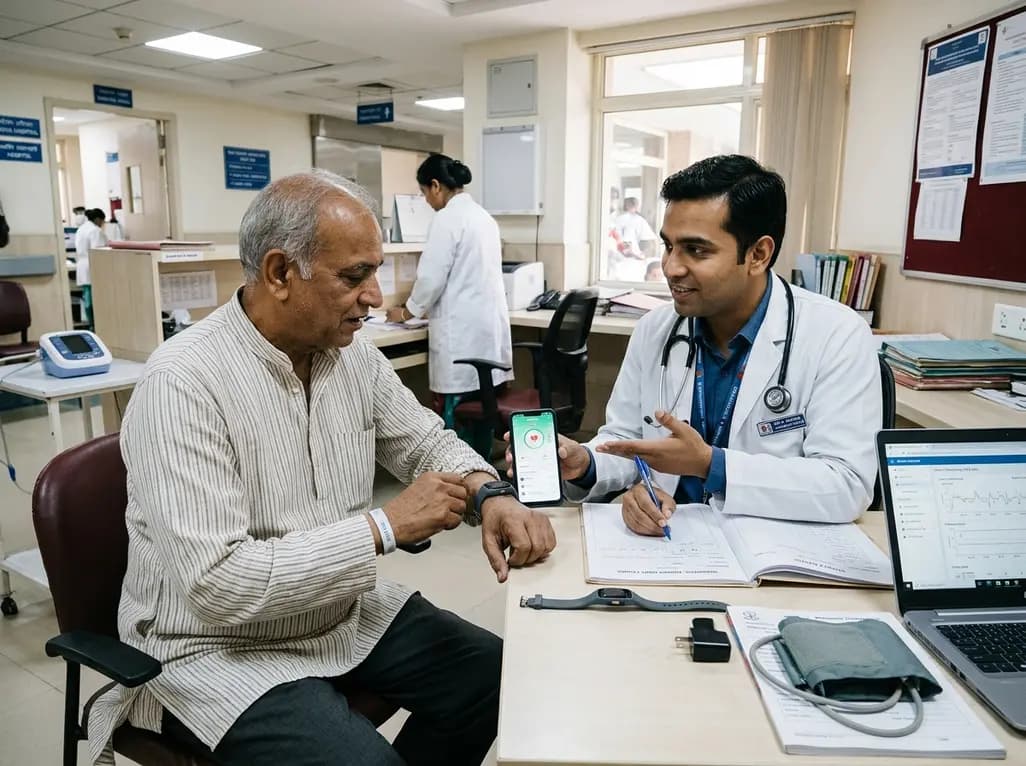
A multicenter observational study evaluated an 8-week digital health monitoring platform using wearable sensors in ambulatory heart failure. While participants achieved high daily wear-time of 11.7 hours and 80% completion, initial recruitment revealed significant technology-related onboarding barriers.
Today

A paired cadaveric study compared triple and quintuple percutaneous Achilles tendon lengthening. While quintuple hemisection showed numerically greater elongation, differences were not statistically significant.
Yesterday

A clinical decision-support framework using health checkup data from 231,683 adults predicts incident obesity with high discrimination (AUROC 0.918). The system integrates temporal survival analysis and risk-factor explanations to prioritize individualized preventive interventions.
Today
