.webp&w=384&q=75)

Loading, please wait...
Loading, please wait...
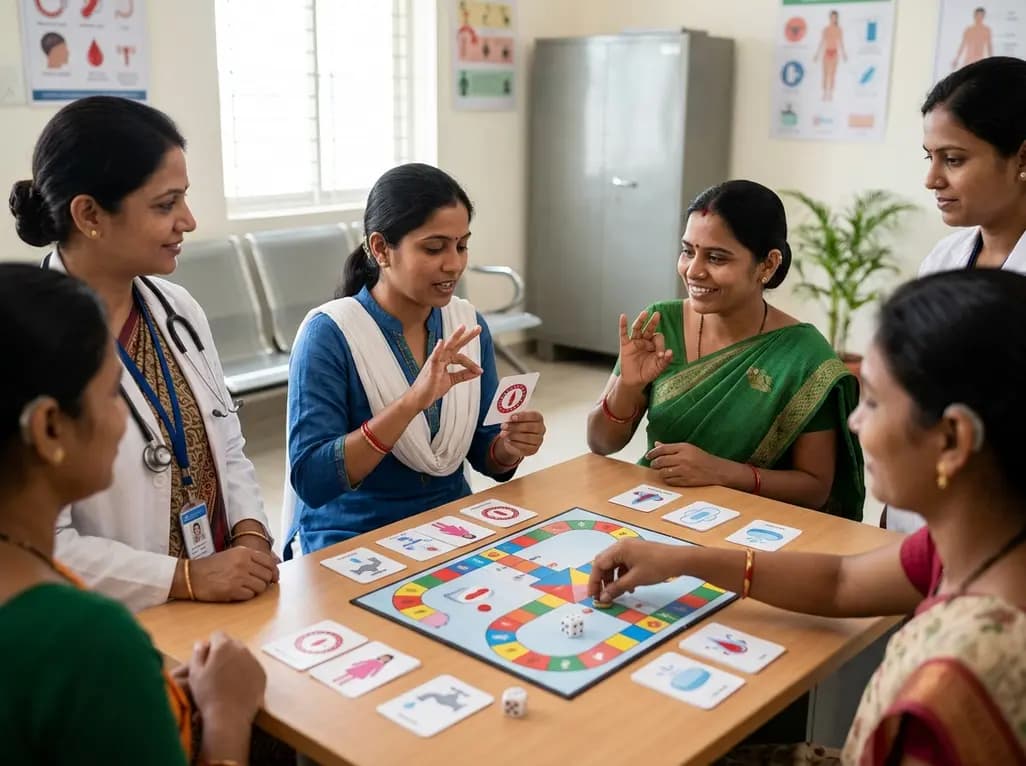
Menstrual health remains a cornerstone of female well-being, yet vulnerable populations often face severe information gaps. Women with hearing disabilities frequently experience significant communication barriers, limiting their access to structured health education. Traditional educational materials usually rely on spoken dialogue or complex narrative text, which may not adequately address the unique learning needs of hearing-impaired individuals. To bridge this critical gap, researchers have developed innovative, visual, and gamified educational tools. Utilizing a menstrual hygiene interactive game offers an engaging, accessible pathway to deliver vital reproductive health concepts. This article explores recent evidence demonstrating how interactive play can transform perception, enhance menstrual health literacy, and empower hearing-impaired women in reproductive age groups.
Disabilities often compound the societal taboos surrounding menstrual health, creating substantial challenges for reproductive health education. For women with hearing impairments, accessing reliable information regarding menstrual cycle physiology and hygienic practices is frequently hampered by systemic barriers. Standard healthcare communications, school curricula, and public health campaigns rarely incorporate adapted educational modalities such as sign language interpretation, visual graphics, or interactive learning tools. Consequently, hearing-impaired women may experience elevated rates of anxiety, misconceptions, and sub-optimal hygiene practices during menstruation. Addressing these disparities requires tailor-made strategies that accommodate sensory limitations while promoting active learning. Interactive educational modalities have emerged as a promising strategy because they leverage visual cues, immediate feedback, and experiential participation. By replacing passive reading materials with dynamic play, educators can demystify complex physiological processes, break cultural taboos, and encourage practical health skill acquisition. In clinical and community nursing settings, adopting gamified tools ensures that vulnerable populations receive equitable, clear, and actionable health guidance. Ultimately, improving health literacy among hearing-impaired women fosters greater bodily autonomy, enhances self-care confidence, and mitigates the risk of preventable urogenital infections associated with poor menstrual hygiene.
A landmark quasi-experimental pre-test-post-test study evaluated the efficacy of a gamified educational tool among women of reproductive age with hearing disabilities. Conducted between May 30 and August 31, 2025, the trial enrolled a cohort of 82 hearing-impaired women, who were allocated into an intervention group of 42 participants and a control group of 40 participants. The study aimed to assess changes in participants' perception of the menstrual cycle and hygiene management following a structured educational game session. The intervention group engaged in a single session of the interactive game designed to communicate core concepts through visual and tactile feedback. Meanwhile, the control group received standard care without any gamified educational intervention. Evaluators collected baseline and follow-up data four weeks post-intervention using a comprehensive questionnaire. The survey tool measured demographic characteristics alongside standardized sections dedicated to menstrual cycle understanding and hygiene perception. Statistical analyses utilized robust parametric tools, including the Independent Sample T-Test, Analysis of Variance (ANOVA), Paired T-Test, and Mixed ANOVA to rigorously evaluate intra-group and inter-group differences over time. This meticulous methodology allowed researchers to isolate the specific impact of the interactive learning tool from confounding variables.
The empirical outcomes of the study demonstrated striking statistical and clinical benefits following the gamified intervention. Post-test measurements revealed that mean scores for menstrual cycle and hygiene perceptions were significantly higher in the intervention group compared to the non-intervention control group. Mixed ANOVA analysis confirmed a statistically significant main effect for the intervention group, demonstrating that the single interactive game session yielded durable gains in health literacy four weeks later. Participants in the gamified cohort demonstrated enhanced understanding of cycle regularity, physiological changes, and correct sanitization techniques. Furthermore, their subjective perception of menstrual hygiene shifted from anxiety and hesitation toward confidence and proactive management. Conversely, the control group exhibited no significant changes in perception scores over the four-week period, highlighting the inadequacy of conventional passive information exposure for hearing-impaired individuals. The statistical robustness of these findings underscores the transformative potential of game-based learning. By fostering active engagement, the interactive format effectively addressed baseline knowledge deficits and cleared common misconceptions. These results provide compelling clinical evidence that non-verbal, visually rich, and interactive educational tools can successfully bridge health communication gaps for individuals with sensory impairments.
Translating study findings into clinical and community practice requires structured implementation strategies across gynaecological, nursing, and primary care settings. Healthcare professionals in India and globally can integrate a menstrual hygiene interactive game into routine clinical counseling, community outreach modules, and specialized educational workshops. Gamified interventions eliminate linguistic and auditory barriers, enabling nurses and reproductive health educators to convey essential hygienic practices effectively. Clinics catering to patients with special needs can incorporate digital or physical interactive board games into waiting rooms or consultation sessions. Moreover, training healthcare staff to utilize gamified tools empowers them to discuss sensitive topics with greater ease and empathy. Interactive play also encourages peer interaction, allowing participants to share experiences, ask questions, and normalize discussions around menstruation in a supportive environment. Primary care providers should collaborate with special education institutions and disability non-governmental organizations to distribute these interactive educational tools widely. By standardizing gamified health education in clinical protocols, health systems can ensure that hearing-impaired individuals receive culturally sensitive, accessible, and comprehensive menstrual hygiene instruction, ultimately leading to improved health outcomes and reduced healthcare disparities.
The success of gamified education among hearing-impaired women highlights a vital pathway toward broader reproductive health equity. Universally, women with physical or sensory disabilities face disproportionate barriers to sexual and reproductive health services. Expanding access to innovative, inclusive educational tools aligns with global public health directives emphasizing equitable healthcare for vulnerable populations. The principles of gamification—such as visual storytelling, interactive problem solving, and immediate feedback—can be adapted to address other health topics, including family planning, STI prevention, and antenatal care. Healthcare policymakers and curriculum developers must prioritize inclusive design when creating public health campaigns. Investing in accessible educational formats not only improves individual health literacy but also reduces the burden of reproductive tract infections and psychological distress associated with unmanaged menstrual hygiene. Furthermore, scaling up inclusive educational interventions supports self-advocacy and social inclusion for women with disabilities. As healthcare systems globally strive toward universal health coverage, incorporating gamified, sensory-adapted educational tools into reproductive health programs represents an essential step toward achieving true equity, dignity, and autonomy for all women regardless of physical or sensory abilities.
An interactive game utilizes clear visual cues, structured tactile elements, and immediate feedback mechanisms rather than relying solely on verbal or dense textual communication. This multi-sensory and experiential approach bypasses traditional auditory barriers, making complex physiological concepts intuitive and engaging. Consequently, hearing-impaired individuals can process health information effectively, correct existing misconceptions, and retain critical menstrual hygiene practices over extended periods.
Women with sensory disabilities often experience heightened social isolation, communication barriers, and reduced access to standard public health education. Traditional instructional materials rarely cater to hearing or visual impairments, leading to widespread knowledge gaps and anxiety regarding menstrual health. Specialized educational interventions ensure that health information is delivered in an accessible, non-stigmatizing format, empowering women to maintain proper hygiene and protect their overall reproductive health.
Clinicians and community health nurses can integrate gamified educational tools during patient counseling sessions, group workshops, or pre-consultation waiting periods. By utilizing visual and interactive board games or digital applications, healthcare providers can easily explain menstrual cycle phases and hygienic protocols. This interactive approach fosters open communication, reduces patient anxiety, and ensures that sensitive reproductive health concepts are conveyed clearly and effectively.
Disclaimer: This content is for informational and educational purposes only and does not constitute medical advice, diagnosis, or treatment. Always seek the advice of a qualified healthcare provider with any questions regarding a medical condition. Refer to the latest local and national guidelines for clinical practice.
References

Read summarized clinical updates, watch expert medical content, and earn CME certifications right from your smartphone.
Open your smartphone camera to scan and install.





A quasi-experimental study reveals that playing an interactive game significantly improves menstrual cycle understanding and hygiene perception among hearing-impaired women of reproductive age, providing a novel framework for accessible health education.
3 months ago

Explore vital recurrent stroke predictors in lacunar stroke patients managed with intensive blood pressure lowering. This analysis examines trial findings from SPS3 to uncover residual vascular risks, metabolic factors, and targeted secondary prevention strategies for high-risk neurological patients.
Today
A comprehensive scoping review synthesises evidence linking prenatal maternal mental health to long-term offspring neurodevelopment, evaluating neuroendocrine, inflammatory, and epigenetic pathways while highlighting clinical screening and future research priorities.
Today

The Directorate General of Health Services directs Indian states to halt the hazardous reuse and reprocessing of single-use medical devices. Discover regulatory implications under the Drugs and Cosmetics Act, critical infection risks, legal liabilities, and operational changes required across clinical specialties.
Today
Mitochondria-targeted nanoparticles self-assembled from EGCG and L-glutamic acid effectively restore mitochondrial homeostasis, suppress synovial inflammation, and attenuate chondrocyte senescence in osteoarthritis, offering a promising disease-modifying nanotherapy.
Today

India is advancing preventive healthcare by integrating genomics, artificial intelligence, and quantum technologies. With the SANGAM programme sequencing one million Indian genomes, clinicians can unlock personalized therapies, detect cardiometabolic risks early, and curb the burden of diabetes and heart disease.
Today
