.webp&w=384&q=75)

Loading, please wait...
Loading, please wait...

Postgraduate medical training continually demands novel pedagogical strategies to engage modern learners and enhance diagnostic acumen. Consequently, educators increasingly recognize that gamification in radiology offers an innovative framework to bridge didactic lectures and practical diagnostic interpretation. Recently, an international prospective multicenter study evaluated 'Resident Debil', an immersive virtual-world competition tailored for radiology trainees across Spanish-speaking countries. Furthermore, this collaborative project demonstrates how gamified environments can transcend institutional boundaries to deliver structured, high-yield diagnostic training.
The Resident Debil initiative created a collaborative, three-dimensional learning space designed specifically for diagnostic radiology education. Organizers structured the program as a comprehensive six-week tournament spanning core imaging subspecialties. Specifically, the curriculum encompassed thoracic, musculoskeletal, neuroradiology, abdominal, breast, and emergency imaging. Because participating trainees balanced demanding hospital rotas across multiple time zones, developers structured the primary tasks asynchronously. As a result, residents could navigate interactive learning modules and review complex clinical cases without sacrificing daily patient care duties. Each week, academic panels delivered structured educational materials to guide self-directed study before participants faced competitive challenges. Trainees engaged in individual multiple-choice question assessments alongside complex, role-based collaborative exercises. Furthermore, this dynamic instructional design encouraged residents to synthesize clinical data and interpret multiplanar cross-sectional imaging systematically. By combining realistic diagnostic scenarios with engaging game mechanics, the environment stimulated critical thinking while standardizing curricular exposure across disparate academic institutions.
Medical training often suffers from didactic fatigue and variable clinical case exposure across different training hospitals. Therefore, integrating structured gamification in radiology addresses these disparities by providing standardized, interactive case repositories. Gamification leverages innate motivational drivers, including peer competition, immediate feedback, and collaborative problem-solving. In this international initiative, 36 resident teams comprising 144 trainees from 37 hospitals across seven countries enrolled at baseline. Ultimately, 21 teams representing 84 residents across 20 institutions completed the rigorous six-week challenge, achieving an overall completion rate of 58.3 percent. While attrition presented a noticeable challenge, the completing cohort demonstrated remarkable engagement throughout the competition. Individual performance tests yielded a mean score of 6.00 ± 2.64, whereas collaborative team-based tasks achieved a significantly higher mean score of 8.06 ± 1.59. Consequently, these metrics confirm that collaborative problem-solving significantly elevates diagnostic accuracy compared to solitary test-taking. Moreover, this finding illustrates that peer discussion actively helps residents refine their differential diagnoses and avoid perceptual errors.
Participant feedback revealed overwhelmingly favorable impressions regarding the academic content and overall organizational quality of the initiative. Specifically, survey respondents awarded median scores between 9 and 10 out of 10 for curriculum design and relevance to daily radiological practice. Most participants emphasized that the case vignettes effectively reflected real-world clinical dilemmas encountered during emergency and on-call shifts. In addition, residents praised the multi-institutional format because it allowed them to benchmark their diagnostic skills against peers from diverse healthcare systems. However, subjective evaluations differed sharply when assessing social gaming mechanics. Participants assigned lower median scores, ranging between 5 and 6, to inter-team interactions and strategic alliance dynamics. Many residents preferred pure clinical case interpretation over intricate game-theory politics and inter-team rivalry. Thus, future iterations of medical virtual environments should streamline interpersonal competitive elements. Educational designers must prioritize diagnostic reasoning, direct peer collaboration, and structured case review over superfluous competitive dynamics.
The investigators evaluated learner cognitive load using the validated Paas 9-point scale at weeks three and six. Cognitive load theory differentiates between intrinsic load, which relates to task difficulty, and extraneous load, which stems from instructional design. Notably, respondents reported moderate-to-high extraneous cognitive load associated with navigating the three-dimensional virtual interface. Mastering avatar controls, camera angles, and interactive spatial environments generated unnecessary mental exertion for some participants. Consequently, this digital friction occasionally detracted from the core clinical learning objectives. In contrast, trainees managed the intrinsic cognitive load of complex image analysis much more effectively when working in teams. Technical hurdles and steep platform onboarding curves also contributed to participant attrition during early tournament stages. Therefore, academic institutions adopting virtual simulations must provide comprehensive onboarding tutorials before competitive launch. Furthermore, developers should prioritize intuitive user interfaces to ensure that technological barriers do not impede diagnostic skill acquisition.
The insights garnered from this international trial offer valuable lessons for postgraduate medical education worldwide, including India. In India, postgraduate radiology curricula governed by the National Medical Commission emphasize case exposure, emergency preparedness, and standardized competencies. However, significant variations in equipment availability, caseload volume, and subspecialty teaching persist across different teaching hospitals. Collaborative digital platforms can democratize access to rare clinical cases and subspecialty expertise across government and private medical colleges alike. By engaging in asynchronous, gamified diagnostic competitions, Indian residents can practice interpreting complex thoracic, neurological, and musculoskeletal scans in a safe, risk-free environment. Moreover, team-based activities foster inter-institutional networking, effective clinical communication, and shared diagnostic workflows. To maximize success, residency directors should integrate such gamified modules directly into formal departmental teaching schedules rather than treating them as optional extracurriculars. As digital health infrastructures mature, virtual simulation platforms will play an indispensable role in cultivating confident, highly skilled radiologists ready for modern healthcare challenges.
Gamification enhances diagnostic learning by promoting active retrieval, problem-solving, and peer collaboration in low-stakes virtual environments. Instead of passively reviewing static slides, residents interact with realistic clinical cases, interpret multiplanar cross-sectional images, and make immediate diagnostic decisions. Furthermore, real-time scoring and team discussions help trainees recognize imaging pitfalls and refine differential diagnoses. Consequently, these shared exercises reinforce key anatomical landmarks, translating to greater diagnostic accuracy and clinical confidence during independent on-call duties.
Participant attrition primarily stemmed from the intense clinical demands of resident call schedules combined with digital onboarding hurdles. Navigating a complex three-dimensional interface created notable extraneous cognitive load, frustrating some trainees. Additionally, coordinating asynchronous team discussions across diverse hospitals and time zones proved difficult over six continuous weeks. Medical educators can mitigate these dropouts by providing streamlined user interfaces and mandatory initial onboarding sessions. Furthermore, residency directors should integrate competitive modules directly into protected departmental academic time.
Programs can minimize extraneous cognitive load by adopting intuitive user interfaces and offering standardized pre-competition navigation tutorials. When platforms minimize complex avatar mechanics and cumbersome camera controls, trainees focus mental resources entirely on radiological image interpretation and clinical reasoning. Furthermore, developers should embed responsive diagnostic viewers within the game environment. This design ensures residents analyze imaging datasets smoothly without technical disruptions. As a result, trainees preserve intrinsic cognitive focus for mastering difficult subspecialty imaging topics.
Disclaimer: This content is for informational and educational purposes only and does not constitute medical advice, diagnosis, or treatment. Always consult a qualified healthcare provider with any questions you may have regarding a medical condition. Never disregard professional medical advice or delay in seeking it because of something you have read here. Refer to the latest local and national guidelines for clinical practice.
References

Read summarized clinical updates, watch expert medical content, and earn CME certifications right from your smartphone.
Open your smartphone camera to scan and install.





A multicenter study across 7 Spanish-speaking countries evaluated 'Resident Debil', an immersive 6-week virtual-world game for radiology residents. Results demonstrate high feasibility, robust team-based problem solving, and valuable insights into cognitive load and digital medical training.
Today
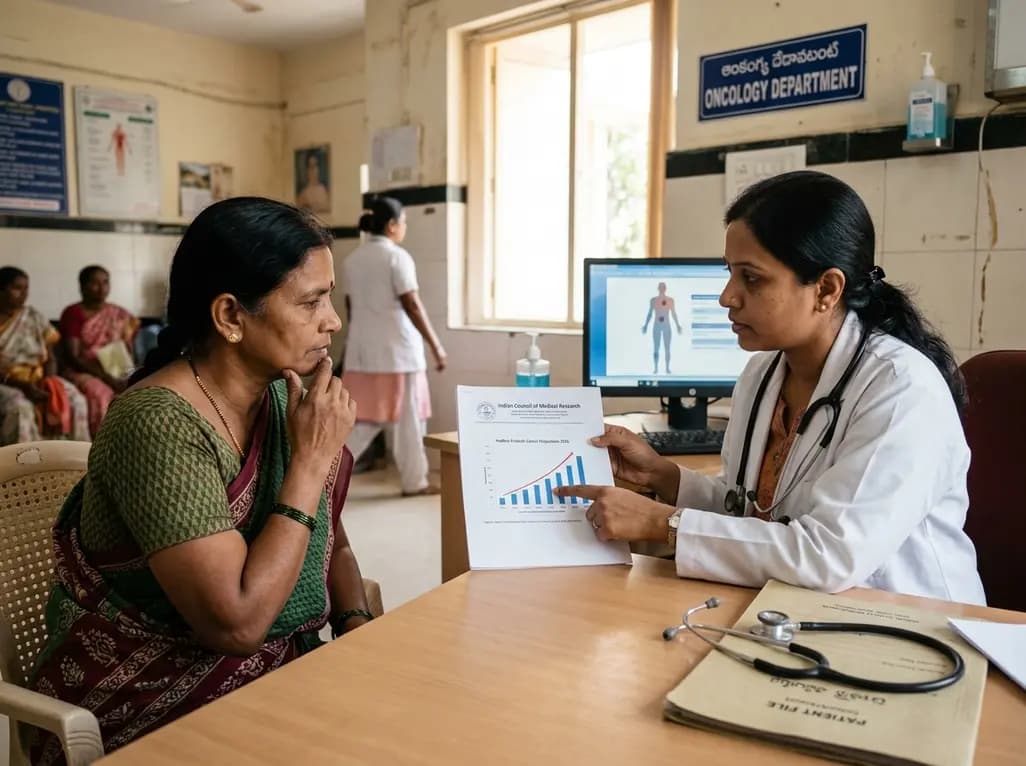
A new ICMR-NINE profile projects 65,000 new adult cancer cases in Andhra Pradesh for 2026, with women carrying the highest burden. The findings underscore an urgent need for oncological infrastructure, early detection initiatives, and public awareness campaigns addressing widespread tobacco and metabolic risk factors.
Today
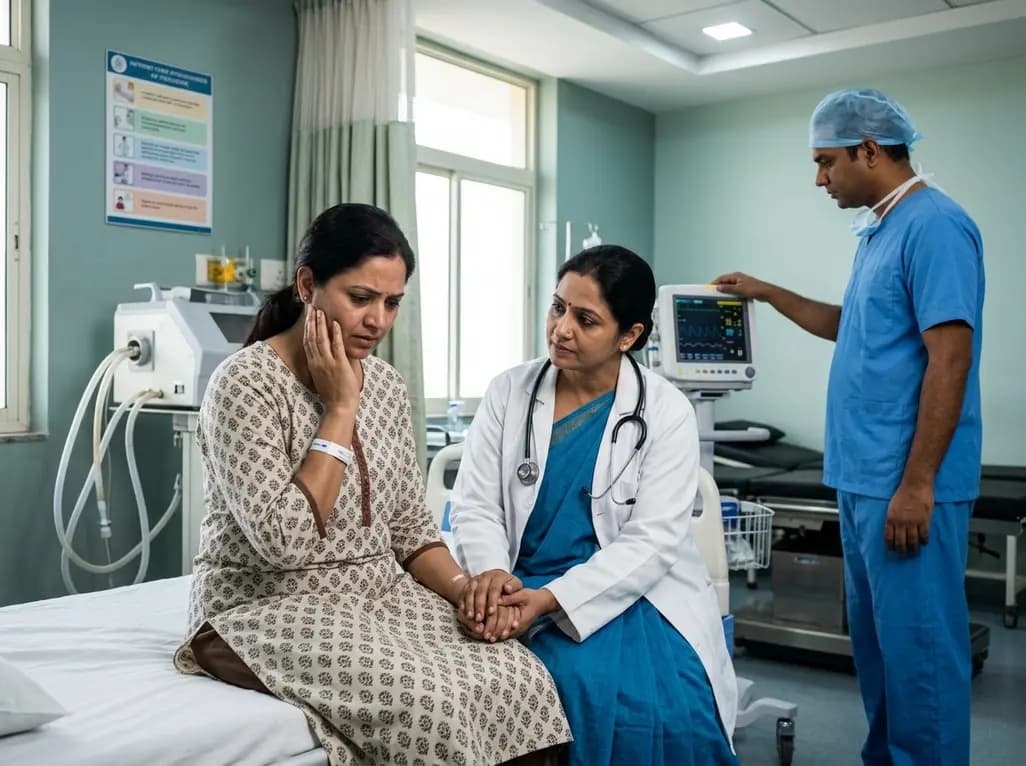
The FEBE study investigates the prevalence of post-traumatic stress disorder symptoms in women receiving high-dose-rate brachytherapy for cervical cancer, highlighting the critical role of procedural sedation and trauma-informed clinical care.
Today
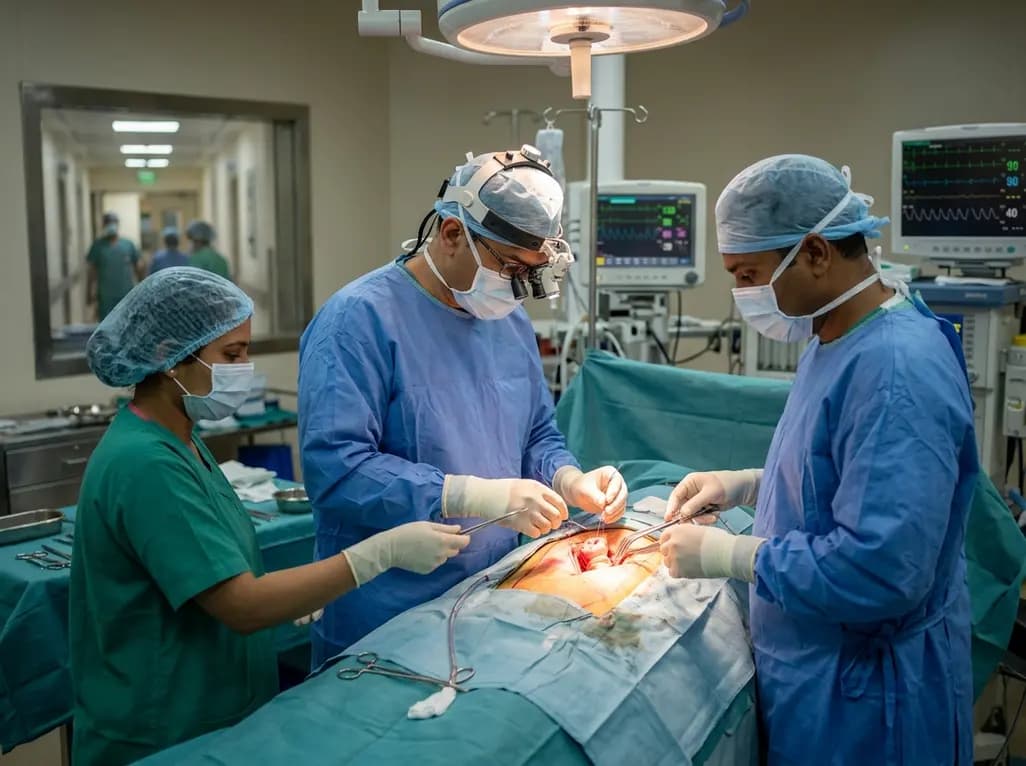
Aortic root aneurysms often develop silently, yet timely intervention provides a critical window to salvage the native aortic valve. Preserving the patient's own anatomy avoids lifelong anticoagulation, provided clinicians identify root dilatation before secondary leaflet distortion and ventricular failure occur.
Today
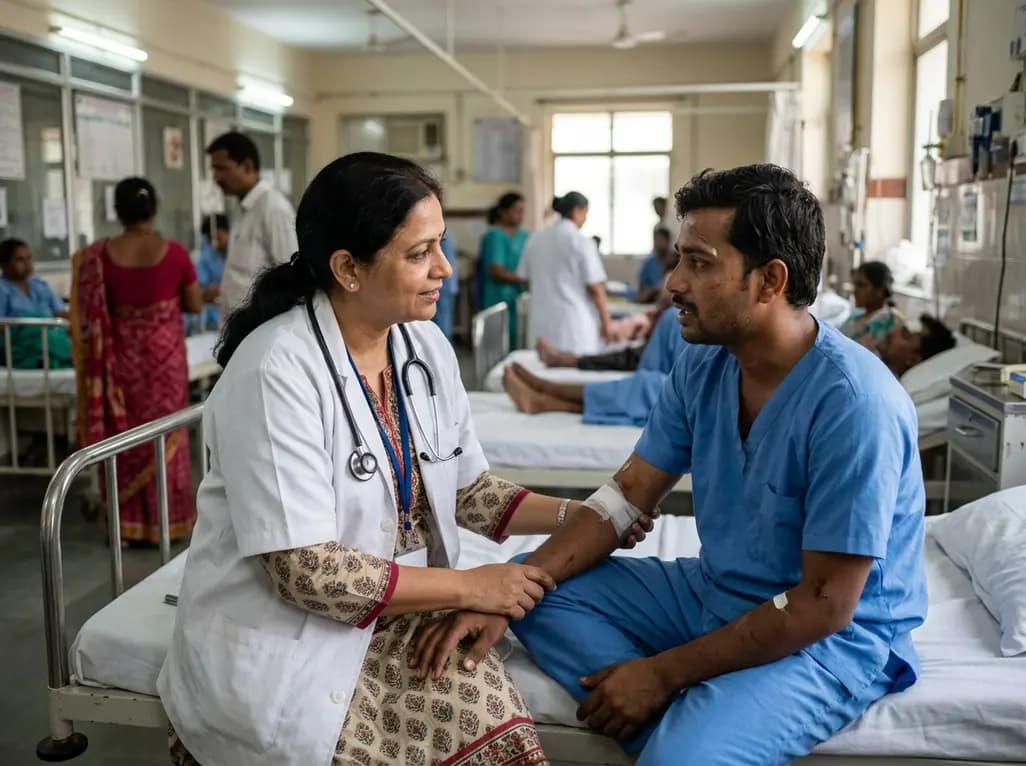
A Level I trauma center study shows a brief bedside mental health intervention boosts 30-day follow-up screening adherence by 84% in nonviolent injury patients. However, outcomes for violence survivors reveal critical care gaps, underscoring the urgent need for specialized community violence intervention programs.
Today
A preclinical study demonstrates that the SGLT2 inhibitor remogliflozin attenuates cyclophosphamide-associated peripheral neurotoxicity in rats. Remogliflozin restores antioxidant balance via Nrf2, suppresses NF-κB-driven neuroinflammation, activates PI3K/Akt survival signaling, and preserves structural myelin integrity.
Today
