

Loading, please wait...
Loading, please wait...

The Food Safety and Standards Authority of India has instructed state authorities to intensify surveillance against manufacturers of packaged drinking water across the country. This regulatory escalation follows recent enforcement proceedings against Bisleri International after laboratory analyses identified unsafe chemical contaminants in commercial water samples. Consequently, millions of Indian citizens routinely rely on commercially bottled fluids under the assumption of absolute sterility. Therefore, medical professionals must closely examine the clinical, toxicological, and public health ramifications of chemical non-compliance in commercial hydration products.
Recently, the central food authority dispatched rigorous directives to state Food Safety Commissioners and regional directors. Specifically, the apex regulator directed field officers to execute risk-based sampling and unannounced factory audits. In addition, regulators mandated that inspectors log every sample and analytical outcome directly into the Food Safety Compliance System. This digitized protocol prevents local tampering and facilitates nationwide oversight. The enforcement drive directly follows legal action against Bisleri International, where formal analysis revealed elevated bromate levels. Furthermore, subsequent referral testing identified polynuclear aromatic hydrocarbons, compounding regulatory concern. Although the manufacturer stated that the problem involved only a single discontinued batch, the statutory response highlights systemic vulnerability. The regulatory agency classified bottled water as a high-risk category after eliminating mandatory Bureau of Indian Standards certification prerequisites. Consequently, authorities are treating manufacturing oversights with enhanced legal severity. Healthcare providers must recognize that commercial labeling does not automatically guarantee biochemical purity.
Bromate does not naturally occur in pristine groundwater sources. Instead, water purification plants produce bromate during disinfection when ozone reacts with naturally present bromide ions. When technicians apply aggressive ozonation without adequate pH balancing, bromate concentrations rapidly exceed permissible statutory limits. The World Health Organization and Indian regulators establish a strict maximum limit of ten micrograms per liter. Bromate exposure poses substantial toxicological challenges. Chronic intake causes severe cellular oxidative injury and lipid peroxidation. Furthermore, animal studies demonstrate that prolonged bromate consumption induces renal cell tumors, thyroid follicular adenomas, and peritoneal mesotheliomas. The International Agency for Research on Cancer classifies bromate as a Group 2B possible human carcinogen. In acute exposures, bromate ingestion precipitates severe gastrointestinal irritation, vomiting, and irreversible acute kidney injury. Additionally, toxic doses can induce sensorineural hearing loss and metabolic acidosis. Therefore, nephrologists and primary care physicians must view chemical disinfection byproducts as insidious environmental nephrotoxins.
The secondary referral laboratory testing also reported polycyclic aromatic hydrocarbons within the disputed water sample. These complex organic compounds typically originate from the incomplete combustion of fossil fuels, organic matter, or industrial effluents. Consequently, their presence in drinking water indicates potential source water contamination or leaching from processing plastics. Humans experience substantial physiological danger from prolonged exposure to aromatic hydrocarbons. Specifically, compounds like benzo[a]pyrene undergo enzymatic conversion by cytochrome P450 enzymes into reactive diol epoxides. These toxic electrophiles bind irreversibly to cellular DNA, creating mutagenic adducts that promote neoplastic transformation. Chronic ingestion increases long-term risks of gastrointestinal, hepatic, and hematologic malignancies. Moreover, these lipophilic chemicals cross biological membranes, exacerbating systemic inflammation and vascular endothelial dysfunction. Immunological suppression and reproductive impairment also accompany persistent low-level ingestion. Thus, medical practitioners must appreciate that even fractional microgram contamination warrants decisive regulatory intervention to prevent population-wide chemical accumulation.
In November 2024, regulators formally shifted commercial drinking water into the official high-risk food category. Previously, manufacturers relied on dual-track oversight involving mandatory certifications that underwent structural changes. In response, the central watchdog introduced a comprehensive testing scheme in late 2025 to standardize analytical methodologies across state boundaries. Under current rules, state surveillance teams collect field samples directly from wholesale depots, retail shelves, and manufacturing facilities. Subsequently, accredited laboratories examine multiple parameters, including microbial pathogens, pesticide residues, heavy metals, and chemical disinfection byproducts. Central authorities repeatedly emphasize that these aggressive enforcement campaigns aim to protect consumers rather than destabilize markets. Furthermore, centralized reporting through the FoSCoS portal ensures transparency and rapid legal prosecution under the Food Safety and Standards Act of 2006. As a result, commercial brands face stringent penalties for procedural and chemical deviations. Clinicians should observe how modern regulatory vigilance identifies chemical hazards before widespread clinical toxicity manifests.
Many patients automatically assume that purchasing commercial bottled water completely protects them from waterborne illness. While packaged water effectively mitigates enteric pathogens like Salmonella and Vibrio cholerae, chemical adulteration introduces entirely different health risks. Therefore, clinicians must reorient patient education toward holistic water quality. Family physicians frequently manage individuals with preexisting chronic kidney disease, hepatic dysfunction, and delicate immune systems. For these susceptible populations, chronic exposure to oxidative xenobiotics like bromates or carcinogenic hydrocarbons accelerates underlying organ damage. Consequently, doctors should advise vulnerable patients to inspect tamper-evident seals and verify brand authenticity. Additionally, doctors must remind patients that leaving plastic containers in hot vehicles causes chemical leaching into water. For household hydration, physicians should recommend certified home multi-stage filtration systems that utilize activated carbon and reverse osmosis. Thus, active clinical counseling empowers patients to make informed, protective decisions regarding daily fluid intake.
Healthcare facilities maintain a clinical duty to deliver uncompromised water quality to hospitalized inpatients. In particular, oncology units, dialysis centers, and intensive care wards require impeccable water purity to prevent secondary complications. Immunocompromised patients cannot effectively detoxify environmental mutagens or handle additional oxidative renal insults. Therefore, hospital administrative leadership must establish routine water testing protocols rather than uncritically accepting commercial vendor assurances. Hospital supply chains must verify that contracted suppliers comply with all FSSAI testing mandates and maintain active FoSCoS registrations. Furthermore, facility biomedical teams should perform independent quarterly chemical and microbial evaluations of institutional water dispensers. Additionally, clinical nutritionists and nursing staff must enforce strict storage protocols, preventing sunlight exposure to stored bottled water pallets. By integrating rigorous environmental hygiene with inpatient care, medical institutions effectively eliminate preventable toxic exposures among vulnerable patients.
Q1: What is the primary clinical concern regarding bromate contamination in bottled water?
Bromate forms when ozone reacts with bromide during water disinfection. The compound acts as a potent oxidizing agent that damages cellular DNA and induces lipid peroxidation. Chronic exposure links to renal cell carcinomas and thyroid malignancies in animal bioassays. Therefore, regulators classify bromate as a possible human carcinogen, establishing strict statutory thresholds to prevent long-term oncological and nephrological morbidity.
Q2: How do polycyclic aromatic hydrocarbons enter commercially packaged water?
Polycyclic aromatic hydrocarbons originate from incomplete organic combustion and industrial pollution. They typically infiltrate packaged water when source aquifers suffer environmental contamination from industrial runoff. Alternatively, poor manufacturing practices and degradation of petroleum-based packaging plastics can leach these compounds into stored water. Because these aromatic compounds exert mutagenic and carcinogenic effects, regulatory laboratories enforce absolute non-detection standards in packaged water.
Q3: How should medical practitioners counsel vulnerable patients regarding daily drinking water choices?
Physicians must counsel patients that commercial packaging does not guarantee chemical purity. For individuals with chronic kidney disease or cancer, clinicians should recommend multi-stage household filtration systems combining reverse osmosis with activated carbon filtration. Furthermore, patients should avoid drinking water stored in plastics exposed to direct sunlight or heat, as elevated temperatures accelerate chemical leaching and degrade overall water quality.
Disclaimer: This content is for informational and educational purposes only. It does not constitute medical advice or replace professional judgment. Refer to the latest local and national guidelines for clinical practice.
References

Read summarized clinical updates, watch expert medical content, and earn CME certifications right from your smartphone.
Open your smartphone camera to scan and install.





Following regulatory action against major brands, the FSSAI has ordered nationwide risk-based sampling of bottled water. Clinicians should understand the public health implications of chemical contaminants like bromate and polycyclic aromatic hydrocarbons to effectively counsel patients and recognize toxic risks.
Today

A new study reveals that substantial weight loss from GLP-1 receptor agonists increases mammographic breast density, more than doubling screening recall rates. Learn why relative fibroglandular prominence occurs, the clinical significance for radiologists, and how to guide patients during breast cancer screening.
Today
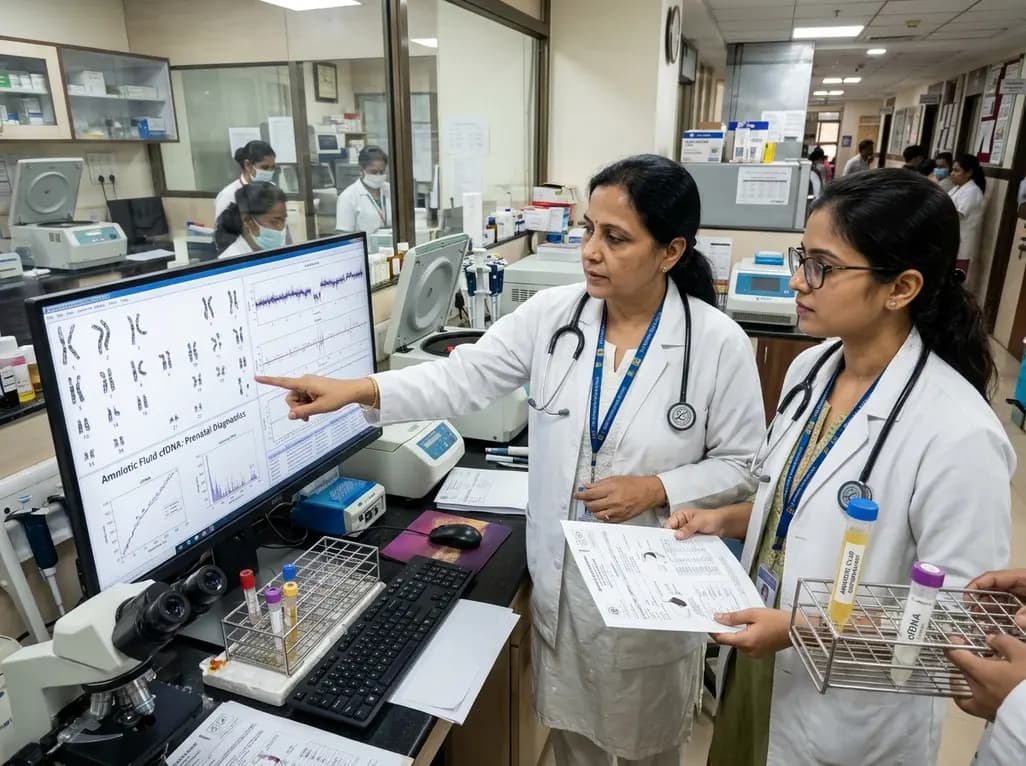
Amniotic fluid cell-free DNA offers a rapid alternative to cultured amniocytes in prenatal testing. With high yield, lack of maternal contamination, and full concordance across microarrays and exome sequencing, it dramatically cuts diagnostic turnaround time.
Today

Time-use diary research maps 24-hour physical activity and dietary habits, providing clinicians with vital insights into temporal patterns, time poverty, and lifestyle modifications essential for noncommunicable disease prevention.
Today

Implant-associated infections present severe challenges in orthopedic and dental surgery. A newly engineered photocatalytic antibacterial composite coating on medical titanium combines passive hyaluronic acid defense with active visible-light reactive oxygen species generation to suppress biofilms and enhance repair.
Today

Investigating the patterns, barriers, and facilitators of sedentary behaviour, physical activity, and nutrition among hybrid employees working from home, with practical recommendations for clinicians managing cardiometabolic and musculoskeletal health.
Today
