

Loading, please wait...
Loading, please wait...

Stroke survivors experience significant physiological disruption alongside profound psychological challenges during their recovery journey. Frequent mental distress represents an underrecognized public health marker that encompasses severe psychological strain, cognitive anxiety, and depressive symptoms. Clinicians frequently focus on motor rehabilitation while overlooking persistent psychological suffering. Consequently, patients often endure unaddressed mental distress that limits recovery and decreases overall quality of life. Recent population surveillance highlights an urgent need to evaluate these emotional deficits systematically. Therefore, physicians must understand how psychological strain impairs neurological rehabilitation.
Public health researchers utilize specific metric standards to quantify self-reported emotional burdens. Specifically, investigators measure frequent mental distress by assessing whether individuals experience poor mental health for fourteen or more days within a thirty-day window. In addition, alternative screening models employ a lower six-day threshold to capture emerging psychological disability. A comprehensive analysis of Behavioral Risk Factor Surveillance System data from 2016 through 2023 offers critical clarity regarding these metrics. Researchers evaluated thousands of patient records across the United States to track subjective mental health patterns. Moreover, the investigators compared stroke survivors directly against individuals with prior myocardial infarction and healthy adult cohorts. The results indicate that cerebrovascular events inflict a uniquely debilitating burden on subjective emotional wellness. Furthermore, stroke survivors consistently demonstrate higher rates of severe emotional distress than healthy peers. Because vascular events disrupt daily autonomy, survivors struggle with persistent emotional disruption. Thus, understanding these epidemiological benchmarks enables healthcare providers to detect psychiatric complications earlier during follow-up visits.
Surveillance data reveal marked disparities across specific demographic and geographical sectors. Specifically, younger stroke survivors aged eighteen to sixty-four years reported the highest prevalence of distress at 32.5 percent. In contrast, older survivors exhibited comparatively lower rates, perhaps due to different lifestyle expectations and psychosocial resilience. Sex also plays an influential role in psychological outcomes. For example, female stroke survivors demonstrated a distress prevalence of 26.0 percent, substantially exceeding male rates. Furthermore, ethnic differences emerged prominently throughout the multi-year dataset. Hispanic individuals experienced distress at a rate of 28.7 percent, facing compounded structural and socioeconomic barriers. Geographic trends similarly showed striking regional variations. Survivors residing in West Virginia and Tennessee recorded distress rates of 29.0 percent and 27.6 percent, respectively. Consequently, distress clustered heavily within the Appalachian region and the Stroke Belt. These communities frequently suffer from reduced healthcare infrastructure, financial hardship, and limited rehabilitation access. Therefore, clinicians practicing in medically underserved areas must actively anticipate significant psychological distress among younger and minority stroke patients.
Cardiovascular and cerebrovascular conditions share overlapping vascular pathology, yet their psychological consequences differ markedly. Multivariable logistic regression revealed that stroke survivors possessed an unadjusted odds ratio of 4.36 for distress relative to healthy adults. Even after controlling for potential confounding factors, stroke survivors maintained an adjusted odds ratio of 1.96. Meanwhile, individuals recovering from myocardial infarction also demonstrated elevated vulnerability compared to healthy populations. Myocardial infarction survivors exhibited an unadjusted odds ratio of 3.02 and an adjusted odds ratio of 1.69. However, stroke survivors experienced higher odds of enduring frequent mental distress than cardiac patients. This divergence highlights the distinct neurological disruption caused by cerebral tissue damage. While cardiac rehabilitation addresses physical conditioning, stroke rehabilitation must manage altered neural circuits alongside motor loss. Moreover, the sudden physical dependence associated with hemiparesis or dysphasia often creates intense emotional trauma. In contrast, many cardiac survivors maintain basic mobility and speech immediately following therapeutic reperfusion. Accordingly, clinical teams cannot assume identical emotional trajectories for cardiac and stroke patients during chronic recovery.
The disproportionate mental health burden observed after stroke stems from intertwined physiological and social factors. From a neurobiological standpoint, cerebral ischemia directly damages monoaminergic pathways and prefrontal-subcortical circuits that regulate human emotion. Furthermore, systemic inflammation triggered by ischemic injury elevates circulating cytokines like interleukin-6 and tumor necrosis factor-alpha. These inflammatory cascades disrupt neurogenesis, heighten neuroinflammation, and precipitate depressive episodes. In addition, neuroplastic disruption alters emotional regulation centers, creating persistent mood instability. Psychosocial factors simultaneously intensify this psychological turmoil. For instance, sudden loss of bodily autonomy strips patients of vocational identity and financial security. Younger survivors face interrupted careers and heavy child-rearing obligations, which compounds perceived helplessness. Moreover, social isolation rapidly emerges when speech impairment or impaired mobility limits community interaction. Caregiver strain also feeds into this cycle, as family tension exacerbates emotional distress. Consequently, biological damage and social isolation reinforce one another over time. Clinicians must recognize that post-stroke psychological distress is not merely a normal reaction to grief. Instead, it represents a complex neurovascular and psychiatric complication requiring targeted therapy.
Integrating routine psychological screening into stroke recovery pathways is critical for optimal long-term outcomes. Clinicians should employ validated tools such as the Patient Health Questionnaire-9 and the General Anxiety Disorder-7 during outpatient reviews. Additionally, tracking frequent mental distress using the standard fourteen-day benchmark provides clear actionable insight into patient well-being. Early identification allows healthcare teams to introduce tailored pharmacotherapy promptly. For example, selective serotonin reuptake inhibitors demonstrate substantial efficacy in improving post-stroke mood disorders and physical functioning. However, physicians must evaluate drug interactions with secondary prevention regimens, including anticoagulants and antiplatelet drugs. Beyond medication, non-pharmacological interventions provide foundational support for emotional resilience. Cognitive behavioral therapy helps survivors reframe catastrophic thinking and overcome functional frustration. Furthermore, physical therapy and structured aerobic exercise stimulate neurogenesis and elevate psychological mood. Multidisciplinary teams, including neurologists, psychiatrists, physiatrists, and medical social workers, must coordinate care seamlessly. Ultimately, addressing mental health directly enhances patient compliance with rehabilitation protocols and secondary preventive medications. By establishing structured mental screening, healthcare systems can reduce disability and foster holistic stroke recovery.
Frequent mental distress is defined epidemiologically as fourteen or more self-reported days of poor mental health within a thirty-day timeframe. It encompasses severe psychological strain, depressive episodes, and persistent anxiety. This standardized public health marker helps healthcare clinicians identify stroke patients who experience chronic emotional impairment requiring structured neuropsychiatric assessment and support.
Younger survivors aged eighteen to sixty-four often face severe disruptions to career trajectories, financial stability, and family responsibilities. Unlike older individuals who may accept illness as part of aging, younger adults encounter sudden independence loss and social isolation. Consequently, this dramatic lifestyle interruption triggers intense psychological strain, resulting in higher reported distress.
Clinicians should implement routine psychological screening using validated tools like the PHQ-9 during follow-up appointments. Effective management combines selective serotonin reuptake inhibitors with cognitive behavioral therapy and structured physical rehabilitation. Additionally, engaging multidisciplinary teams, including psychiatrists and social workers, ensures comprehensive patient support, optimizes secondary prevention adherence, and accelerates functional recovery.
Disclaimer: This content is for informational and educational purposes only... Refer to the latest local and national guidelines for clinical practice.
References

Read summarized clinical updates, watch expert medical content, and earn CME certifications right from your smartphone.
Open your smartphone camera to scan and install.





Recent BRFSS data reveals frequent mental distress is highly prevalent among stroke survivors, especially younger adults, females, and Hispanics. Stroke survivors face significantly higher odds of distress than myocardial infarction survivors or healthy adults, underscoring the urgent need for targeted care.
Today

A new study demonstrates how explainable AI guides transparent fall risk prediction models in older adults. By pairing random survival forests and SHAP with Cox regression, researchers achieved superior accuracy and eliminated unneeded variables, enhancing clinical decision-making and patient safety.
Today

Ascertainment bias in cancer case-control studies inflates odds ratios and penetrance estimates when cases are drawn from high-risk clinics. A landmark modeling study demonstrates substantial bias ranging up to 23.72, highlighting the critical need for ascertainment adjustment in genetic risk counseling.
Today
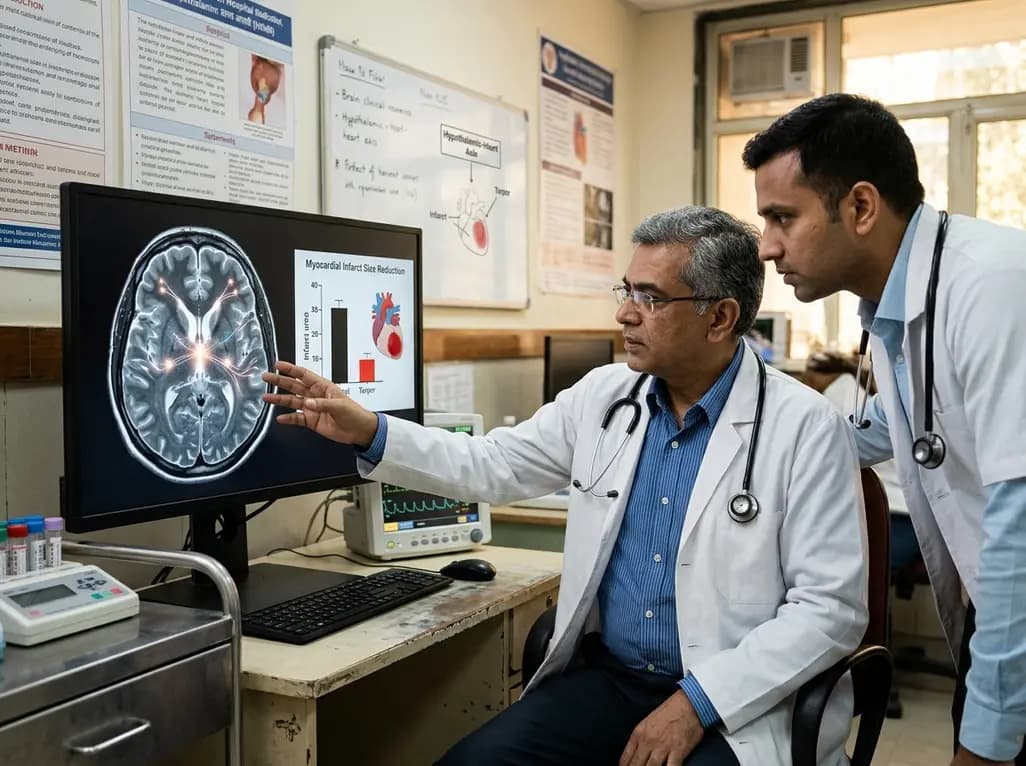
Researchers demonstrate that central induction of synthetic torpor in non-hibernating rats provides striking cardioprotection, reducing myocardial infarct size by ~40% during ischaemia-reperfusion injury through endogenous survival signaling, independent of hypothermia.
Today
A prospective study evaluates DeepSeek for knee osteoarthritis outcomes. While the model excels at baseline diagnosis and clinical scoring, its six-month prognostic predictions fall short of clinicians and simple persistence models, demonstrating high run-to-run variability.
Today
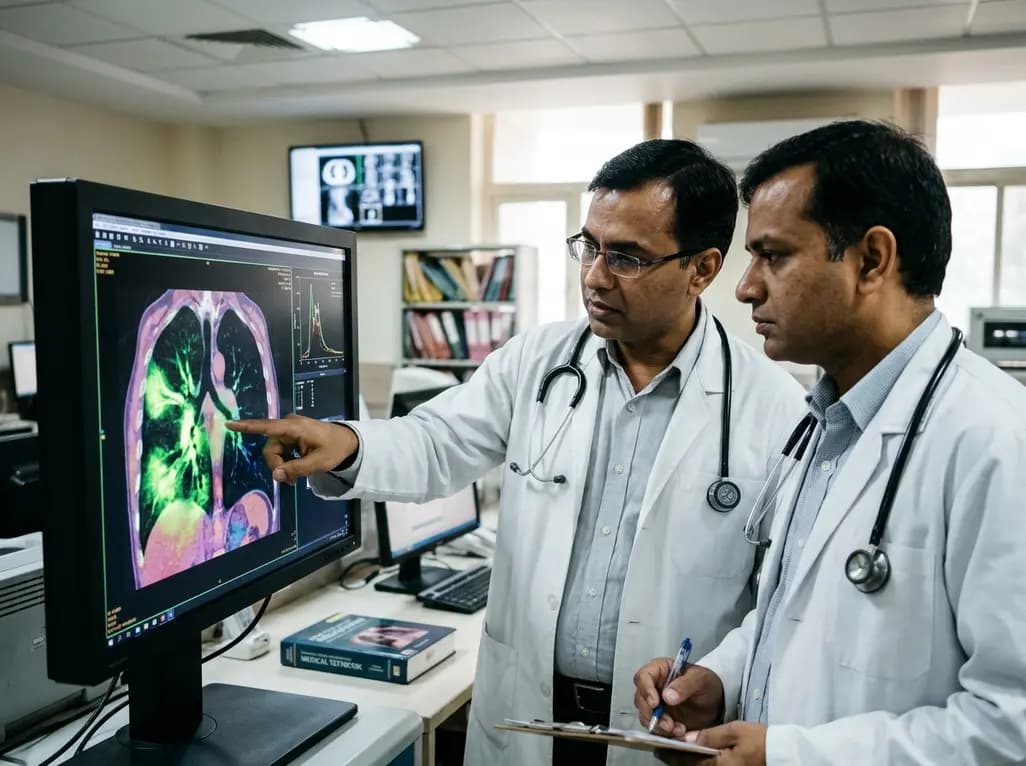
A novel fluorine-functionalized near-infrared copper fluorescent probe selectively illuminates lung tissue, revealing critical links between hyperglycemia, ER stress, and pulmonary malignancy for improved early diagnosis.
Today
