.webp&w=384&q=75)

Loading, please wait...
Loading, please wait...
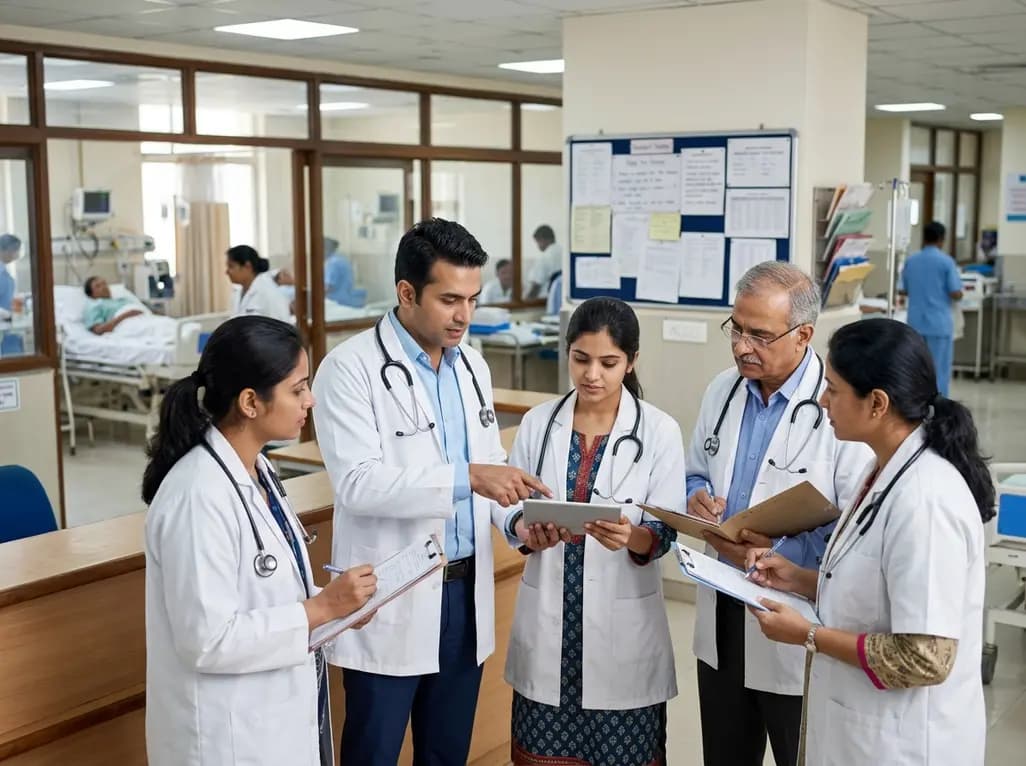
The confirmation of an Ebola case in France marks a critical milestone in global health security. Recently, a humanitarian doctor returned to Paris from the Democratic Republic of Congo and tested positive. Consequently, health authorities immediately isolated the clinician to prevent local transmission. Crucially, this current African epidemic involves the Bundibugyo Ebola virus, a rare and challenging viral variant. Because this strain differs from the common Zaire variant, traditional vaccines do not provide protection. Therefore, global healthcare networks must urgently elevate their local screening protocols. Although European agencies expect minimal public risk, this imported case demands clinical vigilance. Clinicians must understand this strain to recognize symptoms early and secure healthcare facilities. Historically, imported viral hemorrhagic fevers have challenged Western hospital systems. Consequently, medical educators emphasize rapid identification of returning travelers who exhibit febrile illnesses. This specific French case underscores the reality of global viral transport. Ultimately, prompt recognition will save lives and protect public health networks.
The current case in France represents the first confirmed imported infection in the country during this epidemic. Previously, a United States citizen received treatment in Germany and subsequently left the hospital after recovery. Currently, the French patient remains in stable condition under strict quarantine. Health authorities have mobilized specialized epidemiological teams to conduct contact tracing. Specifically, they aim to locate any individual who shared close contact with the infected doctor. Anyone who has had close contact must quarantine at home for twenty-one days. Consequently, this rapid containment strategy minimizes the probability of secondary transmissions within Paris. Historically, Europe has managed imported cases of hemorrhagic fevers with excellent clinical outcomes. However, the presence of the virus on European soil reminds clinicians of the fluid nature of modern pathogen transmission. Because humanitarian professionals travel frequently to high-risk areas, health agencies must maintain dedicated monitoring systems. These screening systems track returning aid workers to ensure early detection. Ultimately, early identification remains the most powerful tool to protect the wider European population from domestic outbreaks.
The Bundibugyo Ebola virus presents unique challenges to modern clinical medicine. Most notably, this strain differs genetically from the Zaire ebolavirus, which caused the devastating West African outbreak. Because of these genomic differences, existing licensed vaccines do not offer cross-protective immunity. Clinicians cannot rely on standard monoclonal antibody therapies like Inmazeb to treat patients infected with this strain. Therefore, medical teams must rely entirely on optimized supportive care to improve patient outcomes. Historically, the Bundibugyo variant exhibits a case fatality rate ranging from thirty to fifty percent. Patients typically experience severe asthenia, high fever, and significant gastrointestinal distress within days of infection. Although hemorrhagic manifestations occur less frequently, they remain highly specific indicators of advanced disease. Consequently, clinicians must maintain a high index of suspicion when evaluating patients with these symptoms. Furthermore, conflict and displacement in the eastern DRC continue to hamper containment efforts locally. These regional challenges allow the virus to circulate silently before detection. Thus, understanding the distinct viral pathology helps medical professionals implement appropriate isolation protocols immediately upon patient presentation.
When patients present with a fever after traveling to East Africa, physicians must act quickly. Because early symptoms of Ebola mimic malaria and typhoid, differentiating these conditions is challenging. Therefore, taking a detailed travel history is the first critical step in any emergency department. If a patient visited the Ituri or North Kivu provinces within the last three weeks, they require immediate isolation. Subsequently, the clinical team must contact regional public health authorities to coordinate testing. Currently, the gold standard for acute diagnosis is real-time reverse transcription-polymerase chain reaction. Because of the risk of specimen contamination, laboratory staff must handle all samples under strict biosafety conditions. Furthermore, clinicians must avoid performing unnecessary invasive procedures that could expose staff to infectious fluids. If the initial test returns positive, genetic sequencing determines the specific viral species. This sequencing is vital to confirm whether the patient carries the Bundibugyo variant. Consequently, accurate diagnosis allows hospitals to deploy specific quarantine measures and protect frontline workers. Through standardized diagnostic pathways, clinical facilities can safely manage suspected cases without disrupting routine healthcare delivery.
Containing a highly contagious pathogen requires meticulous epidemiological intervention. Consequently, contact tracing serves as the backbone of outbreak suppression. Once health authorities identify a confirmed case, investigators must immediately reconstruct the patient's timeline. They identify anyone who had direct contact with the patient's bodily fluids or contaminated environments. In France, the regional health agency manages this process to ensure no contacts are missed. Following identification, these contacts must isolate at home for twenty-one days. This quarantine represents the maximum incubation period of the virus. Daily temperature monitoring helps detect early signs of infection. If a contact develops a fever, medical transport teams immediately transfer them to a specialized isolation facility. This aggressive strategy stops transmission chains before they can establish community spread. Historically, prompt contact tracing successfully contained previous imported outbreaks in Europe and North America. However, success depends heavily on the honesty and cooperation of the individuals involved. Therefore, public health agencies must communicate clearly and compassionately to build trust with affected communities. Ultimately, robust tracing protocols safeguard public health and prevent localized epidemics.
The imported case in Paris serves as a wake-up call for healthcare systems globally. Although the immediate risk to India and other non-endemic nations remains low, global travel creates continuous pathways for viral spread. Therefore, hospitals must regularly train their staff on personal protective equipment protocols. Frontline nurses and physicians need to know how to safely don and doff protective gear without self-contamination. Additionally, facility administrators should update their infectious disease emergency response plans annually. These protocols must specify isolation room locations and coordinate transport logistics with local public health units. Since the Bundibugyo strain lacks specific pharmaceutical treatments, global health security relies on rapid clinical recognition. International agencies, including the World Health Organization, continue to support surveillance in high-risk zones. However, national healthcare systems must also remain vigilant. Educating clinicians about emerging outbreaks ensures that a single imported case does not escalate into a hospital-wide crisis. By prioritizing global preparedness, the medical community can confidently face emerging infectious threats. Ultimately, continuous training and clinical vigilance are our strongest defenses against global pandemics.
Q1: What is the primary difference between the Bundibugyo and Zaire strains of Ebola?
The primary difference lies in their genetic sequence, which prevents current vaccines from offering cross-protection. Standard vaccines and monoclonal antibody treatments specifically target the Zaire variant glycoprotein. Consequently, patients with the Bundibugyo variant must rely solely on supportive clinical care. Furthermore, historical data indicates that the Bundibugyo strain generally exhibits a slightly lower case fatality rate than the highly lethal Zaire strain.
Q2: Why is the case in France considered low risk to the wider public?
The risk remains low because health authorities implemented immediate isolation measures upon the patient's arrival. The doctor did not interact with the general public while symptomatic. Additionally, the French health ministry initiated rapid contact tracing to monitor anyone exposed during transit. These proactive public health protocols successfully interrupt transmission chains, ensuring the virus cannot establish a foothold in the local community.
Q3: What clinical symptoms should healthcare providers look for in traveling patients?
Clinicians must watch for sudden high fever, intense weakness, and severe muscle pain in patients returning from affected regions. Subsequently, these individuals may develop vomiting, watery diarrhea, and impaired kidney or liver function. Although overt bleeding is less common in this outbreak, it remains a critical warning sign. Therefore, any febrile returning traveler requires immediate isolation and diagnostic evaluation.
Disclaimer: This content is for informational and educational purposes only. It does not constitute medical advice or replace professional judgment. Refer to the latest local and national guidelines for clinical practice.
References

Read summarized clinical updates, watch expert medical content, and earn CME certifications right from your smartphone.
Open your smartphone camera to scan and install.





A French doctor returning from a humanitarian mission in the Democratic Republic of Congo has tested positive for Ebola. This marks France's first case in the 2026 outbreak of the rare Bundibugyo strain, for which no licensed vaccine currently exists. Health authorities have initiated strict contact tracing.
3 months ago

As monsoon seasons elevate arboviral disease threats, Tamil Nadu has initiated an ICMR-monitored evaluation of the tetravalent dengue vaccine in Tenkasi district. Clinicians emphasize clinical monitoring, public prevention, and high-quality early pediatric care to reduce disease morbidity across endemic regions.
Today

A comparative cohort study evaluates vNOTES vs TLH hysterectomy for benign conditions, demonstrating shorter operative duration, faster return to daily activities, and equivalent female sexual function scores without increased dyspareunia.
Today

Review how tailored exercise programs benefit frail older patients with heart failure. Explore pathophysiological mechanisms, individualized training prescriptions, and strategies to overcome adherence barriers in clinical practice.
Today

This comparative study evaluates posterior labral tears with and without glenohumeral instability, highlighting distinct demographic patterns, MRI underestimation in stable shoulders, and successful arthroscopic repair outcomes.
Today

A clinical study demonstrates that early intervention with tocilizumab, either as monotherapy or bridged with corticosteroids, achieves significant proptosis reduction and resolves active inflammation in treatment-naive thyroid eye disease.
Today
